
Environmental & Pollution Control
Wet Scrubbers, Stack Systems & Pollution Control Tanks
Packed-bed wet scrubbers, venturi scrubbers, tray scrubbers, caustic and acid scrubbers, sour-water strippers, stack systems, and process pollution-control tanks — for Clean Air Act and Clean Water Act compliance at industrial facilities.
About Environmental & Pollution Control
Industrial air- and water-pollution compliance equipment sits at the intersection of chemical engineering and environmental regulation. Wet scrubbers are the workhorse for process-gas cleanup, transferring acid gases, particulates, and water-soluble VOCs from the gas phase into a liquid scrubbing medium for disposal or neutralization. Packed-bed scrubbers use random or structured packing (Raschig rings, Pall rings, Intalox saddles, structured wire-mesh) to provide surface area for gas-liquid mass transfer; they handle acid gases (HCl, HF, SO2, H2S, NH3) and condensable VOCs at high removal efficiencies. Tray scrubbers (bubble-cap or sieve-tray) deliver very high removal efficiency for difficult absorbates at higher pressure drop. Venturi scrubbers handle particulate-laden gas and heavy-gas absorption at high energy cost.
Scrubber chemistry depends on the target contaminant. Caustic (NaOH) scrubbers neutralize acid gases — HCl, HF, SO2, H2S. Acid scrubbers (sulfuric, phosphoric, citric) absorb basic gases like ammonia and amines. Hypochlorite scrubbers oxidize H2S and odorous organic sulfides. Sour-water strippers remove H2S and NH3 from refinery and chemical-plant process water via steam stripping. Thermal oxidizers (RTO, RCO) attack VOCs through combustion rather than absorption. Equipment selection is a compliance calculation — the local air-permit specifies BACT (Best Available Control Technology), the permitted emission rate, and the monitoring requirements.
Process wastewater compliance demands a matched set of tanks. Equalization tanks dampen flow and load variations ahead of primary treatment. Neutralization tanks adjust pH with caustic or acid dosing to keep downstream biological treatment or NPDES discharge in-spec. Oil-water separators (API 421 design) remove free oil from process water. Coagulation-flocculation tanks with polymer or alum dosing settle suspended solids. Retention tanks provide buffer volume for spill-containment and emergency holding. These vessels are typically FRP, HDPE, or coated carbon steel depending on chemistry and budget.
What We Fabricate
Packed-Bed Wet Scrubbers
Random or structured-packing absorbers for acid gas, basic gas, and VOC removal.
Venturi Scrubbers
High-energy throat-section scrubbers for particulate-laden gas and heavy-gas absorption.
Tray / Bubble-Cap Scrubbers
High-efficiency multi-stage absorption for difficult services (dioxin, mercury, heavy metals).
Caustic Scrubbers
NaOH-circulated absorbers for HCl, HF, SO2, and H2S neutralization.
Acid Scrubbers
H2SO4 or H3PO4-circulated absorbers for ammonia and amine absorption.
Sour-Water Strippers
Steam-stripping columns for H2S and NH3 removal from process water.
Chlorine-Hypochlorite Scrubbers
Oxidizing scrubber for odor control and organic-sulfide destruction.
Stack Systems & Breeching
Emission-point construction — stacks, breeching, dampers, CEM-sample ports.
Thermal Oxidizers
RTO and RCO packages for VOC combustion destruction.
Demister & Mist Eliminators
Entrained-liquid capture at scrubber outlet and process-vent outlet.
Neutralization Tanks
pH-adjustment wastewater tanks with caustic or acid dosing.
Oil-Water Separators
API 421 and CPI (corrugated-plate) separators for process-water oil removal.
How a Custom Project Works
- Requirements capture. Volume, materials of construction, service chemistry, operating temperature and pressure, footprint, utility connections, finish, and any code or certification requirements. We work from your specification or draft one against your process.
- Engineering and drawings. A general-arrangement drawing, bill of materials, and weld map — reviewed and signed off before any material is cut.
- Material procurement. Plate, pipe, fittings, and elastomers ordered to the approved bill of materials, with material certifications captured where the service demands traceability.
- Fabrication. Shells formed and welded, heads and ports installed per drawing, sanitary work TIG-welded and ground flush on product-contact surfaces.
- Inspection and testing. Weld examination, pressure or leak testing as applicable, surface-finish verification, and passivation to ASTM A967 on stainless.
- Documentation and shipment. Material certifications, weld and inspection records, and test certificates compiled for handoff. Shipment with blocking and bracing; freight quoted separately to your ZIP.
Engineering & Design Guides
In-depth, vendor-neutral guides written by our engineering team to help you scope the right build — the equipment, the materials, and the trade-offs.
Wet Scrubbers & Air Pollution Control
Packed-tower and venturi scrubbers compared: acid-gas absorption, particulate capture, Clean Air Act context, and corrosion-resistant construction.
Read the guide →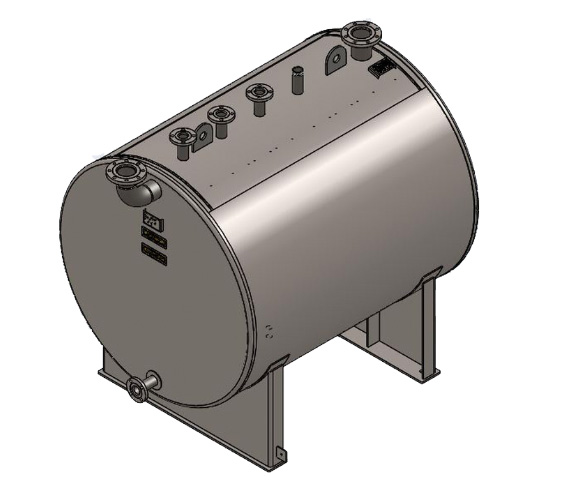
Oil-Water Separators (API 421)
Oil-water separators explained: gravity separation per API 421, coalescing plates, refinery and industrial use, and Clean Water Act context.
Read the guide →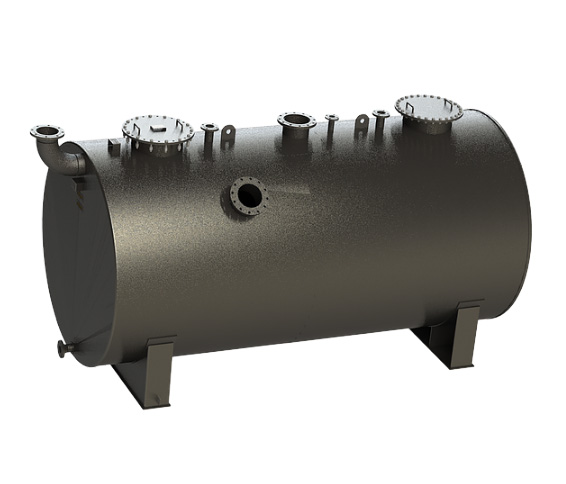
Secondary Containment & SPCC
Secondary containment under the EPA SPCC rule (40 CFR 112): sizing for largest tank plus freeboard, plus double-wall versus dikes and berms.
Read the guide →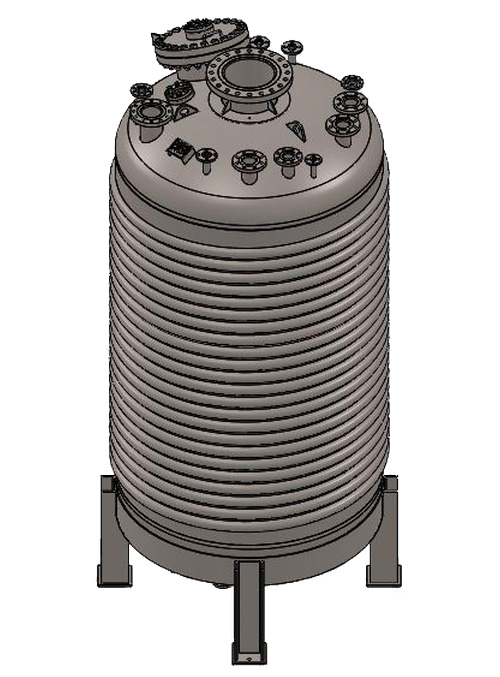
Sour-Water Strippers
Sour-water strippers explained: removing hydrogen sulfide and ammonia with a stripping column and steam, plus materials for corrosive service.
Read the guide →Frequently Asked Questions
- What scrubber chemistry do I need for HCl vapor?
- HCl absorbs into caustic (NaOH) or water. Water alone gives high removal for low-concentration streams; caustic scrubbing handles higher concentrations and provides neutralization of the absorbed HCl. Packed-bed construction is standard.
- What's BACT in my air permit?
- BACT (Best Available Control Technology) is the specific technology-and-efficiency standard imposed by your local air permit. Permits cite a specific scrubber type, removal efficiency, and monitoring requirement. Equipment is sized to meet or exceed BACT.
- Do I need continuous emission monitoring?
- Most major-source air permits under Title V require CEMS (Continuous Emission Monitoring Systems) for at least one pollutant — typically SO2, NOx, or VOC. Minor-source permits and state-level requirements vary. Equipment is specified with CEM-sample ports and appropriate stack access during fabrication.
- Packed-bed or tray scrubber?
- Packed bed: lower pressure drop, tolerates fouling well, handles wide absorbate concentration range. Tray: higher removal efficiency on difficult absorbates, tolerates particulate poorly, higher pressure drop and capital cost. Most industrial acid-gas scrubbing uses packed bed; high-efficiency specialty scrubbing often uses tray construction.
Start a Environmental & Pollution Control Project
Give us your process specs and we come back with a full engineering package, firm lead time, and a fixed price. Freight quoted separately to your ZIP.
Request a Custom Quote Call 866-418-1777