
FRP & Fiberglass Tanks
FRP Tanks, Pressure Vessels & Dual-Laminate Chemical Storage
Custom fiberglass-reinforced plastic tanks, dual-laminate thermoplastic-lined vessels, filament-wound pressure vessels, scrubber towers, and engineered FRP pipe spools — for aggressive chemistries where polyethylene isn't rated and stainless isn't economical.
About FRP & Fiberglass Tanks
FRP (fiberglass-reinforced plastic) tanks fill a very specific niche in chemical storage: the service is too aggressive for polyethylene (hot acids, strong oxidizers, certain solvents), too corrosive for carbon steel (concentrated HCl, H2SO4, FeCl3, NaOCl), and not economical in stainless (too large, too aggressive for 316L even). At this intersection, FRP is the answer — lighter than steel, immune to corrosion, and customizable in resin chemistry to match the exact service.
The critical decision is resin system. Vinyl ester resin handles the widest range of aggressive chemistries — concentrated acids (sulfuric to 93%, hydrochloric to 37%, nitric to moderate strength), caustics (NaOH to 50%), salt solutions, chlorinated water, and many solvents. Epoxy resin is preferred for alkaline service and water treatment. Isophthalic polyester handles mild-service chemical storage and water applications. Bisphenol-A fumarate is specified for hot caustic, hot acid, and bleach service. Resin selection is matched to chemical, concentration, and service temperature — tabulated in a Chemical Resistance Guide updated against published industry data and field performance.
Dual-laminate construction combines a thermoplastic inner liner (PVC, CPVC, PP, PVDF, ECTFE) with an FRP structural outer shell. The thermoplastic handles direct chemical contact; the FRP provides mechanical strength. This is standard for bromine, hot sodium hypochlorite, concentrated hydrofluoric acid, and other chemistries that exceed even vinyl ester's envelope. Filament-wound construction (continuous roving wound under tension) delivers higher mechanical strength than chopped-strand contact molding — required for pressure vessels (ASME Section X), horizontal tanks on saddles, and large-diameter aboveground storage tanks.
What We Fabricate
Vinyl-Ester FRP Storage Tanks
General-purpose aggressive-service FRP storage, 50-gal to 50,000-gal vertical or horizontal.
Dual-Laminate Chemical Tanks
Thermoplastic-lined (PVC, CPVC, PP, PVDF) FRP structural tanks for extreme chemistries.
ASME Section X Pressure Vessels
Code-stamped filament-wound FRP pressure vessels for regulated service.
Filament-Wound FRP Cylinders
Pre-manufactured FRP cylinders for tank heads, pipe segments, and pressure-vessel shells.
Scrubber Towers & Absorbers
Packed-bed and tray FRP scrubbers for air-quality compliance equipment.
Bleach & Hypochlorite Tanks
Bisphenol-A fumarate or dual-laminate FRP for sodium hypochlorite chemical service.
Water-Treatment FRP Tanks
Municipal and industrial water-treatment storage and process vessels.
Underground FRP Tanks
Buried fiberglass tanks with external corrosion protection for fuel and chemical service.
FRP Pipe Spools
Engineered FRP piping in matching resin system for interconnecting fabrication work.
Horizontal FRP Tanks
Filament-wound horizontal tanks on FRP or steel saddles for transport and bulk storage.
FRP Hoods, Ductwork & Stacks
Corrosion-resistant ventilation and exhaust infrastructure for chemical plants.
Custom Resin Systems
Specialty resin matching for unique chemistries — consult with engineering.
How a Custom Project Works
- Requirements capture. Volume, materials of construction, service chemistry, operating temperature and pressure, footprint, utility connections, finish, and any code or certification requirements. We work from your specification or draft one against your process.
- Engineering and drawings. A general-arrangement drawing, bill of materials, and weld map — reviewed and signed off before any material is cut.
- Material procurement. Plate, pipe, fittings, and elastomers ordered to the approved bill of materials, with material certifications captured where the service demands traceability.
- Fabrication. Shells formed and welded, heads and ports installed per drawing, sanitary work TIG-welded and ground flush on product-contact surfaces.
- Inspection and testing. Weld examination, pressure or leak testing as applicable, surface-finish verification, and passivation to ASTM A967 on stainless.
- Documentation and shipment. Material certifications, weld and inspection records, and test certificates compiled for handoff. Shipment with blocking and bracing; freight quoted separately to your ZIP.
Engineering & Design Guides
In-depth, vendor-neutral guides written by our engineering team to help you scope the right build — the equipment, the materials, and the trade-offs.
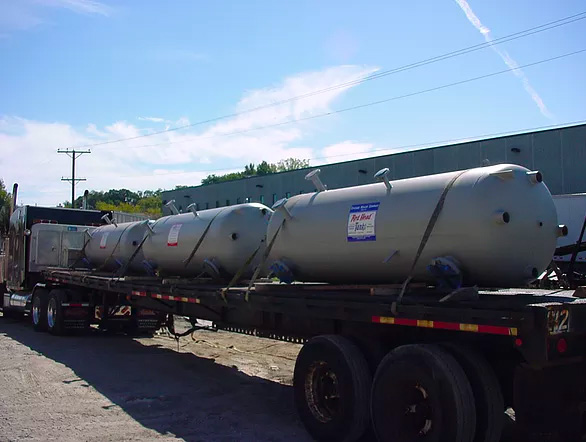
FRP Vinyl Ester vs Epoxy Resins
Polyester, vinyl ester, and epoxy compared for chemical-storage FRP: corrosion barrier, temperature limits, and resin-to-chemistry matching.
Read the guide →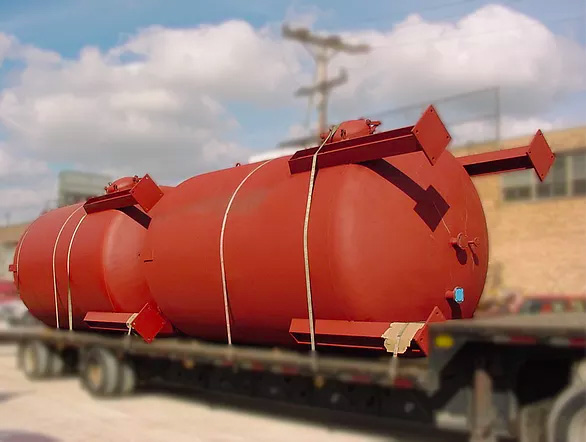
Dual-Laminate FRP Construction
Dual-laminate construction: a thermoplastic liner (PVC, CPVC, PP, PVDF, ECTFE) bonded to a structural FRP backing for severe chemical service.
Read the guide →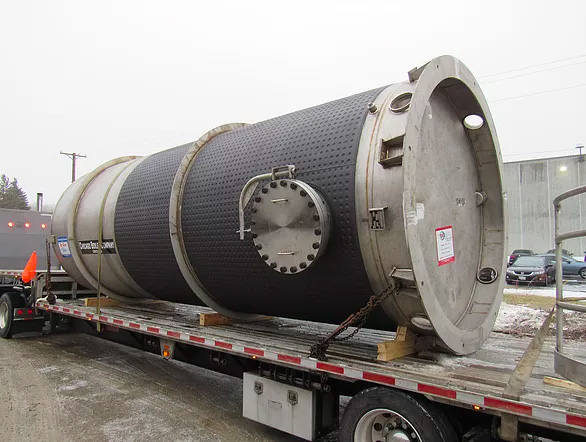
ASME Section X FRP Pressure Vessels
ASME BPVC Section X for fiber-reinforced plastic pressure vessels: design classes, qualification, and when an FRP vessel must be code-stamped.
Read the guide →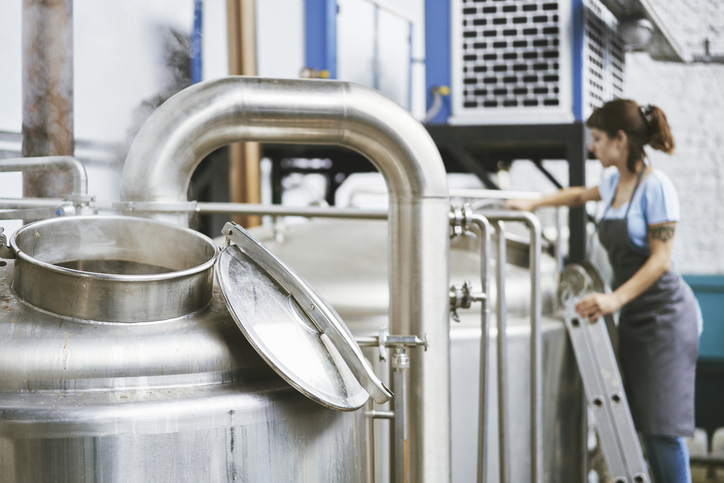
FRP vs Steel vs Polyethylene for Chemical Storage
FRP vs stainless and lined steel vs polyethylene for chemical storage: corrosion, temperature, pressure, and service-life trade-offs.
Read the guide →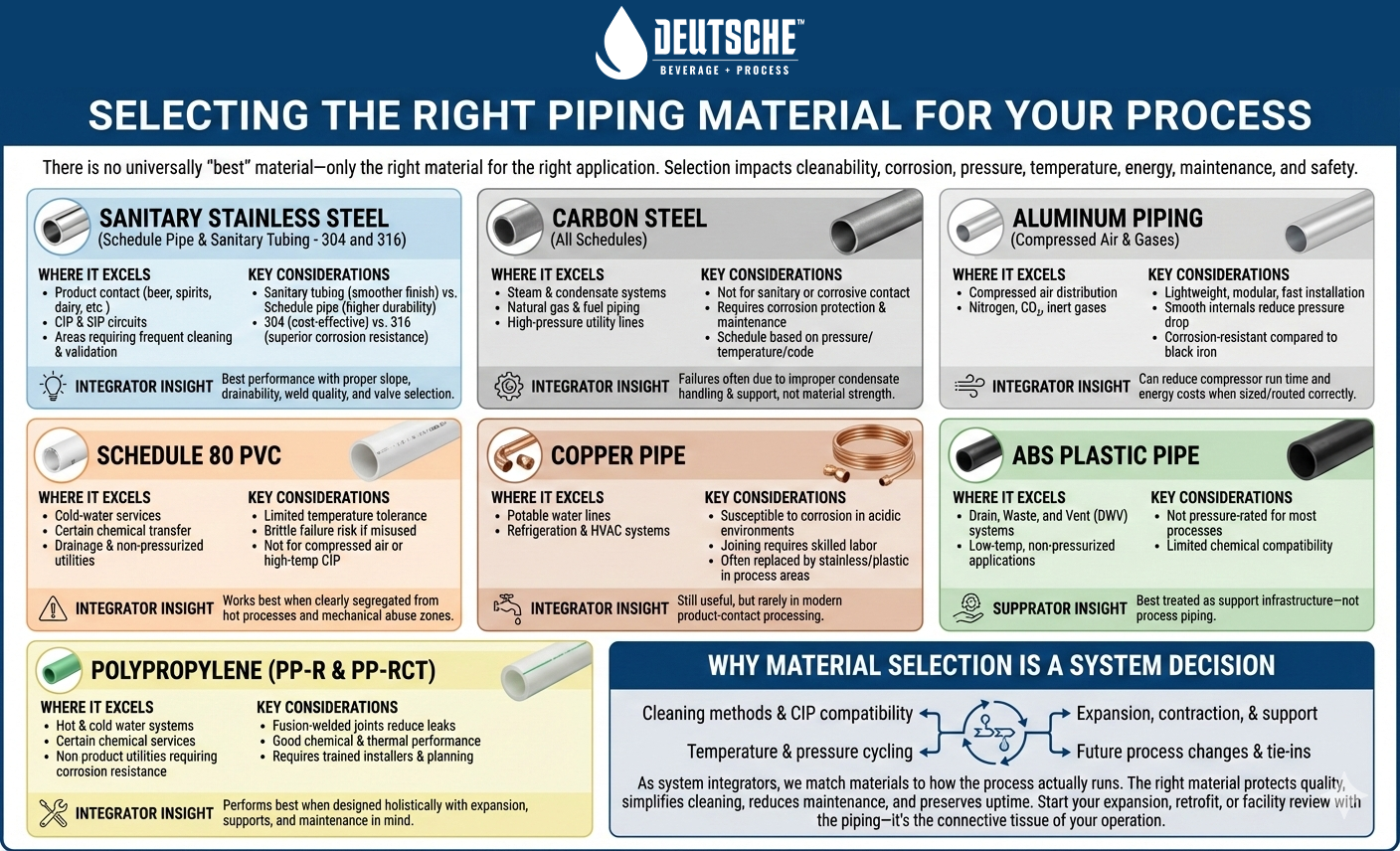
Choosing the Right Piping Materials
Selecting process piping for chemical service: stainless, FRP, CPVC/PVC, PVDF, and lined pipe matched to chemistry, temperature, and pressure.
Read the guide →Frequently Asked Questions
- When is FRP the right answer vs. stainless steel?
- FRP wins when the chemistry is too aggressive for even 316L (concentrated hydrochloric, sulfuric, bromine, certain chlorine-bearing solutions) or when a stainless tank's cost escalates past practical for the target volume. Stainless wins in high-temperature service (>200°F continuous), high-pressure service, sanitary applications, and smaller-volume equipment.
- What's the service life of an FRP tank?
- Properly-specified FRP tanks have documented 30–50 year service lives in aggressive chemical service. Key variables: resin system match to chemistry, installation quality, and environmental exposure (UV, freeze-thaw).
- How do I specify the resin system?
- Provide the chemical stored, maximum concentration, maximum operating temperature, and whether the service is continuous or intermittent. Our engineering team cross-references against published chemical-resistance data and fabricator field-experience lists to specify the resin system.
- Is FRP ASME-rated?
- FRP pressure vessels are designed and code-stamped to ASME Section X, Class I (filament-wound) and Class II (contact-molded). Atmospheric storage tanks follow ASTM D3299 and ASTM D4097. RTP-1 from ASME is the governing standard for low-pressure FRP.
Start a FRP & Fiberglass Tanks Project
Give us your process specs and we come back with a full engineering package, firm lead time, and a fixed price. Freight quoted separately to your ZIP.
Request a Custom Quote Call 866-418-1777