
Alaska Septic Tank Regulations — 18 AAC 72
Alaska Septic Tank Regulations
In Alaska, the rules for onsite wastewater disposal are under 18 AAC 72, overseen by ADEC. For homes, the tank must hold 1,000 gallons plus 250 gallons for each bedroom beyond three. For businesses, tank size is based on flow formulas. Tanks must be 100 feet away from the mean annual high water. Special engineering is needed for permafrost, deep freeze, and remote locations.
The Governing Framework
Alaska regulates onsite wastewater under:
- 18 AAC 72 — Alaska Administrative Code, Title 18 Environmental Conservation, Chapter 72 Wastewater Treatment and Disposal. The substantive Alaska rule.
- 18 AAC 72.035 — Conventional onsite systems.
- 18 AAC 72.275 — Disposal systems.
- 18 AAC 72.530 — Construction requirements for conventional wastewater systems.
- Alaska Department of Environmental Conservation (ADEC) — state-level administrator. ADEC Division of Water, Wastewater Program.
- Onsite Wastewater Systems Installation Manual (OWSIM) — ADEC's technical guidance document consolidating installation standards.
- Local coordination — in regulated municipal areas (Anchorage, Fairbanks North Star Borough, etc.), local environmental health departments may handle field permits under ADEC delegation.
Septic Tank Capacity
| Installation | Minimum Capacity |
|---|---|
| Private residence baseline (up to 3 BR) | 1,000 gallons |
| Private residence, each bedroom over 3 | +250 gallons per bedroom |
| 4 BR private residence | 1,250 gallons |
| 5 BR private residence | 1,500 gallons |
| Non-residential, design flow ≤ 750 gpd | 1,000 gallons |
| Non-residential, design flow 750–1,500 gpd | 1.5 × Q (where Q = daily design flow) |
| Non-residential, design flow > 1,500 gpd | 1,125 + 0.75 × Q |
Setback Distances
Key Alaska setbacks under 18 AAC 72:
- 100 feet — horizontal separation from mean annual high water level of a lake, river, stream, spring, or slough, OR from mean higher high water of coastal waters. Required setback for lift stations, holding tanks, septic tanks, soil absorption systems, seepage pits, pit privies, or other wastewater components.
- 50 feet — the baseline ground-surface setback from the nearest edge of various protected features (full table in 18 AAC 72).
- Additional setbacks for wells, property lines, structures, and public water supply sources
For tidal, estuarine, and coastal areas, the mean higher high water mark is used, while inland waters use the mean annual high water. Alaska's long coastline and focus on water quality require these strict distance rules.
Permafrost and Deep-Freeze Engineering
- Whether conventional buried systems are feasible or if above-ground or shallow-buried insulated systems are needed
- Seasonal freeze/thaw cycle effects on tank integrity and effluent lines
- Heat-tracing, insulation, and freeze-protection engineering
- Holding tanks with pump-and-haul arrangements in sites where soil-based disposal is not feasible
- Composting and waterless systems for remote bush locations
For detailed guidance on designing for permafrost, check ADEC's Onsite Wastewater Systems Installation Manual (OWSIM). Projects in permafrost areas need special engineering beyond the general 18 AAC 72 design rules.
Regional Considerations
- Southcentral (Anchorage, Mat-Su, Kenai): Highest population density. Anchorage largely on municipal sewer. Mat-Su Borough and Kenai Peninsula Borough extensive septic. Frozen ground and glacial soils drive design.
- Interior (Fairbanks, Delta Junction): Continental subarctic climate with deep cold and discontinuous permafrost. Careful thermal design required.
- Southeast (Juneau, Ketchikan, Sitka, Skagway): Maritime climate, heavy precipitation, steep terrain. Coastal setbacks and groundwater issues.
- Bush / rural Alaska: Remote villages often use composting or waterless systems, or community holding-tank arrangements. Permafrost and logistical challenges severely constrain conventional septic.
- North Slope (Prudhoe, Utqiagvik): Continuous permafrost. Conventional septic generally not feasible. Industrial and municipal installations use specialized engineering.
- Southwest (Dillingham, Bethel, Kodiak): Mixed maritime and tundra conditions. Coastal setbacks and flood considerations.
- Aleutians and coastal islands: Limited land, high water tables, severe weather. Specialized small-system engineering.
Permit Process
- Contact ADEC or your delegated local health authority. Determine jurisdictional authority for your specific location.
- Site evaluation. Soil profile, permafrost assessment, percolation, site restrictions.
- System design. Per 18 AAC 72 and OWSIM. For most installations a qualified engineer is involved; complex sites (permafrost, constrained soils) essentially require engineered design.
- Plan review. ADEC Engineering Support and Plan Review handles technical review.
- Permit issuance.
- Construction. By qualified installer.
- Inspection before cover.
- Certificate of completion.
Frequently Asked Questions
- Who regulates septic in Alaska?
- Alaska Department of Environmental Conservation (ADEC), Division of Water, Wastewater Program. In some regulated municipal areas (Anchorage, Mat-Su, Fairbanks North Star Borough), local environmental health departments handle field permits under ADEC delegation.
- What's the OWSIM?
- Onsite Wastewater Systems Installation Manual. ADEC's technical guidance document consolidating installation standards, design procedures, and construction requirements. Your designer will reference OWSIM alongside 18 AAC 72 regulatory text.
- Can you install conventional septic in permafrost?
- Generally no for continuous permafrost. Discontinuous permafrost is site-specific — sometimes feasible with specialized thermal engineering, often not. Common alternatives in permafrost zones include holding tanks with pump-and-haul, composting toilets, and waterless systems. Consult OWSIM and an engineer experienced with Alaska's specific subsurface conditions.
- What about bush-plane-accessible remote sites?
- Remote Alaska sites face significant logistical challenges. Polyethylene tanks are typically preferred over concrete because they can be flown in by small aircraft or boat to sites inaccessible by road. Norwesco, Snyder, and other rotomolded PE tanks with appropriate ratings are commonly used. Consult local supplier networks for shipping arrangements.
- Are polyethylene tanks accepted in Alaska?
- Yes, when meeting IAPMO/NSF listings and 18 AAC 72 construction requirements. Major OEM rotomolded polyethylene tanks work well in Alaska conditions and are often preferred for shipping logistics to remote sites. Verify specific model with your designer and ADEC.
- How do I handle seasonal freeze protection?
- Tank depth (below frost line), insulation, heat-tracing in vulnerable zones, and careful venting design. Seasonal cabins require specific low-flow freeze-protection engineering. Effluent lines and risers are particularly vulnerable. OWSIM includes freeze-protection guidance.
Source Citations
- 18 AAC 72 Wastewater Treatment and Disposal (ADEC PDF)
- Onsite Wastewater Systems Installation Manual (OWSIM)
- ADEC Engineering Support and Plan Review
- 18 AAC 72.035 Conventional Onsite Systems
- 18 AAC 72.530 Construction Requirements (Cornell LII)
- 18 AAC 72.275 Disposal Systems (Justia)
- ADEC 2022 Regulation Updates FAQ
Shop Septic Tanks for Alaska
OneSource stocks polyethylene septic tanks meeting Alaska construction requirements. Match capacity to your design flow per the rules summarized above. Tank + accessories + holding tank options below cover standard and alternative configurations. OneSource drop-ships from the OEM warehouse closest to your install address.
Plastic Septic Tanks
Full polyethylene septic tank catalog. Sizes from 300 to 1,500+ gallons for Alaska installations.
Browse Plastic Septic TanksIAPMO Approved Models
NSF/IAPMO listed tanks. Some counties and some installation types require this listing.
Browse IAPMO Approved ModelsSeptic Accessories
Risers, lids, baffles, filters, alarms, pumps, and install hardware.
Browse Septic AccessoriesHolding Tanks
Holding tanks for construction sites, recreational properties, and pump-and-haul installations.
Browse Holding TanksStoring chemicals in your Alaska tank?
Alaska's OSSF rules don't cover chemical-storage tanks. These are specified by the manufacturer. If you need a tank for sulfuric acid, bleach, fertilizer solution, or any of 300+ industrial chemicals, our Chemical Compatibility Database has all the construction details.
Agricultural Tank Regulations — Alaska DNR & ADEC
The Alaska Department of Natural Resources (DNR) Division of Agriculture and the Alaska Department of Environmental Conservation (ADEC) oversee agricultural tanks in Alaska under the Alaska Statutes (A.S.) and the Alaska Administrative Code (AAC):
- 11 AAC 34 — DNR Division of Agriculture rules; the limited commercial-ag framework that covers seed certification, plant-material inventory, and agribusiness registration in a state with very little row-crop acreage.
- 18 AAC 90 — ADEC Pesticide Control: applicator licensing, restricted-use pesticide (RUP) recordkeeping, bulk storage, and repackaging.
- A.S. 46.03 — Alaska environmental conservation statute (statutory authority over pollution, spills, and hazardous substances).
- 18 AAC 75 — Oil and Other Hazardous Substances Pollution Control, which pulls agricultural bulk fuel and fertilizer handling into the state spill-prevention framework wherever thresholds apply.
Alaska's agriculture is mainly in the Matanuska-Susitna Valley, Delta Junction/Tanana Valley, Kenai Peninsula, and subsistence gardens in the Interior and Southeast. Due to extreme seasons and remote logistics, bulk fertilizer and pesticides are delivered by barge or highway and stored in strong tanks with freeze-rated fittings. Ag retailers use secondary containment for 110% of the largest tank, with spill capture and ADEC spill-prevention plans. Permafrost stability is crucial, so tank foundations must prevent thaw settlement using special pilings and insulated gravel pads.
Oil & Gas Storage — AOGCC, TAPS, and North Slope Operations
Alaska is a major oil and gas producer with the toughest cold-weather tank-storage conditions. Operations are on the North Slope, Cook Inlet, and older fields like Swanson River and Beluga. Tank storage is regulated by:
- 20 AAC 25 — Alaska Oil and Gas Conservation Commission (AOGCC) rules; conservation of resource, pool spacing, well integrity, produced-water and crude-oil handling at the wellhead and production facility.
- 18 AAC 75 — ADEC Oil and Other Hazardous Substances Pollution Control: spill-prevention, control, and countermeasure; applies the state's strict response, containment, and reporting rules to every production, gathering, and terminal tank.
- 18 AAC 78 — ADEC Underground Storage Tanks: UST program for motor-fuel, heating-oil (above exemption), and certain regulated-substance tanks; includes the state's AST provisions in Subpart F for aboveground facilities.
- Trans-Alaska Pipeline System (TAPS) — 800-mile crude pipeline from Pump Station 1 (Prudhoe Bay) to Valdez Marine Terminal. Breakout tanks and relief storage along the right-of-way fall under federal PHMSA jurisdiction plus ADEC spill-prevention rules; Valdez Marine Terminal runs one of the largest crude-oil storage complexes in North America with full federal SPCC/FRP oversight alongside 18 AAC 75.
- Federal OCS — Beaufort and Chukchi Sea leasing administered by BOEM/BSEE outside state jurisdiction.
Alaska requires Oil Discharge Prevention and Contingency Plans (ODPCPs) under 18 AAC 75 for facilities above a certain size, stricter than federal SPCC. Operators must show financial responsibility, response ability, and update plans regularly. North Slope conditions require heat tracing, insulated jackets, special steel alloys, and inspections for ice and thermal changes.
Septic System Sizing — 18 AAC 72 & Arctic Constraints
ADEC regulates on-site wastewater under 18 AAC 72 (Wastewater Disposal). Residential design flow is 150 gpd per bedroom:
| Bedrooms | Minimum Septic Tank Capacity |
|---|---|
| 1–3 BR | 1,000 gallons |
| 4 BR | 1,250 gallons |
| 5 BR | 1,500 gallons |
| 6+ BR | Add 250 gallons per additional bedroom |
Alaska's septic design must consider Arctic conditions. Permafrost prevents typical soil-absorption systems, so alternatives like elevated mound systems, holding tanks, and engineered treatment plants are used. High groundwater, shallow bedrock, and deep frost require deep burial, insulation, and heat-trace risers. Freeze protection is standard for septic systems.
In many rural and Alaska Native villages, regular septic systems don't work. The Village Safe Water Program (ADEC, U.S. Indian Health Service, USDA Rural Development under A.S. 46.07) funds piped water and sewer systems. Tank storage often involves large fuel tanks for power plants and big water cisterns, following 18 AAC 80 Drinking Water Regulations.
Chemical Storage Secondary Containment & Spill Reporting
Federal SPCC (40 CFR 112) applies to 1,320 gallons of aboveground oil. Alaska has strict spill-prevention rules due to the Exxon Valdez incident and resource sensitivity:
- 18 AAC 75 Article 4 ODPCP — Oil Discharge Prevention and Contingency Plans for crude and refined-product operators above threshold; tighter than federal SPCC with financial-responsibility, response-capacity, and plan-approval requirements.
- 18 AAC 75 Article 3 Discharge Reporting — any oil discharge to water, or above 55 gallons to land, must be reported to ADEC immediately; lesser discharges to land have graduated reporting windows down to 10 gallons at 48 hours.
- A.S. 46.04 — Oil and Hazardous Substance Release Prevention and Response; strict, joint-and-several, retroactive liability analogous to federal CERCLA.
- NFPA 30 / 30A — adopted through State Fire Marshal and local fire-code enforcement for flammable and combustible liquids in storage and dispensing.
- 18 AAC 78 Subpart F — state AST provisions layered over NFPA for regulated-substance aboveground tanks.
Report federal-RQ releases to the National Response Center at 1-800-424-8802 and state releases to ADEC at 1-800-478-9300 (24-hour hotline).
Permit Pathways at a Glance
- Residential septic: ADEC or DEC-delegated borough under 18 AAC 72.
- Pesticide applicator license: ADEC under 18 AAC 90.
- Petroleum UST: ADEC under 18 AAC 78.
- Petroleum AST / regulated AST: ADEC under 18 AAC 78 Subpart F + NFPA 30/30A.
- Crude / refined-product operator ODPCP: ADEC under 18 AAC 75 Article 4.
- Upstream oil & gas: AOGCC under 20 AAC 25.
- SPCC > 1,320 gal oil aggregate: Federal SPCC plan plus state ODPCP.
- Village water/sewer: ADEC Village Safe Water Program under A.S. 46.07.
Current fees change; verify with ADEC, AOGCC, or State Fire Marshal before budgeting.
More Alaska FAQs
- How does permafrost change my tank foundation design?
- Permafrost — perennially frozen ground beneath a seasonally thawing active layer — prevents conventional slab-on-grade tank pads across most of the Interior, North Slope, and western Alaska. Standard practice is adfreeze pilings (steel pipe driven into permafrost, freezing in place), insulated gravel pads with thermosyphons to extract summer heat, or elevated steel-frame stands that keep the tank above the ground surface so thaw bulbs never form. Any heat-tracing, heating load, or warm-fluid service (crude oil, diesel day tanks) must be modeled for its thermal effect on the subgrade.
- What is an ODPCP and when do I need one?
- An Oil Discharge Prevention and Contingency Plan is required under 18 AAC 75 Article 4 for crude-oil and refined-product operators above threshold (details vary by facility type). The plan covers discharge prevention, response capacity, trained personnel, equipment staging, wildlife protection, and financial responsibility. ODPCPs must be approved by ADEC before operations begin and are renewed on a regular cycle; they sit alongside, and generally exceed, federal SPCC/FRP requirements.
- How fast must I report an oil spill in Alaska?
- Under 18 AAC 75.300 any discharge to water must be reported to ADEC immediately. Discharges to land above 55 gallons also require immediate reporting; 10-55 gallons has a 48-hour reporting window; releases inside secondary containment still require reporting if they exceed thresholds. Federal-RQ releases also go to NRC at 1-800-424-8802. The ADEC 24-hour hotline is 1-800-478-9300. Under-reporting or delayed reporting can compound A.S. 46.04 liability.
- Does the Village Safe Water Program cover my tank project?
- VSW is a grant/financing program under A.S. 46.07 for sanitation infrastructure in qualifying rural Alaska communities, typically administered jointly with IHS Sanitation Facilities Construction and USDA Rural Development. Tank components — bulk fuel ASTs for village power, potable-water cisterns, circulating-loop reservoirs — are often funded through VSW when they serve community water and sanitation. Private commercial installations do not qualify; confirm scope with ADEC Facility Construction and Operation.
- Who regulates heating-oil tanks at an Alaska home?
- Heating-oil tanks at 1- to 4-unit residential dwellings generally fall outside UST/AST regulated-tank scope but remain subject to A.S. 46.03 spill liability and NFPA 31 fire-code installation standards through the State Fire Marshal and local fire officials. Insurance-driven integrity programs are common given the harsh service environment. Any release triggers immediate ADEC reporting and cleanup obligations.
- How does TAPS affect my local tank project?
- The Trans-Alaska Pipeline System itself is regulated by federal PHMSA, but tanks, pump stations, and laydown yards along the right-of-way trigger ADEC 18 AAC 75 spill-prevention rules and borough land-use review. Valdez Marine Terminal, the TAPS southern terminus, operates under federal SPCC/FRP plus 18 AAC 75 ODPCP plus Coast Guard response coordination. Contractors working near TAPS assets coordinate with Alyeska Pipeline Service Company in addition to standard state permitting.
Septic Tanks That Meet Alaska Code
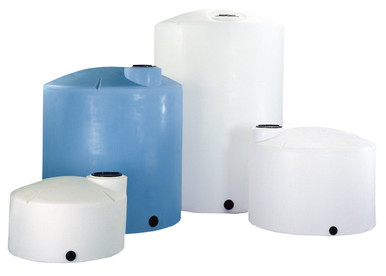
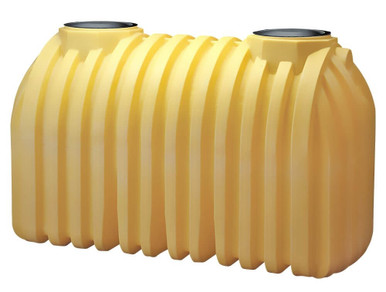
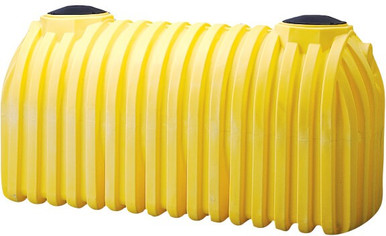
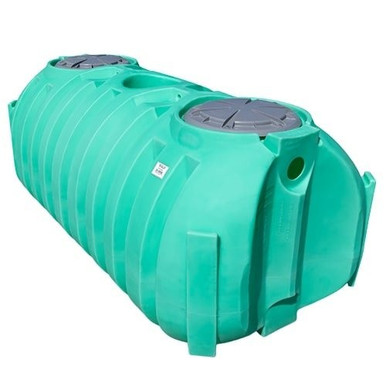
Alaska (18 AAC 72) sizes septic tanks by bedroom count or design flow, with residential systems typically starting at 1,000 gallons. These IAPMO PS 1–listed polyethylene tanks meet that capacity standard; your county or state permitting office confirms the final size.
Shop all IAPMO PS 1–listed septic tanks →
Meeting the construction standard is not the same as a permit — your county environmental health office issues the permit and makes the final determination. Call us with your permit number and we will confirm the exact tank spec before shipment, with freight quoted to your ZIP.
Chemical Storage & Secondary Containment in Alaska
Storing fuel, fertilizer, or process chemicals alongside your tank changes the rules. The federal Spill Prevention, Control, and Countermeasure rule (40 CFR Part 112) applies at 1,320 gallons of aggregate aboveground oil storage and requires secondary containment sized to at least 110% of your largest tank. Releases of hazardous substances above their federal reportable quantity (40 CFR 302.4) must be reported to the National Response Center at 1-800-424-8802.
Alaska layers its own spill reportable quantities and restricted-substance rules on top of that federal floor — confirm the current thresholds with your state environmental agency before specifying a chemical tank. Just as important, the polyethylene resin must be matched to the exact chemical, concentration, and specific gravity you intend to store; a tank rated for water is not automatically rated for acid, bleach, or fertilizer.
Last reviewed: May 2026 · sourced from Alaska administrative code
Regulations change on a rolling basis — confirm the current rule with your county or state agency before purchasing. Spot something out of date? Email us and we'll fix it.
Nearby states (Pacific) & full index: