
Arkansas Septic Tank Regulations — ADH Onsite Wastewater Rules
Arkansas Septic Tank Regulations
In Arkansas, the Department of Health's Onsite Wastewater Program oversees wastewater systems. They have rules for systems handling up to 5,000 gallons per day (gpd) underground and 2,000 gpd above ground. Homeowners are exempt from certain rules if their system is more than 200 feet from any property line. You need two permits (construction and operation) based on Act 402 of 1977.
The Governing Framework
Arkansas regulates onsite wastewater under:
- Arkansas State Board of Health Rules Pertaining to Onsite Wastewater Systems — the substantive rule governing all onsite wastewater treatment facilities (OSTF) in Arkansas.
- Arkansas Administrative Code Agency 007 (Arkansas Department of Health) Division 04 (Environmental Health Services).
- 007.04.93-005 — Alternative Systems Manual.
- Act 402 of 1977 — the enabling statute requiring licensed installer certification for anyone installing septic systems.
- Arkansas Department of Health (ADH) — Onsite Wastewater Program within the Public Health and Safety division.
ADH Jurisdictional Thresholds
| System Type | ADH Review Threshold |
|---|---|
| Subsurface treatment (conventional septic + drainfield, ATU, drip, etc.) | < 5,000 gallons per day |
| Surface discharging design | < 2,000 gallons per day |
| Above either threshold | Typically falls under DEQ NPDES or other larger-system permitting |
For homes and small businesses, the Arkansas Department of Health (ADH) issues permits. Larger systems for businesses, subdivisions, or industries may fall under the Arkansas Department of Energy and Environment (E&E, formerly ADEQ).
The Two-Permit Model — Construction + Operation
Arkansas is one of the states that explicitly requires two separate permits for new septic installations:
- Construction Permit — authorizes tank and dispersal system installation on the approved plan.
- Operation Permit — issued after successful final inspection, authorizes the system for use.
You can't legally use a system without both construction and operation permits. This two-permit system ensures a final inspection happens before the system is used.
The 200-Foot Homeowner Exemption
Arkansas offers a special exemption for homeowners: if your sewage system is more than 200 feet from any property line, you don't need a licensed installer for a single home.
If your system is not within the 200-foot exemption, you need a licensed installer certified under Act 402 of 1977. The installer must pass an exam given by the ADH.
System Design Standards
Standard onsite wastewater system components in Arkansas:
- Septic tank sized per the residential capacity schedule
- Absorption trenches: individual trenches should not exceed 60 feet in length; maximum length under some configurations is 100 feet
- Trench dispersal in perforated pipe surrounded by gravel (or ADH-approved gravelless product)
- Alternative systems (mounds, drip, ATUs) per Alternative Systems Manual 007.04.93-005
Permit Process
- Contact ADH Onsite Wastewater Program or your county. ADH operates through local county health units.
- Site evaluation. Certified soil classifier or ADH environmental health specialist.
- Construction permit application. Submitted to ADH with design documentation.
- Construction permit issuance. Timeline varies; fees typical range $200–$500.
- Act 402 licensed installer construction (unless 200-foot homeowner exemption applies).
- Final inspection. ADH inspects before backfill.
- Operation permit issuance. Authorizes system for use. Operation permit is kept with property records.
Regional Considerations
- Ozarks (Washington, Benton, Madison): Shallow soil over karst limestone. Sinkhole-zone engineering review. Alternative systems (mounds, ATUs) very common. The Northwest Arkansas growth corridor has intensive permitting activity.
- Ouachitas (Garland, Polk, Montgomery): Rocky terrain, shallow soil over sandstone/shale. Alternative systems common. Some parcels require rock excavation.
- Delta (Arkansas, Phillips, Lee): Mississippi alluvial floodplain. Clay soils, high water table, flood-zone considerations. Mounds and pressure dosing typical.
- Central Arkansas (Pulaski, Saline, Faulkner): Mixed urban/suburban/rural. Little Rock metro is largely on municipal sewer; perimeter parcels use septic.
- Hot Springs region: Unique geothermal considerations near Hot Springs National Park. Permit review coordinates with Park Service on nearby parcels.
- Timber counties (Union, Ouachita, Ashley): Rural residential and timber-industry support. 200-foot homeowner exemption applies to many large parcels.
Material Approvals
ADH accepts polyethylene tanks meeting state rule construction standards. Verify at order:
- IAPMO PS 1 or NSF 46 listing
- Ribbed polyethylene construction
- Effluent filter compatibility
- Two-compartment construction typical
- Alternative system configurations per 007.04.93-005 Alternative Systems Manual when applicable
Frequently Asked Questions
- What's the 200-foot homeowner exemption?
- If every part of your proposed sewage system (tank, pipes, dispersal field) is more than 200 feet from any property line (including road right-of-way), a homeowner installing their own system on their own single-residence property is exempt from certain installer-licensing requirements. Arkansas is one of few states with this provision. It reflects the state's rural character.
- What happens if I miss the operation permit?
- Legally, you cannot operate the system without it. In practice, ADH issues the operation permit immediately after successful final inspection. Missing the operation permit usually means the installation didn't pass inspection — the construction permit is not enough to start using the system.
- Act 402 of 1977 — is my installer actually licensed?
- Yes, licensed installers pass a state examination administered by ADH. Verify your installer's current license status before signing a contract. Unlicensed installation invalidates permits and creates real-estate-transfer liability.
- Can I exceed ADH's 5,000 gpd threshold?
- Yes, but you shift to Arkansas Department of Energy and Environment (E&E, formerly ADEQ) jurisdiction. Larger systems go through NPDES-style review if surface discharge is contemplated, or different subsurface-system review for larger subsurface designs.
- Are polyethylene tanks accepted in Arkansas?
- Yes. Major OEM rotomolded polyethylene tanks meeting IAPMO/NSF listings and state construction standards are accepted. Norwesco, Snyder, and Chem-Tainer all have Arkansas-compliant configurations.
Source Citations
- ADH Onsite Wastewater Program
- Arkansas State Board of Health Rules Pertaining to Onsite Wastewater Systems (PDF)
- Arkansas Rules and Regulations for Onsite Wastewater Systems 2014 Revision (PDF)
- ADH Installer Basics — Rules Training (PDF)
- AAC Agency 007 Division 04 Rule 007.04.93-005 Alternative Systems Manual
- 007.04.93 Ark Code R § 005 on Cornell LII
Shop Septic Tanks for Arkansas
OneSource stocks polyethylene septic tanks meeting Arkansas construction requirements. Match capacity to your design flow per the rules summarized above. Tank + accessories + holding tank options below cover standard and alternative configurations. OneSource drop-ships from the OEM warehouse closest to your install address.
Plastic Septic Tanks
Full polyethylene septic tank catalog. Sizes from 300 to 1,500+ gallons for Arkansas installations.
Browse Plastic Septic TanksIAPMO Approved Models
NSF/IAPMO listed tanks. Some counties and some installation types require this listing.
Browse IAPMO Approved ModelsSeptic Accessories
Risers, lids, baffles, filters, alarms, pumps, and install hardware.
Browse Septic AccessoriesHolding Tanks
Holding tanks for construction sites, recreational properties, and pump-and-haul installations.
Browse Holding TanksStoring chemicals in your Arkansas tank?
Arkansas's onsite sewage system rules don't cover chemical-storage tanks. These are specified by the manufacturer. If you need a tank for chemicals like sulfuric acid or bleach, our Chemical Compatibility Database provides full construction specifications.
Agricultural Tank Regulations — Arkansas Department of Agriculture (State Plant Board)
The Arkansas Department of Agriculture, through the State Plant Board, manages pesticide and fertilizer storage under two statutes and their rules.
- Arkansas Pesticide Control Act — A.C.A. section 2-16-401 et seq. The State Plant Board is authorized (under 2-16-406) to make regulations providing for the safe handling, transportation, storage, display, distribution, and disposal of pesticides and their containers.
- Arkansas Pesticide Use and Application Act — A.C.A. section 20-20-201 et seq. Under 20-20-206, the State Plant Board has broad rulemaking authority for pesticide use.
- Agency 209.02 Division 02 — Arkansas State Plant Board rules, including 209.02 Regulation No. 7 (Arkansas Pesticide Control Act Regulations), the Pesticide Enforcement Response Regulation, and Circular 11 covering the Pesticide Container and Containment Rule.
- Bulk sale: Under the rule, certain economic poisons may be sold by manufacturers or dealers in bulk with the label information required by the subchapter attached to the invoice.
Arkansas agriculture mainly involves rice, cotton, soybeans, corn, and poultry, especially in the Mississippi River Delta and Grand Prairie. Bulk fertilizers and pesticides are stored in large quantities. The Plant Board's rules follow federal guidelines (40 CFR 165 Subpart E) for pesticide repackaging, and industry best practice is to have secondary containment that holds 110% of the largest tank on an impervious pad.
Oil & Gas Produced Water — Arkansas Oil and Gas Commission
The Arkansas Oil and Gas Commission (AOGC) oversees exploration, production, transportation, and storage under Agency 178 of the Arkansas Administrative Code.
- General Rules and Regulations (AOGC Rule Book) — Covers well permits, casing, cementing, tank batteries, pit construction, and saltwater disposal.
- Rule B-17 (historically) and successors — Produced water disposal standards.
- Class II UIC — Disposal into permitted Class II injection wells. Arkansas has primacy under the Safe Drinking Water Act for Class II.
- Fayetteville Shale and Arkoma Basin — Principal production areas, with dry-gas play producing flowback and formation brine requiring containment.
Operators using frac tanks, brine tanks, and tank batteries must meet AOGC's containment, reporting, and disposal rules. Polyethylene tanks should be chosen based on the specific gravity and chemistry of the water, which can have 10,000 to 200,000 ppm TDS. For the latest AOGC rules and fees, contact the Commission directly.
Septic System Sizing Deep Dive
The Arkansas Department of Health manages onsite wastewater systems under the Rules and Regulations Pertaining to Onsite Wastewater Disposal Systems. Here's a typical capacity table used in practice.
| Bedrooms | Minimum Septic Tank Capacity |
|---|---|
| 1–3 BR | 1,000 gallons |
| 4 BR | 1,250 gallons |
| 5 BR | 1,500 gallons |
| Non-dwelling | Engineered design on peak daily flow |
Licensed designated representatives (DRs) do soil evaluations, and county health units issue permits. In Delta counties with heavy clay, pressure distribution or drip systems are often needed. In Ozark upland counties with thin soils over limestone, shallow or enhanced treatment systems are common. Check with your county health unit for current setbacks and Table 2 values before finalizing your site plan.
Chemical Storage Secondary Containment & Spill Reporting
Federal SPCC (40 CFR 112) applies at 1,320 gallons aggregate aboveground oil. Arkansas layers on:
- Arkansas Pollution Control and Ecology Commission Regulation No. 12 — Storage Tanks.
- Arkansas Division of Environmental Quality (DEQ) UST Program — Registration, technical standards, and release reporting.
- A.C.A. section 8-7-801 et seq. — Hazardous Waste Management Act spill reporting.
- DEQ 24-hour emergency line for spill notification.
Secondary containment for polyethylene chemical tanks should hold at least 110% of the largest tank's capacity. If you have more than 1,320 gallons of oil, you need a written SPCC plan with documented inspections. Contact DEQ for current fee schedules and any Arkansas-specific RQ thresholds.
Permit Pathways at a Glance
- Residential septic: County health unit under ADH Onsite Wastewater rules.
- Commercial pesticide dealer and applicator: State Plant Board licensing under A.C.A. 2-16-401 and 20-20-201.
- Fertilizer distributor: State Plant Board registration.
- Oil & gas produced water: AOGC authorization; Class II UIC for disposal.
- Petroleum UST: DEQ registration under Regulation No. 12.
- SPCC > 1,320 gal oil aggregate: Federal SPCC plan; DEQ spill reporting.
More Arkansas FAQs
- My rice operation has a 4,000-gallon UAN tank. Do I need State Plant Board containment?
- The Plant Board licenses dealers and applicators and registers products. On-farm use of UAN for the operator's own crop is typically not subject to the same containment rules as commercial retail sites. Above 1,320 gallons aggregate, check whether your product is classified as oil under 40 CFR 112 (most plant-nutrient solutions aren't). Build 110% containment regardless as good practice.
- Does the Fayetteville Shale slowdown affect my existing brine tank permit?
- Existing AOGC authorizations remain in effect subject to their terms. Operators should maintain annual reporting, inspect tanks per their plan, and coordinate with the AOGC on any well status changes (shut-in, plugging, transfer).
- What are the rules for broiler litter storage structures?
- Broiler litter is regulated by the Natural Resources Division (poultry litter management plans under Act 1059 of 2003 for nutrient-surplus watersheds). Storage structures must meet roof and containment standards specified by the Division. See Arkansas Department of Agriculture Natural Resources Division guidance.
- My Delta farm holds 6,000 gallons of Roundup. Is that regulated storage?
- Glyphosate is a registered pesticide, not a federal RQ hazardous substance. Above 1,320 gallons aggregate "oil" SPCC applies only if the product meets the oil definition (glyphosate formulations typically don't). State Plant Board rules apply to commercial storage — for on-farm use of purchased product, industry best practice is 110% containment and proper labeling.
- Is there a state-funded cleanup program?
- The Petroleum Storage Tank Trust Fund covers eligible petroleum UST releases. Non-petroleum chemical tanks are owner liability.
- Are there special septic rules for duck camps and hunting lodges?
- Seasonal-occupancy systems are sized on peak daily flow and designed on a case-by-case basis. County health units typically require engineered designs for non-residential hunting and fishing camps.
Septic Tanks That Meet Arkansas Code
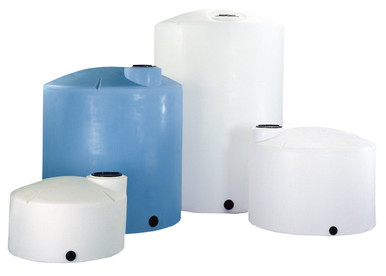
Arkansas (ADH Onsite Wastewater Rules, Agency 007 Div 04) sizes septic tanks by bedroom count or design flow, with residential systems typically starting at 1,000 gallons. These IAPMO PS 1–listed polyethylene tanks meet that capacity standard; your county or state permitting office confirms the final size.
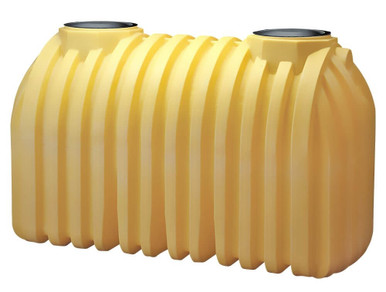
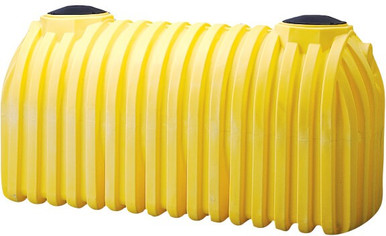
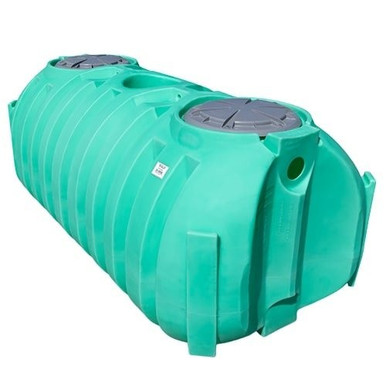
Shop all IAPMO PS 1–listed septic tanks →
Meeting the construction standard is not the same as a permit — your county environmental health office issues the permit and makes the final determination. Call us with your permit number and we will confirm the exact tank spec before shipment, with freight quoted to your ZIP.
Chemical Storage & Secondary Containment in Arkansas
Storing fuel, fertilizer, or process chemicals alongside your tank changes the rules. The federal Spill Prevention, Control, and Countermeasure rule (40 CFR Part 112) applies at 1,320 gallons of aggregate aboveground oil storage and requires secondary containment sized to at least 110% of your largest tank. Releases of hazardous substances above their federal reportable quantity (40 CFR 302.4) must be reported to the National Response Center at 1-800-424-8802.
Arkansas layers its own spill reportable quantities and restricted-substance rules on top of that federal floor — confirm the current thresholds with your state environmental agency before specifying a chemical tank. Just as important, the polyethylene resin must be matched to the exact chemical, concentration, and specific gravity you intend to store; a tank rated for water is not automatically rated for acid, bleach, or fertilizer.
Last reviewed: May 2026 · sourced from Arkansas administrative code
Regulations change on a rolling basis — confirm the current rule with your county or state agency before purchasing. Spot something out of date? Email us and we'll fix it.
Nearby states (West South Central) & full index: