
Delaware Septic Tank Regulations — 7 DE Admin Code 7101
Delaware Septic Tank Regulations
Delaware's rules for on-site wastewater systems are found in 7 DE Admin Code 7101. DNREC oversees these rules, which require a two-compartment tank with an effluent filter. The process involves a Class D soil scientist, a licensed designer, and a Class E installer. These rules apply from Wilmington suburbs to the Sussex County coast.
The Governing Framework
Delaware regulates onsite wastewater under:
- 7 DE Admin Code 7101 — Regulations Governing the Design, Installation and Operation of On-Site Wastewater Treatment and Disposal Systems. The substantive Delaware rule.
- 7 DE Admin Code 7101-5.0 — Small Systems (less than 2,500 gpd).
- Delaware Department of Natural Resources and Environmental Control (DNREC) — state-level administrator. DNREC Groundwater Discharges Section.
- Class D Licensed Soil Scientist — performs site evaluation.
- Licensed System Designer — designs the system and obtains permit.
- Class E System Contractor — installs the system.
Septic Tank Requirements
Delaware mandates specific tank construction that differs from many states:
| Requirement | Specification |
|---|---|
| Compartments | Two-compartment tank required for standard onsite systems |
| Effluent filter | Required on tank outlet |
| Flows < 500 gpd | Minimum working capacity: 1,000 gallons |
| Flows 500–2,500 gpd | Minimum working capacity: 1,500 gallons |
| Flows > 2,500 gpd | Per design calculations (larger-system track) |
The Three-Step Process
- Class D Licensed Soil Scientist site evaluation. Soil profile, percolation assessment, site restrictions per 7 DE Admin Code 7101.
- Licensed System Designer design and permit. Based on soil scientist's findings, designer prepares system plan and obtains DNREC permit.
- Class E Licensed System Contractor installation. Constructs the system per approved design.
Each step in the process must be done by a state-licensed professional. Temporary licenses might be available in some cases. Check the license status on DNREC's professional registry before hiring someone.
Setback Distances
Delaware setbacks vary by system size, soil conditions, and local factors. General framework covers:
- Private wells (typical baseline 50–100 feet depending on system type and soils)
- Surface water features
- Property lines and structures
- Wellhead Protection Areas (where applicable)
Specific distances are outlined in 7 DE Admin Code 7101. Your Licensed Designer will ensure the correct setbacks are applied. Coastal and inland Bay watershed areas might have extra requirements.
Regional Considerations
- New Castle County (Wilmington metro): Largely on municipal sewer. OWTS remaining on exurban fringe. Coastal-plain sandy soils.
- Kent County (Dover): Mix of sewer (Dover city) and rural septic. Agricultural parcels, varied soils.
- Sussex County (Rehoboth, Lewes, Ocean View, inland): Highest OWTS density. Sandy coastal-plain soils work well for conventional septic. Inland Bays (Rehoboth, Indian River, Little Assawoman) watershed concerns drive nitrogen-reduction attention on coastal and near-coastal parcels.
- Beach resort communities: Mix of municipal systems (ocean resorts) and OWTS (inland). Post-Hurricane Sandy floodplain elevations affect design.
- Agricultural Sussex County: Large-parcel agricultural operations common. Standard systems typical, with occasional commercial-scale installations for poultry and other ag facilities.
Inland Bays Watershed Considerations
Delaware's Inland Bays (Rehoboth Bay, Indian River Bay, Little Assawoman Bay) are special areas with strict rules about nutrient loading from wastewater systems. In these areas, new buildings and major system upgrades might need to meet additional standards. Nitrogen-reducing technology might be required for properties near the Bays. Check with your Licensed Designer to see if your property has extra requirements.
Frequently Asked Questions
- Do I really need three different licensed professionals?
- Yes for standard onsite systems. Class D soil scientist for site evaluation, Licensed Designer for permit/design, Class E contractor for install. Some firms employ professionals with multiple licenses, but the roles remain distinct. Budget $2,000-$5,000+ for professional services on top of system construction cost.
- Why the two-compartment + effluent filter mandate?
- Delaware prioritizes treatment effectiveness and downstream system protection. Two-compartment improves solids settling. Effluent filters further reduce solids reaching the absorption field, extending absorption-field life. The mandate is stricter than many states where these features are preferred but not required.
- Are polyethylene tanks accepted in Delaware?
- Yes, when meeting IAPMO/NSF listings, 7 DE Admin Code 7101 requirements, configured as two-compartment with effluent filter. Major OEM rotomolded polyethylene tanks from Norwesco, Snyder, and others include Delaware-compliant two-compartment models. Your Designer will specify accepted options.
- What happens if I need a larger system (>2,500 gpd)?
- Larger systems fall outside the "small systems" track (§7101-5.0) and require additional engineering review. Commercial and institutional installations typically require extended permitting and may invoke Groundwater Discharge Licenses.
- What's Delaware's Inland Bays program?
- State and federal partnership addressing water quality in Rehoboth, Indian River, and Little Assawoman Bays. OWTS in the watershed may have additional nutrient-reduction requirements. If your parcel is inland-Bay-watershed-affected, your Licensed Designer will specify the applicable standards.
Source Citations
Shop Septic Tanks for Delaware
OneSource stocks polyethylene septic tanks meeting Delaware construction requirements. Match capacity to your design flow per the rules summarized above. Tank + accessories + holding tank options below cover standard and alternative configurations. OneSource drop-ships from the OEM warehouse closest to your install address.
Plastic Septic Tanks
Full polyethylene septic tank catalog. Sizes from 300 to 1,500+ gallons for Delaware installations.
Browse Plastic Septic TanksIAPMO Approved Models
NSF/IAPMO listed tanks. Some counties and some installation types require this listing.
Browse IAPMO Approved ModelsSeptic Accessories
Risers, lids, baffles, filters, alarms, pumps, and install hardware.
Browse Septic AccessoriesHolding Tanks
Holding tanks for construction sites, recreational properties, and pump-and-haul installations.
Browse Holding TanksStoring chemicals in your Delaware tank?
Delaware's rules for on-site systems don't include chemical-storage tanks. These are specified by the manufacturer. If you need a tank for chemicals like sulfuric acid, bleach, or fertilizer solution, our Chemical Compatibility Database has all the construction details.
Agricultural Tank Regulations — DE Dept of Agriculture
The Delaware Department of Agriculture (DDA) regulates the storage of pesticides, fertilizers, and feed in bulk under the Delaware Code and Delaware Administrative Code.
- 3 DE Admin Code 501 — DDA Pesticide Rules and Regulations: applicator licensing, RUP recordkeeping, bulk storage, repackaging.
- 3 Del. C. Ch. 12 — statutory authority for the Delaware Pesticide Law.
- 3 Del. C. Ch. 22 — Commercial Fertilizer Law: registration, tonnage reporting, labeling.
- 7 Del. C. Ch. 60 / 7 DE Admin Code 5101 — Nutrient Management Law and regulations administered by the Delaware Nutrient Management Commission under DDA.
Delaware is small but has a lot of agriculture. Sussex County is a top broiler-producing area in the U.S., supplying companies like Perdue, Mountaire, and Allen Harim. It is part of the Delmarva poultry complex, which includes parts of Maryland and Virginia. Kent and New Castle counties focus on grain, vegetables, and dairy. Bulk storage of liquid fertilizers and pesticides must have secondary containment at 110% of the largest tank, with impermeable liners and inspection records. Poultry farms above a certain size need DNREC CAFO permits and must follow nutrient management plans. Sussex County's poultry industry drives much of Delaware's environmental regulations.
Petroleum Storage Tanks (UST & AST) — DNREC
The Delaware Department of Natural Resources and Environmental Control (DNREC) manages petroleum tank programs through its Division of Waste and Hazardous Substances, specifically the Tank Management Section.
- 7 DE Admin Code 1351 — Underground Storage Tank Regulations: design, installation, corrosion protection, spill/overfill prevention, release detection, operator training, closure, financial responsibility.
- 7 DE Admin Code 1352 — Aboveground Storage Tank Regulations: registration, construction, spill prevention, release reporting for petroleum AST facilities.
- 7 Del. C. Ch. 74 — statutory authority for the Jeffrey Davis Aboveground Storage Tank Act and Underground Storage Tank Act.
- Delaware Underground Petroleum Storage Tank Response Fund — state trust fund for UST corrective-action reimbursement for eligible facilities.
Delaware has both a mature UST rule (1351) and a state AST rule (1352) due to its petroleum industry. This includes the Delaware City Refinery, the Port of Wilmington, and major pipelines. DNREC registers petroleum tanks, inspects facilities, certifies operators, manages the state fund for UST cleanups, and provides 24-hour spill response. The Tank Management Section works with the Delaware Environmental Response Team (DERT) on major spills.
Septic Systems — 7 DE Admin Code 7101
DNREC's Division of Water regulates on-site wastewater systems under 7 DE Admin Code 7101. Residential design flow is 150 gpd per bedroom.
| Bedrooms | Minimum Septic Tank Capacity (7 DE Admin Code 7101) |
|---|---|
| 1–3 BR | 1,000 gallons |
| 4 BR | 1,250 gallons |
| 5 BR | 1,500 gallons |
| 6+ BR | Add 250 gallons per additional bedroom |
Delaware's soils are mostly sandy loams and sands, with high water tables in Sussex County and near the Inland Bays. The Inland Bays watershed has nitrogen-reduction requirements, and septic systems in Pollution Control Strategy areas must use advanced treatment or connect to central sewer if possible. Common alternative systems in Delaware include aerobic treatment units, drip dispersal, and pressure-dosed drainfields for areas with shallow water tables. Coastal zones need elevated drainfields and measures to prevent flotation in flood-prone areas.
Chemical Storage Secondary Containment & Spill Reporting
Federal SPCC (40 CFR 112) applies at 1,320 gallons aggregate aboveground oil. Delaware layers on:
- 7 DE Admin Code 1352 — AST containment and release reporting.
- 7 Del. C. Ch. 63 — Regulated Substances; release reporting and corrective action.
- 7 DE Admin Code 1375 — Hazardous Substance Cleanup Act Regulations.
- DNREC 24-hour spill response: 1-800-662-8802.
- 7 DE Admin Code 1302 — Regulations Governing Hazardous Waste (RCRA Subtitle C delegation).
Report federal-RQ releases to the NRC at 1-800-424-8802 and state releases to DNREC. Secondary containment at 110% of the largest tank is standard under SPCC and rule 1352. Delaware's small size means most petroleum or chemical facilities are close to tidal waters or the Inland Bays, so response to releases is quick.
Permit Pathways at a Glance
- Residential OWTDS: DNREC Ground Water Discharges Section under 7 DE Admin Code 7101.
- Nutrient management plan: Delaware Nutrient Management Commission (under DDA) per 7 DE Admin Code 5101.
- Pesticide applicator: DDA under 3 DE Admin Code 501.
- Poultry CAFO: DNREC under Delaware PDES general permit with NMP filed to the NMC.
- Petroleum UST: DNREC Tank Management under 7 DE Admin Code 1351 with state response fund.
- Petroleum AST: DNREC Tank Management under 7 DE Admin Code 1352.
- SPCC > 1,320 gal oil aggregate: Federal SPCC plan; DNREC state spill reporting.
- NPDES industrial stormwater: DNREC Surface Water Discharges Section (Delaware is a delegated NPDES state as DPDES).
- Delaware City Refinery / port facilities: DNREC multiple divisions coordinate (Air, Waste & Hazardous, Water).
Current fees change; verify with DNREC, DDA, or the Delaware Nutrient Management Commission before budgeting.
More Delaware FAQs
- How does the Inland Bays PCS affect my septic system?
- Pollution Control Strategy areas within the Inland Bays watershed impose nitrogen-reduction requirements on new and replacement septic. Advanced treatment units, drip dispersal, or central-sewer connection where available are typical compliance pathways. Check DNREC's Inland Bays PCS designation for your parcel before septic design.
- Do I need to register my poultry-house manure shed with the Nutrient Management Commission?
- Most Delaware poultry operations above small-flock threshold hold or are covered by a nutrient management plan filed with the Delaware Nutrient Management Commission. Bulk litter storage buildings, stormwater exclusion, and annual implementation reports are standard. Integrators typically provide template documentation that growers adapt.
- Does DE have its own AST rule beyond SPCC?
- Yes — 7 DE Admin Code 1352 is Delaware's state AST regulation. It imposes registration, construction, spill-prevention, and release-reporting requirements on petroleum AST facilities, supplementing federal SPCC. The presence of the Delaware City Refinery and port-area terminal volume drove the state's comprehensive AST rule.
- What is the Delaware City Refinery's regulatory framework?
- The refinery operates under a stack of DNREC permits spanning Air Quality (synthetic-minor/major source), Water (DPDES discharge), Waste & Hazardous (RCRA, UST/AST), and coastal-zone regulation. Federal SPCC, FRP (Facility Response Plan under 40 CFR 112.20), and Risk Management Plan under 40 CFR 68 all apply. The refinery is one of the most heavily regulated individual facilities in Delaware.
- Who runs my county septic permit?
- DNREC's Ground Water Discharges Section runs septic permitting statewide — Delaware does not delegate to county health departments the way Maryland or Virginia do. Contractor licensing is also DNREC-administered. One-stop-shop workflow with the state agency.
- Is Delaware a delegated NPDES state?
- Yes — Delaware Pollutant Discharge Elimination System (DPDES) permits are issued by DNREC Surface Water Discharges Section under EPA NPDES delegation. Industrial stormwater, municipal stormwater (MS4), and wastewater treatment discharges all route through DNREC DPDES.
Septic Tanks That Meet Delaware Code
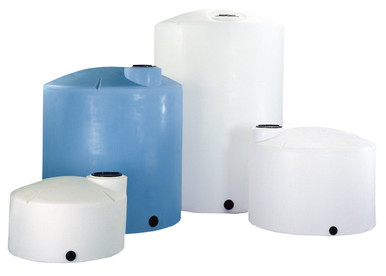
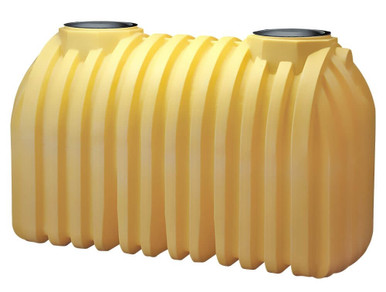
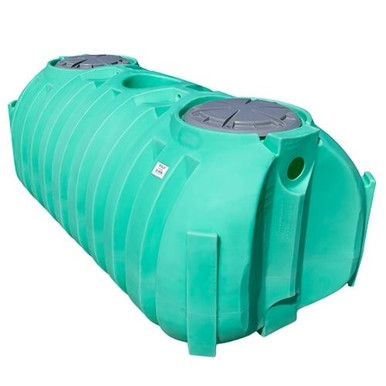
Delaware (7 DE Admin Code 7101) requires a two-compartment septic tank with an effluent filter. The IAPMO PS 1–listed two-compartment tanks below are built to that standard at or above 1,000 gallons.
Shop all IAPMO PS 1–listed septic tanks →
Meeting the construction standard is not the same as a permit — your county environmental health office issues the permit and makes the final determination. Call us with your permit number and we will confirm the exact tank spec before shipment, with freight quoted to your ZIP.
Chemical Storage & Secondary Containment in Delaware
Storing fuel, fertilizer, or process chemicals alongside your tank changes the rules. The federal Spill Prevention, Control, and Countermeasure rule (40 CFR Part 112) applies at 1,320 gallons of aggregate aboveground oil storage and requires secondary containment sized to at least 110% of your largest tank. Releases of hazardous substances above their federal reportable quantity (40 CFR 302.4) must be reported to the National Response Center at 1-800-424-8802.
Delaware layers its own spill reportable quantities and restricted-substance rules on top of that federal floor — confirm the current thresholds with your state environmental agency before specifying a chemical tank. Just as important, the polyethylene resin must be matched to the exact chemical, concentration, and specific gravity you intend to store; a tank rated for water is not automatically rated for acid, bleach, or fertilizer.
Last reviewed: May 2026 · sourced from Delaware administrative code
Regulations change on a rolling basis — confirm the current rule with your county or state agency before purchasing. Spot something out of date? Email us and we'll fix it.
Nearby states (South Atlantic) & full index: