
Hawaii Septic Tank Regulations — HAR Title 11 Chapter 62 + Act 125
Hawaii Septic Tank Regulations
Hawaii's onsite wastewater is managed under HAR Title 11 Chapter 62 and Act 125 (2017), which requires cesspool conversion. The DOH Wastewater Branch oversees this, with about 88,000 active cesspools statewide. Conversion deadlines are set for 2030, 2035, and 2050, depending on hazard priority, to protect the islands' groundwater and coral reefs.
The Governing Framework
Hawaii regulates onsite wastewater under:
- HAR Title 11, Chapter 62 — Wastewater Systems. The substantive rule covering public wastewater systems and Individual Wastewater Systems (IWS).
- HAR Title 11, Chapter 62, Subchapter 3 — Individual Wastewater Systems specific requirements.
- Act 125 (2017) — Session Laws of Hawaii. Requires conversion of all cesspools in Hawaii by 2050 with accelerated priority-based deadlines.
- Hawaii Department of Health (DOH), Wastewater Branch — state-level administrator. (808) 586-4400.
- County integrated wastewater management plans — particularly active at Hawaii County DEM (Department of Environmental Management).
Act 125 — The Cesspool Conversion Mandate
Hawaii Act 125 is one of the most consequential onsite wastewater laws in the United States. Passed in 2017, it:
- Prohibits installation of new cesspools. Effective at passage. New construction must use approved alternatives.
- Mandates conversion of ALL existing cesspools by January 1, 2050. No exceptions for continued cesspool operation past that date.
- Establishes priority-based accelerated deadlines. Using the University of Hawaii's 2022 hazard assessment and prioritization tool, cesspools are tiered by environmental hazard. High-priority cesspools must be converted by 2030; medium-priority by 2035; all others by 2050.
Approved alternatives to cesspools include conventional septic tanks with absorption systems, aerobic treatment units (ATUs), and advanced reuse systems. A polyethylene septic tank that meets HAR Chapter 62 standards is a simple replacement option for many properties.
Individual Wastewater Systems (IWS) — HAR 11-62 Subchapter 3
For properties beyond public wastewater service, Individual Wastewater Systems are permitted under Subchapter 3. Key constraints:
- Current rules allow up to two (2) dwelling units per IWS (may or may not be in same building)
- IWS deployed in remote areas and areas of low population density
- Design and construction per HAR 11-62 requirements — tank capacity, setbacks, absorption system
- DOH Wastewater Branch oversight and permitting
When replacing a cesspool with an IWS (usually a septic tank and absorption system), the new system must meet current HAR 11-62 standards. Older systems that don't conform can't just be upgraded; they must be fully compliant.
Cesspool Priority Levels — UH 2022 Assessment
The University of Hawaii's 2022 cesspool hazard assessment and prioritization tool tiered Hawaii's cesspools based on:
- Proximity to drinking-water sources (groundwater aquifers and wells)
- Proximity to recreational waters and coral-reef ecosystems
- Soil type and infiltration characteristics
- Depth to water table and bedrock
- Population density of surrounding area
| Priority Level | Conversion Deadline | Typical Characteristics |
|---|---|---|
| Priority 1 | 2030 | Near drinking water sources or sensitive recreational waters |
| Priority 2 | 2035 | Moderate environmental risk |
| Priority 3 | 2050 | Lower immediate risk but still required to convert |
Homeowners can find out their cesspool priority designation through DOH or UH resources. Deadlines for Priority 1 and 2 are coming up, with 2030 not far off.
Island-Specific Considerations
- Oahu (Honolulu County): Most densely populated. Large portions on central sewer. Remaining cesspools concentrated in older neighborhoods and windward/North Shore communities.
- Hawaii Island (Big Island, Hawaii County): The highest cesspool count of any island. Active Integrated Wastewater Management Plan at Hawaii County DEM. Volcanic terrain complicates conversion engineering.
- Maui County (Maui, Molokai, Lanai): Extensive rural cesspool inventory. Destination Maui and other local commentary highlight community concern about conversion cost.
- Kauai County: Mix of coastal and mountain installations. Coral-reef protection a high priority.
- Niihau: Limited public utility infrastructure; onsite systems are the norm.
Conversion Engineering Considerations
Converting a cesspool to a compliant septic + absorption system on a Hawaii parcel involves:
- Site evaluation of soil, slope, proximity to wells and property boundaries
- Septic tank installation (polyethylene tanks commonly used for ease of transport to island sites)
- Absorption system design compatible with volcanic soil permeability
- Possible need for alternative systems (ATU, media filter) on constrained parcels
- Coordination with county DEM integrated wastewater plans
- DOH Wastewater Branch permit
Conversion costs can vary a lot depending on the site. Most residential conversions cost between $15,000 and $50,000 or more, with higher costs for difficult sites or where alternative treatment is needed.
Frequently Asked Questions
- What happens if I don't convert my cesspool by the deadline?
- Act 125 requires conversion. Non-compliance exposes property owners to enforcement action by DOH and the state. Practical considerations also include property-sale implications — buyers increasingly scrutinize cesspool status, and a non-compliant system can complicate transactions even before the final 2050 deadline. Start planning early for priority-1 and priority-2 cesspools.
- How do I find my cesspool's priority level?
- The University of Hawaii 2022 hazard assessment identifies priority levels. DOH Wastewater Branch can provide information about your specific property. Start with DOH at (808) 586-4400 or the Wastewater Branch online resources.
- Are there financial assistance programs?
- Yes, various programs have been established to help homeowners with cesspool conversion costs. Programs evolve — check current availability through DOH, County Departments of Environmental Management, and wastewater clean-water advocacy organizations.
- Are polyethylene tanks accepted in Hawaii?
- Yes, when meeting IAPMO/NSF listings and HAR 11-62 construction requirements. Rotomolded polyethylene tanks are often preferred for Hawaii due to ease of transport to island sites and corrosion resistance in coastal environments. Major OEM tanks from Norwesco, Snyder, and others are commonly approved.
- What's the two-dwelling-unit limit for IWS?
- HAR 11-62 Subchapter 3 limits IWS to two dwelling units. For three-plus dwelling properties, a larger wastewater treatment system is required (and may fall under different permitting tracks). Plan for this constraint at property development.
- Do I need to convert immediately if I'm selling my property?
- Legal obligation follows the ownership transfer. Buyers increasingly require conversion or price adjustment reflecting conversion cost. Disclosure rules typically require identifying cesspool presence in sale transactions. Consult a Hawaii real-estate attorney for specifics of your situation.
Source Citations
Shop Septic Tanks for Hawaii
Hawaii effectively requires IAPMO/NSF listing for polyethylene septic tanks. Specify the IAPMO-approved models below. Match capacity to your design flow per Hawaii's rules summarized above. OneSource drop-ships from the OEM warehouse closest to your install address.
IAPMO Approved Septic Tanks
Required specification for most Hawaii installations. NSF/IAPMO listed polyethylene tanks.
Browse IAPMO Approved Septic TanksAll Plastic Septic Tanks
Full catalog of polyethylene septic tanks. Confirm IAPMO listing with your chosen model.
Browse All Plastic Septic TanksSeptic Accessories
Risers, lids, inlet/outlet baffles, effluent filters, alarms, pumps.
Browse Septic AccessoriesMulti-Use Tanks
Dual-use tanks for combined septic/cistern installations where local code permits.
Browse Multi-Use TanksStoring chemicals in your Hawaii tank?
Hawaii's OSSF rules don't cover chemical-storage tanks; these are specified by the manufacturer. If you need a tank for sulfuric acid, bleach, fertilizer solution, or any of 300+ industrial chemicals, our Chemical Compatibility Database has all the construction specifications.
Agricultural Tank Regulations — HDOA & HDOH
The Hawaii Department of Agriculture (HDOA) and the Hawaii Department of Health (HDOH) oversee agricultural tanks under the Hawaii Revised Statutes (HRS) and the Hawaii Administrative Rules (HAR).
- HAR 4-66 — HDOA Pesticide rules; applicator licensing, restricted-use pesticide (RUP) recordkeeping, bulk storage, repackaging.
- HRS Chapter 149A — Hawaii Pesticide Law (statutory authority).
- HAR 4-62 — HDOA Commercial Fertilizer Materials registration and labeling.
- HAR 11-23 and HAR 11-62 — HDOH Safe Drinking Water and Wastewater rules that overlay ag water supply, irrigation reservoir, and manure/septage handling.
Hawaii's agriculture focuses on seed-corn and crop research in Kauai and Oahu, macadamia and coffee on the Big Island, specialty crops on Maui and the Big Island, cattle on the Big Island, and aquaculture at NELHA and similar sites. Hawaii relies heavily on sole-source aquifers for drinking water, which requires strict tank siting and containment. Ag retailers handling bulk liquid fertilizer and pesticides must have secondary containment at 110% of the largest tank, with impermeable liners and spill-response plans. Salt-spray corrosion is a concern near the coast, pushing metal tanks to use protective coatings or materials like polyethylene.
Oil & Gas Storage — Petroleum UST Path
Hawaii doesn't produce oil or gas; all petroleum is imported to Honolulu Harbor, Kalaeloa, and other terminals, then distributed by barge and truck. Petroleum storage is regulated through specific guidelines.
- HAR 11-280.1 — HDOH Safe Drinking Water Branch UST rules: design, installation, corrosion protection, spill/overfill, release detection, operator training, closure, financial responsibility.
- HAR 11-281 — HDOH Aboveground Storage Tank rules; regulated AST framework covering design, containment, and release response.
- HRS Chapter 342L — Underground Storage Tanks statutory authority.
- NFPA 30 / 30A — adopted through State Fire Council and county fire codes for flammable and combustible liquids.
- Red Hill Bulk Fuel Storage Facility — the Navy bulk-fuel complex above the Pearl Harbor Aquifer, subject to federal (Navy, EPA Region 9, DoD) and state HDOH enforcement; the 2021-2022 Red Hill releases reshaped Hawaii's regulatory focus on tank integrity above sole-source aquifers and drove the HDOH administrative-order defueling process.
Honolulu's refining and fuel terminals hold the state's main bulk storage. Offshore federal OCS is not used for oil and gas due to the Pacific tectonic setting.
Septic System Sizing — HAR 11-62
HDOH regulates onsite wastewater under HAR 11-62. Residential design flow is 200 gpd per bedroom, higher than the continental norm of 150 gpd/bedroom, due to Hawaii's water-use patterns and aquifer protection.
| Bedrooms | Minimum Septic Tank Capacity |
|---|---|
| 1–3 BR | 1,200 gallons |
| 4 BR | 1,500 gallons |
| 5 BR | 1,900 gallons |
| 6+ BR | Add 350 gallons per additional bedroom |
Hawaii's septic design has unique constraints. Cesspools, which are single-pit disposal systems, were banned for new construction in 2016 and must be converted to septic or sewer by 2050 under Act 125 (2017). This affects about 83,000 cesspools, mainly in Hawaii County, Maui County, and rural Oahu. Conservation District siting (HAR 13-5) requires extra permits and setbacks, affecting many rural properties. Ocean-front setback rules require septic systems to be set back from the shoreline and elevated. Soil types vary, with mandatory perc tests needed.
Chemical Storage, Salt-Spray Corrosion & Spill Reporting
Federal SPCC (40 CFR 112) applies to 1,320 gallons of aggregate aboveground oil. Hawaii adds extra aquifer-protection and coastal-zone rules that are stricter than continental practices.
- HAR 11-451 — HDOH Hazard Evaluation and Emergency Response (HEER) Office; the state cleanup program analog to federal CERCLA for hazardous-substance releases.
- HRS Chapter 128D — Environmental Response Law; strict, joint-and-several, retroactive liability for hazardous-substance releases.
- HAR 11-451-6 — release-reporting requirements to HDOH HEER; spills above reportable quantities trigger immediate notification.
- NFPA 30 / 30A — adopted through State Fire Council and county fire codes for flammable and combustible liquids.
- Salt-spray corrosion — not a single rule but a service-condition reality: per ISO 9223 atmospheric corrosivity classification, Hawaii coastal parcels routinely exceed C4 (high) and can reach C5 (very high) within a few hundred meters of the shoreline. Steel tanks require hot-dip galvanizing plus multi-coat epoxy or polyurethane, stainless or polymer-lined fittings, and inspection cycles tightened beyond continental SPCC expectations. Polyethylene storage is often preferred for chemical service at coastal sites because it eliminates galvanic and atmospheric corrosion.
Report federal-RQ releases to the National Response Center at 1-800-424-8802; report state releases to HDOH HEER at 808-586-4249 (Oahu) or find neighbor-island HEER numbers on the HDOH website.
Permit Pathways at a Glance
- Residential septic: HDOH Wastewater Branch under HAR 11-62.
- Cesspool conversion: HDOH under Act 125 / HRS Chapter 342D; 2050 deadline.
- Pesticide applicator license: HDOA under HAR 4-66.
- Fertilizer registration: HDOA under HAR 4-62.
- Petroleum UST: HDOH Safe Drinking Water Branch under HAR 11-280.1.
- Petroleum/chemical AST: HDOH under HAR 11-281 + federal SPCC + NFPA 30/30A.
- Conservation District / SMA: DLNR and county planning under HAR 13-5 and HRS 205A.
- Release investigation / cleanup: HDOH HEER under HAR 11-451.
Current fees change; verify with HDOH, HDOA, DLNR, or State Fire Council before budgeting.
More Hawaii FAQs
- What is the cesspool conversion mandate and when does it affect me?
- Act 125 (2017), codified at HRS Chapter 342D, bans new cesspool construction and requires conversion of all existing cesspools to septic, aerobic treatment, or sewer by 2050. HDOH administers the program with county cooperation; tax credits are available for qualifying early conversions. Approximately 83,000 cesspools remain statewide, concentrated in Hawaii County, Maui County, and rural Oahu. Any property transfer, remodel, or on-site wastewater work triggers cesspool-conversion scrutiny; budget tank, pump chamber, and dispersal-field replacement on any parcel with a legacy cesspool.
- How does Conservation District status affect my tank project?
- Under HAR 13-5, roughly 48% of Hawaii lands are classified Conservation District and require DLNR Board of Land and Natural Resources (BLNR) approval for most uses, including on-site wastewater and bulk-storage tanks. Conservation subzones (Protective, Limited, Resource, General, Special) set progressively more restrictive use regimes. Projects in Conservation District typically require a Conservation District Use Permit (CDUP) or Conservation District Use Application (CDUA) before any grading or tank installation. Timelines run months.
- What is the Special Management Area and how does it overlay the coast?
- HRS Chapter 205A established the Special Management Area (SMA) along all shoreline corridors, administered by the four counties. SMA permits are required for most construction, grading, and bulk-storage installation within the SMA; shoreline setback determinations (county-specific, typically 40-150 feet from the certified shoreline) govern where tanks, dispersal fields, and secondary containment can sit. Elevated tanks with anti-flotation ballast are standard on vulnerable parcels.
- Why do metal tanks fail faster on Hawaii coasts?
- Hawaii coastal atmospheric corrosivity routinely exceeds ISO 9223 Class C4 (high) and can reach C5 (very high) within a few hundred meters of breaking surf. Uncoated or single-coat steel can exhibit 10-20x continental corrosion rates; fasteners, gauges, vents, and fittings corrode first and fail first. Best practice is hot-dip galvanizing plus two-coat epoxy/polyurethane, stainless or polymer-lined hardware, polyethylene construction where service chemistry allows, and inspection cycles tightened relative to federal SPCC expectations.
- What happened at Red Hill and how does it affect my permit?
- The Navy Red Hill Bulk Fuel Storage Facility sits above the Pearl Harbor sole-source aquifer. Fuel releases in 2021-2022 contaminated Navy drinking-water wells and catalyzed HDOH administrative orders, federal defueling, and closure. The regulatory aftermath has tightened HDOH and EPA scrutiny on any above-aquifer tank storage statewide; expect more conservative siting, double-wall construction, interstitial monitoring, and enhanced release-detection requirements on any project near or above mapped sole-source aquifers.
- How fast must I report a release in Hawaii?
- Under HAR 11-451 any release of a hazardous substance above reportable quantity to soil, water, or air must be reported to HDOH HEER immediately; petroleum releases under HAR 11-280.1 and 11-281 also require prompt reporting. Federal-RQ releases also go to NRC at 1-800-424-8802. HDOH HEER 24-hour is 808-586-4249 (Oahu); neighbor-island contacts are published on the HDOH website. Hawaii's HRS 128D liability is strict, joint-and-several, and retroactive.
Septic Tanks That Meet Hawaii Code
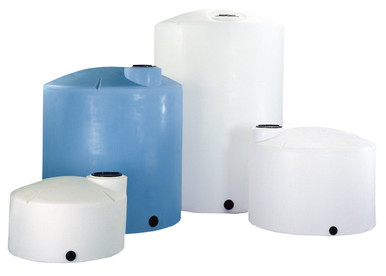
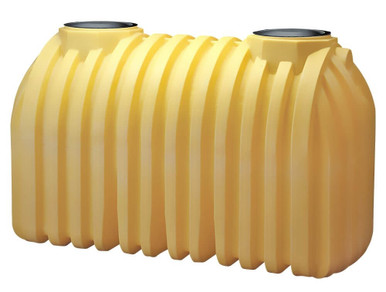
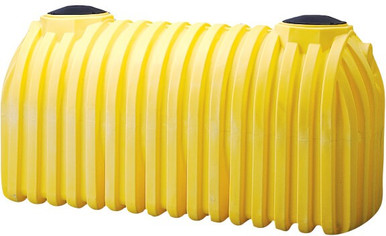
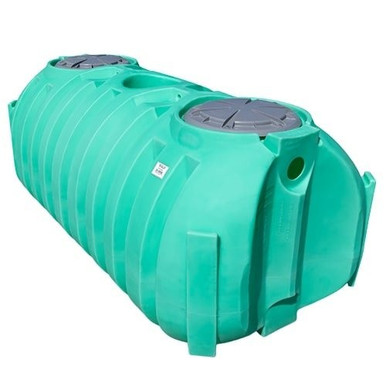
Hawaii (HAR 11-62) sizes septic tanks by bedroom count or design flow, with residential systems typically starting at 1,000 gallons. These IAPMO PS 1–listed polyethylene tanks meet that capacity standard; your county or state permitting office confirms the final size.
Shop all IAPMO PS 1–listed septic tanks →
Meeting the construction standard is not the same as a permit — your county environmental health office issues the permit and makes the final determination. Call us with your permit number and we will confirm the exact tank spec before shipment, with freight quoted to your ZIP.
Chemical Storage & Secondary Containment in Hawaii
Storing fuel, fertilizer, or process chemicals alongside your tank changes the rules. The federal Spill Prevention, Control, and Countermeasure rule (40 CFR Part 112) applies at 1,320 gallons of aggregate aboveground oil storage and requires secondary containment sized to at least 110% of your largest tank. Releases of hazardous substances above their federal reportable quantity (40 CFR 302.4) must be reported to the National Response Center at 1-800-424-8802.
Hawaii layers its own spill reportable quantities and restricted-substance rules on top of that federal floor — confirm the current thresholds with your state environmental agency before specifying a chemical tank. Just as important, the polyethylene resin must be matched to the exact chemical, concentration, and specific gravity you intend to store; a tank rated for water is not automatically rated for acid, bleach, or fertilizer.
Last reviewed: May 2026 · sourced from Hawaii administrative code
Regulations change on a rolling basis — confirm the current rule with your county or state agency before purchasing. Spot something out of date? Email us and we'll fix it.
Nearby states (Pacific) & full index: