
Idaho Septic Tank Regulations — IDAPA 58.01.03
Idaho Septic Tank Regulations
Idaho's Individual and Subsurface Sewage Disposal Rules, under IDAPA 58.01.03, are overseen by the DEQ. The minimum tank size is now 1,000 gallons, up from 750 gallons. In 2024–25, rules will change setbacks and installer bonding across the state, from Magic Valley to the Panhandle.
The Governing Framework
Idaho regulates onsite wastewater under:
- IDAPA 58.01.03 — Individual/Subsurface Sewage Disposal Rules and Rules for Cleaning of Septic Tanks. The substantive rule covering design, construction, siting, installer registration, and pumping-contractor licensing.
- IDAPA 58.01.03.007 — Septic Tanks Design and Construction Standards.
- Idaho Department of Environmental Quality (DEQ) — state-level rule administrator.
- Public health districts — Idaho's 7 regional public health districts handle field permits under DEQ oversight.
Septic Tank Capacity — IDAPA 58.01.03.007
| Bedrooms | Minimum Capacity |
|---|---|
| 1–2 bedrooms | 900 gallons |
| 3–4 bedrooms | 1,000 gallons (new floor) |
| Each additional bedroom above 4 | +250 gallons |
The new minimum tank size of 1,000 gallons, increased from 750 gallons, is based on research about how solids accumulate and how modern fixtures use water. Systems installed under old rules are allowed to stay, but new systems must meet the current minimum.
Setback Revisions — The Case-by-Case Approach
The 2024–25 rule update allows Idaho to determine setback distances based on site conditions instead of fixed distances. Here are the main changes:
- The previously undocumented 300-foot surface-water setback was removed
- Revised setbacks reflect updated technical understanding of nutrient movement and soil attenuation
- Technical Guidance Committee review supports parcel-specific determinations
- Some setbacks (wells, water lines) retain fixed minimums
To find out the specific setback distances for your property, contact your regional public health district. The new rules give reviewers more flexibility but also require them to justify their decisions based on site conditions.
Permit Process
- Contact your public health district. Idaho's 7 health districts cover all counties (Panhandle, North Central, Southwest, Central, South Central, Southeastern, Eastern Idaho).
- Site evaluation. Per IDAPA 58.01.03 protocols.
- System design submission. Plot plan, soil results, tank + absorption field sizing.
- Installation permit. Health district issues. Fees vary by district.
- Registered installer construction. Per 2024–25 rules, installers must maintain state-required bond (increased under the rule overhaul).
- Inspection before backfill. Health district inspects.
Regional Considerations
- Treasure Valley (Boise, Meridian, Nampa): Largely on municipal sewer in urban areas. Expanding sewer reduces septic footprint but rural-fringe parcels still use onsite systems.
- Magic Valley (Twin Falls, Jerome): Lava rock and shallow soil in some areas. Standard systems in deep-soil areas; alternative systems in rocky parcels.
- Panhandle (Coeur d'Alene, Sandpoint, Bonners Ferry): Deep forest soil in many areas, glacial till in others. Lake-shore setbacks (Coeur d'Alene, Pend Oreille, Priest Lake) are especially strict.
- Teton Valley / Driggs: Mountain resort area with seasonal occupancy. Deep frost-line requirements (48+ inches).
- Central mountains (Stanley, Ketchum): Extreme winter conditions, high elevation, shallow soil over bedrock in many locations. Mound systems and pressure dosing common.
- Snake River Plain: Deep basalt under variable-depth soil. Percolation highly variable — soil evaluation is critical.
Frequently Asked Questions
- Does the new 1,000-gallon minimum apply to my existing tank?
- No. Existing tanks installed under prior rules are grandfathered. The new minimum applies to new installations and to replacements/upgrades of failed systems. If you're replacing a failing 750-gallon tank, the new installation must meet the 1,000-gallon minimum.
- What's the installer bond requirement?
- Under the 2024-25 overhaul, installer bonds increased from the previous minimum. Exact amounts are specified in the revised rule — contact your health district or DEQ for current bonding requirements. Verify your installer is currently bonded before contracting.
- Do I have case-by-case setbacks or fixed setbacks?
- Depends on the setback type. Some (wells, water supply lines) retain fixed minimums. Others (surface water, certain features) are case-by-case under the revised rule. Your health district will specify which apply.
- Does Idaho accept polyethylene tanks?
- Yes. Major OEM rotomolded polyethylene tanks meeting IAPMO/NSF listings and IDAPA 58.01.03.007 construction standards qualify. Your health district maintains an approved-product list.
Source Citations
Shop Septic Tanks for Idaho
OneSource stocks polyethylene septic tanks meeting Idaho construction requirements. Match capacity to your design flow per the rules summarized above. Tank + accessories + holding tank options below cover standard and alternative configurations. OneSource drop-ships from the OEM warehouse closest to your install address.
Plastic Septic Tanks
Full polyethylene septic tank catalog. Sizes from 300 to 1,500+ gallons for Idaho installations.
Browse Plastic Septic TanksIAPMO Approved Models
NSF/IAPMO listed tanks. Some counties and some installation types require this listing.
Browse IAPMO Approved ModelsSeptic Accessories
Risers, lids, baffles, filters, alarms, pumps, and install hardware.
Browse Septic AccessoriesHolding Tanks
Holding tanks for construction sites, recreational properties, and pump-and-haul installations.
Browse Holding TanksStoring chemicals in your Idaho tank?
Idaho's OSSF rules do not apply to chemical-storage tanks. These are specified by the manufacturer. If you need a tank for sulfuric acid, bleach, fertilizer solution, or any of 300+ industrial chemicals, our Chemical Compatibility Database has all the construction specifications you need.
Agricultural Tank Regulations — Idaho State Department of Agriculture (ISDA)
The Idaho State Department of Agriculture oversees pesticide, fertilizer, and chemigation bulk storage under Idaho Code Title 22, Chapter 23, with rules in the Idaho Administrative Procedure Act (IDAPA) Title 02.
- IDAPA 02.03.03 — ISDA Rules Governing Pesticide and Chemigation Use and Application, including bulk pesticide storage and containment.
- IDAPA 02.06.17 — Fertilizer and Soil and Plant Amendment rules.
- Idaho Code 22-23 — Idaho Pesticide Law (statutory authority).
- Idaho Code 22-603 — Commercial Fertilizer Law.
Idaho's agriculture is strong, with irrigated crops like potatoes, sugar beets, and corn in the Snake River Plain. The Palouse grows wheat and barley, while the Lewiston-Clarkston basin has fruit and grapes. Facilities with bulk liquid fertilizer and pesticide storage must have secondary containment for 110% of the largest tank, with impermeable liners and inspection records. ISDA rules under IDAPA 02.03.03 require registration and construction standards. Chemigation is regulated with required anti-pollution devices and permits. Anhydrous ammonia storage follows ANSI K61.1 standards, with significant use in the Magic Valley and eastern Idaho.
Oil, Gas & Geothermal — Idaho Department of Lands (IDL)
Idaho's oil and gas sector is small compared to Wyoming or North Dakota. The Idaho Oil and Gas Conservation Commission, part of the Idaho Department of Lands, regulates production in the Payette Basin under IDAPA 20.07.02 and Idaho Code 47-315.
- IDAPA 20.07.02 — Rules Governing Conservation of Crude Oil and Natural Gas in the State of Idaho: pits, tanks, spills, and closure.
- Idaho Code 47-315 — Oil and Gas Conservation Act.
- IDAPA 20.07.01 — Geothermal rules (relevant to southeastern Idaho geothermal developments).
Because Idaho's oilfield is small, most tank storage regulations focus on petroleum UST, SPCC, and agricultural programs rather than water infrastructure. Operators in the Payette Basin must follow rules for pit-lining, tank-containment, and spill-reporting under IDAPA 20.07.02. These operations are small compared to the petroleum retail and agricultural sectors.
Petroleum USTs — Idaho DEQ
The Idaho Department of Environmental Quality regulates underground storage tanks under IDAPA 58.01.07, with authority from Idaho Code 39-8802.
- IDAPA 58.01.07 — Rules Regulating Underground Storage Tank Systems: design, installation, release detection, spill/overfill prevention, corrective action, closure.
- Idaho Code 39-8801 et seq. — Idaho Ground Water Quality Protection Act.
- Idaho Petroleum Storage Tank Fund — state reimbursement mechanism for eligible corrective-action costs.
Idaho UST owners must register with DEQ regional offices, pay annual fees, and maintain 2018 federal rule upgrades like inspections and operator training. They must report suspected releases within 24 hours. The Eastern Snake River Plain's sole-source aquifer status requires more frequent inspections and reviews near wells. For ASTs with over 1,320 gallons of oil or 660 gallons in one container, federal SPCC rules apply, with DEQ handling spills.
Septic System Sizing Deep Dive
Idaho regulates subsurface sewage disposal through IDAPA 58.01.03, managed by the seven Public Health Districts. The minimum design flow is 100 gpd per bedroom.
| Bedrooms | Minimum Septic Tank Capacity |
|---|---|
| 1–3 BR | 1,000 gallons |
| 4 BR | 1,250 gallons |
| 5 BR | 1,500 gallons |
| 6+ BR | +250 gallons per additional bedroom |
Idaho's soils vary widely, from volcanic loess to rocky mountain profiles. IDAPA 58.01.03 requires a site evaluation, licensed installer, and permit. Alternative systems for poor percolation include aerobic units and sand filters. The Eastern Snake River Plain's aquifer status and nitrate areas require enhanced treatment in certain zones. Winter frost in eastern Idaho affects tank design and burial depth.
Chemical Storage Secondary Containment & Spill Reporting
Federal SPCC (40 CFR 112) applies at 1,320 gallons aggregate aboveground oil. Idaho layers on:
- Idaho Code 39-7101 et seq. — Idaho Environmental Protection and Health Act and related water-quality release authorities.
- IDAPA 58.01.02 — Water Quality Standards (release reporting, discharge prohibitions).
- IDAPA 58.01.05 — Hazardous waste management incorporating RCRA Subtitle C.
- Idaho Bureau of Homeland Security — EPCRA Tier II and State Emergency Response Commission.
Report spills to Idaho DEQ's 24-hour line and federal releases to the National Response Center at 1-800-424-8802. Oil and gas spills go to the Idaho Department of Lands. Secondary containment at 110% of the largest tank is standard, but ISDA may have stricter rules for pesticide facilities. For specific RQ thresholds different from 40 CFR 302.4, contact DEQ.
Permit Pathways at a Glance
- Residential OWTS: Public Health District under IDAPA 58.01.03.
- Fertilizer & pesticide registration: ISDA under Idaho Code 22-23 and IDAPA 02.03.03 / 02.06.17.
- Pesticide applicator license: ISDA under Idaho Pesticide Law.
- Chemigation permit: ISDA annual permit under IDAPA 02.03.03.
- Oil & gas: Idaho Department of Lands under IDAPA 20.07.02.
- Petroleum UST: Idaho DEQ under IDAPA 58.01.07.
- SPCC > 1,320 gal oil aggregate: Federal SPCC plan; state spill reporting to DEQ.
- IPDES industrial stormwater: Idaho DEQ (Idaho assumed NPDES authority as IPDES).
Current fees change; verify with ISDA, DEQ, or IDL before budgeting.
More Idaho FAQs
- Does Idaho require a chemigation permit for my center-pivot?
- If you inject fertilizer or pesticide through the pivot, yes — ISDA requires annual chemigation permits under IDAPA 02.03.03 with prescriptive anti-pollution device requirements (check valve, low-pressure drain, vacuum breaker, interlock). Wellhead protection is central to Idaho's sole-source aquifer strategy.
- How does sole-source aquifer designation affect tank siting?
- The Eastern Snake River Plain Aquifer is federally designated under the Safe Drinking Water Act. DEQ, Public Health Districts, and local source-water protection programs layer tighter siting, setback, and inspection requirements on tanks and OWTS in the ESRP recharge zone spanning the Snake River Plain.
- Is IPDES the same as federal NPDES?
- IPDES is Idaho's state-delegated NPDES program — Idaho DEQ assumed primacy from EPA Region 10 in 2018. Industrial stormwater, CAFOs, and process-wastewater permits run through DEQ under IDAPA 58.01.25.
- Who regulates a 2,000-gallon diesel tank at my remote logging operation?
- DEQ UST rules (IDAPA 58.01.07) cover regulated underground storage; ASTs above 1,320 aggregate aboveground oil trigger federal SPCC. Local fire marshal plan review applies regardless. Remote does not mean unregulated.
- Can I install my own septic at a rural parcel?
- No — IDAPA 58.01.03 requires licensed installer and Public Health District permit. Unpermitted installations create title defects and can trigger enforcement retrofit at sale.
Septic Tanks That Meet Idaho Code
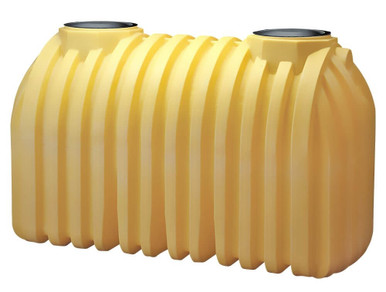
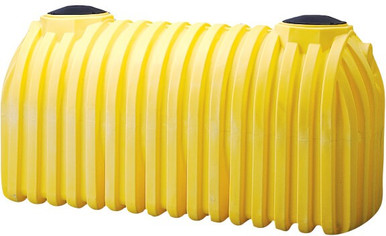
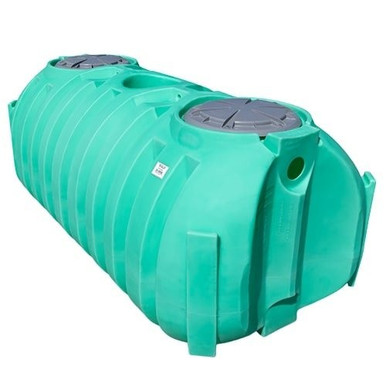
Idaho (IDAPA 58.01.03) sizes septic tanks by bedroom count or design flow, with residential systems typically starting at 1,000 gallons. These IAPMO PS 1–listed polyethylene tanks meet that capacity standard; your county or state permitting office confirms the final size.
Shop all IAPMO PS 1–listed septic tanks →
Meeting the construction standard is not the same as a permit — your county environmental health office issues the permit and makes the final determination. Call us with your permit number and we will confirm the exact tank spec before shipment, with freight quoted to your ZIP.
Chemical Storage & Secondary Containment in Idaho
Storing fuel, fertilizer, or process chemicals alongside your tank changes the rules. The federal Spill Prevention, Control, and Countermeasure rule (40 CFR Part 112) applies at 1,320 gallons of aggregate aboveground oil storage and requires secondary containment sized to at least 110% of your largest tank. Releases of hazardous substances above their federal reportable quantity (40 CFR 302.4) must be reported to the National Response Center at 1-800-424-8802.
Idaho layers its own spill reportable quantities and restricted-substance rules on top of that federal floor — confirm the current thresholds with your state environmental agency before specifying a chemical tank. Just as important, the polyethylene resin must be matched to the exact chemical, concentration, and specific gravity you intend to store; a tank rated for water is not automatically rated for acid, bleach, or fertilizer.
Last reviewed: May 2026 · sourced from Idaho administrative code
Regulations change on a rolling basis — confirm the current rule with your county or state agency before purchasing. Spot something out of date? Email us and we'll fix it.
Nearby states (Mountain) & full index: