
Illinois Septic Tank Regulations — 77 Ill. Adm. Code Part 905
Illinois Septic Tank Regulations
Illinois's Private Sewage Disposal Code under 77 Ill. Adm. Code Part 905 — IDPH (Illinois Department of Public Health) oversight, tank capacity scaled to design flow with multi-compartment triggers above 1,350 gpd, setback envelope 50/10/25 (well/property/drainage), and realities from Chicago suburbs to Mississippi River farmland.
The Governing Framework
Illinois regulates private sewage disposal under:
- 77 Ill. Adm. Code Part 905 — Private Sewage Disposal Code. The substantive Illinois rule.
- 77 Ill. Adm. Code 905.20 — General Requirements.
- 77 Ill. Adm. Code 905.40 — Septic Tanks.
- Illinois Department of Public Health (IDPH) — state-level administrator.
- County / local health departments — administer field permits under IDPH oversight.
- U.S. EPA Underground Injection Control (UIC) program — applies to large-capacity onsite systems exceeding 1,500 gpd (federal layer on top of IDPH).
Septic Tank Capacity — § 905.40
| Daily Flow | Minimum Capacity (below liquid level) |
|---|---|
| Flows ≤ 500 gpd | 750 gallons |
| Flows > 500 gpd | 1.5 × estimated daily sewage flow |
| Flows > 1,350 gpd | Two or more tanks in series, OR a multi-compartment tank |
| Flows > 1,500 gpd | May additionally classify as "large-capacity" under U.S. EPA UIC (federal layer) |
The 750-Gallon Floor — Lower Than Most States
Illinois's 750-gallon minimum for flows under 500 gpd is lower than most states' 1,000-gallon floor. For small residential loads (typically 1–2 bedroom cottages or small additions), this enables cost-effective installation at capacities matched to actual need. Larger households exceed 500 gpd and scale through the 1.5× flow formula.
Setback Distances
| Feature | Minimum Distance |
|---|---|
| Potable well | 50 feet |
| Property line | 10 feet |
| Drainage ditch | 25 feet |
The 50-foot potable well setback is on the lower end among states — reflecting a well-regulated well construction code (Illinois regulates private water well construction stringently under separate rules). The 10-foot property line setback is comparable to most states.
EPA UIC Classification — Large-Capacity Systems
Systems designed to receive more than 1,500 gallons per day may be classified as large-capacity septic systems under the U.S. EPA Underground Injection Control (UIC) program. This federal layer adds:
- UIC inventory registration requirements
- Additional design and operational standards
- Potential prohibition on installation in certain groundwater-sensitive areas
- Enforcement authority overlap between EPA and IDPH
Large-capacity UIC applies nationally wherever qualifying installations occur. If your Illinois installation approaches the 1,500 gpd threshold, coordinate with IDPH and EPA Region 5 at design time.
Regional Considerations
- Chicago Metro (Cook, DuPage, Lake, Kane, Will, McHenry): Heavily sewered. Remaining septic on exurban fringe and estate parcels. Moraine topography and glacial soils.
- Collar counties and suburbia: Mix of sewer and septic. Shoreland considerations near Lake Michigan and inland lakes.
- Central Illinois (Springfield, Bloomington, Champaign): Agricultural and small-town. Standard systems typical. Good-draining prairie soils favor absorption fields.
- Southern Illinois (Carbondale, Mount Vernon): Mix of forest and farm. Shawnee National Forest and Ohio River influences. Variable soils.
- Mississippi River towns: Floodplain considerations, alluvial soils near the river.
- Rockford / Northern IL: Urban-fringe and rural. Glacial-till soils.
- Kankakee River / I-57 corridor: Agricultural with scattered residential. Sandy and silty soils, generally good drainage.
Climate Considerations
Illinois's humid continental climate brings moderate frost depth (typically 3–4 feet in northern Illinois, less in the south) and occasional severe winters. Standard design considerations:
- Frost depth impacts tank and line burial depth
- Spring thaw and heavy rain events can saturate absorption fields — site selection considers high-water-table periods
- Summer droughts can stress marginal systems; tank sizing margin helps
Permit Process
- Contact your county or local health department. Illinois permits are administered locally under IDPH standards.
- Soil and site evaluation.
- System design. Per 77 Ill. Adm. Code Part 905.
- Permit application. County health department.
- Licensed contractor construction. Illinois Plumbing Authority certifies plumbing contractors; septic contractor licensing varies by county.
- Inspection before cover. Local health inspector.
- Certificate of completion.
Frequently Asked Questions
- Why is Illinois's minimum tank so much smaller than neighboring states?
- 77 Ill. Adm. Code Part 905 establishes a flow-based minimum (750 gal for ≤500 gpd) rather than a fixed floor across all residential sizes. Small-occupancy installations benefit from matched sizing. Larger residences quickly exceed 500 gpd and scale into the 1.5× formula, effectively bringing Illinois installations to 1,000+ gallons for typical 3+ bedroom homes.
- When do I need multiple tanks or multi-compartment?
- When total flow exceeds 1,350 gpd. Two or more tanks in series OR a single multi-compartment tank. The first tank or first compartment must hold 1/2 to 2/3 of total required capacity. This applies most often to larger commercial, institutional, and high-occupancy installations.
- What's the EPA UIC angle?
- Above 1,500 gpd, a system may be classified as a "large-capacity septic system" under federal UIC rules. Inventory registration, additional design standards, and enforcement overlap with EPA Region 5 apply. This is a federal layer beyond IDPH. Coordinate with both agencies for qualifying installations.
- Are polyethylene tanks accepted in Illinois?
- Yes, when meeting IAPMO/NSF listings and 77 Ill. Adm. Code 905.40 construction requirements. Major OEM rotomolded polyethylene tanks from Norwesco, Snyder, and others are commonly approved. Your designer and local health department will specify accepted models.
- Does Chicago's Metropolitan Water Reclamation District affect me?
- MWRD handles public sewer in much of the metro area — if you're in MWRD service territory, septic is typically not an option because sewer is available. On MWRD fringe and in collar counties beyond MWRD, 77 Ill. Adm. Code Part 905 controls private septic design.
Source Citations
Shop Septic Tanks for Illinois
OneSource stocks polyethylene septic tanks meeting Illinois construction requirements. Match capacity to your design flow per the rules summarized above. Tank + accessories + holding tank options below cover standard and alternative configurations. OneSource drop-ships from the OEM warehouse closest to your install address.
Plastic Septic Tanks
Full polyethylene septic tank catalog. Sizes from 300 to 1,500+ gallons for Illinois installations.
Browse Plastic Septic TanksIAPMO Approved Models
NSF/IAPMO listed tanks. Some counties and some installation types require this listing.
Browse IAPMO Approved ModelsSeptic Accessories
Risers, lids, baffles, filters, alarms, pumps, and install hardware.
Browse Septic AccessoriesHolding Tanks
Holding tanks for construction sites, recreational properties, and pump-and-haul installations.
Browse Holding TanksStoring chemicals in your Illinois tank?
Illinois's OSSF rules don't cover chemical-storage tanks — those are specified at the manufacturer level. If you need a tank rated for sulfuric acid, bleach, fertilizer solution, or any of 300+ industrial chemicals, our Chemical Compatibility Database has the full system-of-construction specifications.
Agricultural Tank Regulations — Illinois Department of Agriculture
The Illinois Department of Agriculture (IDOA) administers pesticide, fertilizer, and bulk agricultural chemical rules under Title 8 of the Illinois Administrative Code, with statutory authority from the Illinois Pesticide Act (415 ILCS 60) and the Illinois Fertilizer Act (505 ILCS 80). Chapters that govern on-farm and ag-retail tank storage:
- 8 Ill. Adm. Code 255 — Agrichemical Facility rules, including secondary containment, operational area, loading-pad, and rinsate-recovery requirements for bulk pesticides and fertilizers.
- 8 Ill. Adm. Code 250 — Pesticide Act rules covering applicator licensing, RUP handling, and recordkeeping.
- 8 Ill. Adm. Code 255.40 through 255.60 — Secondary containment construction, freeboard, sealing, and inspection standards for agrichemical dealers.
- 505 ILCS 80 — Illinois Fertilizer Act, establishes IDOA registration and tonnage reporting duties.
Illinois is the nation's second-largest corn state, and its agrichemical-facility rules are among the more prescriptive in the Midwest. Any commercial dealer with bulk pesticide or fertilizer storage must build containment sized to hold 110% of the largest container (or 100% plus rainfall for uncovered containment), with impermeable liners, positive leak detection, and documented inspection logs. Loading pads must capture incidental spills and rinsate for reuse. On-farm storage in true "farm-use" configurations is generally exempt from the commercial agrichemical-facility rules but remains subject to SPCC for oil, EPCRA Tier II for hazardous substances, and the Illinois Environmental Protection Act.
Petroleum USTs & Heating Oil — Illinois EPA Bureau of Land
Illinois EPA regulates underground and aboveground petroleum tanks under 415 ILCS 5 (Illinois Environmental Protection Act) and the Leaking Underground Storage Tank (LUST) program. Key subparts:
- 35 Ill. Adm. Code 731 — Technical standards and corrective action for USTs.
- 35 Ill. Adm. Code 734 — Leaking Underground Storage Tank Program procedures and reimbursement from the Underground Storage Tank Fund.
- 41 Ill. Adm. Code 175 — Illinois Office of the State Fire Marshal (OSFM) UST construction and installation standards.
- 35 Ill. Adm. Code 176 — State SPCC-analog rules for aboveground petroleum storage.
Illinois splits UST jurisdiction: OSFM handles construction, installation, inspection, and licensing; Illinois EPA handles release reporting, corrective action, and fund reimbursement. Owners of regulated USTs must register with OSFM, pass annual inspections, comply with 2018 federal UST rule upgrades (release detection, spill/overfill prevention, secondary containment for new tanks), and report suspected releases within 24 hours. Heating-oil tanks serving on-premises use are typically excluded from the federal UST definition but may still fall under state requirements above certain capacities.
Septic System Sizing Deep Dive
The Illinois Department of Public Health (IDPH) regulates private sewage under the Illinois Private Sewage Disposal Code (77 Ill. Adm. Code 905). Minimum septic tank capacity on the residential side:
| Bedrooms | Minimum Septic Tank Capacity |
|---|---|
| 1–3 BR | 1,000 gallons |
| 4 BR | 1,250 gallons |
| 5 BR | 1,500 gallons |
| 6+ BR | +250 gallons per additional bedroom |
Illinois soils range from deep Mollisols on the central prairie (excellent absorption) to tight glacial tills in the north and floodplain sands along the major rivers. Where conventional trenches fail perc, IDPH-approved alternatives include aerobic treatment units (ATU), low-pressure-pipe distribution, drip-dispersal systems, and engineered mounds. Licensed private sewage disposal system installers and pumpers are required, and county health departments often layer on additional requirements (setbacks to drain tile, well separation of 75-100 feet minimum, floodplain restrictions). Riverbottom counties — Calhoun, Pike, Mason — routinely require mound systems where groundwater is shallow.
Chemical Storage Secondary Containment & Spill Reporting
Federal SPCC (40 CFR 112) applies at 1,320 gallons aggregate aboveground oil. Illinois layers on:
- 35 Ill. Adm. Code 176 — State aboveground petroleum storage rules.
- 8 Ill. Adm. Code 255 — Agrichemical containment (discussed above).
- 415 ILCS 5 / Section 25 — Illinois Environmental Protection Act release reporting requiring immediate notice to Illinois EPA and the Illinois Emergency Management Agency (IEMA) of releases that threaten waters of the state.
- 29 Ill. Adm. Code 430 — IEMA hazardous material release reporting, including Tier II EPCRA filings.
Report releases to IEMA's 24-hour line and, for federal RQ releases, the National Response Center at 1-800-424-8802. State RQs for specific chemicals may differ; consult Illinois EPA directly for substance-specific thresholds. Secondary containment of 110% of the largest tank is the industry and SPCC standard; for agrichemical facilities, 8 Ill. Adm. Code 255 controls and is stricter than SPCC in several dimensions (impermeable liners, documented inspection, loading-pad capture).
Permit Pathways at a Glance
- Residential septic: Licensed installer under 77 Ill. Adm. Code 905 with county health department approval.
- Agrichemical facility: IDOA registration and containment per 8 Ill. Adm. Code 255.
- Pesticide applicator license: IDOA under the Illinois Pesticide Act (415 ILCS 60).
- Petroleum UST: OSFM registration; Illinois EPA for release/corrective action.
- SPCC > 1,320 gal oil aggregate: Federal SPCC plan; state spill reporting through IEMA.
- NPDES industrial stormwater: Illinois EPA Bureau of Water.
Fees and forms change; verify directly with IDOA, Illinois EPA, or OSFM before applying.
More Illinois FAQs
- Does Illinois require permits for on-farm liquid fertilizer tanks?
- Strictly on-farm storage for the farm's own use is generally exempt from the commercial agrichemical-facility rules in 8 Ill. Adm. Code 255. Once you sell, custom-apply for hire, or repackage for resale, you're a regulated facility and must build containment, register with IDOA, and keep rinsate-recovery records.
- What is the Illinois LUST fund and who qualifies?
- The Underground Storage Tank Fund reimburses eligible owners and operators for corrective-action costs at leaking petroleum UST sites, administered through Illinois EPA under 35 Ill. Adm. Code 734. Registration, fee payment, and financial responsibility rules must be current.
- How close can a septic drain field be to drain tile?
- 77 Ill. Adm. Code 905 sets minimum separations; county health departments often require greater distances to field tile (commonly 50-100 feet) given the prevalence of subsurface drainage on Illinois row-crop ground. Confirm locally before siting.
- Do I need a Tier II EPCRA report for my 6,000-gallon on-farm diesel tank?
- Diesel fuel is a hazardous substance above 10,000 pounds under EPCRA 312 (roughly 1,420 gallons). A 6,000-gallon diesel tank is well over, so you likely owe IEMA an annual Tier II report in addition to SPCC plan requirements.
- Who regulates anhydrous ammonia nurse tanks moved between fields?
- Anhydrous ammonia is regulated federally (49 CFR, DOT) in transport and by IDOA and the Illinois Commerce Commission for in-state ag handling, with safety requirements echoing ANSI K61.1 and OSHA PSM where applicable. Nurse-tank inspection tags and 5-year hydrostatic requalification are enforced on-road.
Septic Tanks That Meet Illinois Code
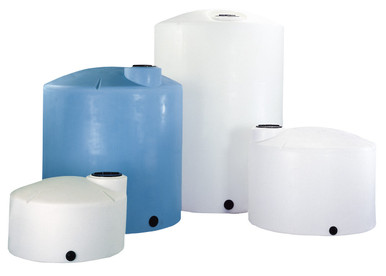
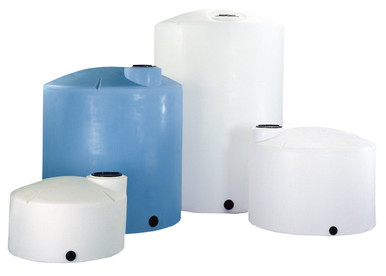
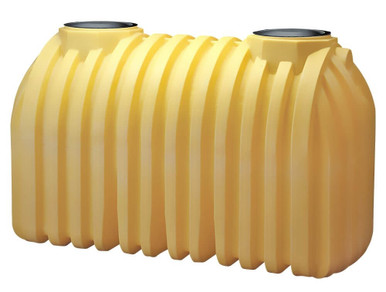
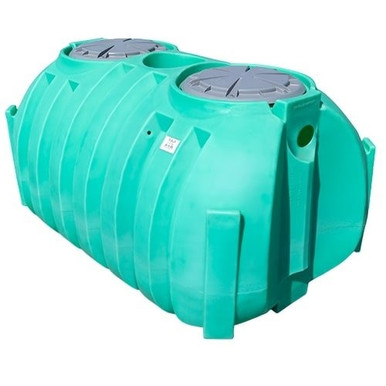
Illinois (77 Ill. Adm. Code Part 905) allows tanks as small as 750 gallons for the smallest systems and scales up with design flow. These IAPMO PS 1–listed tanks meet the Illinois capacity standard.
Shop all IAPMO PS 1–listed septic tanks →
Meeting the construction standard is not the same as a permit — your county environmental health office issues the permit and makes the final determination. Call us with your permit number and we will confirm the exact tank spec before shipment, with freight quoted to your ZIP.
Chemical Storage & Secondary Containment in Illinois
Storing fuel, fertilizer, or process chemicals alongside your tank changes the rules. The federal Spill Prevention, Control, and Countermeasure rule (40 CFR Part 112) applies at 1,320 gallons of aggregate aboveground oil storage and requires secondary containment sized to at least 110% of your largest tank. Releases of hazardous substances above their federal reportable quantity (40 CFR 302.4) must be reported to the National Response Center at 1-800-424-8802.
Illinois layers its own spill reportable quantities and restricted-substance rules on top of that federal floor — confirm the current thresholds with your state environmental agency before specifying a chemical tank. Just as important, the polyethylene resin must be matched to the exact chemical, concentration, and specific gravity you intend to store; a tank rated for water is not automatically rated for acid, bleach, or fertilizer.
Last reviewed: May 2026 · sourced from Illinois administrative code
Regulations change on a rolling basis — confirm the current rule with your county or state agency before purchasing. Spot something out of date? Email us and we'll fix it.
Nearby states (East North Central) & full index: