
Indiana Septic Tank Regulations — 410 IAC 6-8.3
Indiana Septic Tank Regulations
Indiana's Residential On-Site Sewage Systems rule 410 IAC 6-8.3 sets capacity levels and a maximum water depth of 6.5 feet. The Indiana Department of Health, through local health departments, oversees these systems from the Ohio River to the Great Lakes.
The Governing Framework
Indiana residential onsite wastewater systems are regulated under:
- 410 IAC 6-8.3 — Residential On-Site Sewage Systems. The substantive rule for single-family and small residential installations.
- 410 IAC 6-8.3-60 — Septic Tanks: General Requirements.
- 410 IAC 6-8.3-61 — Septic Tanks: Construction Details.
- 410 IAC 6-8.3-62 — Dosing Tanks.
- Indiana Department of Health (IDOH) — state-level rule author and oversight.
- Local health departments — Indiana's 92 counties each operate local health departments that handle permits, inspections, and site evaluations under IDOH rules.
Septic Tank Capacity — 410 IAC 6-8.3-60 and -61
Indiana's capacity requirements are tied to bedroom count and building use. Typical sizing:
| Dwelling Type | Typical Minimum Capacity |
|---|---|
| Single-family (standard range) | 1,000–1,500 gallons |
| Small single-family (fewer bedrooms) | 1,000 gallons floor |
| Larger single-family (more bedrooms) | Up to 1,500 gallons typical; larger for 5+ bedroom |
Check 410 IAC 6-8.3-60 and your local health department for the exact capacity table based on bedroom count and design flow for your installation.
The 6.5-Foot Maximum Water Depth Rule
In Indiana, the maximum water depth for calculating septic tank capacity is 6.5 feet. This means the tank's effective liquid capacity is measured only up to 6.5 feet, no matter how tall the tank is.
Setback Distances
Indiana requires minimum distances between the tank and absorption field and wells, lot lines, surface waters, structures, and water supply pipes. These distances are in 410 IAC 6-8.3 and can vary based on soil conditions and local health department rules. Check with your county health department for the exact setback table for your property.
Permit Process
- Contact your local (county) health department. Indiana's 92 counties each implement IDOH rules locally.
- Soil evaluation. Certified soil scientist or local health department environmental specialist performs site evaluation.
- System design submission. Plot plan, soil profile, proposed tank + absorption field sizing.
- Permit issuance. County-level permits. Fees typically $250–$600; timeline 3–8 weeks.
- Licensed installer construction. Use an IDOH-certified installer.
- Inspection before backfill. County inspects the complete installation before cover.
Regional Considerations
- Indianapolis Metro (Marion, Hamilton, Hancock counties): Largely on municipal sewer. Septic remains on rural perimeter parcels. County health departments maintain legacy inspection records for older systems.
- Northwest Indiana (Lake, Porter counties): Dune sand and loamy till areas transitioning to municipal service. Lake Michigan watershed implications for discharges.
- Central Indiana (Tipton, Hamilton, Johnson): Glacial till with good percolation in most areas. Standard trench systems typical.
- Southern Indiana (Bloomington, Columbus, New Albany): Karst limestone terrain. Sinkhole zones require geotechnical review. Hilly terrain often requires pressure dosing or alternative systems.
- Ohio River valley (Evansville, Jeffersonville): Alluvium soils over river gravel. High water table in floodplain areas. Elevated tank risers mandatory in FEMA flood zones.
- Great Lakes watershed: Northern third of state drains to Lake Michigan or Lake Erie. Federal Great Lakes Water Quality Agreement considerations may add layers for non-standard systems near the lakes or their tributaries.
Material Approvals
IDOH accepts polyethylene septic tanks meeting 410 IAC 6-8.3-61 construction standards. Verify at order:
- IAPMO PS 1 or NSF 46 listing
- Ribbed polyethylene construction rated for burial
- Effective liquid capacity at 6.5 ft measured depth (not raw fill capacity)
- Two-compartment design is preferred by many Indiana counties
- Effluent filter compatibility
- County-specific requirements — some counties have published approved-model lists
Frequently Asked Questions
- Why does Indiana cap the capacity calculation at 6.5 feet water depth?
- To prevent tall skinny tanks from claiming capacity they don't effectively deliver. Treatment effectiveness depends on detention time and surface-area-driven solids settling, both of which decline in disproportionately tall tanks. Indiana's rule enforces a usable-volume definition.
- Which counties have the strictest implementation?
- Implementation varies. Counties with intensive real-estate turnover or rapid new construction (Hamilton, Hendricks, Johnson) generally have faster permit timelines and clearer expectations. Counties with less population density may have longer queues. Always contact your specific county first.
- Do I need a different system in karst zones?
- Often yes. Southern Indiana karst zones (Monroe, Lawrence, Washington counties, among others) often require geotechnical review and may require alternative systems (ATUs, drip dispersal, or mounds) because conventional absorption fields pose groundwater contamination risk in karst.
- Are Norwesco or Snyder tanks approved in Indiana?
- Major rotomolded polyethylene OEM tanks generally have approved configurations in Indiana. Norwesco and Snyder each publish tanks meeting IAPMO/NSF listings that comply with 410 IAC 6-8.3-61. Verify with your county for the specific approved-model list before ordering.
Source Citations
Shop Septic Tanks for Indiana
OneSource stocks polyethylene septic tanks meeting Indiana construction requirements. Match capacity to your design flow per the rules summarized above. Tank + accessories + holding tank options below cover standard and alternative configurations. OneSource drop-ships from the OEM warehouse closest to your install address.
Plastic Septic Tanks
Full polyethylene septic tank catalog. Sizes from 300 to 1,500+ gallons for Indiana installations.
Browse Plastic Septic TanksIAPMO Approved Models
NSF/IAPMO listed tanks. Some counties and some installation types require this listing.
Browse IAPMO Approved ModelsSeptic Accessories
Risers, lids, baffles, filters, alarms, pumps, and install hardware.
Browse Septic AccessoriesHolding Tanks
Holding tanks for construction sites, recreational properties, and pump-and-haul installations.
Browse Holding TanksStoring chemicals in your Indiana tank?
Indiana's OSSF rules don't cover chemical-storage tanks; these are specified by the manufacturer. If you need a tank for sulfuric acid, bleach, fertilizer solution, or any of 300+ industrial chemicals, our Chemical Compatibility Database has the full construction specifications.
Agricultural Tank Regulations — Indiana Office of Indiana State Chemist (OISC)
The Office of Indiana State Chemist (OISC) at Purdue University regulates pesticide and fertilizer storage under Indiana Code and the Indiana Administrative Code Title 355. Core rules apply.
- 355 IAC 7 — Fertilizer Material Rule. Governs registration, labeling, and tonnage reporting of commercial fertilizer distributed in Indiana.
- 355 IAC 4 — Pesticide Product rules including registration, labeling, and licensing.
- 357 IAC 1 — Indiana Pesticide Review Board pesticide use rules including applicator certification.
- IC 15-16-2 — Indiana Fertilizer Law (statutory authority).
- IC 15-16-4 — Indiana Pesticide Use and Application Law.
- IC 15-16-5 — Indiana Pesticide Registration Law.
Indiana uses a containment-rule approach like Illinois and Kansas. Commercial fertilizer and pesticide dealers with bulk liquid storage must build containment to hold the largest tank plus extra for rain, with impermeable liners, inspection schedules, and rinsate-recovery for pesticide pads. Farm-use storage for personal use is less strict but must meet federal SPCC (40 CFR 112) at 1,320 gallons of oil and EPCRA Tier II thresholds for hazardous substances. Central and northern Indiana co-ops often use 110% containment with reinforced concrete or steel and epoxy liners for UAN, ammonium thiosulfate, and liquid starter blends.
Petroleum USTs — IDEM Office of Land Quality
The Indiana Department of Environmental Management (IDEM) regulates underground storage tanks under IC 13-23 and 329 IAC 9. Highlights:
- IC 13-23-1 through 13-23-13 — Statutory UST program including registration, financial responsibility, and the Excess Liability Trust Fund (ELTF).
- 329 IAC 9 — UST technical rules including design, installation, release detection, release reporting, and corrective action.
- 327 IAC 2 — Surface water quality rules that apply when a release reaches waters of the state.
- IC 13-25-4 — Voluntary Remediation Program for contaminated sites including LUST closures.
Indiana owners of regulated USTs must register with IDEM, pay annual fees, maintain release detection and spill/overfill prevention, and upgrade to 2018 federal rule standards (secondary containment for new tanks, operator training, walkthrough inspections). Suspected releases must be reported to IDEM within 24 hours. The ELTF reimburses eligible corrective-action costs; owners must have financial responsibility through commercial coverage or fund participation.
Septic System Sizing Deep Dive
The Indiana State Department of Health (ISDH) regulates residential onsite sewage under 410 IAC 6-8.3 (Residential Onsite Sewage Systems). Typical residential capacity is outlined here.
| Bedrooms | Minimum Septic Tank Capacity |
|---|---|
| 1–3 BR | 1,000 gallons |
| 4 BR | 1,250 gallons |
| 5 BR | 1,500 gallons |
| 6+ BR | +250 gallons per additional bedroom |
Indiana soils, mainly from the Wisconsin glaciation, have dense clay subsoils in the central and northern corn belt. Soil loading rates from 410 IAC 6-8.3 determine trench sizes, and many sites, especially in central Indiana's clay-pan counties and south-central limestone areas, need alternative systems like aerobic treatment units, drip-dispersal fields, sand filters, or engineered mounds. Local health department approval and certified installers are required. Flood-plain sites along the Wabash, White, and Ohio rivers have extra elevation and groundwater separation requirements.
Chemical Storage Secondary Containment & Spill Reporting
Federal SPCC (40 CFR 112) applies at 1,320 gallons aggregate aboveground oil. Indiana layers on:
- 327 IAC 2 — Surface water quality standards that set the downstream target when a tank release reaches waterways.
- 327 IAC 2-6.1 — Spill reporting: requires immediate reporting to IDEM of spills that may threaten human health, the environment, or waters of the state.
- 329 IAC 10 — Solid waste rules that may govern impoundment closure.
- IC 13-25-2 — Hazardous substance response.
Report spills to IDEM's 24-hour emergency line and federal RQ releases to the National Response Center at 1-800-424-8802. The SPCC industry standard is 110% secondary containment of the largest tank; OISC agrichemical-facility containment may exceed this for certain products. For chemical-specific RQ thresholds different from 40 CFR 302.4, contact IDEM directly.
Permit Pathways at a Glance
- Residential septic: County health department under 410 IAC 6-8.3.
- Fertilizer registration: OISC under 355 IAC 7.
- Pesticide registration & applicator license: OISC under 355 IAC 4 and 357 IAC 1.
- Petroleum UST: IDEM Office of Land Quality registration and ELTF participation.
- SPCC > 1,320 gal oil aggregate: Federal SPCC plan; state spill reporting to IDEM.
- NPDES industrial stormwater: IDEM Office of Water Quality.
Current fee and form inventory lives on the respective agency websites; verify before budgeting a project.
More Indiana FAQs
- Do I need to register a 1,500-gallon UAN tank at my corn/soy farm with OISC?
- OISC registers fertilizer products and distributors, not on-farm end-user tanks for the farm operator's own use. If you also sell to a neighbor or custom-apply for hire, you become a distributor and fall under 355 IAC 7 registration and containment rules.
- What does the Indiana Excess Liability Trust Fund cover?
- ELTF reimburses eligible owners and operators of registered petroleum USTs for corrective-action costs above a deductible, per IC 13-23 and 328 IAC 1. Annual fees, timely reporting, and compliance with release detection and spill/overfill rules are prerequisites for eligibility.
- How do karst counties handle septic design differently?
- Karst terrain in the Mitchell Plain (Orange, Washington, Lawrence, Monroe) creates direct-to-groundwater pathways through solution cavities. Health departments in these counties typically require engineered treatment (ATU, drip dispersal), deeper separations to limestone bedrock, and denser soil survey data before approving a permit.
- Is anhydrous ammonia on-farm storage regulated in Indiana?
- Anhydrous is regulated federally in transport by DOT and in ag handling by OSHA Process Safety Management above 10,000 pounds. Indiana follows ANSI K61.1 for storage and distribution; state ag chemical rules apply through the Indiana Pesticide Review Board and OISC where the product has ag use.
- Do I need SPCC for an above-ground heating oil tank at my rural home?
- Heating oil for on-premises use at a residence is generally excluded from federal SPCC. If the same property has a farming operation with other oil storage, aggregate totals can push the site over 1,320 gallons and trigger SPCC for the farm side.
Septic Tanks That Meet Indiana Code
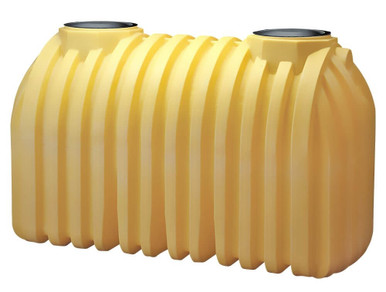
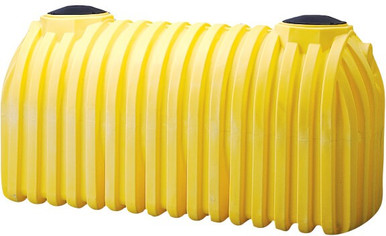
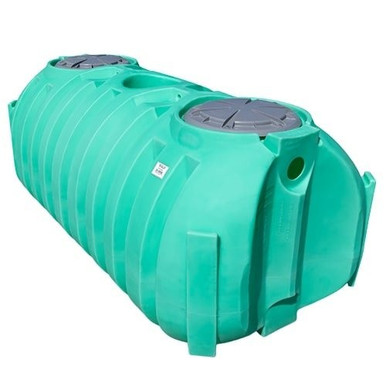
Indiana (410 IAC 6-8.3) sizes septic tanks by bedroom count or design flow, with residential systems typically starting at 1,000 gallons. These IAPMO PS 1–listed polyethylene tanks meet that capacity standard; your county or state permitting office confirms the final size.
Shop all IAPMO PS 1–listed septic tanks →
Meeting the construction standard is not the same as a permit — your county environmental health office issues the permit and makes the final determination. Call us with your permit number and we will confirm the exact tank spec before shipment, with freight quoted to your ZIP.
Chemical Storage & Secondary Containment in Indiana
Storing fuel, fertilizer, or process chemicals alongside your tank changes the rules. The federal Spill Prevention, Control, and Countermeasure rule (40 CFR Part 112) applies at 1,320 gallons of aggregate aboveground oil storage and requires secondary containment sized to at least 110% of your largest tank. Releases of hazardous substances above their federal reportable quantity (40 CFR 302.4) must be reported to the National Response Center at 1-800-424-8802.
Indiana layers its own spill reportable quantities and restricted-substance rules on top of that federal floor — confirm the current thresholds with your state environmental agency before specifying a chemical tank. Just as important, the polyethylene resin must be matched to the exact chemical, concentration, and specific gravity you intend to store; a tank rated for water is not automatically rated for acid, bleach, or fertilizer.
Last reviewed: May 2026 · sourced from Indiana administrative code
Regulations change on a rolling basis — confirm the current rule with your county or state agency before purchasing. Spot something out of date? Email us and we'll fix it.
Nearby states (East North Central) & full index: