
Iowa Septic Tank Regulations — 567 IAC Chapter 69
Iowa Septic Tank Regulations
Iowa's Private Sewage Disposal Systems rules in 567 IAC Chapter 69 require a tank to be at least 1,250 gallons or twice the design flow, with a minimum liquid depth of 40 inches, a maximum capacity depth of 6.5 feet, and an interior length of 5 feet with a 1.5:1 length-to-width ratio.
The Governing Framework
Iowa regulates private sewage disposal under:
- 567 IAC Chapter 69 — Private Sewage Disposal Systems. The substantive rule issued under the authority of Iowa Code Chapter 455B.
- 567—69.2 — General Design Standards.
- 567—69.3 — Primary Treatment Unit.
- 567—69.8 — Primary Treatment — Septic Tanks.
- Iowa Department of Natural Resources (DNR) — state-level rule administrator.
- County sanitation/zoning offices — handle field permits under DNR oversight. Iowa is predominantly county-implemented.
Septic Tank Capacity — 567—69.8
Iowa's capacity rule has an unusually specific design-flow-plus-floor structure:
| Parameter | Requirement |
|---|---|
| Minimum liquid-holding capacity | 1,250 gallons OR 2 × daily sewage flow, whichever is greater |
| Residential design flow | 150 gallons per bedroom per day |
| Minimum liquid-holding depth per compartment | 40 inches |
| Maximum liquid-holding depth for capacity calculation | 6.5 feet |
| Minimum interior length | 5 feet |
| Length-to-width ratio | At least 1.5:1 (larger ratios preferred) |
For a standard 3-bedroom house in Iowa, the design flow is 450 gallons per day, so the minimum tank size is 1,250 gallons. For a 4-bedroom house, the design flow is 600 gallons per day, and the minimum tank size remains 1,250 gallons. For a 5-bedroom house, the design flow is 750 gallons per day, and the tank size should be 1,500 gallons based on the 2× rule.
Easement Rule — An Iowa Distinctive
According to 567—69.8, a septic tank must be on the same property as the wastewater source unless there is a legally recorded easement approved by the proper authority.
Simply put, your septic tank must be on your property unless you have a legal easement recorded with the county.
- Shared-drive rural subdivisions where multiple parcels historically used common septic footprints
- Farm severances where the farmhouse septic crosses the lot line after land sale
- Family homestead situations where a newly-deeded plot needs its own system
Iowa's rule prevents you from running a drainfield onto a neighbor's property unless you have formal easement documentation.
Permit Process
- Contact your county sanitation/zoning office. Iowa counties handle permit issuance under DNR delegation.
- Percolation test or soil profile. Per 567 IAC 69 protocols.
- System design submission. Plot plan, soil results, tank and absorption system layout. Must demonstrate compliance with 69.8 geometry rules.
- Permit issuance. County-level permits. Fees typically $200–$500. Timeline 2–8 weeks.
- Licensed installer construction. Iowa licenses septic installers.
- Inspection before backfill. County inspects tank, piping, dispersal placement.
Regional Considerations
- Loess Hills (Monona, Harrison, Woodbury): Deep wind-blown loess with excellent percolation. Standard trench systems typical.
- Des Moines Lobe (central Iowa): Glacial till, moderate percolation. Standard systems work; occasional mound requirements.
- Driftless Area (Allamakee, Clayton, Winneshiek): Karst terrain with shallow soil over limestone. Sinkhole-zone engineering review. Alternative systems common.
- Mississippi River counties (Scott, Dubuque, Clinton): Alluvial floodplain. Elevated tank risers for flood zones. Coordinate with FEMA flood maps.
- Missouri River counties (Pottawattamie, Mills): Floodplain considerations similar to Mississippi side.
- Agricultural conservation drainage: Iowa's extensive tile-drainage infrastructure can complicate septic site evaluation — drain tile near a proposed dispersal area affects percolation and separation calculations. Verify tile locations before finalizing system placement.
Material Approvals
Iowa DNR accepts polyethylene septic tanks meeting 567 IAC 69.8 construction standards. Verify at order:
- IAPMO PS 1 or NSF 46 listing
- Geometry meets 40-inch min compartment depth, 5-ft min interior length, 1.5:1 length-to-width
- Effective liquid capacity measured at the 6.5-ft-depth cap
- Two-compartment construction preferred
- Effluent filter compatibility
Frequently Asked Questions
- Why is Iowa's minimum 1,250 gallons instead of 1,000?
- 567—69.8 sets 1,250 gallons as the floor even for small residences. This is stricter than many states' 1,000-gallon floor. The rule exists because Iowa's cold-season tank metabolism is slower (similar to Minnesota) and the larger floor provides settling margin for winter conditions.
- How does the 6.5-ft depth rule work?
- If your tank is 8 feet tall internally, only the first 6.5 feet of liquid depth counts toward claimed capacity. A tank marketed as 1,500 gallons but relying on 8 feet of depth would only deliver roughly 1,200 gallons of compliant capacity. Check the effective capacity at 6.5 ft depth when comparing tank models.
- What about shared septic systems?
- Shared systems across property lines require recorded easements. This is a frequent issue in rural Iowa parcels that were historically operated as single farmsteads but later subdivided. If you're buying rural property with an existing septic system, verify the easement recording before closing.
- What's the 1.5:1 length-to-width rule for?
- Treatment effectiveness in septic tanks relies on solids settling in the quiescent zone between inlet and outlet. Square or near-square tanks (low length-to-width ratio) create turbulent flow that short-circuits solids settling. The 1.5:1 minimum ratio ensures enough flow path for effective treatment.
- Does Iowa accept polyethylene tanks?
- Yes. Major OEM rotomolded polyethylene tanks (Norwesco, Snyder) have Iowa-compliant configurations meeting 567 IAC 69.8 geometry requirements.
Source Citations
Shop Septic Tanks for Iowa
OneSource stocks polyethylene septic tanks meeting Iowa construction requirements. Match capacity to your design flow per the rules summarized above. Tank + accessories + holding tank options below cover standard and alternative configurations. OneSource drop-ships from the OEM warehouse closest to your install address.
Plastic Septic Tanks
Full polyethylene septic tank catalog. Sizes from 300 to 1,500+ gallons for Iowa installations.
Browse Plastic Septic TanksIAPMO Approved Models
NSF/IAPMO listed tanks. Some counties and some installation types require this listing.
Browse IAPMO Approved ModelsSeptic Accessories
Risers, lids, baffles, filters, alarms, pumps, and install hardware.
Browse Septic AccessoriesHolding Tanks
Holding tanks for construction sites, recreational properties, and pump-and-haul installations.
Browse Holding TanksStoring chemicals in your Iowa tank?
Iowa's OSSF rules don't apply to chemical-storage tanks. Those are specified by the manufacturer. If you need a tank for sulfuric acid, bleach, fertilizer solution, or any of 300+ industrial chemicals, our Chemical Compatibility Database has all the construction specifications.
Agricultural Tank Regulations — IAC 21 Chapter 44
Iowa has strict agricultural-tank rules, managed by the Iowa Department of Agriculture and Land Stewardship (IDALS) under IAC Chapter 21-44, which covers on-site containment of pesticides, fertilizers, and soil conditioners.
- 21-44.1 — Definitions. A "permanent pesticide storage and mixing site" is a site where pesticides are being stored for more than 30 days per year and at which more than 300 gallons of liquid pesticide or 300 pounds of dry pesticide are being mixed, repackaged, or transferred from one container to another within a 30-day period.
- 21-44.x — All nonmobile bulk pesticide storage containers shall be located within a watertight secondary containment facility.
- Nonliquid fertilizer and soil conditioner: Must be stored within an area that drains into a secondary containment structure with a volume sufficient to retain the equivalent of 12 inches of runoff from the area drained. No fertilizer rinsates or wash waters from fertilizer or soil conditioner equipment shall be disposed of through sanitary or storm sewer systems.
- Design plans: Must be submitted to IDALS prior to construction, with certification from a registered engineer that the facilities comply with the rule.
- Statute: Iowa Code Chapter 206 (pesticides) and Chapter 200 (fertilizer).
Iowa's corn and soybean regions use many co-op and independent ag-retail sites, each with specific containment engineering. The 12-inch runoff rule for dry fertilizer, the 300-gallon/300-pound permanent-site threshold, and the registered-engineer design certification make Iowa strict on polyethylene bulk tank installations. Plan for engineered, certified containment from the start.
Petroleum UST & Fuel Storage — 567 IAC Chapter 135
Iowa has little conventional oil and gas production, so the closest rule is the fuel UST framework by the Iowa Department of Natural Resources.
- 567 IAC Chapter 135 — Iowa DNR Technical Standards and Corrective Action Requirements for Underground Storage Tank systems.
- Iowa Code Chapter 455B Subchapter IX — Statutory backbone for the UST program.
- Iowa Comprehensive Petroleum UST Fund — Petroleum release remediation funding for eligible tank owners.
- Agricultural tanks — Farm and residential motor fuel tanks of 1,100 gallons or less are generally excluded from federal UST rules but remain subject to Iowa spill reporting and SPCC if aggregate exceeds 1,320 gallons aboveground.
On Iowa farms, polyethylene above-ground fuel storage tanks are usually kept below 1,320 gallons total to avoid federal SPCC requirements. If over 1,320 gallons, you need an SPCC plan and 110% containment. For commercial motor-fuel USTs, follow 567 IAC Chapter 135 for corrosion protection, leak detection, and release reporting.
Septic System Sizing Deep Dive
Iowa's onsite wastewater is regulated under 567 IAC Chapter 69. Here's the typical capacity table used.
| Bedrooms | Minimum Septic Tank Capacity |
|---|---|
| 1–3 BR | 1,000 gallons |
| 4 BR | 1,250 gallons |
| 5 BR | 1,500 gallons |
| Non-dwelling | Engineered design on peak daily flow |
Iowa's Time of Transfer inspection program requires most private septic systems to be inspected when property is sold. A certified inspector files a report with the county. Non-compliant systems must be upgraded within a set time. Buyers should include a Time of Transfer clause in purchase agreements and budget $8,000–$25,000 for replacement if needed. Check current setbacks and Table values with your county's environmental health office.
Chemical Storage Secondary Containment & Spill Reporting
Federal SPCC (40 CFR 112) applies at 1,320 gallons aggregate aboveground oil. Iowa layers on:
- 567 IAC Chapter 131 — Hazardous Conditions Reporting. Requires any person manufacturing, storing, handling, transporting, or disposing of a hazardous substance to notify the DNR of a hazardous condition within 6 hours of onset.
- Iowa Code section 455B.386 — Hazardous condition statutory reporting requirement.
- DNR 24-hour Environmental Emergency Notification at 1-515-725-8694.
- IAC 567-133 — Underground Storage Tank release reporting.
Secondary containment for polyethylene chemical tanks should hold at least 110% of the largest tank's capacity. If oil storage exceeds 1,320 gallons total, maintain a written SPCC plan. Iowa requires hazardous condition reports within 6 hours, faster than some nearby states, so include the DNR notification process in your response plan.
Permit Pathways at a Glance
- Residential septic: County environmental health under 567 IAC Chapter 69.
- Permanent pesticide storage/mixing site: IDALS engineer-certified design under IAC 21-44.
- Bulk fertilizer containment: IDALS engineer-certified design under IAC 21-44.
- Pesticide applicator and dealer: IDALS under Iowa Code Chapter 206.
- Petroleum UST: DNR under 567 IAC Chapter 135.
- SPCC > 1,320 gal oil aggregate: Federal SPCC plan; DNR hazardous-condition reporting (6-hour window).
More Iowa FAQs
- Does my 600-gallon mobile nurse tank trigger IAC 21-44?
- The rule targets nonmobile bulk storage. Nurse tanks moving in the field of application are handled differently. Confirm your specific operation with IDALS.
- What does the 12-inches-of-runoff rule mean for dry fertilizer?
- Your dry fertilizer building or pad must drain into a secondary containment structure with enough volume to retain the equivalent of 12 inches of precipitation running off the entire drainage area. For a 5,000 square foot pad, that works out to roughly 37,400 gallons of containment volume. This is why Iowa ag-retail dry-fertilizer buildings have large sumps or catch basins.
- Is the Time of Transfer septic inspection really enforced?
- Yes. County environmental health enforces Time of Transfer across most Iowa counties. Non-compliance can stall closing and delay property transfer. Budget upgrades in your contract negotiations.
- My farm holds 3,000 gallons of diesel in two above-ground poly tanks. SPCC applies?
- Yes — aggregate is above the 1,320-gallon federal threshold. Build a written SPCC plan, 110% containment (the largest tank plus freeboard), and integrity inspections. Note the 6-hour Iowa reporting window for any hazardous condition.
- Are there Iowa-specific rules for livestock lagoons and manure storage?
- Yes. CAFO manure storage is regulated under 567 IAC Chapter 65 (Animal Feeding Operations) with specific design, siting, and nutrient-management-plan requirements. Separate rule family from the ag-chemical containment rule.
- What's the penalty for unreported spills?
- Iowa Code 455B.386 and the hazardous condition rules allow substantial civil penalties for failure to notify. Report on time — the phone call is cheaper than the enforcement action.
Septic Tanks That Meet Iowa Code
Iowa (567 IAC 69) sets a 1,250-gallon minimum (or twice the design flow, whichever is greater). The IAPMO PS 1–listed tanks below meet that 1,250-gallon floor.
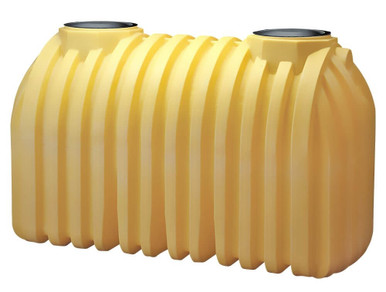
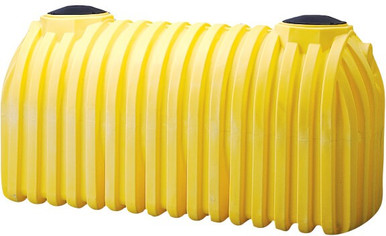
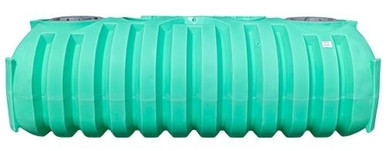
Shop all IAPMO PS 1–listed septic tanks →
Meeting the construction standard is not the same as a permit — your county environmental health office issues the permit and makes the final determination. Call us with your permit number and we will confirm the exact tank spec before shipment, with freight quoted to your ZIP.
Chemical Storage & Secondary Containment in Iowa
Storing fuel, fertilizer, or process chemicals alongside your tank changes the rules. The federal Spill Prevention, Control, and Countermeasure rule (40 CFR Part 112) applies at 1,320 gallons of aggregate aboveground oil storage and requires secondary containment sized to at least 110% of your largest tank. Releases of hazardous substances above their federal reportable quantity (40 CFR 302.4) must be reported to the National Response Center at 1-800-424-8802.
Iowa layers its own spill reportable quantities and restricted-substance rules on top of that federal floor — confirm the current thresholds with your state environmental agency before specifying a chemical tank. Just as important, the polyethylene resin must be matched to the exact chemical, concentration, and specific gravity you intend to store; a tank rated for water is not automatically rated for acid, bleach, or fertilizer.
Last reviewed: May 2026 · sourced from Iowa administrative code
Regulations change on a rolling basis — confirm the current rule with your county or state agency before purchasing. Spot something out of date? Email us and we'll fix it.
Nearby states (West North Central) & full index: