
Kansas Septic Tank Regulations — K.A.R. 28-5 + Bulletin 4-2
Kansas Septic Tank Regulations
Kansas has rules for onsite wastewater systems under K.A.R. 28-5-1 through 28-5-9 and KDHE Bulletin 4-2. These include tank sizes of 1,000, 1,200, and 1,500 gallons, setback distances in Table 5, and local program management from Wichita to the High Plains.
The Governing Framework
Kansas regulates onsite wastewater under:
- K.A.R. 28-5-1 through 28-5-9 — Kansas Administrative Regulations governing sewage and excreta disposal.
- K.A.R. 28-5-6 — Discharge requirements: all domestic wastewater must discharge to approved sewage collection or approved onsite system (septic, lagoon, or alternative).
- KDHE Bulletin 4-2 — Minimum Standards for Design and Construction of Onsite Wastewater Systems. The detailed technical specification published by Kansas Department of Health and Environment.
- Kansas Department of Health and Environment (KDHE) — state-level rule author and administers the Local Environmental Protection Program (LEPP).
- Local Environmental Protection Program (LEPP) — KDHE delegates field implementation to county-level environmental health. Counties may adopt local sanitary codes that layer on top of KDHE minimums.
Septic Tank Capacity
| Bedrooms | Minimum Capacity |
|---|---|
| 1–3 bedrooms | 1,000 gallons |
| 4 bedrooms | 1,200 gallons |
| 5 bedrooms | 1,500 gallons |
| 6+ bedrooms | Per Bulletin 4-2 calculation, typically +250 gal per additional bedroom |
Kansas uses a table based on the number of bedrooms to determine tank size. For exact details and commercial or non-residential calculations, check Bulletin 4-2.
Setback Distances — Table 5
Bulletin 4-2 Table 5 lists the minimum and recommended distances between parts of onsite wastewater systems and other features. It covers distances to various points.
- Water wells (public and private)
- Surface water
- Property lines
- Building foundations
- Water supply lines
- Other setback-sensitive features
Consult Bulletin 4-2 or your county LEPP office for the complete setback table applying to your specific parcel.
Permit Process
- Contact your county LEPP office. Kansas delegates field permitting to county Local Environmental Protection Programs.
- Soil evaluation. County LEPP or licensed soil scientist performs percolation test or soil profile.
- System design submission. Plot plan, soil results, tank and absorption field sizing per Bulletin 4-2.
- Permit issuance. County-level permits. Fees typically $200–$500.
- Construction by a qualified installer. Kansas certifies installers; some counties maintain additional licensing.
- Inspection before backfill. County LEPP inspects.
Regional Considerations
- Kansas City / Johnson County Metro: Largely on municipal sewer. Remaining septic parcels are rural-fringe.
- Flint Hills: Shallow soil over limestone. Alternative systems (mounds, pressure dosing) common where conventional trench fails.
- High Plains (western Kansas): Deep sandy loam with good percolation. Standard systems typical. Very low rainfall — hydraulic loading not a major concern.
- Wichita Metro / south-central Kansas: Mixed urban/suburban with expanding sewer. Perimeter septic installations common.
- Eastern Kansas (Topeka, Lawrence, Leavenworth): Glacial till and loess soils. Standard systems typical.
- Southeast Kansas (Crawford, Cherokee): Mining legacy considerations. Groundwater contamination history from former mining areas may drive stricter setbacks.
Material Approvals
KDHE accepts polyethylene tanks meeting K.A.R. 28-5 and Bulletin 4-2 construction standards. Verify at order:
- IAPMO PS 1 or NSF 46 listing
- Ribbed polyethylene construction
- Effluent filter compatibility
- Two-compartment preferred
- County LEPP confirmation on any model-specific restrictions
Source Citations
Shop Septic Tanks for Kansas
OneSource stocks polyethylene septic tanks meeting Kansas construction requirements. Match capacity to your design flow per the rules summarized above. Tank + accessories + holding tank options below cover standard and alternative configurations. OneSource drop-ships from the OEM warehouse closest to your install address.
Plastic Septic Tanks
Full polyethylene septic tank catalog. Sizes from 300 to 1,500+ gallons for Kansas installations.
Browse Plastic Septic TanksIAPMO Approved Models
NSF/IAPMO listed tanks. Some counties and some installation types require this listing.
Browse IAPMO Approved ModelsSeptic Accessories
Risers, lids, baffles, filters, alarms, pumps, and install hardware.
Browse Septic AccessoriesHolding Tanks
Holding tanks for construction sites, recreational properties, and pump-and-haul installations.
Browse Holding TanksFrequently Asked Questions
- Who regulates onsite wastewater in Kansas?
- Kansas Department of Health and Environment (KDHE) sets statewide rules under KAR 28-5 series regulations. Local health departments administer field permits under KDHE oversight. Contact your county health department for project-specific permitting.
- Are polyethylene tanks accepted in Kansas?
- Yes, when meeting IAPMO/NSF listings and KDHE construction requirements. Major OEM rotomolded polyethylene tanks from Norwesco, Snyder, and others are commonly approved. Verify your specific model with your county health department.
- What about Ogallala Aquifer watershed considerations?
- Western and central Kansas sit atop the Ogallala (High Plains) Aquifer, a critical drinking-water source. Some counties apply additional setback or design requirements for onsite systems in aquifer-sensitive areas. Verify local overlay rules for your parcel.
- Is a licensed professional required for design?
- Design requirements vary by county under KDHE delegation. Many counties require licensed contractor install; design may be by PE, KDHE-certified designer, or in some cases qualified homeowner with county approval. Check specific county rules.
- What's the typical permit process?
- Contact county health department, perform site/soil evaluation, submit design, obtain permit, install with licensed contractor, pass inspection before cover, receive certificate of compliance.
Storing chemicals in your Kansas tank?
Kansas's rules for onsite sewage systems don't include chemical storage tanks. These are specified by manufacturers. If you need a tank for chemicals like sulfuric acid or bleach, our Chemical Compatibility Database has detailed specifications.
Agricultural Tank Regulations — KDA Pesticide & Fertilizer Program
Kansas has detailed rules for agricultural tanks, managed by the Kansas Department of Agriculture (KDA) Pesticide and Fertilizer Program.
- K.A.R. 4-13-25 — Bulk pesticide storage and handling of pesticides; definitions. Also 4-13-25j on facility inspection and maintenance.
- K.A.R. 4-4-931 — Approved secondary containment of bulk fertilizer; general requirements.
- Pesticide threshold: If a facility handles any undivided pesticide product container at or above 500 gallons liquid or 4,000 pounds dry, approved secondary containment is required. Below that threshold, a facility does not need secondary containment or a mixing/loading pad.
- Fertilizer threshold: Secondary containment is required when liquid fertilizer storage reaches a total capacity of 2,000 gallons.
- Diked area capacity: The containment must hold at least 110% of the capacity of the largest storage container plus the volume displaced by all other tanks, fixtures, and materials in the diked area (below the height of the dike).
- Monthly inspections: The owner/operator must inspect storage and containment at least monthly for defects. Upon discovery of a defect, the owner must within 24 hours initiate repairs or take the component out of service. Defects left in service must be corrected within 14 days.
- Contact: KDA Pesticide and Fertilizer Program at 785-564-6700.
In Kansas, retailers and farm suppliers often use 1,650-gallon tanks to stay under the 2,000-gallon limit for fertilizer containment. However, many exceed this limit and use a containment pad.
Oil & Gas Produced Water — Kansas Corporation Commission
The Kansas Corporation Commission (KCC) Oil & Gas Conservation Division regulates the saltwater and brine produced by the oil and gas industry in Kansas.
- K.A.R. 82-3 — Production and Conservation of Oil and Gas. Covers well operation, tank batteries, produced water storage, and disposal.
- K.A.R. 82-3-400 through 82-3-412 — Injection well regulations, specifically tailored to protect underground sources of drinking water.
- K.A.R. 82-3-603 and 82-3-603a — Spill notification and cleanup for oil-field releases.
- Disposal: The most common pathway is Class II UIC injection. Commercial and noncommercial disposal options are available, with the majority going into deep reinjection wells permitted under K.A.R. 82-3-400 series.
- Brine tanks: Operators must contain produced water in permitted brine tanks or dispose through a permitted Class II system. Open pits are limited and generally prohibited for long-term brine storage.
In Kansas, polyethylene brine tanks must consider specific gravity, chemistry, and freeze/thaw cycles. Most operators use 500-barrel (21,000-gallon) steel tanks, but smaller sites often use poly tanks.
Septic System Sizing Deep Dive
Kansas onsite wastewater systems are managed by KDHE with local programs under K.A.R. 28-5 and KDHE Bulletin 4-2. This includes a capacity table for design and construction standards.
| Bedrooms | Minimum Tank Capacity |
|---|---|
| 1–3 BR | 1,000 gallons |
| 4 BR | 1,200 gallons |
| 5 BR | 1,500 gallons |
In Kansas, soil type is more important than tank size for system design. Flint Hills soils need special technology, while western Kansas soils can use standard systems. Setback distances are in Bulletin 4-2 and local ordinances. Check with your county office for exact numbers.
Chemical Storage Secondary Containment & Spill Reporting
Kansas has some of the most specific spill reporting thresholds in the country, codified in K.A.R. 28-48 administered by KDHE:
| Substance | Kansas Reportable Quantity (K.A.R. 28-48-3) |
|---|---|
| Oil (any hydrophobic/lipophilic nonpolar chemical, incl. petroleum) | 25 gallons |
| Brine (water with 3,000+ ppm chlorides/sulfates) | 420 gallons |
| Liquid fertilizer | 100 gallons |
| Dry fertilizer | 1,000 pounds |
| Aggregate releases within 90 days on same property | Sum triggers the threshold |
Oil spills during exploration and production are reported to the KCC, not KDHE. Spills on the same property within 90 days are counted together for reporting.
Federal SPCC rules (40 CFR 112) apply to oil storage over 1,320 gallons. Containment must hold 110% of the largest tank. Check your chemical tanks against federal RQs (40 CFR 302.4) and the Kansas RQ table.
Permit Pathways at a Glance
- Residential septic: County Local Environmental Protection Program under KDHE delegation + K.A.R. 28-5 + Bulletin 4-2.
- Commercial bulk pesticide >500 gal / 4,000 lb: KDA Pesticide and Fertilizer Program under K.A.R. 4-13-25.
- Commercial bulk liquid fertilizer >2,000 gal: KDA secondary containment approval under K.A.R. 4-4-931.
- Oil & gas produced water storage & disposal: KCC under K.A.R. 82-3.
- SPCC > 1,320 gal oil: Federal SPCC plan; state RQ reporting per K.A.R. 28-48-3.
Contact KDA, KCC, or KDHE directly for current fee schedules.
More Kansas FAQs
- My co-op has 1,800 gallons of liquid fertilizer. Do I need KDA containment?
- Technically no at 1,800 gallons — the K.A.R. 4-4-931 threshold is 2,000 gallons. However, you're one typical tank away from triggering, and the economics of retrofitting containment later are poor. Most co-ops build to the rule even at smaller volumes.
- Does a nurse tank in the field count toward the containment threshold?
- Nurse tanks moving in the field of application are typically treated differently from stationary bulk storage. Confirm your specific operation with KDA; the rule targets nonmobile commercial storage.
- What's the difference between reporting an oil release to KCC vs KDHE?
- Oil released during oil-and-gas exploration and production goes to KCC (which runs its own spill notification process under K.A.R. 82-3-603/603a). Oil released in any other context (farm tank, UST, industrial) goes to KDHE under K.A.R. 28-48.
- How do I handle an accidental discharge from a 1,650-gallon poly tank?
- Stop the source, contain within secondary containment, and evaluate against the Kansas RQ table. If the release exceeds 100 gallons liquid fertilizer or 25 gallons of oil (or any amount that reaches water), notify KDHE via the 24-hour line. Document the event and corrective action.
- Are there different rules in the Flint Hills or western plains?
- The statewide KDA and KDHE rules apply uniformly. Local ordinances and the county LEPP program may add setback or site-evaluation requirements. Ogallala Aquifer protection areas (western Kansas) see extra scrutiny on bulk ag storage.
Septic Tanks That Meet Kansas Code
Kansas (KDHE Bulletin 4-2) sizes septic tanks by bedroom count or design flow, with residential systems typically starting at 1,000 gallons. These IAPMO PS 1–listed polyethylene tanks meet that capacity standard; your county or state permitting office confirms the final size.
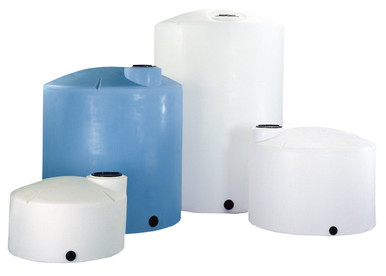
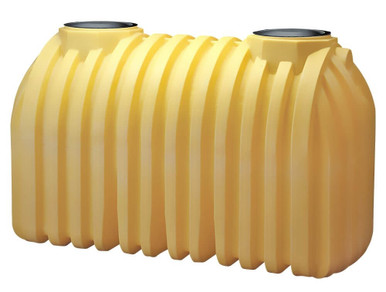
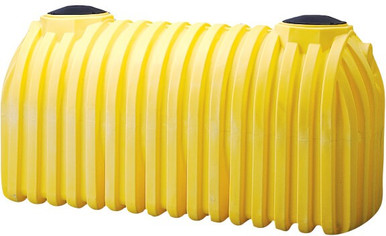
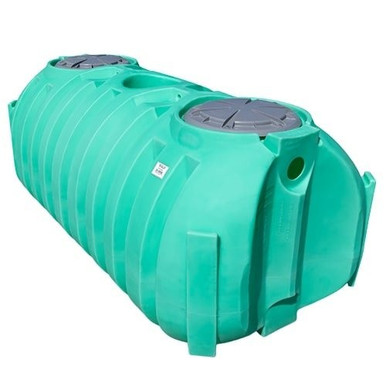
Shop all IAPMO PS 1–listed septic tanks →
Meeting the construction standard is not the same as a permit — your county environmental health office issues the permit and makes the final determination. Call us with your permit number and we will confirm the exact tank spec before shipment, with freight quoted to your ZIP.
Chemical Storage & Secondary Containment in Kansas
Storing fuel, fertilizer, or process chemicals alongside your tank changes the rules. The federal Spill Prevention, Control, and Countermeasure rule (40 CFR Part 112) applies at 1,320 gallons of aggregate aboveground oil storage and requires secondary containment sized to at least 110% of your largest tank. Releases of hazardous substances above their federal reportable quantity (40 CFR 302.4) must be reported to the National Response Center at 1-800-424-8802.
Kansas layers its own spill reportable quantities and restricted-substance rules on top of that federal floor — confirm the current thresholds with your state environmental agency before specifying a chemical tank. Just as important, the polyethylene resin must be matched to the exact chemical, concentration, and specific gravity you intend to store; a tank rated for water is not automatically rated for acid, bleach, or fertilizer.
Last reviewed: May 2026 · sourced from Kansas administrative code
Regulations change on a rolling basis — confirm the current rule with your county or state agency before purchasing. Spot something out of date? Email us and we'll fix it.
Nearby states (West North Central) & full index: