
Kentucky Septic Tank Regulations — 902 KAR 10:085
Kentucky Septic Tank Regulations
Kentucky's rules for Onsite Sewage Disposal Systems are found in 902 KAR 10:085. They include capacity tiers based on bedrooms, setback distances in Table 7, and the permit process managed by the Department for Public Health Environmental Management Branch.
The Governing Framework
Kentucky regulates onsite sewage disposal systems under:
- 902 KAR 10:085 — Kentucky On-Site Sewage Disposal Systems. The substantive rule covering system design, capacity, setbacks, installer certification, and permitting.
- 902 KAR 10:110 — Issuance of On-Site Sewage Disposal System Permits.
- 902 KAR 10:170 — Septic Tank Servicing (pumping contractor regulation).
- Cabinet for Health and Family Services (CHFS) — Department for Public Health (DPH) — Environmental Management Branch (EMB) — administers the On-Site Sewage Disposal Systems Program at the state level.
- Local health departments — handle field permits and inspections.
Septic Tank Capacity — Bedroom-Based Table
Kentucky uses a bedroom-based working-liquid-capacity table:
| Bedrooms | Minimum Working Liquid Capacity |
|---|---|
| 1 to 3 bedrooms | 1,000 gallons |
| 4 bedrooms | 1,250 gallons |
| 5 bedrooms | 1,500 gallons |
| Each additional bedroom over 5 | +250 gallons |
| With garbage disposal (grinder) | +250 gallons on top of base size |
Setback Distances — Table 7
902 KAR 10:085 contains Table 7, which lists the minimum setback distances for septic tank systems from various features. This table also applies to greywater system absorption areas. Here are the typical setback categories from Kentucky's Table 7.
- To private well: minimum 50–100 feet depending on system type.
- To public well: greater distance required — often 100+ feet.
- To surface water / stream / lake: typically 50–100 feet.
- To property line: typically 10–15 feet for tank; greater for absorption field.
- To building foundation: typically 10 feet.
- To water supply line: typically 10 feet.
Check Table 7 in your local health department's copy of 902 KAR 10:085 for the official numbers, as requirements might have changed since it was published.
Permit Process — 902 KAR 10:110
- Contact your local health department. Kentucky's local health departments handle onsite sewage permits under CHFS DPH guidance.
- Site evaluation. Soil evaluator or certified environmental health specialist performs soil/site analysis.
- Application submission. Plot plan, site evaluation results, proposed system sizing.
- Permit issuance. Fees and timelines vary by district; typical range $300–$700 and 2–8 weeks.
- Certified installer construction. Kentucky certifies installers through CHFS DPH.
- Final inspection. Local health department inspects before backfill.
Regional Considerations
- Bluegrass Region (Lexington, Louisville outer): Limestone karst terrain. Sinkhole zones require geotechnical review.
- Eastern Kentucky (Appalachian Plateau): Steep slopes, shallow soil over bedrock. Alternative systems (ATUs, drip dispersal) common. Mountain communities face significant onsite treatment challenges.
- Western Kentucky (Jackson Purchase, Pennyrile): Deeper soils, flatter terrain. Standard trench dispersal typical.
- Ohio River floodplain counties: Flood-zone construction requires elevated tank risers and flood-proofing. Check 100-year and 500-year flood maps.
- Bourbon country (Bardstown, Loretto): Many distilleries operate private onsite systems for non-process wastewater. Process water handling is under separate DEP permits.
Frequently Asked Questions
- Is the agency "DPH" or "EMB" or "CHFS"?
- All three. CHFS is the cabinet (top-level state agency), DPH is the department within CHFS handling public health, and EMB is the branch within DPH handling environmental management including onsite sewage. For practical permit questions, contact your local health department.
- Do I need a larger tank if I install a garbage disposal later?
- Best practice is yes. The regulation adds 250 gallons for disposal-equipped systems. If you retrofit a disposal without upsizing the tank, you'll accelerate solids accumulation and likely need more frequent pumping.
- Are polyethylene tanks accepted?
- Yes, provided they meet IAPMO/NSF listing requirements and comply with 902 KAR 10:085 construction standards. Norwesco, Snyder, and Chem-Tainer all have Kentucky-approved models.
- What about pumping frequency?
- Kentucky doesn't set a statewide pumping frequency, but industry standard for a family-of-four on a 1,000–1,250 gallon tank is every 3–5 years. Pumpers must hold certification under 902 KAR 10:170.
Source Citations
Shop Septic Tanks for Kentucky
OneSource stocks polyethylene septic tanks meeting Kentucky construction requirements. Match capacity to your design flow per the rules summarized above. Tank + accessories + holding tank options below cover standard and alternative configurations. OneSource drop-ships from the OEM warehouse closest to your install address.
Plastic Septic Tanks
Full polyethylene septic tank catalog. Sizes from 300 to 1,500+ gallons for Kentucky installations.
Browse Plastic Septic TanksIAPMO Approved Models
NSF/IAPMO listed tanks. Some counties and some installation types require this listing.
Browse IAPMO Approved ModelsSeptic Accessories
Risers, lids, baffles, filters, alarms, pumps, and install hardware.
Browse Septic AccessoriesHolding Tanks
Holding tanks for construction sites, recreational properties, and pump-and-haul installations.
Browse Holding TanksStoring chemicals in your Kentucky tank?
Kentucky's OSSF rules do not include chemical-storage tanks. These are specified by the manufacturer. If you need a tank for sulfuric acid, bleach, fertilizer solution, or any of over 300 industrial chemicals, our Chemical Compatibility Database provides full construction specifications.
Agricultural Tank Regulations — 302 KAR 31:040
The Kentucky Department of Agriculture (KDA) Division of Pesticide Regulation oversees bulk pesticide and fertilizer storage under one of the strictest rules in the country.
- 302 KAR 31:040 — Storage and handling of pesticides and bulk fertilizer. Applies at any commercial facility.
- "Bulk fertilizer" is defined as dry or liquid fertilizer in any unpackaged quantity.
- "Bulk pesticide" is a pesticide held in a nonmobile container in an undivided quantity.
- Liquid bulk pesticide & liquid bulk fertilizer: must be stored inside secondary containment. Transfers between storage containers must be performed inside impervious operational containment designed to intercept, retain, and recover any accidental release or rinsate.
- Dry bulk pesticide: secondary containment required; must be segregated from other containment areas by a six-inch curb extending at least two feet beyond the perimeter of the container walls.
- Dry bulk fertilizer: must be stored inside a structure with cover, sidewalls, and base sufficient to prevent precipitation contact. Loading, unloading, and handling (unless in the field of application) must collect and reuse spilled material.
- Registration: Every commercial storage facility registers with the KDA Division of Pesticide Regulation.
Kentucky's rule is one of the most detailed in the region and is strictly enforced for retailers and custom applicators. Buyers choosing polyethylene bulk tanks for agricultural retail should ensure that containment volume, perimeter curbing, and load-pad design comply with 302 KAR 31:040, along with any local zoning requirements.
Oil & Gas Produced Water — 805 KAR 1:110
Oil and gas activities in Kentucky, mainly in the eastern Appalachian coal and gas basin and the western Illinois Basin, produce brine and flowback water regulated under specific rules.
- 805 KAR Title 805 — Division of Oil and Gas within the Energy and Environment Cabinet.
- 805 KAR 1:110 — Underground injection control (UIC). Governs disposal of produced water and hydraulic-fracturing flowback into Class II injection wells.
- KRS 353.590 through 353.593 and KRS 353.992 — statutory authority for UIC permitting.
- Gathering lines — any pipeline installed to transport produced water, crude, or natural gas from a well or production facility, regulated alongside the well itself.
Operators using polyethylene frac tanks, brine storage tanks, or production batteries must follow the Division of Oil and Gas's pit-and-tank rules, spill prevention requirements, and Class II disposal authorizations. Some operators may also need to comply with 401 KAR 42 (UST) if they have petroleum product tanks. For fee details, contact the Division of Oil and Gas directly.
Septic System Sizing Deep Dive
According to 902 KAR 10:085, septic tank sizing is based on the number of bedrooms. For non-dwelling uses, design flow is calculated using the per-fixture estimate method outlined in the rule.
| Use Type | Minimum Working Liquid Capacity |
|---|---|
| 1–3 BR residential | 1,000 gallons |
| 4 BR residential | 1,250 gallons |
| 5 BR residential | 1,500 gallons |
| 6+ BR residential | +250 gallons per additional bedroom |
| With grinder disposal | +250 gallons added to base |
| Non-dwelling | Per Table 7 or engineered design |
Setbacks in 902 KAR 10:085 Table 7 include distances from wells, property lines, surface water, foundations, and water-supply lines. These distances might have been updated, so always get the latest Table 7 from your local health department before finalizing a layout. Polyethylene tanks must meet IAPMO PS 1 or NSF 46 standards, and two-compartment construction is allowed.
Chemical Storage Secondary Containment & Spill Reporting
Federal SPCC (40 CFR 112) applies at 1,320 gallons aggregate aboveground oil. Kentucky layers on:
- KRS 224.1-400 — state reportable quantity framework incorporating the federal hazardous substance list, the CERCLA list, and the Clean Water Act. Responsible parties must report immediately to the Emergency Response Branch (ERB) of the Department for Environmental Protection.
- 401 KAR 42 — Underground Storage Tank Program. 401 KAR 42:020 sets system requirements, notification, registration, and annual fees.
- 401 KAR 39:060 — General requirements for hazardous waste and release management.
- 24-hour reporting line: contact the Kentucky Environmental Response Team via the 24-hour state line listed on the EEC ERB page. For specific reporting fees, contact the agency directly.
Liquid chemical bulk tanks must have containment that holds at least 110% of the largest tank's capacity. Owners of polyethylene chemical tanks must compare their inventory against federal RQs and create a written SPCC plan if they exceed the 1,320-gallon threshold, along with any 302 KAR 31:040 requirements for commercial agricultural sites.
Permit Pathways at a Glance
- Residential septic: Local health department under CHFS DPH / 902 KAR 10:110.
- Commercial bulk pesticide/fertilizer: KDA Division of Pesticide Regulation registration under 302 KAR 31:040.
- Oil & gas produced water storage & disposal: EEC Division of Oil and Gas plus UIC Class II authorization under 805 KAR 1:110.
- Petroleum UST: 401 KAR 42 registration.
- SPCC > 1,320 gal oil aboveground: Federal SPCC plan; state spill reporting through ERB.
- Pumping contractor: 902 KAR 10:170 licensing.
Timelines and fees vary by agency. For current numbers, consult the applicable state agency directly.
More Kentucky FAQs
- Does a small on-farm nurse tank need 302 KAR 31:040 containment?
- The rule targets commercial facilities. On-farm storage for an operator's own use has historically been treated more flexibly, but custom applicators and retail sites fall squarely within the rule. Confirm your classification with the KDA Division of Pesticide Regulation before assuming on-farm status.
- Can I install a poly brine tank at my Eastern Kentucky gas well?
- Yes, with the Division of Oil and Gas compliance documentation. Chemical compatibility is critical — Appalachian brines can be extremely high-salinity and often contain NORM (naturally occurring radioactive material). Verify polyethylene resin chemistry and specific-gravity rating before specifying.
- What's the reporting process if my diesel UST leaks?
- 401 KAR 42 requires immediate notification to the Department for Environmental Protection. The 24-hour hotline initiates an ERB response and an orderly corrective-action sequence. Most regulated USTs are eligible for Kentucky's Petroleum Storage Tank Environmental Assurance Fund, but only if registration and fees are current.
- Are there special rules for distillery process tanks?
- Distillery process tanks (mash, fermentation, whiskey aging barrels) are primarily regulated by TTB at the federal level for tax and excise purposes. Non-process wastewater (sanitary) is regulated by CHFS DPH. Large distilleries with their own wastewater treatment also hold KPDES NPDES-analog permits from the Energy and Environment Cabinet.
- Is there a state-funded cleanup program for chemical tank releases?
- Only for regulated petroleum USTs through the PSTEAF fund. Non-petroleum chemical tanks are owner-liability with no state reimbursement.
Septic Tanks That Meet Kentucky Code
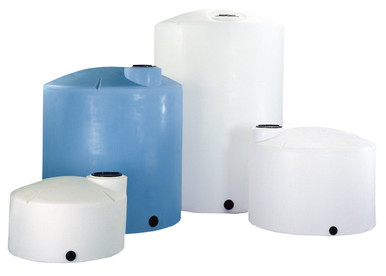
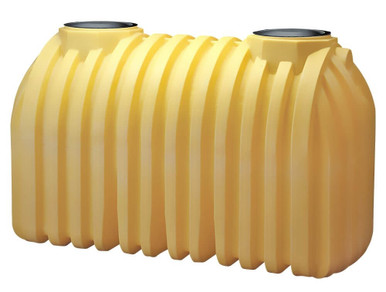
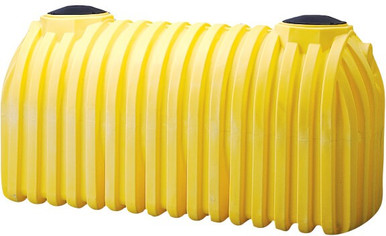
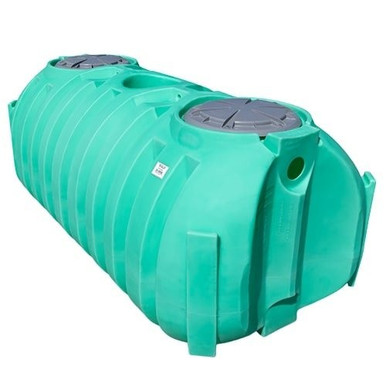
Kentucky (902 KAR 10:085) sizes septic tanks by bedroom count or design flow, with residential systems typically starting at 1,000 gallons. These IAPMO PS 1–listed polyethylene tanks meet that capacity standard; your county or state permitting office confirms the final size.
Shop all IAPMO PS 1–listed septic tanks →
Meeting the construction standard is not the same as a permit — your county environmental health office issues the permit and makes the final determination. Call us with your permit number and we will confirm the exact tank spec before shipment, with freight quoted to your ZIP.
Chemical Storage & Secondary Containment in Kentucky
Storing fuel, fertilizer, or process chemicals alongside your tank changes the rules. The federal Spill Prevention, Control, and Countermeasure rule (40 CFR Part 112) applies at 1,320 gallons of aggregate aboveground oil storage and requires secondary containment sized to at least 110% of your largest tank. Releases of hazardous substances above their federal reportable quantity (40 CFR 302.4) must be reported to the National Response Center at 1-800-424-8802.
Kentucky layers its own spill reportable quantities and restricted-substance rules on top of that federal floor — confirm the current thresholds with your state environmental agency before specifying a chemical tank. Just as important, the polyethylene resin must be matched to the exact chemical, concentration, and specific gravity you intend to store; a tank rated for water is not automatically rated for acid, bleach, or fertilizer.
Last reviewed: May 2026 · sourced from Kentucky administrative code
Regulations change on a rolling basis — confirm the current rule with your county or state agency before purchasing. Spot something out of date? Email us and we'll fix it.
Nearby states (East South Central) & full index: