
Maine Septic Tank Regulations — 10-144 CMR Ch 241
Maine Septic Tank Regulations
Maine's rules for subsurface wastewater disposal are found in 10-144 CMR Chapter 241, managed by the Maine CDC Subsurface Wastewater Unit. Licensed Site Evaluators (LSEs) are required professionals. The rules were updated in September 2023 to include watertight risers and a 40-year-fill rule, covering areas from coastal cottages to the North Woods.
The Governing Framework
Maine regulates subsurface wastewater disposal under:
- 10-144 CMR Chapter 241 — Subsurface Wastewater Disposal Rules. The substantive Maine rule.
- Maine Center for Disease Control (CDC), Subsurface Wastewater Unit — state-level administrator. The Subsurface Wastewater Unit sits within Maine CDC (not Maine DEP, which some people assume).
- Licensed Site Evaluator (LSE) — a professional-license category specific to Maine onsite wastewater. LSEs perform site evaluations, soil profiles, and system designs. The LSE requirement is stricter than many states' "soil evaluator" or "designer" categories.
- Local plumbing inspectors (LPIs) — issue permits and perform field inspections under Maine CDC oversight. Every Maine municipality has an LPI or LPI coverage arrangement.
The September 2023 Amendment Package
Maine CDC adopted significant amendments to Chapter 241 effective September 23, 2023. Key changes include:
- Watertight riser requirement. New installations require watertight risers on septic tanks to prevent surface water intrusion and facilitate maintenance access without excavation.
- 40-year-fill rule replacing 1974 soil cutoff. Historically, Maine's rules distinguished "natural" vs "fill" soils based on 1974. The 2023 amendment replaced this antiquated cutoff with a 40-year-fill rule (fill placed more than 40 years ago is treated as natural soil for permit purposes). This significantly simplifies evaluation of older modified sites.
- Seasonal-to-year-round conversion requirements. Converting a seasonal cottage (summer-only) to year-round use now triggers specific system evaluation and potential upgrade requirements. Seasonal systems were historically designed for lower flow and are not automatically adequate for year-round service.
- Grinder pump capacity additions. Requirements for grinder-pump-served systems were clarified to match modern installation practices.
If your project was designed before 2023 and construction was delayed, check with your LSE to see if the design needs updating to meet the new amendments.
Septic Tank Capacity
Maine Chapter 241 establishes tank capacity based on bedroom count and design flow. Typical residential sizing:
| Installation | Typical Minimum Capacity |
|---|---|
| 1–3 bedroom residential | 1,000 gallons |
| 4 bedroom residential | 1,250 gallons |
| 5+ bedroom residential | Per Ch 241 tables |
| With garbage disposal | Upsized per Ch 241 |
| Commercial / institutional | Per design flow calculations in Ch 241 |
Your LSE will determine the tank capacity based on your site's design flow and Chapter 241 tables. Polyethylene tanks that meet IAPMO/NSF listings and Chapter 241 construction standards are approved.
Permit Process
- Hire a Licensed Site Evaluator (LSE). The LSE is your design professional. Maine CDC maintains a list of licensed LSEs by region.
- LSE performs site evaluation. Soil profile, percolation, site restrictions per Ch 241.
- LSE prepares HHE-200 application. The formal permit application form including system design.
- Submit to Local Plumbing Inspector (LPI). The LPI reviews and approves at the municipal level.
- Licensed installer construction.
- LPI inspection before cover.
- Approval of completion. Formal sign-off from LPI.
Regional Considerations
- Southern Maine (York, Cumberland): Highest population density, mix of municipal sewer and dense-septic suburbia. Coastal parcels face saltwater-table concerns and erosion setbacks.
- Midcoast (Sagadahoc, Lincoln, Knox, Waldo): Extensive coastal cottage stock. Seasonal-to-year-round conversion requirements apply frequently.
- Down East (Hancock, Washington): Rural coastal. Long LSE lead times, short construction season (May–October). Plan well ahead.
- Western Mountains (Franklin, Oxford): Ski-country cottages and year-round rural. Rocky glacial soils, frost considerations.
- North Woods (Aroostook, Piscataquis, Somerset): Remote parcels, limited LSE coverage, logistical challenges. Shoulder-season siting often preferred.
- Central / Kennebec Valley: Agricultural and small-town. Standard systems typical.
- Lakes Region: Shoreland zoning layered on Chapter 241. Additional setbacks from lakes, stricter for phosphorus-sensitive watersheds.
Frequently Asked Questions
- Can I design my own septic system in Maine?
- No. Maine requires a Licensed Site Evaluator (LSE) to prepare the HHE-200 application. Homeowner-designed systems are not accepted. Budget for LSE services ($1,500-$4,000+ depending on site complexity).
- How do I find an LSE?
- Maine CDC maintains a directory of Licensed Site Evaluators. Contact LSEs in your region directly. In peak season expect 2-8 week lead times before site evaluation can begin. Book as early as possible.
- What's the 40-year-fill rule?
- Part of the September 2023 amendments. Fill soil (imported or placed soil over original grade) placed more than 40 years ago is treated as natural soil for permit evaluation purposes. This replaces the older 1974 cutoff and dramatically simplifies evaluation of mid-20th-century modified sites.
- Is my seasonal cottage's septic system adequate for year-round use?
- Usually not automatically. Seasonal systems were typically designed for lower peak flow and may have undersized tanks or absorption fields for year-round occupancy. The September 2023 amendments added specific requirements for seasonal-to-year-round conversion. Have your LSE evaluate before converting.
- Are polyethylene tanks accepted in Maine?
- Yes, when meeting IAPMO/NSF listings and Chapter 241 construction requirements. Major OEM rotomolded polyethylene tanks from Norwesco, Snyder, Ace Roto-Mold, and others are commonly approved. Your LSE will specify accepted models.
- What about shoreland zoning?
- Maine shoreland zoning applies additional setbacks and restrictions near lakes, rivers, and coastal shorelines. These layer on top of baseline Chapter 241 setbacks. Phosphorus-sensitive lake watersheds have particularly strict design requirements. Your LSE will know which rules apply to your parcel.
Source Citations
Shop Septic Tanks for Maine
OneSource stocks polyethylene septic tanks meeting Maine construction requirements. Match capacity to your design flow per the rules summarized above. Tank + accessories + holding tank options below cover standard and alternative configurations. OneSource drop-ships from the OEM warehouse closest to your install address.
Plastic Septic Tanks
Full polyethylene septic tank catalog. Sizes from 300 to 1,500+ gallons for Maine installations.
Browse Plastic Septic TanksIAPMO Approved Models
NSF/IAPMO listed tanks. Some counties and some installation types require this listing.
Browse IAPMO Approved ModelsSeptic Accessories
Risers, lids, baffles, filters, alarms, pumps, and install hardware.
Browse Septic AccessoriesHolding Tanks
Holding tanks for construction sites, recreational properties, and pump-and-haul installations.
Browse Holding TanksStoring chemicals in your Maine tank?
Maine's OSSF rules do not apply to chemical-storage tanks. These are specified by the manufacturer. If you need a tank for sulfuric acid, bleach, fertilizer solution, or any of 300+ industrial chemicals, our Chemical Compatibility Database provides full construction specifications.
Agricultural Tank Regulations — Maine BPC & DACF
The Maine Department of Agriculture, Conservation and Forestry (DACF) and the Maine Board of Pesticides Control (BPC) oversee agricultural tanks under the Maine Revised Statutes Annotated (MRSA) and the Code of Maine Rules (CMR):
- 01-001 CMR Ch. 20-22 — Maine Board of Pesticides Control rules; applicator licensing, restricted-use pesticide (RUP) recordkeeping, bulk storage, repackaging, dealer registration.
- 22 MRSA § 1471-A — Maine Pesticide Control Act (statutory authority).
- 01-001 CMR Ch. 33 — DACF Commercial Fertilizer Law rules: registration, tonnage reporting, labeling.
- 06-096 CMR Ch. 691 / 692 — ME DEP UST and AST rules covering any petroleum or hazardous-substance tank used at or adjacent to an ag operation above threshold.
Maine's agriculture focuses on potatoes in Aroostook County, dairy in the Kennebec and Penobscot valleys, apple orchards in western Maine, wild blueberries in Washington and Hancock counties, and maple syrup and forestry products statewide. Aroostook's potato region requires significant fertilizer storage, including bulk liquid UAN, ATS, 10-34-0, and fumigants like metam sodium and Vapam. Operators must build secondary containment to 110% of the largest tank with impermeable liners and spill capture, following ME DEP spill-response plans. The BPC's pesticide permit and buffer rules are detailed due to concerns about drift and water exposure in the St. John and Aroostook river areas.
Oil & Gas Storage — Petroleum UST/AST Path
Maine has no commercial oil or gas production and no framework for upstream operators. Petroleum is imported via the Portland-Montreal Pipeline and by marine tanker to Searsport and South Portland. Petroleum tank storage is regulated by:
- 06-096 CMR Ch. 691 — ME DEP UST rules: design, installation, corrosion protection, spill/overfill, release detection, operator training, closure, financial responsibility.
- 06-096 CMR Ch. 692 — ME DEP AST rules: regulated aboveground petroleum and hazardous-substance tanks; a notably detailed state AST framework for New England.
- 38 MRSA Chapter 3 Sub-chapter 2-B — UST statutory authority.
- 38 MRSA § 568-A — Groundwater Oil Cleanup Fund (state fund reimbursing eligible corrective-action costs for petroleum releases).
- NFPA 30 / 30A — adopted through State Fire Marshal and local fire-code enforcement for flammable and combustible liquids.
Heating-oil tanks in 1- to 4-unit residential buildings have partial Chapter 692 exemptions and follow NFPA 31. Insurance-driven integrity programs are common. Offshore federal OCS leasing in the Gulf of Maine is managed by BOEM/BSEE, outside state jurisdiction. The State Fire Marshal handles AST registration and inspection with ME DEP.
Septic System Sizing — 10-144 CMR Ch. 241 Maine Subsurface Wastewater Disposal Rules
The Maine Department of Health and Human Services (DHHS) oversees subsurface wastewater under 10-144 CMR Ch. 241. Licensed Site Evaluators (LSEs) handle design and soil evaluation. Maine's residential design flow is high at 270 gpd per bedroom, due to conservative sizing for cold, wet, shallow-bedrock soils:
| Bedrooms | Minimum Septic Tank Capacity |
|---|---|
| 1–3 BR | 1,000 gallons |
| 4 BR | 1,250 gallons |
| 5 BR | 1,500 gallons |
| 6+ BR | Add 250 gallons per additional bedroom |
Maine's soils vary from shallow-bedrock granite in the western mountains and Downeast, sandy sediments along the coast, heavy glacial till in the central state, to rich Caribou silt loam in Aroostook County. Frost depth requires deep burial, Styrofoam insulation, and heat-trace on risers. Alternative systems like pressure-dosed dispersal, mound systems, peat biofilters, and sand filters are common. Every new system is designed by a Licensed Site Evaluator, a key part of Maine's regulations.
The Mandatory Shoreland Zoning Act (38 MRSA § 435 et seq.) applies to coastal and freshwater shorelines. Septic tanks and grading within the shoreland zone (usually 250 feet from ponds, rivers, and coastal waters; 75 feet from streams) need municipal permits that meet state standards. Coastal areas have extra setbacks for wetlands and erosion risks.
Chemical Storage, Shoreland Zoning & Spill Reporting
Federal SPCC (40 CFR 112) applies at 1,320 gallons aggregate aboveground oil. Maine layers on:
- 38 MRSA § 543 — Maine Oil Discharge Prevention and Pollution Control statute; strict, joint-and-several, retroactive liability for petroleum discharges.
- 06-096 CMR Ch. 600 — Site Location of Development Act review for large facilities (industrial, commercial, subdivisions); siting-level review that pulls tank projects into ME DEP oversight at scale.
- Mandatory Shoreland Zoning (38 MRSA § 435 et seq.) — statewide minimum standards administered by municipalities; coastal and lakeshore setback regime that affects virtually every ag, residential, and commercial tank project near water.
- High-Yield Aquifer protection — mapped high-yield sand-and-gravel aquifers in the Presumpscot, Androscoggin, Kennebec, and other basins face tighter siting and containment expectations under local ordinance and DEP guidance.
- NFPA 30 / 30A — adopted through State Fire Marshal and local fire-code enforcement for flammable and combustible liquids.
Report federal-RQ releases to the National Response Center at 1-800-424-8802 and state releases to ME DEP Response Services at 1-800-482-0777, available 24 hours.
Permit Pathways at a Glance
- Residential septic: Licensed Site Evaluator + municipal plumbing inspector under 10-144 CMR Ch. 241.
- Pesticide applicator license: Maine BPC under 01-001 CMR Ch. 20-22.
- Fertilizer registration: DACF under 01-001 CMR Ch. 33.
- Petroleum UST: ME DEP under 06-096 CMR Ch. 691.
- Petroleum/chemical AST: ME DEP under 06-096 CMR Ch. 692 + NFPA 30/30A.
- SPCC > 1,320 gal oil aggregate: Federal SPCC plan; ME DEP spill reporting.
- Shoreland zoning: Municipal permit under 38 MRSA § 435 et seq. state minimum standards.
- Site Location of Development: ME DEP under 06-096 CMR Ch. 600 (large commercial/industrial).
Current fees change; verify with ME DEP, BPC, DHHS, or State Fire Marshal before budgeting.
More Maine FAQs
- What is a Licensed Site Evaluator and why does every septic project need one?
- Under 22 MRSA § 42 and the Subsurface Wastewater Disposal Rules, Maine requires a Licensed Site Evaluator (LSE) to conduct soil evaluation, system design, and construction inspection for every new or replacement on-site wastewater system. The LSE program is distinctive to Maine and drives relatively consistent design quality across the state; LSEs are licensed by DHHS and carry design liability. Budget an LSE retainer early in any property-development timeline.
- How does shoreland zoning affect my tank project?
- Maine's Mandatory Shoreland Zoning Act sets minimum standards for any construction within 250 feet of great ponds, rivers, and coastal waters; 75 feet from streams; and within freshwater and coastal wetlands. Municipalities adopt conforming ordinances. Tanks, septic systems, and secondary containment within the shoreland zone require municipal shoreland permits, typically with setback and vegetation-protection conditions. Coastal shoreland parcels also face Erosion Hazard Area designations that may prohibit certain tank installations.
- Why is Aroostook County fertilizer storage different?
- Aroostook potato country handles bulk liquid fertilizer and fumigants at volumes uncommon elsewhere in Maine: on-farm bulk tanks of 6,000-20,000 gallons for UAN, ATS, and 10-34-0 plus specialty storage for potato-soil fumigants (metam sodium, Vapam). BPC buffer and drift rules are detailed; DEP spill-prevention expectations scale up accordingly. Aroostook's Caribou silt loam and proximity to the St. John and Aroostook rivers drive tight nutrient-management and containment discipline.
- Does Maine have a state UST cleanup fund?
- Yes — the Maine Ground Water Oil Clean-up Fund under 38 MRSA § 568-A reimburses eligible corrective-action costs for petroleum releases from registered, compliant tanks. Coverage caps and deductibles are set by ME DEP; unregistered or out-of-compliance tanks are generally ineligible, and documentation discipline matters.
- Who regulates heating-oil tanks at a Maine home?
- Residential heating-oil tanks at 1- to 4-unit dwellings follow partial Chapter 692 exemptions, NFPA 31 installation standards through local fire officials, and strict 38 MRSA § 543 oil-discharge liability on any release. State Fire Marshal plus local code enforcement handle inspection coordination. Insurance-driven tank-integrity programs (particularly for basement No. 2 heating-oil tanks) are standard.
- How fast must I report an oil or chemical release in Maine?
- Under 38 MRSA § 543 and Ch. 691/692 a petroleum or hazardous-substance release must be reported to ME DEP Response Services immediately; federal-RQ releases also go to NRC at 1-800-424-8802. The DEP 24-hour number is 1-800-482-0777. Delayed reporting compounds liability and can jeopardize state-fund eligibility. Maine liability is strict, joint-and-several, and retroactive.
Septic Tanks That Meet Maine Code
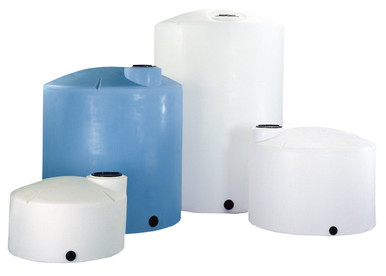
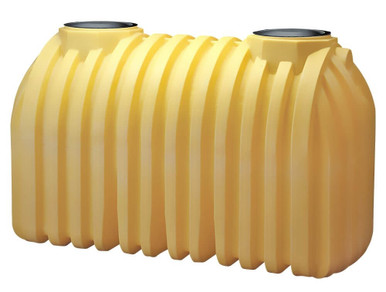
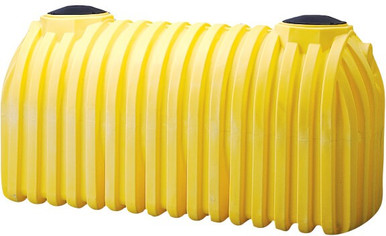
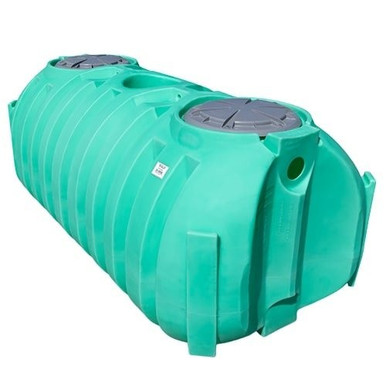
Maine (10-144 CMR Chapter 241) sizes septic tanks by bedroom count or design flow, with residential systems typically starting at 1,000 gallons. These IAPMO PS 1–listed polyethylene tanks meet that capacity standard; your county or state permitting office confirms the final size.
Shop all IAPMO PS 1–listed septic tanks →
Meeting the construction standard is not the same as a permit — your county environmental health office issues the permit and makes the final determination. Call us with your permit number and we will confirm the exact tank spec before shipment, with freight quoted to your ZIP.
Chemical Storage & Secondary Containment in Maine
Storing fuel, fertilizer, or process chemicals alongside your tank changes the rules. The federal Spill Prevention, Control, and Countermeasure rule (40 CFR Part 112) applies at 1,320 gallons of aggregate aboveground oil storage and requires secondary containment sized to at least 110% of your largest tank. Releases of hazardous substances above their federal reportable quantity (40 CFR 302.4) must be reported to the National Response Center at 1-800-424-8802.
Maine layers its own spill reportable quantities and restricted-substance rules on top of that federal floor — confirm the current thresholds with your state environmental agency before specifying a chemical tank. Just as important, the polyethylene resin must be matched to the exact chemical, concentration, and specific gravity you intend to store; a tank rated for water is not automatically rated for acid, bleach, or fertilizer.
Last reviewed: May 2026 · sourced from Maine administrative code
Regulations change on a rolling basis — confirm the current rule with your county or state agency before purchasing. Spot something out of date? Email us and we'll fix it.
Nearby states (New England) & full index: