
Maryland Septic Tank Regulations — COMAR 26.04.02
Maryland Septic Tank Regulations
Maryland's sewage disposal rules, under COMAR 26.04.02 and overseen by MDE, require a design flow of 150 gallons per day (gpd) per bedroom plus 300 gpd for the residential floor. Homes must have two-compartment tanks, and the Chesapeake Bay Restoration Fund affects coastal properties.
The Governing Framework
Maryland regulates onsite sewage disposal under:
- COMAR 26.04.02 — Sewage Disposal and Certain Water Systems for Homes and Other Establishments in the Counties of Maryland Where a Public Sewage System is Not Available.
- COMAR 26.04.02.03 — On-Site Sewage Disposal Permits.
- COMAR 26.04.02.05 — Design and Construction of Conventional On-Site Sewage Disposal Systems.
- Regulation .04J — Horizontal separation distances (setbacks).
- Maryland Department of the Environment (MDE) — state-level administrator. MDE's Water and Science Administration handles onsite systems.
- Local health departments — handle field permits under MDE oversight.
Design Flow and Tank Capacity
| Parameter | Requirement |
|---|---|
| Residential design flow baseline | 150 gpd per bedroom |
| Minimum residential design flow | 300 gpd per residence (regardless of bedroom count) |
| Residential tank construction | Minimum two compartments OR two tanks in series |
| Absolute minimum tank capacity | 1,000 gallons |
The Approving Authority can set design flows based on square footage for unusual setups, but it can't be less than 300 gpd per home. The standard is 150 gpd per bedroom for regular homes.
Commercial and Institutional Capacity — The V Formulas
For institutional and commercial installations, Maryland uses two flow-dependent formulas:
| Peak Daily Flow (Q) | Minimum Tank Capacity (V) |
|---|---|
| Less than 1,500 gpd | V = 1.5 × Q |
| 1,500 gpd or greater | V = 1,125 + 0.75 × Q (gallons) |
| Absolute minimum | 1,000 gallons |
The Two-Compartment Requirement
In Maryland, homes must have tanks with two compartments or two tanks in series. This is stricter than in many states where one compartment is enough. This rule helps settle solids better and handle flow changes.
When buying a polyethylene tank for Maryland, make sure it has two compartments with the right inlet-to-outlet ratio. Tanks with one compartment sold in other states won't work here.
Chesapeake Bay Restoration Fund — The Nitrogen Upgrade Driver
Maryland's Chesapeake Bay Restoration Fund, also known as the "flush tax," helps upgrade septic systems in the Chesapeake Bay Critical Area and certain watersheds. Key points include:
- Properties in the Critical Area may be required to upgrade to Best Available Technology (BAT) for nitrogen reduction
- BAT systems (aerobic treatment units, denitrifying filters, etc.) cost significantly more than conventional septic
- Bay Restoration Fund provides partial cost offset for homeowners
- New construction in designated areas typically requires BAT from the start
If your property is in the Chesapeake Bay Critical Area, defined by its distance from tidal waters and tributaries, expect to pay for a BAT-level system and ongoing maintenance.
Permit Process
- Contact your county health department. Maryland county health departments handle onsite permits under MDE delegation.
- Site evaluation. Per COMAR 26.04.02 protocols.
- System design submission. Plot plan, soil results, flow calculations per 150 gpd/BR rule.
- Permit application. County-level. Fees vary.
- Licensed installer construction.
- Inspection before cover.
- Bay Restoration Fund review for Critical Area parcels.
Regional Considerations
- Baltimore and Washington DC Metro: Largely on municipal sewer. Remaining septic on exurban fringe.
- Eastern Shore (Dorchester, Talbot, Wicomico, Worcester): Extensive Chesapeake Bay Critical Area. BAT-level systems often required. High water-table concerns in coastal parcels.
- Western Maryland (Garrett, Allegany): Mountain terrain, shallow soil over shale/sandstone. Alternative systems common.
- Southern Maryland (St. Mary's, Calvert, Charles): Tidal Chesapeake and Potomac shorelines. Critical Area rules apply broadly.
- Annapolis / Bay Bridge area: Waterfront properties with strict Critical Area oversight. Real-estate-transfer inspections common.
- Ocean City and coastal resort: Largely on municipal sewer. Rural Worcester County uses septic with coastal-watershed considerations.
Frequently Asked Questions
- What's the Chesapeake Bay Critical Area?
- Defined in Maryland statute as areas within 1,000 feet of tidal waters and their tributaries. Within the Critical Area, additional environmental protections apply including BAT-level septic for many new and upgrading systems. Maps at county and state levels define the boundary.
- What's a BAT system?
- Best Available Technology for nitrogen reduction. Typically aerobic treatment units (ATUs) with denitrification, or recirculating media filters. Removes 50%+ of total nitrogen (vs 30% for conventional septic). Required in Critical Area, optional elsewhere. Cost $20,000-$45,000 plus ongoing O&M.
- Is two-compartment really required?
- Yes, for residential installations. Single-compartment tanks don't meet COMAR 26.04.02.05 requirements. Verify any tank you order is spec'd as two-compartment or is paired as two tanks in series.
- Do I need a PE-stamped design?
- Depends on system type and county requirements. Conventional systems within flow limits typically don't require PE stamping. BAT systems and larger commercial installations usually do. Your county health department will specify.
Source Citations
Shop Septic Tanks for Maryland
OneSource stocks polyethylene septic tanks meeting Maryland construction requirements. Match capacity to your design flow per the rules summarized above. Tank + accessories + holding tank options below cover standard and alternative configurations. OneSource drop-ships from the OEM warehouse closest to your install address.
Plastic Septic Tanks
Full polyethylene septic tank catalog. Sizes from 300 to 1,500+ gallons for Maryland installations.
Browse Plastic Septic TanksIAPMO Approved Models
NSF/IAPMO listed tanks. Some counties and some installation types require this listing.
Browse IAPMO Approved ModelsSeptic Accessories
Risers, lids, baffles, filters, alarms, pumps, and install hardware.
Browse Septic AccessoriesHolding Tanks
Holding tanks for construction sites, recreational properties, and pump-and-haul installations.
Browse Holding TanksStoring chemicals in your Maryland tank?
Maryland's rules for onsite sewage systems don't cover chemical-storage tanks. These are specified by manufacturers. If you need a tank for chemicals like sulfuric acid or bleach, our Chemical Compatibility Database has all the construction details.
Agricultural Tank Regulations — MDA & MDE
The Maryland Department of Agriculture (MDA) and Maryland Department of the Environment (MDE) oversee agricultural tanks under the Annotated Code of Maryland and COMAR.
- COMAR 15.05 — MDA Pesticide Regulation, Fertilizer, and related commodity programs; applicator licensing, RUP recordkeeping, bulk storage, repackaging.
- Md. Code Agriculture Title 5 — statutory authority for the Pesticide Applicator's Law.
- Md. Code Agriculture Title 6 — Commercial Fertilizer registration, tonnage reporting, and the Maryland Nutrient Management Program (landmark Chesapeake Bay law requiring NMPs on most farms).
- COMAR 15.20 — MDA Nutrient Management Program: certification, plan implementation, recordkeeping, annual implementation reports.
Maryland's agriculture is small but intense. The Eastern Shore has poultry farms, Southern Maryland has moved from tobacco to grains, and the Piedmont and Western Maryland have dairy and orchards. The Maryland Nutrient Management Program is key for Chesapeake Bay protection, requiring most farms to follow certified plans. Large poultry farms need CAFO permits under COMAR 26.08.04 and MAFO permits from MDE.
Petroleum Storage Tanks (UST & AST) — MDE Oil Control Program
MDE's Oil Control Program administers Maryland's petroleum-tank rules under Md. Code Environment Title 4:
- COMAR 26.10 (full subtitle) — Oil Pollution and Tank Management: comprehensive regulation covering UST, AST, oil transport, and oil-handling facilities.
- COMAR 26.10.01 — General Provisions.
- COMAR 26.10.02–26.10.12 — UST technical standards, installation, operation, release detection, corrective action, closure, financial responsibility.
- COMAR 26.10.13 — Aboveground Storage Tanks and Oil Transfers: registration, construction, spill prevention, release reporting for petroleum AST facilities.
- Md. Code Environment § 4-401 et seq. — statutory authority for the Oil Pollution, Prevention, Control & Discharge Act.
- Maryland Oil Disaster Containment, Clean-up and Contingency Fund — state trust fund for release response and eligible corrective action.
Petroleum facility owners in Maryland must register tanks with MDE, pay yearly fees, keep 2018 federal UST upgrades, and follow AST spill prevention rules under COMAR 26.10.13. MDE's Oil Control Program checks compliance, certifies technicians, and runs a 24-hour spill response line. Areas like Baltimore harbor and the I-95 corridor have large petroleum storage, and Maryland's AST rules are strict due to Chesapeake Bay tanker traffic.
Chesapeake Bay Critical Area BAT-N Septic Deep Dive
Maryland's septic rules are closely linked to protecting the Chesapeake Bay. Land within 1,000 feet of the Bay and tidal tributaries must use the Best Available Technology for Nitrogen Removal (BAT-N):
- COMAR 26.04.02 — On-Site Sewage Disposal Systems: statewide septic design, siting, and permitting.
- COMAR 27 (Critical Area Commission) — Critical Area Resource Conservation, Limited Development, and Intensely Developed Area overlays within the 1,000-ft Critical Area.
- Md. Code Environment § 9-1108.1 — statutory requirement that new and replacement septic systems in the Critical Area use Best Available Technology for Nitrogen Removal (BAT-N).
- Bay Restoration Fund — state program funded by the flush tax and water-infrastructure fees; reimburses qualifying BAT-N upgrades for owners in Critical Area and eligible Tier II watersheds.
BAT-N systems are advanced treatment units certified by MDE to cut nitrogen by about 50% compared to regular septic systems. Approved models are listed by MDE. Initially for the Critical Area, the BAT-N rule now covers more nitrogen-sensitive areas. The Bay Restoration Fund helps cover BAT-N costs for eligible homeowners. Maryland's residential design flow is 250 gpd per bedroom, one of the highest in the US for safety.
| Bedrooms | Minimum Septic Tank Capacity (COMAR 26.04.02) |
|---|---|
| 1–3 BR | 1,000 gallons (Critical Area BAT-N unit sized per approval) |
| 4 BR | 1,250 gallons |
| 5 BR | 1,500 gallons |
| 6+ BR | Add 250 gallons per additional bedroom |
County health departments in Maryland issue permits under COMAR 26.04.02 and work with MDE and the Critical Area Commission for Critical Area properties. Eastern Shore lots with high water tables or near tidal waters often need BAT-N systems and elevated drainfields or mounds.
Chemical Storage Secondary Containment & Spill Reporting
Federal SPCC (40 CFR 112) applies at 1,320 gallons aggregate aboveground oil. Maryland layers on:
- COMAR 26.10.13 — AST containment and release reporting.
- Md. Code Environment § 4-417 — oil discharge reporting (MDE 24-hour notification).
- COMAR 26.08 — Water Pollution: NPDES permits, industrial stormwater, water-quality standards.
- MDE 24-hour spill response: 866-633-4686.
- COMAR 26.13 — Hazardous Waste Management (RCRA Subtitle C delegation).
Report federal reportable quantity releases to the NRC at 1-800-424-8802 and state releases to MDE. Secondary containment must be 110% of the largest tank, as per SPCC and COMAR 26.10.13. Proximity to Chesapeake Bay and tidal waters means quick response is crucial, and the state treats these releases very seriously.
Permit Pathways at a Glance
- Residential OSDS: County health department under COMAR 26.04.02; BAT-N mandatory in Critical Area per Md. Code Environment § 9-1108.1.
- Nutrient Management Plan: MDA-certified consultant under COMAR 15.20.
- Pesticide applicator: MDA under Md. Code Agriculture Title 5 / COMAR 15.05.
- CAFO / MAFO: MDE Animal Feeding Operations program under COMAR 26.08.04.
- Petroleum UST: MDE Oil Control Program under COMAR 26.10.
- Petroleum AST: MDE Oil Control Program under COMAR 26.10.13.
- SPCC > 1,320 gal oil aggregate: Federal SPCC plan; MDE state spill reporting.
- NPDES industrial stormwater: MDE under COMAR 26.08.
- Critical Area projects: Critical Area Commission review plus county CAC administrator.
Current fees change; verify with MDE, MDA, or the county health department before budgeting.
More Maryland FAQs
- What is BAT-N and do I really need it?
- Best Available Technology for Nitrogen Removal is an MDE-approved aerobic treatment unit that reduces effluent nitrogen roughly 50% versus conventional septic. Under Md. Code Environment § 9-1108.1, new and replacement septic systems within the Chesapeake Bay Critical Area (1,000-ft buffer) must use BAT-N. Maryland gradually expanded BAT-N application to additional nitrogen-sensitive watersheds. If your parcel is in the Critical Area or a designated Tier II watershed, BAT-N is the default and the Bay Restoration Fund may reimburse a portion.
- What is the Critical Area and how do I know if my site is in it?
- The Chesapeake Bay Critical Area is the 1,000 feet of land landward of tidal waters and tidal wetlands. County Critical Area maps are the authoritative source; the Critical Area Commission maintains statewide oversight. Critical Area classification (RCA, LDA, IDA) drives development intensity, buffer requirements, and BAT-N septic applicability.
- Does MD have its own AST rule beyond SPCC?
- Yes — COMAR 26.10.13 is Maryland's state AST rule. It imposes registration, construction, and spill-prevention requirements on petroleum AST facilities that can be stricter than federal SPCC baseline. Port operators, fuel-terminal operators, and heating-oil dealers along the I-95 corridor coordinate with MDE Oil Control Program for plan review.
- Who runs my county septic permit?
- Maryland's 24 county (including Baltimore City) health departments administer the septic permit under COMAR 26.04.02 in coordination with MDE. BAT-N approvals come from MDE. For Critical Area parcels, the county's Critical Area administrator reviews as well. Several agencies, one permit workflow — start with the county health department.
- Why is Maryland's 250 gpd/bedroom design flow so high?
- It reflects conservative hydraulic sizing and Maryland's extensive high-water-table Eastern Shore soils where drainfield capacity is the binding constraint. Higher per-bedroom design flow enlarges trench area and tank volume, buffering against seasonal water-table rise and protecting drainfield longevity. Other states use 100–150 gpd/bedroom; Maryland's 250 gpd is among the highest.
- What is the flush tax?
- Officially the Bay Restoration Fee — a per-user sewer and onsite-system charge that feeds the Bay Restoration Fund. The fund finances upgrades of major wastewater treatment plants to enhanced nutrient removal and subsidizes BAT-N septic upgrades for qualifying homeowners. Widely credited as a meaningful driver of Chesapeake Bay nitrogen reductions.
Septic Tanks That Meet Maryland Code
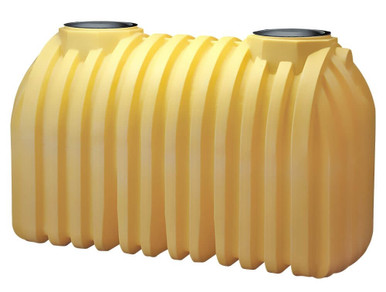
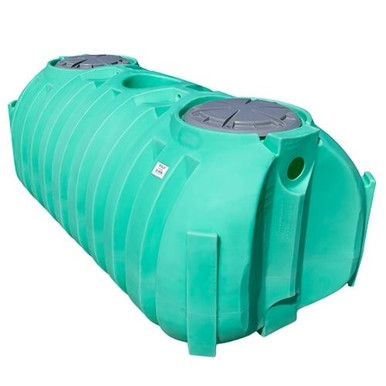
Maryland (COMAR 26.04.02) requires a two-compartment septic tank for residential systems and Best Available Technology in the Chesapeake Bay Critical Area. These IAPMO PS 1–listed two-compartment tanks meet the two-compartment standard.
Shop all IAPMO PS 1–listed septic tanks →
Meeting the construction standard is not the same as a permit — your county environmental health office issues the permit and makes the final determination. Call us with your permit number and we will confirm the exact tank spec before shipment, with freight quoted to your ZIP.
Chemical Storage & Secondary Containment in Maryland
Storing fuel, fertilizer, or process chemicals alongside your tank changes the rules. The federal Spill Prevention, Control, and Countermeasure rule (40 CFR Part 112) applies at 1,320 gallons of aggregate aboveground oil storage and requires secondary containment sized to at least 110% of your largest tank. Releases of hazardous substances above their federal reportable quantity (40 CFR 302.4) must be reported to the National Response Center at 1-800-424-8802.
Maryland layers its own spill reportable quantities and restricted-substance rules on top of that federal floor — confirm the current thresholds with your state environmental agency before specifying a chemical tank. Just as important, the polyethylene resin must be matched to the exact chemical, concentration, and specific gravity you intend to store; a tank rated for water is not automatically rated for acid, bleach, or fertilizer.
Last reviewed: May 2026 · sourced from Maryland administrative code
Regulations change on a rolling basis — confirm the current rule with your county or state agency before purchasing. Spot something out of date? Email us and we'll fix it.
Nearby states (South Atlantic) & full index: