
Mississippi Septic Tank Regulations — MSDH IOWDS Rules
Mississippi Septic Tank Regulations
Mississippi's onsite wastewater rules are set by the Mississippi State Department of Health (MSDH) under the IOWDS framework. These include Chapter 5 design standards, Title 41 Chapter 67 statute, and regional considerations from the Mississippi Delta to the coast.
The Governing Framework
Mississippi regulates individual onsite wastewater under MSDH:
- MSDH Regulation Governing Individual Onsite Wastewater Disposal Systems (IOWDS) — the substantive rule for residential and small-commercial onsite systems.
- MSDH Chapter 5 — Individual Onsite Wastewater Disposal Design Standard — the detailed engineering design document.
- Mississippi Code Title 41 — Public Health. Section 41-67 chapter provides enabling statutory authority.
- Mississippi State Department of Health (MSDH) — develops policy and regulations, provides technical assistance to regional environmentalists.
- Regional environmentalists — MSDH field staff who design, permit, and inspect individual onsite systems across the nine MSDH regions.
Septic Tank Capacity — Bedroom-Based
Mississippi uses a bedroom-based rule for tank capacity in homes. The size depends on the number of bedrooms planned. You can find the specific capacity table in the MSDH Chapter 5 design standard. Check the design standard PDF or ask your regional environmentalist for the correct capacity table for your project.
Setback Distances
MSDH IOWDS rules specify minimum setback distances including:
- 50 feet from any water source or property boundary (baseline)
- Additional setbacks to wells, surface water, structures, and water supply lines specified in Chapter 5
Delta parishes and coastal counties might have extra setback rules for floodplains. Check with your regional environmentalist to be sure.
Permit Process
- Contact your MSDH regional environmentalist. The nine MSDH regions cover all Mississippi counties.
- Site evaluation. Regional environmentalist performs soil and site evaluation per Chapter 5 protocols.
- System design. MSDH staff may design the system directly for simple residential cases, or review designs submitted by the homeowner or installer.
- Permit issuance. Fees typically $200–$500.
- Licensed installer construction. Mississippi licenses onsite installers.
- Final inspection. MSDH regional environmentalist inspects before backfill.
Regional Considerations
- Mississippi Delta (Bolivar, Coahoma, Washington): Flat alluvial land with poorly-drained clay soils and high water tables. Mound systems and pressure dosing are the norm. Conventional trench systems often fail Chapter 5 soil criteria.
- North Central Hills (Lafayette, Yalobusha, Calhoun): Loess and clay soils with moderate percolation. Standard systems typical.
- Piney Woods (Forrest, Jones, Lauderdale): Sandy coastal plain soils with good percolation. Standard systems work well.
- coastal (Hancock, Harrison, Jackson): Hurricane floodplain considerations. Tank anchoring required. Post-Katrina regulatory amendments apply.
- Jackson Metro: Urban/suburban transition from septic to municipal sewer. Remaining septic parcels in rural-perimeter counties (Rankin, Madison, Hinds rural).
- Loess Bluffs (Warren, Claiborne, Jefferson): Deep wind-blown loess, excellent percolation in stable conditions. Some slope stability concerns on bluffs.
Material Approvals
MSDH accepts polyethylene tanks meeting Chapter 5 construction standards. Verify at order:
- IAPMO PS 1 or NSF 46 listing
- Ribbed polyethylene construction
- Hurricane-zone anchoring for coastal counties
- Elevated-riser compatibility for Delta flood zones
- Effluent filter compatibility
Frequently Asked Questions
- Who is my "regional environmentalist"?
- MSDH operates 9 regional health offices across Mississippi. The regional environmentalist at your region is the MSDH field-staff person who handles septic permits, inspections, and site evaluations. Contact the MSDH On-Site Wastewater Program headquarters or your county health department to identify your regional office.
- Does MSDH design the system for me?
- For straightforward residential systems, MSDH regional environmentalists often design the system directly at no extra cost. Complex systems, commercial flows, or alternative-technology installations typically require private engineering services.
- What about Delta soil conditions?
- Mississippi Delta clay soils with high water tables usually fail Chapter 5 site evaluation for conventional systems. Alternative systems — mounds, pressure dosing, aerobic treatment units, or drip dispersal — are the norm. Expect higher system cost and ongoing maintenance obligations.
- Are there special coastal requirements?
- Yes. Post-Katrina regulatory amendments added hurricane-anchoring and flood-zone elevation requirements for coastal counties. Your regional environmentalist will specify these for your parcel.
- Does Mississippi accept polyethylene tanks?
- Yes, provided they meet IAPMO/NSF listings and Chapter 5 construction standards. Major OEM tanks are accepted.
Source Citations
Shop Septic Tanks for Mississippi
OneSource stocks polyethylene septic tanks meeting Mississippi construction requirements. Match capacity to your design flow per the rules summarized above. Tank + accessories + holding tank options below cover standard and alternative configurations. OneSource drop-ships from the OEM warehouse closest to your install address.
Plastic Septic Tanks
Full polyethylene septic tank catalog. Sizes from 300 to 1,500+ gallons for Mississippi installations.
Browse Plastic Septic TanksIAPMO Approved Models
NSF/IAPMO listed tanks. Some counties and some installation types require this listing.
Browse IAPMO Approved ModelsSeptic Accessories
Risers, lids, baffles, filters, alarms, pumps, and install hardware.
Browse Septic AccessoriesHolding Tanks
Holding tanks for construction sites, recreational properties, and pump-and-haul installations.
Browse Holding TanksStoring chemicals in your Mississippi tank?
Mississippi's OSSF rules don't cover chemical-storage tanks. These are specified by the manufacturer. If you need a tank for sulfuric acid, bleach, fertilizer solution, or any of 300+ industrial chemicals, our Chemical Compatibility Database has all the construction specifications.
Agricultural Tank Regulations — MDAC Bureau of Plant Industry
The Mississippi Department of Agriculture and Commerce (MDAC) Bureau of Plant Industry handles pesticide, fertilizer, and feed regulation.
- Mississippi Administrative Code Title 2 — Agriculture and Commerce, Rules of the Bureau of Plant Industry.
- MDAC Pesticide Program — registration, commercial and private applicator certification, licensing of commercial applicators and consultants, and compliance/enforcement.
- Feed, Fertilizer, Lime, Soil and Plant Amendments (FFLSP) program — product registration, facility registration, inspection and sampling against label guarantees, and penalty assessments.
- Mississippi Code Title 75 — Pesticide Law and Pesticide Application Law, the statutory backbone for MDAC's pesticide rules.
MDAC requires registered product labels, licensed applicators, and compliant storage. While Mississippi doesn't specify containment geometry like Kentucky's 302 KAR 31:040, operators should at least meet the federal SPCC standard for oil and the EPA Pesticide Container Containment Rule (40 CFR 165 Subpart E) for repackaging. Bulk retail fertilizer sites usually follow the industry standard of 110% containment with an impervious pad.
Oil & Gas Produced Water — State Oil and Gas Board
The Mississippi State Oil and Gas Board controls oil-field exploration and production waste, including produced water and brine, under Mississippi Code Title 53, Chapter 1 and related chapters. Key points include:
- Title 26 Part 2 (MS Admin Code) — Statewide Rules and Regulations of the State Oil and Gas Board.
- 26 Miss. Code. R. 2-1.45 — Pollution of Air, Fresh Waters and Soils Prohibited. Requires operators to prevent seepage, overflow, and damage to topsoil or surface waters.
- Noncommercial disposal of oil-field E&P wastes by injection is permitted only into sub-surface strata with a total dissolved solids content above 10,000 ppm that are void of oil and gas. Each noncommercial disposal arrangement is case-by-case subject to Supervisor authorization.
- MDEQ coordination — State Oil and Gas Board rules on waste disposal are subject to Mississippi Commission on Environmental Quality approval.
Operators using frac tanks, brine tanks, and tank batteries in the Mississippi Salt Basin and the Smackover Trend must follow OGB rules for containment, reporting, and disposal. Polyethylene tanks should be designed for the specific gravity and chemistry of local produced water, which can have over 100,000 ppm TDS in some Smackover wells.
Septic System Sizing Deep Dive
The Mississippi State Department of Health (MSDH) oversees onsite wastewater under the Individual Onsite Wastewater Disposal System (IOWDS) rules. Design-flow tables are in MS Admin Code Title 15 Part 20 and Mississippi Code Title 41, Chapter 67. Key design parameters usually applied include:
- Minimum tank: 1,000 gallons for typical residential systems.
- Design flow: Calculated on a bedroom basis for dwellings and a peak-fixture basis for non-dwellings.
- Setbacks: Typical minimums include 50 feet from wells and surface water, 10 feet from property lines, and additional distances for commercial-scale systems. Specific Table setbacks should be confirmed with MSDH before design.
- Inspections: MSDH environmental health district offices perform pre-cover inspections; certified installers are required.
Coastal counties like Hancock, Harrison, and Jackson have high-water-table issues and might need mound systems or other technologies. Delta counties with heavy clay often require pressure distribution. Upland pine-belt areas generally support conventional trench systems.
Chemical Storage Secondary Containment & Spill Reporting
Federal SPCC (40 CFR 112) applies at 1,320 gallons aggregate aboveground oil. Mississippi spill reporting layers on:
- Miss. Code Ann. §§ 49-17-17(i) and 49-17-401 — statutory authority for MDEQ release reporting.
- 11 Miss. Admin. Code Pt. 5, Ch. 2 — UST rules. A spill or overfill that releases more than 25 gallons of product from a UST system must be reported to MDEQ, typically within 24 hours. Smaller releases must be contained and cleaned up; if cleanup can't be completed within 24 hours, MDEQ must be notified.
- Hazardous substance RQ releases must be reported immediately to the National Response Center (1-800-424-8802) in addition to MDEQ.
- MDEQ 24-hour emergency line for spill notification is published on the MDEQ Report a Release page.
Operators using polyethylene chemical tanks must design secondary containment to hold at least 110% of the largest tank volume, use impervious flooring, and document SPCC compliance. Contact MDEQ for current fee schedules and any state-specific reportable-quantity changes.
Permit Pathways at a Glance
- Residential septic: MSDH district environmental health.
- Commercial pesticide/fertilizer retail: MDAC Bureau of Plant Industry registration and applicator licensing.
- Oil & gas produced water storage & disposal: State Oil and Gas Board permitting; Class II UIC authorization.
- Petroleum UST: MDEQ registration under 11 Miss. Admin. Code Pt. 5.
- SPCC > 1,320 gal oil: Federal SPCC plan; MDEQ spill reporting.
Fees and timelines are agency-specific. Contact MDAC, MDEQ, or the State Oil and Gas Board directly for current numbers.
More Mississippi FAQs
- Are coastal parcels in Harrison and Jackson counties harder to permit?
- Yes. Saltwater intrusion, shallow groundwater, and post-Katrina building-elevation standards all compound the IOWDS design. Plan on elevated tank risers, pressure distribution, and potentially advanced treatment. Budget 30–60% premium over a typical pine-belt installation.
- My farm is in the Delta and holds 8,000 gallons of liquid fertilizer seasonally. What applies?
- Above 1,320 gallons aggregate you're a federal SPCC facility if that product is classified as oil (some specialty liquid ag products qualify). Even where SPCC doesn't apply, MDAC rules for the retail/commercial site and MDEQ spill reporting still apply. Build containment to 110% of the largest tank and maintain a site plan.
- Can I store produced water in a poly frac tank on my Smackover well pad?
- Yes, subject to State Oil and Gas Board approval and assuming the polyethylene chemistry holds up to the brine. Smackover brines in southwest Mississippi run extremely high TDS; many operators use fiberglass or steel with chemical resistant liners for long-duration storage. For short-term holding a properly-specified XLPE tank may be acceptable — verify with the manufacturer.
- What are the rules for non-residential IOWDS (restaurants, truck stops)?
- MSDH treats non-dwellings under engineered-design rules. Peak daily flow and peak-hour surge drive tank and field sizing. A licensed engineer typically prepares the design.
- Is there a state-funded cleanup program?
- The Groundwater Protection Trust Fund covers eligible petroleum UST releases. Non-petroleum chemical releases are owner liability with no state reimbursement.
Septic Tanks That Meet Mississippi Code
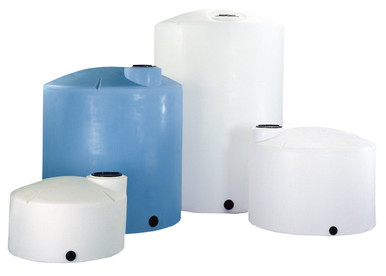
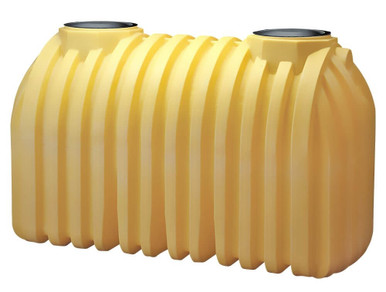
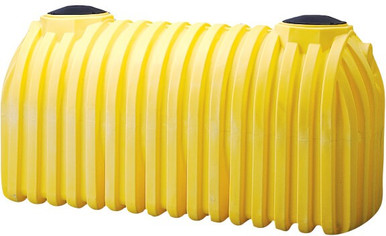
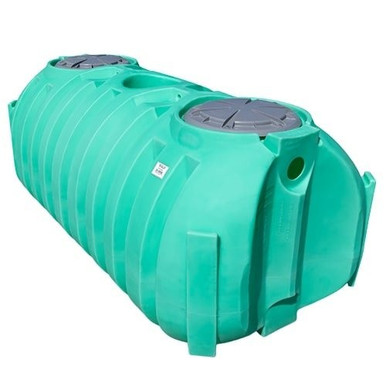
Mississippi (MSDH IOWDS Regulations) sizes septic tanks by bedroom count or design flow, with residential systems typically starting at 1,000 gallons. These IAPMO PS 1–listed polyethylene tanks meet that capacity standard; your county or state permitting office confirms the final size.
Shop all IAPMO PS 1–listed septic tanks →
Meeting the construction standard is not the same as a permit — your county environmental health office issues the permit and makes the final determination. Call us with your permit number and we will confirm the exact tank spec before shipment, with freight quoted to your ZIP.
Chemical Storage & Secondary Containment in Mississippi
Storing fuel, fertilizer, or process chemicals alongside your tank changes the rules. The federal Spill Prevention, Control, and Countermeasure rule (40 CFR Part 112) applies at 1,320 gallons of aggregate aboveground oil storage and requires secondary containment sized to at least 110% of your largest tank. Releases of hazardous substances above their federal reportable quantity (40 CFR 302.4) must be reported to the National Response Center at 1-800-424-8802.
Mississippi layers its own spill reportable quantities and restricted-substance rules on top of that federal floor — confirm the current thresholds with your state environmental agency before specifying a chemical tank. Just as important, the polyethylene resin must be matched to the exact chemical, concentration, and specific gravity you intend to store; a tank rated for water is not automatically rated for acid, bleach, or fertilizer.
Last reviewed: May 2026 · sourced from Mississippi administrative code
Regulations change on a rolling basis — confirm the current rule with your county or state agency before purchasing. Spot something out of date? Email us and we'll fix it.
Nearby states (East South Central) & full index: