
Missouri Septic Tank Regulations — 10 CSR 20-8 + 19 CSR 20-3.060
Missouri Septic Tank Regulations
Missouri's onsite wastewater system is managed by two agencies: 10 CSR 20-8 (DNR) and 19 CSR 20-3.060 (DHSS). Counties handle the implementation, considering the soil differences from the Ozarks to the Bootheel.
The Governing Framework
Missouri regulates onsite wastewater through a dual-agency structure:
- 10 CSR 20-8 — Design Standards for Wastewater Treatment Facilities. Issued by the Missouri Department of Natural Resources (DNR) Water Protection Program. Covers subdivision-scale and commercial wastewater treatment design standards.
- 19 CSR 20-3.060 — Minimum Construction Standards for On-Site Sewage Disposal Systems. Issued by the Missouri Department of Health and Senior Services (DHSS). Governs residential onsite systems.
- 10 CSR 20-6.030 — Disposal of Wastewater in Residential Housing Developments. The DNR rule covering wastewater in new subdivision construction.
- Local health departments — Missouri county health departments (and in some cases, city environmental health) handle residential onsite permits under DHSS oversight.
Residential System Framework — 19 CSR 20-3.060
For most septic systems in Missouri, like those for single-family homes and small duplexes, 19 CSR 20-3.060 is the main rule to follow. Here are the key points:
- Minimum construction standards for tanks, disposal fields, and piping
- Soil evaluation requirements (percolation test or soil morphology evaluation)
- Setback distances from wells, surface water, property lines, and structures
- Installer certification requirements (DHSS certifies installers via state program)
- Inspection protocols and approved materials list
Since Missouri lets counties handle the details, the exact capacity and distance requirements can vary by county. Check with your county health department to get the specific rules for your area.
DNR Jurisdiction — 10 CSR 20-8
When does DNR (rather than DHSS) have jurisdiction?
- Subdivisions or multi-unit developments
- Systems discharging treated effluent to state waters (NPDES permits)
- Commercial or industrial facilities above residential-scale flow
- Failed or grandfathered systems being remediated under state-level oversight
For these systems, you need to follow 10 CSR 20-8 (Design Standards for Wastewater Treatment Facilities) and go through the DNR Water Protection Program's permit process. You can reach DNR at 800-361-4827 or visit their central office in Jefferson City.
Permit Process
- Start at the county health department. For residential systems, the county is the decision-maker under DHSS delegation.
- Soil evaluation. Licensed soils professional or county environmental health specialist performs the site assessment.
- System design submission. Plot plan, soil results, proposed tank and disposal field sizing.
- Permit issuance. County-level fees typically $200–$500. Timeline 2–8 weeks depending on county workload.
- DHSS-certified installer construction. Verify the installer's current Missouri certification before contracting.
- Final inspection. County inspects system placement before backfill.
Regional Considerations
- Ozarks (Springfield, Branson, Rolla): Karst limestone geology with sinkhole and cave risk. Geotechnical review required in documented karst zones. Some lots cannot support conventional systems and require alternatives.
- St. Louis Metro (St. Louis County, St. Charles): Largely on municipal sewer. Remaining septic parcels are older or rural/suburban fringe. County environmental health has extensive legacy records.
- Kansas City Metro (Jackson, Clay, Platte counties): Mixed urban/suburban with expanding sewer. Rural parcels handle conventional septic; urban edges often in transition to sewer.
- Bootheel (Pemiscot, Dunklin counties): Mississippi River floodplain. High water table, Mississippi alluvium. Mound systems and pressure dosing common.
- North Missouri / Loess Hills: Deep loess soils with good percolation in most areas. Standard trench systems typical.
- Lake of the Ozarks / Table Rock Lake: Shoreline development requires coordinated DNR review for any system within reservoir buffer zones. Setbacks from perennial water can exceed baseline state requirements.
Frequently Asked Questions
- Do I contact DNR or DHSS for my residential septic system?
- Start with your county health department. They operate under DHSS (not DNR) for residential installations. DNR gets involved only for subdivisions, commercial-scale systems, or systems discharging to state waters.
- Why can't I find one master septic-rule document for Missouri?
- Because there isn't one. DHSS owns residential (19 CSR 20-3.060), DNR owns larger and discharge-regulated systems (10 CSR 20-8), and counties implement with local ordinances on top. For your specific lot, the county health department is the authoritative source.
- Is Missouri's framework unusual?
- A bit. Most states centralize septic under one agency (either a health department or an environmental agency). Missouri's split reflects the historical division: DHSS carries public-health responsibility for rural residential, DNR carries water-quality responsibility for discharges and larger systems. The framework works but requires extra attention when your project crosses the boundary.
- Do polyethylene tanks need special Missouri approval?
- They need to meet DHSS construction standards (for residential) or DNR design standards (for larger). Major OEM rotomolded polyethylene tanks (Norwesco, Snyder, Chem-Tainer) have approved configurations. Your county will specify acceptable models.
Source Citations
Shop Septic Tanks for Missouri
OneSource stocks polyethylene septic tanks meeting Missouri construction requirements. Match capacity to your design flow per the rules summarized above. Tank + accessories + holding tank options below cover standard and alternative configurations. OneSource drop-ships from the OEM warehouse closest to your install address.
Plastic Septic Tanks
Full polyethylene septic tank catalog. Sizes from 300 to 1,500+ gallons for Missouri installations.
Browse Plastic Septic TanksIAPMO Approved Models
NSF/IAPMO listed tanks. Some counties and some installation types require this listing.
Browse IAPMO Approved ModelsSeptic Accessories
Risers, lids, baffles, filters, alarms, pumps, and install hardware.
Browse Septic AccessoriesHolding Tanks
Holding tanks for construction sites, recreational properties, and pump-and-haul installations.
Browse Holding TanksStoring chemicals in your Missouri tank?
Missouri's rules for onsite sewage systems don't cover chemical-storage tanks. Those are specified by the manufacturer. If you need a tank for chemicals like sulfuric acid or bleach, check our Chemical Compatibility Database for detailed specifications.
Agricultural Tank Regulations — MDA and MDNR Agrichemical Rules
Missouri uses a split regulatory model: the Missouri Department of Agriculture (MDA) manages pesticide and fertilizer registration and licensing, while the Missouri Department of Natural Resources (MDNR) sets the design and containment rules for bulk agrichemical facilities.
- 2 CSR 70-25 — MDA Division of Plant Industries Pesticide rules (definitions, applicator licensing, enforcement).
- 281.005 through 281.180 RSMo — Missouri Pesticide Use Act, statutory backbone for MDA pesticide regulation.
- 10 CSR 20-8.500 — MDNR Design Requirements for Agrichemical Facilities.
- Secondary containment for liquids: Under 10 CSR 20-8.500, secondary containment for nonmobile bulk liquid pesticides and bulk liquid fertilizers must be designed to contain any spilled product and prevent discharge, with containment sized per 40 CFR 165.85 (July 1, 2014).
- Dry fertilizer handling: All unloading, loading, mixing, and handling of dry bulk fertilizers must be done on an operational containment area required by the rule.
- Flood protection: Agrichemical facilities must be located so agrichemicals are protected from a 100-year flood event.
Missouri's row-crop areas, like the Bootheel and western Missouri, have many co-op bulk facilities. The 10 CSR 20-8.500 containment rules are strict, linking to the EPA Pesticide Container Containment Rule and adding Missouri-specific flood and containment requirements. Polyethylene vertical bulk tanks are common for liquid fertilizers.
Oil & Gas Produced Water — Missouri Oil and Gas Council
Missouri has limited oil and gas production, with some wells in the western and north-central counties. Regulation is handled by:
- RSMo Chapter 259 — Oil and Gas Resources.
- 10 CSR 50 — Missouri Oil and Gas Council rules (well permitting, casing, plugging, and produced-water disposal).
- UIC Class II — Disposal of produced water through permitted Class II injection wells. Missouri operates under a federal-state cooperative program with EPA Region 7.
Compared to Oklahoma or Kansas, Missouri has smaller volumes. Most operators use small tank batteries and dispose of water through nearby permitted Class II wells. Polyethylene tanks should be checked for compatibility with Missouri's Forest City and Cherokee Basin brines. For rules and fees, contact the Oil and Gas Council.
Septic System Sizing Deep Dive
Missouri's onsite wastewater is governed by 19 CSR 20-3.060 (Missouri Department of Health and Senior Services - Onsite Sewage Disposal Systems). Here's the typical capacity table used:
| Bedrooms | Minimum Septic Tank Capacity |
|---|---|
| 1–3 BR | 1,000 gallons |
| 4 BR | 1,200 gallons |
| 5 BR | 1,500 gallons |
| Non-dwelling | Engineered design on peak daily flow |
Registered onsite soil evaluators do percolation tests, and county environmental health departments issue permits where applicable. In the Ozarks, shallow soils often need at-grade mounds or drip dispersal, while Bootheel areas with silty-clay soils usually need engineered pressure distribution. Check with your county or DHSS for current setbacks and table values before finalizing your site plan.
Chemical Storage Secondary Containment & Spill Reporting
Federal SPCC (40 CFR 112) applies at 1,320 gallons aggregate aboveground oil. Missouri layers on:
- 10 CSR 26 — Petroleum and Hazardous Substance Storage Tank rules (MDNR).
- 260.500 RSMo — Missouri Hazardous Waste Management Law spill reporting.
- 260.530 RSMo — Reporting of hazardous substance emergencies to the Missouri Department of Natural Resources.
- MDNR 24-hour Environmental Emergency Response at 1-573-634-2436.
Secondary containment for polyethylene chemical tanks should hold at least 110% of the largest tank's capacity. If you have more than 1,320 gallons of oil, you need a written SPCC plan. Contact MDNR for Missouri-specific RQ thresholds, fee schedules, and reporting timelines.
Permit Pathways at a Glance
- Residential septic: County environmental health (or DHSS where not delegated) under 19 CSR 20-3.060.
- Agrichemical facility design (bulk pesticide/fertilizer): MDNR under 10 CSR 20-8.500.
- Pesticide applicator and dealer: MDA under 2 CSR 70-25.
- Oil & gas produced water: Missouri Oil and Gas Council under 10 CSR 50; Class II UIC through EPA Region 7.
- Petroleum UST: MDNR under 10 CSR 26.
- SPCC > 1,320 gal oil aggregate: Federal SPCC plan; MDNR spill reporting.
More Missouri FAQs
- My co-op in northwest Missouri is building a new liquid fertilizer facility. What rule governs containment?
- 10 CSR 20-8.500 — Design Requirements for Agrichemical Facilities. The rule ties directly to 40 CFR 165.85 for sizing plus layers on Missouri 100-year flood protection and operational containment requirements. Submit the design through MDNR before construction.
- Does on-farm storage qualify under 10 CSR 20-8.500?
- The rule targets commercial agrichemical facilities. On-farm storage for the operator's own use has historically been treated differently. Confirm classification with MDA and MDNR for your specific site.
- What's the difference between reporting spills to MDA vs MDNR?
- Pesticide-specific releases and misapplications typically go to MDA. Any release to waters of the state, hazardous substance release above federal RQ, or petroleum UST release goes to MDNR. When in doubt, call MDNR's 24-hour line — they coordinate with MDA.
- Are there special septic rules for Ozark lake properties?
- Yes. Lake-of-the-Ozarks and Table Rock shoreline properties face thin-soil, shallow-bedrock conditions plus setback requirements from the lake. County environmental health (Camden, Miller, Stone, Taney) typically requires engineered designs — often at-grade mounds, drip, or pressure distribution. Budget 2x–3x a typical trench system.
- Is there a state-funded cleanup fund?
- The Petroleum Storage Tank Insurance Fund covers eligible petroleum UST releases. Non-petroleum chemical tanks are owner liability.
- My Bootheel operation stores 8,000 gallons of UAN. What applies?
- MDNR's 10 CSR 20-8.500 governs the containment design for nonmobile bulk liquid fertilizers at commercial facilities. For on-farm use, industry best practice is 110% secondary containment. Flood protection (100-year) is a key Missouri-specific requirement for any location in the Mississippi or St. Francis River floodplains.
Septic Tanks That Meet Missouri Code
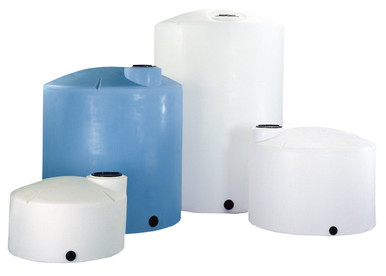
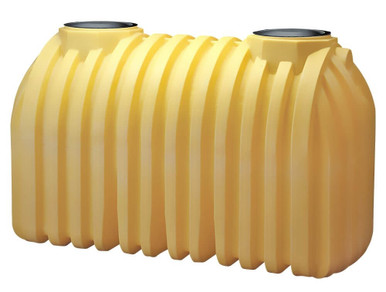
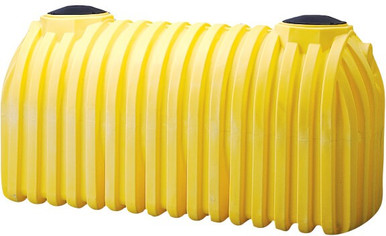
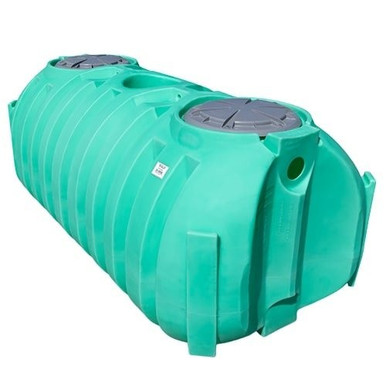
Missouri (10 CSR 20-8 / 19 CSR 20-3.060) sizes septic tanks by bedroom count or design flow, with residential systems typically starting at 1,000 gallons. These IAPMO PS 1–listed polyethylene tanks meet that capacity standard; your county or state permitting office confirms the final size.
Shop all IAPMO PS 1–listed septic tanks →
Meeting the construction standard is not the same as a permit — your county environmental health office issues the permit and makes the final determination. Call us with your permit number and we will confirm the exact tank spec before shipment, with freight quoted to your ZIP.
Chemical Storage & Secondary Containment in Missouri
Storing fuel, fertilizer, or process chemicals alongside your tank changes the rules. The federal Spill Prevention, Control, and Countermeasure rule (40 CFR Part 112) applies at 1,320 gallons of aggregate aboveground oil storage and requires secondary containment sized to at least 110% of your largest tank. Releases of hazardous substances above their federal reportable quantity (40 CFR 302.4) must be reported to the National Response Center at 1-800-424-8802.
Missouri layers its own spill reportable quantities and restricted-substance rules on top of that federal floor — confirm the current thresholds with your state environmental agency before specifying a chemical tank. Just as important, the polyethylene resin must be matched to the exact chemical, concentration, and specific gravity you intend to store; a tank rated for water is not automatically rated for acid, bleach, or fertilizer.
Last reviewed: May 2026 · sourced from Missouri administrative code
Regulations change on a rolling basis — confirm the current rule with your county or state agency before purchasing. Spot something out of date? Email us and we'll fix it.
Nearby states (West North Central) & full index: