
Montana Septic Tank Regulations — ARM 17.36
Montana Septic Tank Regulations
Montana's onsite wastewater rules are found in ARM Chapter 17.36, overseen by DEQ Engineering Infrastructure. They include the 4-foot-soil separation rule, § 17.36.918 setbacks, and the Title 76 Chapter 4 MCA Sanitation in Subdivision Act, covering areas from the Bitterroot to the Missouri Breaks.
The Governing Framework
Montana regulates onsite wastewater under:
- ARM Chapter 17.36 — the substantive Administrative Rules of Montana covering subdivision sanitation and onsite wastewater treatment.
- ARM 17.36 Subchapter 1 — Review procedures (including § 17.36.112 Review of Previously Approved Facilities).
- ARM 17.36 Subchapter 3 — Subdivision wastewater rules (including § 17.36.320 onsite systems requirements and § 17.36.327 existing systems).
- ARM 17.36.918 — Setback distances (range 10–100 feet depending on structure).
- Title 76, Chapter 4, MCA — Sanitation in Subdivision Act. The enabling statute requiring DEQ review of subdivision wastewater.
- Montana DEQ — Engineering Infrastructure & Subdivisions Division — state-level administrator.
- Local health departments — implement field permits under DEQ oversight.
The 4-Foot Soil Separation Rule — ARM 17.36.320(4)
Montana requires four feet of natural soil between the bottom of absorption trenches or beds and any limiting layer like groundwater, bedrock, or a restrictive horizon.
Setback Distances — ARM 17.36.918
ARM 17.36.918 specifies minimum setback distances ranging from 10 to 100 feet depending on the protected feature:
- Water wells (higher end of range)
- Surface water (higher end)
- Property lines (lower end)
- Foundations and structures (variable)
- Water supply lines (lower end)
The required distance for setbacks depends on the component (like a septic tank or absorption field) and what it is protecting. Sealed components like tanks usually have shorter setbacks than unsealed absorption fields. Check ARM 17.36.918 or contact your local health department for the official table.
The Sanitation in Subdivision Act Framework
Title 76, Chapter 4, MCA (Sanitation in Subdivision Act) mandates DEQ review of subdivision wastewater during the plat-review stage, separate from the onsite permit for individual lots. The Act ensures compliance with sanitation standards.
- Lot sizes and soil conditions will support onsite wastewater without contaminating state waters
- Proposed water and sewer infrastructure is adequate
- Cumulative impact on groundwater is assessed
- Subsequent individual-lot permits will be feasible
For lots created before the Act, individual-lot permits follow ARM 17.36 directly, skipping the subdivision review step.
Permit Process
- Contact your local health department. Most Montana counties have health departments handling onsite permits.
- Site evaluation. Per ARM 17.36 including the 4-foot soil depth check.
- System design submission. Plot plan, soil logs, tank + absorption system sizing, setback compliance per § 17.36.918.
- DEQ subdivision review (for new subdivisions). Plats trigger Title 76 Ch 4 MCA review at state level.
- Permit issuance. County health department under DEQ oversight. Fees vary.
- Installer construction.
- Pre-backfill inspection.
Regional Considerations
- Gallatin Valley (Bozeman): Rapid growth corridor with high septic permit demand. Deep alluvial soils work well for standard systems. Water-table concerns in Gallatin River floodplain areas.
- Bitterroot Valley (Hamilton, Stevensville): Shallow soil over river gravel in some areas. Mix of standard and alternative systems.
- Missoula County: Mixed urban/suburban. Downtown is municipal sewer; outlying areas septic.
- Flathead Valley (Kalispell, Whitefish): Lake-shore setbacks to Flathead Lake are especially strict. High-elevation installations require deep frost-line (48+ inches).
- Yellowstone Country (Paradise Valley, Livingston): Mountain resort areas with extreme winter conditions. Seasonal cabin installations common.
- Eastern plains (Billings, Miles City, Glendive): Semi-arid, deep soils. Standard systems typical.
- Indian reservations: Crow, Northern Cheyenne, Fort Peck, Fort Belknap, Rocky Boy's, Blackfeet — tribal environmental authority governs onsite systems on reservation land. Not under Montana DEQ jurisdiction.
Frequently Asked Questions
- Why is Montana's 4-foot soil rule stricter than other states?
- Montana's geology includes significant areas of shallow soil over glacial till, fractured granite (Rocky Mountains), and limestone (eastern front). Nitrate and pathogen attenuation requires adequate unsaturated soil between the absorption surface and groundwater. The 4-foot standard provides margin in parcels where depth to water table or bedrock is highly variable within the parcel.
- Do I need both subdivision review AND a septic permit?
- If you're creating a new subdivision (plat), yes — DEQ subdivision review plus individual-lot septic permits. If you're developing on an existing lot (pre-existing plat), just the individual-lot septic permit.
- What's an alternative system in Montana?
- Mound systems, at-grade systems, pressure-dosed systems, aerobic treatment units (ATUs), and drip dispersal are all recognized. Used where conventional gravity-trench systems cannot meet the 4-foot soil rule or where site conditions otherwise preclude standard installation. Cost ranges $8,000-$25,000 with annual maintenance contracts.
- Does my tribal-reservation parcel fall under ARM 17.36?
- No. Tribal environmental authority (not Montana DEQ) governs onsite systems on reservation land. Each Montana reservation has its own tribal environmental code — Crow EPA, Northern Cheyenne EPA, Blackfeet EPA, etc.
Source Citations
Shop Septic Tanks for Montana
OneSource stocks polyethylene septic tanks meeting Montana construction requirements. Match capacity to your design flow per the rules summarized above. Tank + accessories + holding tank options below cover standard and alternative configurations. OneSource drop-ships from the OEM warehouse closest to your install address.
Plastic Septic Tanks
Full polyethylene septic tank catalog. Sizes from 300 to 1,500+ gallons for Montana installations.
Browse Plastic Septic TanksIAPMO Approved Models
NSF/IAPMO listed tanks. Some counties and some installation types require this listing.
Browse IAPMO Approved ModelsSeptic Accessories
Risers, lids, baffles, filters, alarms, pumps, and install hardware.
Browse Septic AccessoriesHolding Tanks
Holding tanks for construction sites, recreational properties, and pump-and-haul installations.
Browse Holding TanksStoring chemicals in your Montana tank?
Montana's OSSF rules do not cover chemical-storage tanks. These are specified by the manufacturer. If you need a tank for chemicals like sulfuric acid or bleach, our Chemical Compatibility Database provides full construction specifications.
Agricultural Tank Regulations — Montana Department of Agriculture (MDA)
The Montana Department of Agriculture regulates pesticide, fertilizer, and commercial feed storage under Title 80 of the Montana Code Annotated (MCA) with rules in the Administrative Rules of Montana (ARM).
- ARM 4.5.101 et seq. — Agricultural Sciences Division pesticide rules including applicator licensing, RUP handling, and recordkeeping.
- MCA Title 80, Chapter 8 — Montana Pesticides Act (statutory authority).
- MCA Title 80, Chapter 10 — Montana Commercial Fertilizer Act.
- ARM 4.12 — Feed and fertilizer rules.
Montana agriculture includes dryland wheat and barley, irrigated crops like sugar beets, and rangeland for cattle. Facilities with bulk liquid fertilizer and pesticide storage must have containment at 110% of the largest tank. MDA and Montana DEQ handle facility incidents, following SPCC and Montana Water Quality Act (MCA Title 75, Chapter 5) standards. Anhydrous ammonia storage follows ANSI K61.1 standards.
Oil & Gas Produced Water — Montana Board of Oil and Gas Conservation (BOGC)
Montana's oil and gas sector is regulated by the Montana Board of Oil and Gas Conservation (BOGC) under the Department of Natural Resources and Conservation (DNRC), with rules in ARM Title 36, Chapter 22.
- ARM 36.22.1001 et seq. — Pits, ponds, and tanks: construction, lining, freeboard, and closure standards.
- ARM 36.22.1226 — Tank and vessel construction standards.
- ARM 36.22.1242 — Produced water disposal.
- MCA Title 82, Chapter 11 — Oil and gas conservation statute.
- SB 30 (2019) — Produced water handling amendments.
In eastern Montana, areas like the Bakken generate a lot of produced water. BOGC permits water pits and tanks, requires 2-feet-of-freeboard on pits, and works with Montana DEQ on water-quality issues. Saltwater disposal is mainly done through Class II injection wells. Polyethylene tanks are used for chemical injection, while fiberglass and steel are used for high-volume water service.
Petroleum USTs — Montana DEQ
The Montana Department of Environmental Quality (DEQ) oversees underground storage tanks under ARM Title 17, Chapter 56, with authority from MCA Title 75, Chapter 11.
- ARM 17.56 — UST technical standards, release detection, spill/overfill prevention, corrective action, and closure.
- MCA 75-11-301 et seq. — Petroleum Tank Release Compensation Board (Petro Board) and the Petroleum Tank Release Cleanup Fund.
Montana UST owners must register with DEQ, pay annual fees, maintain release detection, meet 2018 federal rule upgrades, and report suspected releases within 24 hours. The Petro Board fund reimburses eligible corrective-action costs. The short construction season and cold climate require specific installation and freeze-protection practices.
Septic System Sizing Deep Dive
Montana DEQ regulates onsite wastewater through the Montana Subdivision and Platting Act and ARM Title 17, Chapter 36, with technical design in DEQ Circular DEQ-4.
| Bedrooms | Minimum Septic Tank Capacity |
|---|---|
| 1–3 BR | 1,000 gallons |
| 4 BR | 1,250 gallons |
| 5 BR | 1,500 gallons |
| 6+ BR | +250 gallons per additional bedroom |
Montana's soils and climate are tough for OWTS, with short summers and deep frost. DEQ-4 outlines design flow, absorption-field sizing, setbacks, and alternative systems like sand filters and aerobic treatment units. County sanitarians enforce these through local health departments, and certified installers are required. Nitrate-sensitive areas often need extra Level 2 treatment.
Chemical Storage Secondary Containment & Spill Reporting
Federal SPCC (40 CFR 112) applies at 1,320 gallons aggregate aboveground oil. Montana layers on:
- MCA Title 75, Chapter 5 — Montana Water Quality Act; authority for the DEQ Water Protection Bureau.
- ARM 17.56.407 and related — UST release reporting.
- ARM 36.22 — BOGC reporting for upstream oil and gas releases.
- MCA 75-10-701 et seq. — Hazardous waste release reporting.
- Montana Disaster and Emergency Services (DES) — EPCRA Tier II filings.
Report spills to the Montana DEQ 24-hour line and federal RQ releases to the National Response Center at 1-800-424-8802. Oil and gas releases go to BOGC. Secondary containment at 110% is standard, but BOGC and MDA may have stricter rules for certain facilities. For state-specific RQ thresholds, contact DEQ directly.
Permit Pathways at a Glance
- Residential septic: County sanitarian / local health department under ARM 17.36, DEQ-4.
- Fertilizer & pesticide registration: MDA under MCA Title 80 and ARM 4.5/4.12.
- Pesticide applicator license: MDA under Montana Pesticides Act.
- Oil & gas produced water storage: BOGC under ARM 36.22.
- Petroleum UST: DEQ under ARM 17.56; Petro Board fund participation.
- SPCC > 1,320 gal oil aggregate: Federal SPCC plan; state spill reporting to DEQ or BOGC.
- MPDES industrial stormwater: DEQ Water Protection Bureau Montana Pollutant Discharge Elimination System.
Current fees change; verify with MDA, DEQ, or BOGC before budgeting.
More Montana FAQs
- Do I need a BOGC permit for a 500-bbl saltwater tank at my stripper well?
- Yes — produced-water storage at any scale falls under ARM 36.22. Even marginal-well tank batteries must meet construction, containment, and integrity requirements. BOGC inspectors routinely audit older leases.
- How does the Flathead Valley nitrate-sensitive designation affect septic design?
- Sand and gravel aquifers in the Flathead Valley drove DEQ and Flathead County Health to require Level 2 treatment (nitrogen-reducing ATU or mounds with enhanced treatment) in vulnerable zones. Sizing and treatment targets exceed baseline DEQ-4 defaults.
- Is anhydrous ammonia regulated at the state level?
- Anhydrous ammonia transport is federal (DOT 49 CFR); storage follows ANSI K61.1 and OSHA PSM above 10,000 pounds. Montana does not have a standalone prescriptive anhydrous ammonia rule separate from the general Pesticides and Fertilizer Acts; MDA inspects commercial facilities and coordinates with local fire marshals.
- What is the Petro Board fund and who qualifies?
- The Montana Petroleum Tank Release Cleanup Fund reimburses eligible owners and operators of registered petroleum tanks for corrective-action costs above a deductible, per MCA 75-11-301. Registration and fee payment must be current.
- Can I build my own off-grid septic on acreage without a permit?
- No — ARM 17.36 applies statewide and requires county-sanitarian review, permit, and licensed installer for new OWTS. Unpermitted systems create title defects and can trigger enforcement and retrofit costs at sale.
Septic Tanks That Meet Montana Code
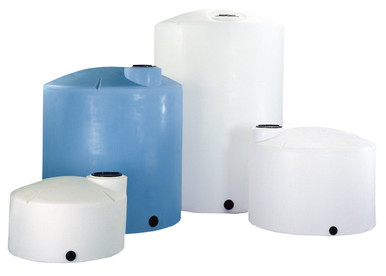
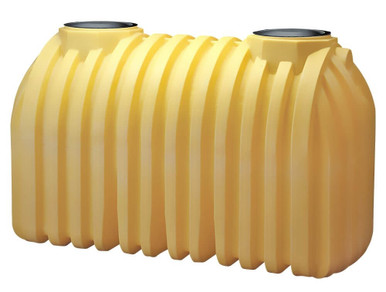
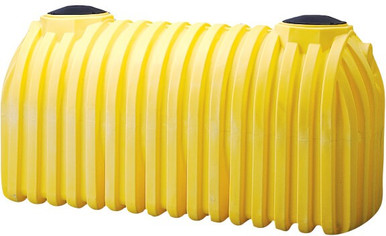
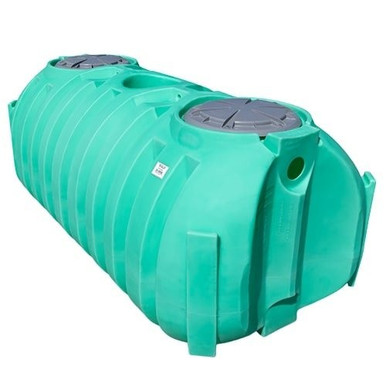
Montana (ARM 17.36) sizes septic tanks by bedroom count or design flow, with residential systems typically starting at 1,000 gallons. These IAPMO PS 1–listed polyethylene tanks meet that capacity standard; your county or state permitting office confirms the final size.
Shop all IAPMO PS 1–listed septic tanks →
Meeting the construction standard is not the same as a permit — your county environmental health office issues the permit and makes the final determination. Call us with your permit number and we will confirm the exact tank spec before shipment, with freight quoted to your ZIP.
Chemical Storage & Secondary Containment in Montana
Storing fuel, fertilizer, or process chemicals alongside your tank changes the rules. The federal Spill Prevention, Control, and Countermeasure rule (40 CFR Part 112) applies at 1,320 gallons of aggregate aboveground oil storage and requires secondary containment sized to at least 110% of your largest tank. Releases of hazardous substances above their federal reportable quantity (40 CFR 302.4) must be reported to the National Response Center at 1-800-424-8802.
Montana layers its own spill reportable quantities and restricted-substance rules on top of that federal floor — confirm the current thresholds with your state environmental agency before specifying a chemical tank. Just as important, the polyethylene resin must be matched to the exact chemical, concentration, and specific gravity you intend to store; a tank rated for water is not automatically rated for acid, bleach, or fertilizer.
Last reviewed: May 2026 · sourced from Montana administrative code
Regulations change on a rolling basis — confirm the current rule with your county or state agency before purchasing. Spot something out of date? Email us and we'll fix it.
Nearby states (Mountain) & full index: