
Nebraska Septic Tank Regulations — Title 124 NDEE
Nebraska Septic Tank Regulations
Nebraska's onsite wastewater rules are under Title 124, managed by NDEE (now called DWEE). They include a 100-foot setback from surface water and wells, distances from Table 2.1, and flexibility for certified installers, REHS, and PE designers across the state.
The Governing Framework
Nebraska regulates onsite wastewater under:
- Title 124 — Rules and Regulations for the Design, Operation, and Maintenance of Onsite Wastewater Treatment Systems. The substantive statewide rule.
- Nebraska Department of Environment and Energy (NDEE) — previously Nebraska Department of Environmental Quality. Currently rebranded as DWEE (Department of Water, Environment, and Energy) per recent reorganization. The agency retains authority over Title 124.
- Local health districts / county environmental health — implement field-level permits.
Setback Distances — Table 2.1
Title 124 establishes baseline setback requirements:
- 100 feet from any surface water or private drinking water well
- Additional setback distances per Title 124 Table 2.1 covering wells, property lines, buildings, water supply pipes, and other features
Consult Title 124 Table 2.1 or your local health district for the complete setback table.
Designer Flexibility — ≤10 BR / ≤1,000 gpd
Nebraska provides an unusually flexible designer-qualification rule:
- A certified installer, OR
- A Registered Environmental Health Specialist (REHS), OR
- A Professional Engineer (PE)
— provided the system meets all Title 124 design, setback, and reserve area provisions.
This flexible approach allows residential installations to be affordable without needing a Professional Engineer (PE) for every simple job. Certified installers can design most single-family home systems, REHS can help when extra environmental review is needed, and PEs are used for larger or unusual systems.
Professional Requirement for Operations
Title 124 states that only certified professionals, Professional Engineers, Registered Environmental Health Specialists, or those they supervise can work on these systems.
- Inspection
- Pumping
- Siting and layout
- Construction, reconstruction, alteration, or modification
- Repair, closure, or changing
— of an onsite wastewater treatment system. This is stricter than many states and effectively blocks DIY repair or alteration work.
Permit Process
- Contact your local health district or county environmental health office.
- Soil and site evaluation. Per Title 124 protocols.
- System design. By certified installer, REHS, or PE per the designer-flexibility rule.
- Permit application. Submitted through local health district.
- Permit issuance. Fees vary by district. Typical timelines 2–8 weeks.
- Construction by qualified professional.
- Inspection before cover. Local health district or qualified inspector.
Regional Considerations
- Omaha / Lincoln Metros: Largely on municipal sewer. Remaining septic on rural/suburban perimeter.
- Platte Valley / central Nebraska: Deep alluvium with excellent percolation and a shallow water table. Tank placement above water table is critical.
- Panhandle (Scotts Bluff, Cheyenne, Sioux): Sandy soils, deep water table, low rainfall. Standard systems work well. Cold winters require frost-line depth (48+ inches).
- Sandhills: Distinctive grassland ecosystem over deep sand. Extreme percolation rates may actually require special design to prevent effluent from flushing through without treatment. Reserve drainfield specifications important.
- Loess Hills (eastern Nebraska): Deep wind-blown loess with good structure and moderate percolation. Standard systems typical.
- Niobrara / cedar canyon country: Rocky terrain, shallow soil. Alternative systems sometimes required.
Material Approvals
NDEE/DWEE accepts polyethylene tanks meeting Title 124 construction standards. Verify at order:
- IAPMO PS 1 or NSF 46 listing
- Ribbed polyethylene construction
- Tanks > 3,000 gallons fabricated as single unit have specific Title 124 requirements — consult current rule
- Effluent filter compatibility
- Manhole dimensions and inspection pipe parameters per Title 124
Source Citations
- Nebraska Title 124 Rules and Regulations (historical PDF)
- Onsite Wastewater Treatment Systems Title 124 General Permits (PDF)
- DWEE On-Site Septic Systems Program Overview
- Private Onsite Wastewater Treatment Facility Holding Tank Permit (PDF)
- UNL Extension: Residential Onsite Wastewater Treatment Septic Tank Design
Shop Septic Tanks for Nebraska
OneSource stocks polyethylene septic tanks meeting Nebraska construction requirements. Match capacity to your design flow per the rules summarized above. Tank + accessories + holding tank options below cover standard and alternative configurations. OneSource drop-ships from the OEM warehouse closest to your install address.
Plastic Septic Tanks
Full polyethylene septic tank catalog. Sizes from 300 to 1,500+ gallons for Nebraska installations.
Browse Plastic Septic TanksIAPMO Approved Models
NSF/IAPMO listed tanks. Some counties and some installation types require this listing.
Browse IAPMO Approved ModelsSeptic Accessories
Risers, lids, baffles, filters, alarms, pumps, and install hardware.
Browse Septic AccessoriesHolding Tanks
Holding tanks for construction sites, recreational properties, and pump-and-haul installations.
Browse Holding TanksFrequently Asked Questions
- Who regulates onsite wastewater in Nebraska?
- Nebraska Department of Environment and Energy (NDEE) under Title 124 NAC (On-site Wastewater Treatment Systems Professionals). Local health departments administer field permits under NDEE oversight.
- Are polyethylene tanks accepted in Nebraska?
- Yes, when meeting IAPMO/NSF listings and NDEE construction requirements. Major OEM rotomolded polyethylene tanks from Norwesco, Snyder, and others are commonly approved. Your licensed installer will specify accepted models.
- What about Ogallala Aquifer and Sandhills considerations?
- Western Nebraska sits atop the Ogallala Aquifer. Sandhills region has unique sandy soil conditions that favor absorption but also allow rapid contaminant transport to groundwater. Design must consider groundwater vulnerability; some areas require enhanced treatment.
- Is a licensed professional required?
- Yes. Title 124 NAC establishes installer and pumper licensing. NDEE maintains certified professional rosters. Contractors performing onsite wastewater work must hold appropriate NDEE credentials.
- What about freeze-depth considerations?
- Nebraska's northern-plains climate brings frost depths of 4-5 feet. Tanks, lines, and risers need protection (burial depth, insulation, or both). Seasonal/recreational properties need careful low-flow freeze-protection engineering.
Storing chemicals in your Nebraska tank?
Nebraska's OSSF rules don't apply to chemical-storage tanks. These are specified by the manufacturer. If you need a tank for sulfuric acid, bleach, fertilizer solution, or any of 300+ industrial chemicals, our Chemical Compatibility Database has all the construction details.
Agricultural Tank Regulations — Nebraska Title 198 Secondary Containment
The Nebraska Department of Environment and Energy (NDEE) manages the Agricultural Chemical Secondary Containment Program under Title 198, which covers rules for agricultural chemical containment.
- Title 198 — Administered by NDEE for commercial and private secondary containment and loadout facilities for bulk liquid fertilizer and pesticide storage. Coordinates with the Nebraska Department of Agriculture (NDA) on pesticide registration and applicator licensing.
- Pesticide containment trigger: Required if the total storage capacity of bulk liquid pesticide containers (>55 gallons) at a storage facility exceeds 500 gallons.
- Fertilizer containment trigger: Between November 1 and March 15, liquid fertilizers stored in a container larger than 500 gallons in quantities exceeding 25 percent of the container's capacity trigger containment.
- NDA pesticide rules: Separate licensing and registration framework for dealers and applicators (Neb. Rev. Stat. sections 2-2622 through 2-2656, Nebraska Pesticide Act).
- Mixing/loading pads: Required for bulk handling under Title 198, with design and construction standards for impervious surfaces and operational containment.
Nebraska's agricultural areas, including the Platte Valley and Panhandle, have a strong retail infrastructure. Title 198 sets thresholds like 500 gallons for pesticides and fertilizers. Operators should plan tank sizes and inventory to either stay below these limits or design to meet containment requirements.
Oil & Gas Produced Water — Nebraska Oil and Gas Conservation Commission
Oil and gas activity in Nebraska is mainly in the Denver-Julesburg Basin in the southwest Panhandle counties like Kimball, Cheyenne, and Banner. Regulation is handled by:
- Neb. Rev. Stat. Chapter 57 — Oil and Gas.
- Title 267 — Nebraska Oil and Gas Conservation Commission rules. Covers well permitting, casing, cementing, tank batteries, pit construction, produced-water storage, and Class II UIC.
- Class II UIC — Primary disposal pathway for produced water. Nebraska has primacy for Class II under the Safe Drinking Water Act.
Polyethylene brine and frac tanks in western Nebraska should check their chemistry against DJ Basin brines, which range from 20,000 to 80,000 ppm TDS. For the latest Title 267 rules, fees, and permits, contact the Oil and Gas Conservation Commission.
Septic System Sizing Deep Dive
Nebraska's onsite wastewater is regulated under Title 124 by the Nebraska Department of Environment and Energy. This includes rules for designing, operating, and maintaining onsite wastewater systems.
| Bedrooms | Minimum Septic Tank Capacity |
|---|---|
| 1–3 BR | 1,000 gallons |
| 4 BR | 1,250 gallons |
| 5 BR | 1,500 gallons |
| Non-dwelling | Engineered design on peak daily flow |
Nebraska requires certified environmental service technicians and certified onsite wastewater treatment system professionals to design and install systems under Title 124. Sandy soils in the Sandhills and Platte Valley usually work with trench systems, while silt loam in the Loess Hills needs pressure distribution. Check current setbacks and Table values with NDEE or your county before finalizing plans.
Chemical Storage Secondary Containment & Spill Reporting
Federal SPCC (40 CFR 112) applies at 1,320 gallons aggregate aboveground oil. Nebraska layers on:
- Title 200 — NDEE Rules and Regulations for Underground Storage Tanks.
- Neb. Rev. Stat. Chapter 66 sections 66-1501 et seq. — Nebraska Petroleum Release Remedial Action Act.
- Title 126 — NDEE Integrated Solid Waste Management Rules.
- NDEE 24-hour Emergency Response at 1-402-471-4545.
Polyethylene chemical tanks need secondary containment that holds at least 110% of the largest tank's capacity. If you have more than 1,320 gallons of oil, you need a written SPCC plan. For Nebraska-specific RQ thresholds and reporting timelines, contact NDEE.
Permit Pathways at a Glance
- Residential septic: NDEE or county delegated authority under Title 124.
- Ag chemical secondary containment: NDEE under Title 198 (above 500-gallon pesticide or 500-gallon fertilizer seasonal trigger).
- Pesticide applicator and dealer: NDA under Neb. Rev. Stat. 2-2622 et seq.
- Oil & gas produced water: Oil and Gas Conservation Commission under Title 267.
- Petroleum UST: NDEE under Title 200.
- SPCC > 1,320 gal oil aggregate: Federal SPCC plan; NDEE spill reporting.
More Nebraska FAQs
- If I store 400 gallons of pesticide year-round, am I subject to Title 198?
- Below the 500-gallon pesticide containment trigger, Title 198 doesn't require secondary containment. You're still subject to NDA applicator and dealer rules plus the federal Pesticide Container Containment Rule (40 CFR 165 Subpart E) for any repackaging.
- My 1,000-gallon UAN tank is full from November through March. Does Title 198 apply?
- Potentially yes. The fertilizer seasonal rule triggers when liquid fertilizer is stored November 1 through March 15 in a container larger than 500 gallons and exceeds 25% of container capacity. A 1,000-gallon tank over 250 gallons (25%) during that window triggers the rule. Build containment.
- Are Sandhills ranches subject to any special ag-chemical rules?
- The Sandhills overlie the Ogallala Aquifer, and Title 198 plus NDEE groundwater-protection rules apply as throughout the state. Operators with significant bulk storage in the Sandhills should coordinate with their local Natural Resources District (NRD) on well and site siting.
- What does the Oil and Gas Conservation Commission require for new frac tanks in Kimball County?
- Title 267 requirements for tank battery design, containment, and Class II disposal apply. Polyethylene specification should match DJ Basin brine chemistry. File required notifications with the Commission.
- Is there a state-funded cleanup program?
- The Petroleum Release Remedial Action Cash Fund under Neb. Rev. Stat. 66-1501 et seq. covers eligible petroleum UST releases. Non-petroleum chemical tanks are owner liability.
- How do NRDs interact with state rules?
- Nebraska's 23 Natural Resources Districts have jurisdiction over groundwater management, including well permitting and certain irrigation and nutrient-management rules. Bulk ag chemical sites typically coordinate with both the NRD and NDEE/NDA, especially in Groundwater Management Areas or phase-restricted zones.
Septic Tanks That Meet Nebraska Code
Nebraska (Title 124) sizes septic tanks by bedroom count or design flow, with residential systems typically starting at 1,000 gallons. These IAPMO PS 1–listed polyethylene tanks meet that capacity standard; your county or state permitting office confirms the final size.
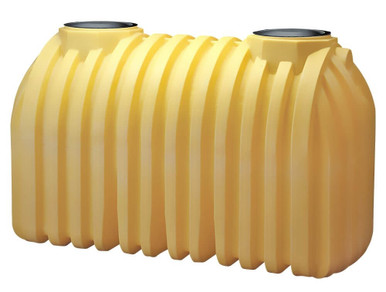
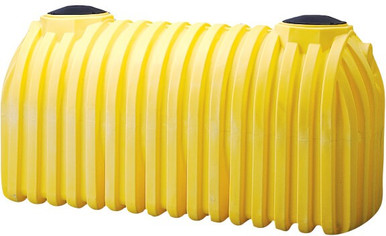
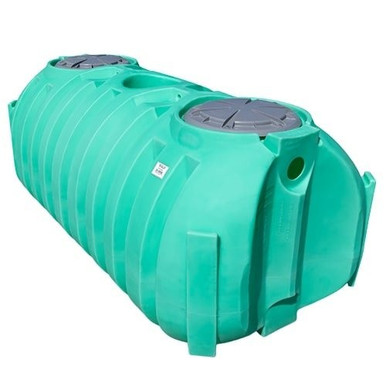
Shop all IAPMO PS 1–listed septic tanks →
Meeting the construction standard is not the same as a permit — your county environmental health office issues the permit and makes the final determination. Call us with your permit number and we will confirm the exact tank spec before shipment, with freight quoted to your ZIP.
Chemical Storage & Secondary Containment in Nebraska
Storing fuel, fertilizer, or process chemicals alongside your tank changes the rules. The federal Spill Prevention, Control, and Countermeasure rule (40 CFR Part 112) applies at 1,320 gallons of aggregate aboveground oil storage and requires secondary containment sized to at least 110% of your largest tank. Releases of hazardous substances above their federal reportable quantity (40 CFR 302.4) must be reported to the National Response Center at 1-800-424-8802.
Nebraska layers its own spill reportable quantities and restricted-substance rules on top of that federal floor — confirm the current thresholds with your state environmental agency before specifying a chemical tank. Just as important, the polyethylene resin must be matched to the exact chemical, concentration, and specific gravity you intend to store; a tank rated for water is not automatically rated for acid, bleach, or fertilizer.
Last reviewed: May 2026 · sourced from Nebraska administrative code
Regulations change on a rolling basis — confirm the current rule with your county or state agency before purchasing. Spot something out of date? Email us and we'll fix it.
Nearby states (West North Central) & full index: