
Nevada Septic Tank Regulations — NAC 444 + SNHD
Nevada Septic Tank Regulations
Nevada requires two-compartment septic tanks with a liquid depth between 30 and 72 inches, as per NAC Chapter 444. The Southern Nevada Health District oversees these rules in the Las Vegas Valley, covering areas from Red Rock to the Ruby Mountains, alongside NAC 445A water controls.
The Governing Framework
Nevada regulates sewage disposal through a dual-chapter framework:
- NAC Chapter 444 — Sanitation. The traditional home for sewage disposal rules. Includes § 444.8306 (single-family capacity), § 444.804 (construction), § 444.8354 (absorption trench design).
- NAC Chapter 445A — Water Controls. Contains overlapping and complementary sewage-system rules including § 445A.9658 (general septic tank requirements) and § 445A.965 (setbacks).
- Nevada Division of Environmental Protection (NDEP) — state-level administrator.
- Local health authorities — field-level permits. Most populous area is under Southern Nevada Health District (SNHD) covering Clark County including Las Vegas Valley.
Two-Compartment Tank Requirement — § 444.804
Nevada is one of the states that explicitly requires two-compartment tank construction for onsite sewage service. Per NAC § 444.804:
| Requirement | Specification |
|---|---|
| Compartments required | Two (inlet + outlet) |
| Inlet compartment capacity | At least 2/3 of total tank capacity |
| Inlet compartment minimum width | 3 feet |
| Inlet compartment minimum length | 5 feet |
| Liquid depth in inlet compartment | Not less than 30 inches, not more than 72 inches |
Not all single-compartment tanks labeled as "septic" meet Nevada's standards. Make sure the tank you order follows Nevada's two-compartment design rules.
Single-Family Capacity — § 444.8306
Nevada's capacity rule scales from a baseline by bedroom count:
| Bedrooms | Minimum Total Liquid Capacity |
|---|---|
| 1–6 bedrooms | Per NAC § 444.8306 table (typically graduates 1,000–1,500 gallons) |
| 7+ bedrooms | 1,500 gallons + 150 gallons per additional bedroom above 6 |
Consult § 444.8306 or your local health authority for the exact bedroom-to-capacity mapping for your installation.
Southern Nevada Health District (SNHD) Layered Rules
In Clark County, including Las Vegas, Henderson, Boulder City, Mesquite, and rural areas, SNHD regulations apply along with state NAC rules. SNHD has specific requirements you must follow.
- Plan review by SNHD engineer
- Material and design specifications that may be more specific than state minimums
- Inspection protocols
- Fee schedules
- Approved-installer list
Contact SNHD directly for projects in Clark County — they are the practical decision-making authority, not NDEP.
Setback Distances — § 445A.965
Setback distances are detailed in NAC Chapter 445A, not Chapter 444. Section 445A.965 outlines minimum distances from water wells, surface water, property lines, buildings, and other sensitive areas. Check the current rules or ask your local health authority for exact setback distances.
Permit Process
- Contact your local health authority. SNHD for Clark County; Washoe County Health District for Reno-Sparks area; Carson City Health and Human Services for Carson City; NDEP-referred for rural areas without local health authority.
- Site evaluation. Per local authority protocols and applicable NAC rules.
- System design. Including two-compartment tank geometry per § 444.804.
- Plan review. SNHD or local authority reviews design, capacity, materials, setbacks.
- Permit issuance. Fees vary by authority.
- Licensed installer construction.
- Inspection before backfill.
Regional Considerations
- Las Vegas Valley (Clark County / SNHD): Most populous area. Largely on municipal sewer but rural edges (Indian Springs, Pahrump fringe) use septic. SNHD oversight is strict.
- Reno / Washoe County: Mixed urban / rural. Washoe County Health District handles field permits.
- Carson Valley / Douglas County: Rural-residential with many septic parcels. Seasonal-cabin service common near Lake Tahoe.
- Rural north (Elko, Humboldt, Lander): Remote mining-community and ranch properties. NDEP referral or sparse local-authority coverage.
- Desert soils: Deep sand and caliche layers. Caliche can be challenging for absorption-field installation — may require geological review.
- Federal-land surroundings: Nevada has extensive BLM and NFS land. Inholdings and private parcels near federal boundaries may have coordinated review.
- Lake Tahoe Basin: Extremely strict setbacks and additional environmental review. TRPA (Tahoe Regional Planning Agency) adds another regulatory layer.
Frequently Asked Questions
- Is my tank compliant with Nevada's two-compartment rule?
- Check the OEM spec sheet. A tank labeled 'two-compartment' will specify inlet and outlet compartments with their respective capacities. Inlet compartment must be ≥2/3 of total capacity, ≥3 ft × 5 ft footprint, and 30-72 inch liquid depth. Single-compartment tanks do NOT qualify for Nevada installation.
- Do I contact SNHD, NDEP, or Washoe County?
- Depends on location. Clark County = SNHD. Washoe County = Washoe County Health District. Carson City = Carson City HHS. Rural counties without local health = contact NDEP. Start with your county — they'll redirect if needed.
- Why are Nevada rules split between NAC 444 and NAC 445A?
- Historical regulatory drafting. Chapter 444 focuses on sanitation (including sewage); Chapter 445A focuses on water controls (including setbacks that protect water sources). Both chapters apply to septic installations. Designers should review both.
- Do polyethylene tanks meet Nevada's two-compartment requirement?
- Yes, if they're manufactured with two-compartment construction and the dimensions meet § 444.804 geometry. Major OEM rotomolded polyethylene tanks have two-compartment models; verify the specific model's compartment dimensions before ordering.
- What about Tahoe-area installations?
- Tahoe Regional Planning Agency (TRPA) adds environmental review beyond Nevada and California state rules. Setbacks from Tahoe shore, from perennial streams, and from designated sensitive habitat are stricter than NAC minimums. Lake Tahoe septic projects are complex — engage a consultant familiar with TRPA regulations.
Source Citations
- NAC Chapter 444 Sanitation full chapter
- § 444.8306 Capacity of Septic Tank Single-Family Dwelling
- § 444.804 Construction of Septic Tank
- NAC 444.8354 Absorption Trench System Design Criteria
- § 445A.9658 Septic Tanks General Requirements
- NAC 445A.965 Setbacks
- SNHD Residential Septic Tank Permit Requirements
Shop Septic Tanks for Nevada
Nevada effectively requires IAPMO/NSF listing for polyethylene septic tanks. Specify the IAPMO-approved models below. Match capacity to your design flow per Nevada's rules summarized above. OneSource drop-ships from the OEM warehouse closest to your install address.
IAPMO Approved Septic Tanks
Required specification for most Nevada installations. NSF/IAPMO listed polyethylene tanks.
Browse IAPMO Approved Septic TanksAll Plastic Septic Tanks
Full catalog of polyethylene septic tanks. Confirm IAPMO listing with your chosen model.
Browse All Plastic Septic TanksSeptic Accessories
Risers, lids, inlet/outlet baffles, effluent filters, alarms, pumps.
Browse Septic AccessoriesMulti-Use Tanks
Dual-use tanks for combined septic/cistern installations where local code permits.
Browse Multi-Use TanksStoring chemicals in your Nevada tank?
Nevada's OSSF rules don't cover chemical-storage tanks. These are specified by the manufacturer. If you need a tank for sulfuric acid, bleach, fertilizer solution, or any of 300+ industrial chemicals, our Chemical Compatibility Database provides full construction specifications.
Agricultural Tank Regulations — Nevada Department of Agriculture (NDA)
The Nevada Department of Agriculture oversees pesticide, fertilizer, and commercial feed storage under NRS Chapter 555 and NAC Chapter 555 rules.
- NAC 555 — Pesticide rules: registration, labeling, applicator licensing, RUP handling, recordkeeping.
- NAC 588 — Fertilizer rules under NRS Chapter 588 Commercial Fertilizer Law.
- NRS 555 — Nevada Pesticide Law (statutory authority).
- NRS 588 — Commercial Fertilizer statute.
Nevada's agriculture is small but specialized, focusing on alfalfa hay, cow-calf rangeland, and specialty crops in various valleys. Facilities with bulk liquid fertilizer and pesticide storage follow 110% SPCC-style containment. The NDA coordinates with the Nevada Division of Environmental Protection (NDEP) for incident response. Anhydrous ammonia storage follows ANSI K61.1 and is less common in Nevada than in the central Plains.
Oil, Gas, Geothermal & Mining — Nevada Division of Minerals (NDOM)
Nevada's oil and gas sector is small, regulated by the Nevada Division of Minerals under NAC Chapter 522 and NRS 522. The state's industrial tank use is mainly for mining, with operations for gold, silver, copper, lithium, and molybdenum managed by NDEP Bureau of Mining Regulation and Reclamation under NAC 445A.
- NAC 522 — Oil, gas, and geothermal pit, tank, and produced-water rules.
- NAC 445A.350 et seq. — Mining Water Pollution Control (heap-leach pads, process solution tanks, tailings).
- NRS 519A — Mine Reclamation.
- Nevada's geothermal sector (Ormat, Steamboat, Beowawe) handles significant working-fluid and produced-fluid volumes in industrial tanks under NDOM and NDEP coordination.
Polyethylene tanks are used in mining for cyanide, reagents, process water, and secondary containment. Stainless and FRP tanks are used for geothermal services. Heap-leach pads and CIP circuit tanks must meet NDEP zero-discharge standards with liners and freeboard. NDEP audits mining-water infrastructure statewide.
Petroleum USTs — Nevada Division of Environmental Protection (NDEP)
NDEP regulates underground storage tanks under NAC 459.9974-9980 with statutory authority at NRS 590:
- NAC 459.9974-9980 — UST technical standards (design, installation, release detection, corrective action, closure).
- NRS 590 — Petroleum Products statute.
- Nevada Petroleum Fund — state reimbursement mechanism for eligible UST corrective-action costs, administered through NDEP Bureau of Corrective Actions.
Nevada UST owners must register with NDEP, pay annual fees, maintain 2018 federal rule upgrades, and report suspected releases within 24 hours. The NDEP Bureau of Corrective Actions handles LUST remediation. For ASTs over 1,320 gallons, federal SPCC rules apply, with NDEP coordinating spills.
Septic System Sizing Deep Dive
Nevada regulates individual sewage disposal through NAC 444.793 under the Nevada Division of Public and Behavioral Health and NDEP Bureau of Water Pollution Control. The minimum residential design flow is 75 gpd per bedroom, reflecting Nevada's water scarcity and household occupancy.
| Bedrooms | Minimum Septic Tank Capacity |
|---|---|
| 1–3 BR | 1,000 gallons |
| 4 BR | 1,250 gallons |
| 5 BR | 1,500 gallons |
| 6+ BR | +250 gallons per additional bedroom |
Nevada's soils are mostly arid, with various profiles across the state. NAC 444.793 requires a site and soil evaluation, licensed installer, and county health district permit. Washoe and Clark Counties have local health districts for OWTS permitting. Clark County enforces strict setbacks and alternative systems for Colorado River watershed protection. Alternative systems include aerobic units, mounds, drip dispersal, and evapotranspiration beds, which are suitable for high-desert conditions.
Chemical Storage Secondary Containment & Spill Reporting
Federal SPCC (40 CFR 112) applies at 1,320 gallons aggregate aboveground oil. Nevada layers on:
- NRS 445A.435 — Water pollution release-reporting authority under NDEP Bureau of Water Pollution Control.
- NAC 444.842 et seq. — Hazardous waste management incorporating RCRA Subtitle C.
- NAC 445A.350 — Mining water pollution control spill-reporting for heap leach and process-solution releases.
- Nevada Division of Emergency Management — EPCRA Tier II and State Emergency Response Commission.
Report spills to NDEP's 24-hour line and federal RQ releases to the National Response Center at 1-800-424-8802. Mining releases go to NDEP Bureau of Mining Regulation and Reclamation. Secondary containment at 110% of the largest tank is standard. NDEP mining rules may be stricter than federal standards. For state-specific RQ thresholds, consult NDEP.
Permit Pathways at a Glance
- Residential septic: County health district (Washoe, Clark) or Nevada Division of Public and Behavioral Health under NAC 444.793.
- Fertilizer & pesticide registration: NDA under NRS 555 / 588 and NAC 555 / 588.
- Pesticide applicator license: NDA under Nevada Pesticide Law.
- Oil & gas / geothermal: Nevada Division of Minerals under NAC 522.
- Mining water pollution: NDEP Bureau of Mining Regulation and Reclamation under NAC 445A.
- Petroleum UST: NDEP under NAC 459.9974-9980.
- SPCC > 1,320 gal oil aggregate: Federal SPCC plan; state spill reporting to NDEP.
- NPDES industrial stormwater: NDEP Bureau of Water Pollution Control.
Current fees change; verify with NDA, NDEP, or NDOM before budgeting.
More Nevada FAQs
- Who regulates cyanide make-up tanks at gold mines?
- NDEP Bureau of Mining Regulation and Reclamation under NAC 445A.350 regulates cyanide storage, heap-leach solution tanks, and process-circuit containment. Permits require engineered liners, freeboard, spill prevention, and financial assurance for closure. The International Cyanide Management Code is a voluntary standard many Nevada operators follow.
- Does geothermal working fluid require special tank certification?
- Hot geothermal brine and working fluid at Ormat, Enel, and other Nevada geothermal plants demand high-temperature-rated steel, FRP with vinyl-ester resin, or stainless; polyethylene is not appropriate at typical working temperatures. NDEP and NDOM coordinate on permits; OSHA and ASME pressure-vessel rules apply above rated pressures.
- Why is Nevada's 75 gpd septic design flow so low?
- Nevada's arid climate, water scarcity, and relatively dense household water-use patterns produced a historically lower design flow than the 100-150 gpd standard in wetter states. The minimum tank capacity (1,000 gallons for up to 3 BR) is unchanged — just the daily-flow number used for absorption-field sizing.
- How does Colorado River watershed protection affect Clark County tanks?
- Clark County enforces tighter setbacks, lined containment, and spill-response requirements at tank facilities within the Lake Mead / Colorado River watershed protection zones. Southern Nevada Water Authority and Clark County Department of Environment and Sustainability coordinate with NDEP on review.
- Does Nevada have a state LUST reimbursement fund?
- Yes — the Nevada Petroleum Fund under NDEP Bureau of Corrective Actions reimburses eligible UST owners for release-cleanup costs above a deductible. Registration, fee payment, and compliance with release-detection rules are prerequisites.
Septic Tanks That Meet Nevada Code
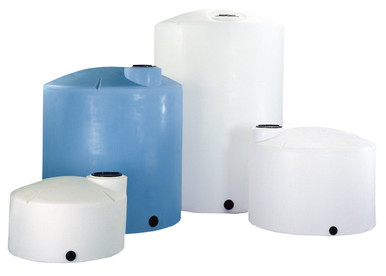
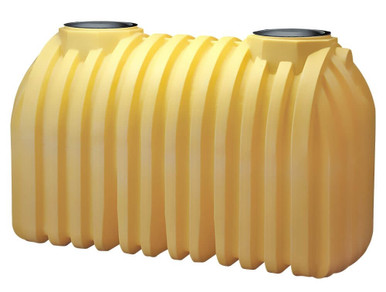
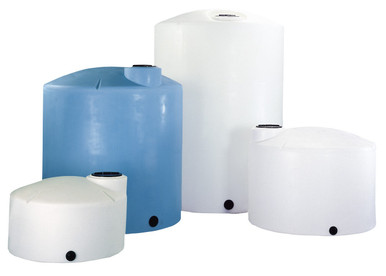
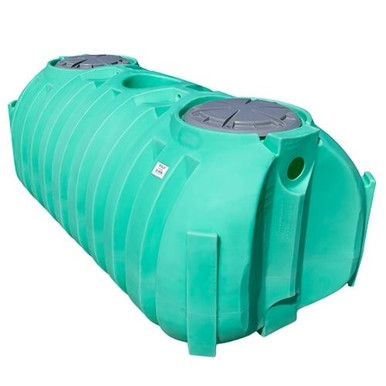
Nevada (NAC 444) requires a two-compartment septic tank with the inlet compartment at least two-thirds of total capacity. The IAPMO PS 1–listed two-compartment tanks below meet that requirement.
Shop all IAPMO PS 1–listed septic tanks →
Meeting the construction standard is not the same as a permit — your county environmental health office issues the permit and makes the final determination. Call us with your permit number and we will confirm the exact tank spec before shipment, with freight quoted to your ZIP.
Chemical Storage & Secondary Containment in Nevada
Storing fuel, fertilizer, or process chemicals alongside your tank changes the rules. The federal Spill Prevention, Control, and Countermeasure rule (40 CFR Part 112) applies at 1,320 gallons of aggregate aboveground oil storage and requires secondary containment sized to at least 110% of your largest tank. Releases of hazardous substances above their federal reportable quantity (40 CFR 302.4) must be reported to the National Response Center at 1-800-424-8802.
Nevada layers its own spill reportable quantities and restricted-substance rules on top of that federal floor — confirm the current thresholds with your state environmental agency before specifying a chemical tank. Just as important, the polyethylene resin must be matched to the exact chemical, concentration, and specific gravity you intend to store; a tank rated for water is not automatically rated for acid, bleach, or fertilizer.
Last reviewed: May 2026 · sourced from Nevada administrative code
Regulations change on a rolling basis — confirm the current rule with your county or state agency before purchasing. Spot something out of date? Email us and we'll fix it.
Nearby states (Mountain) & full index: