
New Hampshire Septic Tank Regulations — Env-Wq 1000
New Hampshire Septic Tank Regulations
In New Hampshire, the Subsurface Systems Bureau of NHDES oversees sewage disposal systems under Env-Wq 1000. Systems are designed based on the number of bedrooms, with a 75-foot setback for systems under 750 gallons per day, applicable from the Seacoast to the White Mountains.
The Governing Framework
New Hampshire regulates subsurface sewage disposal under:
- Env-Wq 1000 — New Hampshire subsurface rules. Codified under the NH Code of Administrative Rules, Chapter Env-Wq (Water Quality).
- NHDES (New Hampshire Department of Environmental Services) — state-level administrator. The Subsurface Systems Bureau within NHDES handles onsite wastewater.
- Approved designers and installers — NH requires specific state approval to design and install subsurface systems. Not every plumber or excavator qualifies.
- Local coordination — site plan, zoning, and shoreland protections at the municipal level layer on top of NHDES rules.
Design Flow and Tank Capacity
Residential systems in New Hampshire are designed based on the number of bedrooms. Commercial and institutional systems are sized using specific flow calculations according to Env-Wq 1000. Typical residential sizing follows these guidelines.
| Bedrooms | Typical Design Flow (gpd) | Typical Minimum Tank Capacity |
|---|---|---|
| 1–2 BR | 300–450 gpd | 1,000 gal |
| 3 BR | 450 gpd | 1,000 gal |
| 4 BR | 600 gpd | 1,250 gal |
| 5 BR | 750 gpd | 1,500 gal |
| 6+ BR or commercial | Per Env-Wq 1000 design tables | Per design tables |
Your designer, approved in New Hampshire, will determine the tank size and design flow using Env-Wq 1000 tables and your site details. Polyethylene tanks that meet IAPMO/NSF standards and New Hampshire construction requirements are accepted.
The 75-Foot Setback Radius — Systems Up to 750 gpd
In New Hampshire, subsurface systems with a design flow up to 750 gallons per day, which includes most single-family homes up to 5 bedrooms, require a 75-foot setback from sensitive areas. Larger systems have different setback requirements as per Env-Wq 1000 tables.
For a typical 5-bedroom single-family home, a 75-foot buffer is needed around the system from wells, surface water, foundations, and property lines. The exact distance varies by feature, so plan your property and house location accordingly, especially if the parcel is small.
Permit Process
- Hire an NH-approved designer. NHDES maintains an approved designer list. Only approved designers can submit subsurface system plans to NHDES.
- Site evaluation. Test pits, soil profile, percolation per Env-Wq 1000 methodology.
- Design submission to NHDES. Application with plans, soil data, flow calculations.
- NHDES review and approval. State-level approval, different from many states where permits are purely local.
- Local coordination. Site plan, zoning, shoreland protection approvals at municipal level.
- NH-approved installer construction.
- Inspection before cover. NHDES-approved inspector.
- Operational approval. System commissioning and approval to use.
Regional Considerations
- Seacoast (Rockingham, Strafford): Highest population density. Mix of municipal sewer (Portsmouth, Dover) and dense-septic suburbia. Coastal parcels face saltwater table and shoreland zoning. Great Bay watershed nitrogen concerns.
- Merrimack Valley (Hillsborough, Merrimack County corridor): Manchester and Nashua metro. Largely sewered; septic on exurban fringe.
- Lakes Region (Belknap, Carroll): Lake Winnipesaukee and neighbors. Shoreland protections and watershed phosphorus concerns layer on Env-Wq 1000 baseline.
- White Mountains (Coos, northern Grafton): Rocky bedrock, shallow soils, short construction season. Alternative systems common.
- Connecticut River Valley (western NH): Varied alluvial and glacial soils.
- Monadnock Region (Cheshire, Sullivan): Rural-estate and small-town parcels. Standard systems typical.
Alternative and Innovative Systems
Env-Wq 1000 allows for alternative septic system technologies when conventional systems aren't feasible due to site constraints. Some alternative options are available.
- Pressure distribution
- Mound systems (for high water table or shallow soil)
- Sand filters and peat biofilters
- Aerobic treatment units (ATUs)
- Cluster systems for small subdivisions
Alternative systems often need more engineering review, ongoing maintenance contracts, and have higher initial costs. Expect to pay between $25,000 and $65,000+ for these systems, compared to $12,000 to $22,000 for conventional ones.
Frequently Asked Questions
- Can I design my own system in New Hampshire?
- No. NH requires a state-approved designer for subsurface system plans. NHDES maintains the approved designer list. Homeowner-designed systems are not accepted.
- Why does NHDES review my permit instead of my town?
- New Hampshire uses state-level NHDES review for subsurface systems, different from many states that delegate permits to local or county health. Municipal coordination (zoning, site plan, shoreland) still happens at town level but the subsurface permit itself is an NHDES document.
- What are shoreland protections?
- NH Shoreland Water Quality Protection Act imposes additional restrictions on land within 250 feet of designated waterbodies. Septic systems in shoreland have additional setbacks and sometimes nitrogen-reduction requirements on top of baseline Env-Wq 1000. Verify if your parcel falls within shoreland protection.
- What happened at the October 2025 rulemaking hearing?
- NHDES held a public hearing on proposed Env-Wq 1000 revisions on October 24, 2025. The revisions update design methodology, alternative system provisions, and other technical standards. Adoption status and effective date should be verified at NHDES rulemaking portal. Projects in design should confirm which rule version applies.
- Are polyethylene tanks accepted in New Hampshire?
- Yes, when meeting IAPMO/NSF listings and NH construction requirements. Major OEM rotomolded polyethylene tanks from Norwesco, Snyder, and others are commonly approved. Your NH-approved designer will specify accepted models for your project.
Source Citations
Shop Septic Tanks for New Hampshire
OneSource stocks polyethylene septic tanks meeting New Hampshire construction requirements. Match capacity to your design flow per the rules summarized above. Tank + accessories + holding tank options below cover standard and alternative configurations. OneSource drop-ships from the OEM warehouse closest to your install address.
Plastic Septic Tanks
Full polyethylene septic tank catalog. Sizes from 300 to 1,500+ gallons for New Hampshire installations.
Browse Plastic Septic TanksIAPMO Approved Models
NSF/IAPMO listed tanks. Some counties and some installation types require this listing.
Browse IAPMO Approved ModelsSeptic Accessories
Risers, lids, baffles, filters, alarms, pumps, and install hardware.
Browse Septic AccessoriesHolding Tanks
Holding tanks for construction sites, recreational properties, and pump-and-haul installations.
Browse Holding TanksStoring chemicals in your New Hampshire tank?
New Hampshire's rules for onsite sewage systems don't cover chemical-storage tanks. These are specified by the manufacturer. If you need a tank for chemicals like sulfuric acid, bleach, or fertilizer solution, our Chemical Compatibility Database has all the construction specifications you need.
Agricultural Tank Regulations — NHDA & NHDES
The New Hampshire Department of Agriculture, Markets & Food (NHDA) and the New Hampshire Department of Environmental Services (NHDES) oversee agricultural tanks under the Revised Statutes Annotated (RSA) and New Hampshire Code of Administrative Rules.
- N.H. Admin. Rules Pes 301–1000 — NHDA Pesticide Control Division rules; applicator licensing, restricted-use pesticide (RUP) recordkeeping, bulk storage and repackaging, dealer licensing.
- RSA 430 — NH Pesticide Control Act and Fertilizer/Lime statutes (statutory authority).
- N.H. Admin. Rules Agr 1400 — Commercial Fertilizer registration, tonnage reporting, and labeling.
- N.H. Admin. Rules Env-Wq 1800–1900 — NHDES animal-waste and agricultural nonpoint-source management.
In New Hampshire, agriculture includes dairy and maple in the North Country and Upper Valley, apple and vegetable farms in the Merrimack Valley, and commercial blueberry farms in the Monadnock region. Ag retailers with bulk liquid fertilizer and pesticide storage must have secondary containment for 110% of the largest tank, impermeable liners, rinsate recovery, and spill plans aligned with NHDES. Lake-water-quality protections and the Great Bay nitrogen TMDL add extra scrutiny to nutrient-bearing tank installations in the Seacoast and Lakes Region.
Oil & Gas Storage — Petroleum UST/AST Path
New Hampshire doesn't produce oil or gas and lacks an upstream operator framework. Petroleum storage is regulated by a two-rule UST/AST system, with a notably low AST threshold.
- Env-Or 400 — NHDES Underground Storage Facilities: design, installation, corrosion protection, spill/overfill prevention, release detection, operator training, closure, financial responsibility.
- Env-Or 300 — NHDES Aboveground Storage Facilities; notably, New Hampshire regulates AST facilities at a 660-gallon single-tank or 1,320-gallon aggregate threshold, significantly lower than the federal SPCC 1,320-gallon oil aggregate trigger, capturing many small commercial heating-oil and fleet-fueling sites that federal SPCC would exempt.
- RSA 146-A (Oil Discharge and Disposal Cleanup Fund) — statutory authority for the Oil Discharge and Disposal Cleanup Fund, which reimburses eligible corrective-action costs for registered tanks in good standing.
- RSA 146-C / 146-D / 146-G — petroleum fund statutes covering Oil Discharge, Motor Oil Discharge, and Gasoline Tank Fund programs.
The key difference in New Hampshire is the 660-gallon AST threshold. A 500-gallon heating-oil tank at a small commercial property doesn't need Env-Or 300 registration, but a 1,000-gallon AST does, requiring state registration, secondary containment, overfill protection, and release detection. Offshore federal OCS leasing is not under state jurisdiction.
Septic System Sizing — Env-Wq 1000
NHDES regulates subdivision and individual sewage disposal under Env-Wq 1000. Residential design flow is 150 gpd per bedroom:
| Bedrooms | Minimum Septic Tank Capacity (Env-Wq 1008) |
|---|---|
| 1–3 BR | 1,000 gallons |
| 4 BR | 1,250 gallons |
| 5 BR | 1,500 gallons |
| 6+ BR | Add 250 gallons per additional bedroom |
The NHDES Subsurface Systems Bureau runs the statewide program. Licensed Designers create site-specific plans, and licensed Installers build them. Soil types vary, requiring different systems like mound or pressure-dosed systems in areas with shallow bedrock or high water tables. Advanced-treatment systems are common in tight-soil areas and in towns near Great Bay, where stricter nitrogen-reduction rules apply. The Shoreland Water Quality Protection Act (RSA 483-B) adds more setback and design rules within 250 feet of public waters.
Chemical Storage Secondary Containment & Spill Reporting
Federal SPCC (40 CFR 112) applies at 1,320 gallons aggregate aboveground oil; New Hampshire tightens the framework through:
- Env-Or 300 — state AST rule at 660-gallon single-tank threshold capturing many sites below federal SPCC trigger.
- Env-Or 600 Hazardous Waste — RCRA generator requirements, accumulation limits, container management.
- NHDES 24-hour Spill Line — immediate reporting for petroleum and hazardous-substance releases.
- RSA 146-A — statutory strict liability for oil discharge response and cleanup.
- NFPA 30 / 30A — State Fire Marshal and local fire-code enforcement for flammable and combustible liquids.
Report federal-RQ releases to the National Response Center at 1-800-424-8802 and state releases immediately to NHDES. Participation in the New Hampshire Oil Discharge and Disposal Cleanup Fund depends on registration and compliance at the time of discharge.
Permit Pathways at a Glance
- Residential septic: NHDES Subsurface Systems Bureau under Env-Wq 1000 (Designer + Installer licenses required).
- Shoreland Protection: NHDES under RSA 483-B for work within 250 ft of public waters.
- Fertilizer registration: NHDA under Agr 1400.
- Pesticide applicator license: NHDA Pesticide Control Division under Pes 301–1000.
- Petroleum UST: NHDES under Env-Or 400 with Oil Discharge/Disposal Cleanup Fund participation.
- Petroleum AST >660 gal: NHDES under Env-Or 300.
- SPCC > 1,320 gal oil aggregate: Federal SPCC plan; NHDES spill reporting; Env-Or 300 also applies.
- Flammable/combustible storage: State Fire Marshal / local fire under NFPA 30/30A.
Current fees change; verify with NHDES and NHDA before budgeting.
More New Hampshire FAQs
- Why is New Hampshire's AST threshold 660 gallons?
- Env-Or 300 sets the 660-gallon single-tank threshold for state AST registration to capture small commercial heating-oil and fleet-fueling sites below the federal SPCC 1,320-gallon aggregate trigger. New Hampshire's combination of dense residential development near surface water and historically severe heating-oil groundwater-contamination incidents drove the state to a lower threshold than most neighbors. Owners of single tanks 660 gallons and above must register, provide secondary containment, and follow state AST rules regardless of federal SPCC status.
- Who issues my septic permit?
- NHDES Subsurface Systems Bureau issues the statewide Approval for Construction and Approval for Operation for individual and subdivision systems under Env-Wq 1000. A state-licensed Designer prepares plans; a state-licensed Installer constructs. Some towns impose local setback or design overlays on top of the state approval.
- Does the Shoreland Protection Act prohibit tanks near the lake?
- RSA 483-B Shoreland Water Quality Protection Act does not outright prohibit tanks within the 250-ft protected shoreland but imposes setbacks, design constraints, and impervious-surface limits. Fuel-oil tanks, septic tanks, and chemical-storage tanks within the 250-ft zone require NHDES shoreland permit review in addition to any underlying UST/AST or septic approval.
- What is the Oil Discharge and Disposal Cleanup Fund and does it pay for my spill?
- RSA 146-A establishes the Oil Discharge and Disposal Cleanup Fund, financed by petroleum fees, that reimburses eligible corrective-action costs for registered tanks in good standing. Eligibility, caps, and deductibles are set by NHDES; confirm current parameters with the NHDES Oil Pollution Control Section before relying on fund coverage. Unregistered tanks or tanks out of compliance at the time of discharge may be ineligible.
- Is the Great Bay nitrogen TMDL enforced on my septic project?
- NHDES applies tightened nitrogen-reduction expectations within Great Bay estuary watersheds (Piscataqua River basin towns in Rockingham and Strafford counties). New construction and significant upgrades in sensitive sub-watersheds may require advanced nitrogen-reducing septic technology. Confirm watershed status during site evaluation.
- Does NH regulate heating-oil tanks at a single-family home?
- Residential heating-oil tanks at 1- to 4-unit dwellings have partial exemptions but still face NFPA 31 / 30 installation standards, local fire-code oversight, and strict Spill Act liability on any release. Tanks 660 gallons and above may cross the Env-Or 300 AST threshold even at residential sites. Insurance-driven tank-integrity programs are common.
Septic Tanks That Meet New Hampshire Code
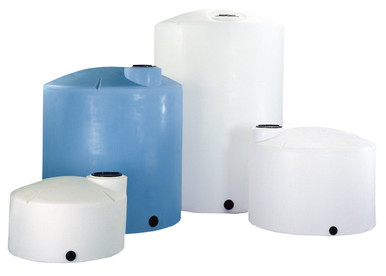
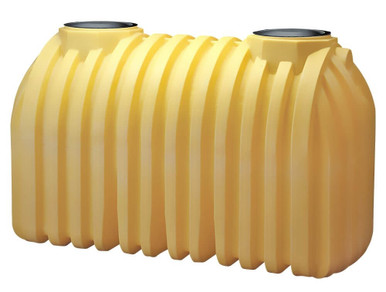
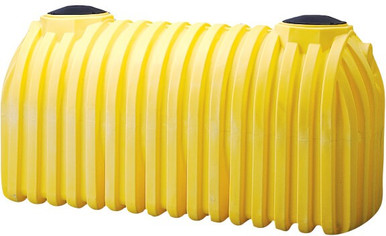
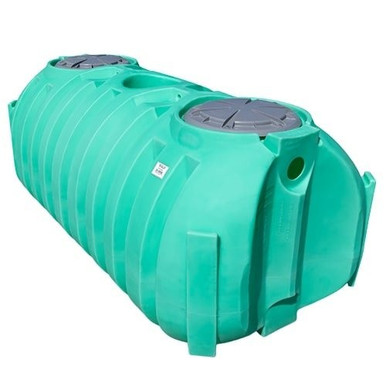
New Hampshire (Env-Wq 1000) sizes septic tanks by bedroom count or design flow, with residential systems typically starting at 1,000 gallons. These IAPMO PS 1–listed polyethylene tanks meet that capacity standard; your county or state permitting office confirms the final size.
Shop all IAPMO PS 1–listed septic tanks →
Meeting the construction standard is not the same as a permit — your county environmental health office issues the permit and makes the final determination. Call us with your permit number and we will confirm the exact tank spec before shipment, with freight quoted to your ZIP.
Chemical Storage & Secondary Containment in New Hampshire
Storing fuel, fertilizer, or process chemicals alongside your tank changes the rules. The federal Spill Prevention, Control, and Countermeasure rule (40 CFR Part 112) applies at 1,320 gallons of aggregate aboveground oil storage and requires secondary containment sized to at least 110% of your largest tank. Releases of hazardous substances above their federal reportable quantity (40 CFR 302.4) must be reported to the National Response Center at 1-800-424-8802.
New Hampshire layers its own spill reportable quantities and restricted-substance rules on top of that federal floor — confirm the current thresholds with your state environmental agency before specifying a chemical tank. Just as important, the polyethylene resin must be matched to the exact chemical, concentration, and specific gravity you intend to store; a tank rated for water is not automatically rated for acid, bleach, or fertilizer.
Last reviewed: May 2026 · sourced from New Hampshire administrative code
Regulations change on a rolling basis — confirm the current rule with your county or state agency before purchasing. Spot something out of date? Email us and we'll fix it.
Nearby states (New England) & full index: