
New Jersey Septic Tank Regulations — NJAC 7:9A Standards
New Jersey Septic Tank Regulations
New Jersey's rules for Individual Subsurface Sewage Disposal Systems are managed by NJDEP under NJAC 7:9A. Section 7:9A-8.2 covers tank construction, and section 7:9A-4.3 specifies distances, like keeping seepage pits 150 feet away from wells. These rules apply from the Pine Barrens to the Highlands.
The Governing Framework
New Jersey regulates individual subsurface sewage disposal under:
- NJAC Title 7, Chapter 9A — Standards for Individual Subsurface Sewage Disposal Systems. The substantive rule.
- NJAC 7:9A-2.1 — Definitions.
- NJAC 7:9A-4.3 — Distances (setbacks).
- NJAC 7:9A-8.2 — Septic Tanks construction and capacity.
- New Jersey Department of Environmental Protection (NJDEP) — state-level administrator.
- Local health authorities — implement field permits under NJDEP oversight. Municipal health departments, county health departments, and some regional health commissions handle local implementation.
Septic Tank Capacity — § 7:9A-8.2
| Installation Type | Capacity Rule |
|---|---|
| Single-family residential | Per § 7:9A-8.2 table by bedroom count |
| Non-SFR, < 1,500 gpd | Minimum capacity = 1.5 × daily sanitary sewage volume |
| Institutional/commercial with > 1,000 gpd daily flow | Multi-compartment tank required |
| Any installation with sewage ejector pump | Multi-compartment tank required |
| Multi-compartment total capacity floor | 1,000 gallons minimum |
Setback Distances — § 7:9A-4.3
NJAC 7:9A-4.3 specifies horizontal separation distances. Notable provisions:
- Seepage pit to water well: 150 feet
- Seepage pit to suction line: 100 feet
- Additional setbacks for septic tanks, absorption fields, and other system components to wells, surface water, property lines, structures, and water supply piping
Seepage pits need to be placed further away than absorption fields because they release wastewater in a smaller area, increasing the risk of groundwater contamination. Most new systems in New Jersey use absorption fields, while seepage pits are found in older properties.
Permit Process
- Contact your local health authority. Most New Jersey onsite permits start at the municipal or county health department level.
- Soil and site evaluation. Per NJAC 7:9A protocols including percolation testing and soil profile.
- System design submission. Plot plan, soil results, tank and absorption system sizing.
- Permit application. Local health authority processes. Fees typically $300–$600.
- Licensed installer construction.
- Inspection before cover. Local authority inspects.
Regional Considerations
- North Jersey (Bergen, Passaic, Essex, Union): Largely on municipal sewer. Remaining septic on rural-estate parcels and Highlands-protected areas.
- Pine Barrens (Burlington, Ocean, Atlantic inland): Sandy soils, deep percolation. Standard systems work well. However, many parcels fall within the Pinelands National Reserve, which has additional environmental protection layers that may require specific design review.
- Highlands Region (Morris, Warren, Sussex, Hunterdon): Protected watershed supplying much of North Jersey drinking water. Stricter septic requirements and development limits under the Highlands Water Protection and Planning Act.
- Shore communities (Cape May, Ocean): Coastal sandy soils. Post-Sandy floodplain elevations affect riser and venting design. Barrier-island installations require anchoring.
- Delaware Bay shore (Cumberland, Salem): Low-lying tidal terrain. Alternative systems often required.
- South Jersey rural (Salem, Cumberland): Agricultural parcels with standard systems typical.
Frequently Asked Questions
- What's special about the Pinelands?
- The Pinelands National Reserve is a federally-designated protected area under New Jersey Pinelands Commission oversight. Within the Pinelands, additional septic system requirements may apply beyond baseline NJAC 7:9A — stricter nitrogen-reduction standards for new systems, setback expansions, and development density limits. If your parcel is in the Pinelands, check with the Pinelands Commission in addition to NJDEP.
- What if I have an ejector pump?
- You must use a multi-compartment septic tank regardless of daily flow. Single-compartment tanks are not permitted for ejector-pump service under § 7:9A-8.2. Plan for this at design time — retrofitting to multi-compartment means replacing the tank.
- What's a seepage pit and why are setbacks larger?
- A seepage pit is a deep pit filled with gravel that receives septic effluent and allows it to percolate downward into the soil. Distinct from an absorption field (trenches or beds near surface). Seepage pits concentrate discharge volume into a smaller footprint, creating higher groundwater contamination potential — hence 150 ft to well vs absorption-field setbacks typically 100 ft. Most new NJ installations use absorption fields rather than seepage pits.
- Does New Jersey require nitrogen-reduction technology?
- In specific designated areas (Pinelands, some watersheds, Highlands). Not statewide by default. If your parcel is in a nitrogen-sensitive designated area, your local authority will specify the required technology level.
Source Citations
Shop Septic Tanks for New Jersey
OneSource stocks polyethylene septic tanks meeting New Jersey construction requirements. Match capacity to your design flow per the rules summarized above. Tank + accessories + holding tank options below cover standard and alternative configurations. OneSource drop-ships from the OEM warehouse closest to your install address.
Plastic Septic Tanks
Full polyethylene septic tank catalog. Sizes from 300 to 1,500+ gallons for New Jersey installations.
Browse Plastic Septic TanksIAPMO Approved Models
NSF/IAPMO listed tanks. Some counties and some installation types require this listing.
Browse IAPMO Approved ModelsSeptic Accessories
Risers, lids, baffles, filters, alarms, pumps, and install hardware.
Browse Septic AccessoriesHolding Tanks
Holding tanks for construction sites, recreational properties, and pump-and-haul installations.
Browse Holding TanksStoring chemicals in your New Jersey tank?
New Jersey's OSSF rules don't apply to chemical-storage tanks. These are specified by the manufacturer. If you need a tank for chemicals like sulfuric acid, bleach, or fertilizer solution, our Chemical Compatibility Database provides full construction specifications.
Agricultural Tank Regulations — NJDA & NJDEP
The New Jersey Department of Agriculture (NJDA) and the New Jersey Department of Environmental Protection (NJDEP) jointly oversee agricultural tanks under N.J.S.A. (statutes) and N.J.A.C. (regulations).
- N.J.A.C. 7:30 — NJDEP Pesticide Control Program: applicator licensing, restricted-use pesticide (RUP) recordkeeping, bulk storage and repackaging, dealer licensing.
- N.J.S.A. 13:1F — Pesticide Control Act (statutory authority).
- N.J.A.C. 2:69 — NJDA Commercial Fertilizer rules: registration, tonnage reporting, and labeling.
- N.J.A.C. 7:1E — Discharge Prevention, Containment and Countermeasure (DPCC) rules; one of the strictest state spill-prevention regimes in the United States, with civil administrative penalties up to $100,000 per day per violation under N.J.S.A. 58:10-23.11u.
New Jersey's agriculture focuses on vegetables, fruits, and greenhouses. South Jersey (Salem, Cumberland, Gloucester, Atlantic) grows blueberries, cranberries, peaches, tomatoes, and bell peppers. The Pinelands (Burlington, Ocean, Atlantic) has cranberry bogs and blueberry fields under special oversight. North Jersey focuses on equestrian, nursery, and hay operations. Agricultural retailers dealing with bulk liquid fertilizer and pesticides must build secondary containment to 110% of the largest tank, with impermeable liners, rinsate recovery, spill capture, and DPCC-aligned plans when needed. New Jersey's combination of DPCC 7:1E, the Spill Compensation and Control Act (Spill Act), and ISRA (Industrial Site Recovery Act) creates strict liability rules for storing hazardous substances.
Oil & Gas Storage — Petroleum UST/AST Path
New Jersey does not produce oil or gas and lacks an upstream operator framework. Petroleum storage is regulated by a complex set of UST/AST and spill-prevention rules.
- N.J.A.C. 7:14B — NJDEP UST Program: design, installation, corrosion protection, spill/overfill, release detection, operator training, closure, financial responsibility.
- N.J.A.C. 7:1E DPCC — discharge prevention, containment and countermeasure rules for major facilities storing hazardous substances (including petroleum) above thresholds; requires DPCC plans, secondary containment, overfill protection, and release response planning well beyond federal SPCC.
- N.J.S.A. 58:10-23.11 Spill Act — strict, joint-and-several, retroactive liability for discharges of hazardous substances; funds the NJ Spill Compensation Fund.
- N.J.A.C. 7:26B ISRA — Industrial Site Recovery Act; triggers on closing operations, transferring ownership, or ceasing operations at an “industrial establishment” (broad SIC/NAICS list). Obligates preliminary assessment, site investigation, remediation, and NJDEP closure under LSRP oversight.
New Jersey has a history of petrochemical and refining activities along the Arthur Kill, Newark Bay, and lower Delaware River. Fuel terminals are located in Linden, Carteret, Bayonne, and Paulsboro, with fleet fueling across all counties. Offshore federal OCS leasing in the Atlantic is managed by BOEM/BSEE, not the state.
DPCC 7:1E — the Strictest Spill Prevention Regime
N.J.A.C. 7:1E applies to 'major facilities' storing 200,000 gallons or more of hazardous substances in total, or lower amounts for certain substances. These requirements are stricter than the federal SPCC (40 CFR 112).
- DPCC Plan — engineer-certified plan covering every tank, transfer point, piping run, and loading rack; renewed on a fixed schedule and revised on material change.
- Discharge Cleanup and Removal (DCR) Plan — facility-specific response plan with contractor commitments, equipment staging, and personnel training.
- Secondary containment — minimum 110% of the largest tank for most installations; impermeable liners, corrosion-resistant materials, 25-year design life expectations.
- Overfill prevention — independent high-level alarms and automatic shutoff on bulk tanks.
- Operator training and drills — periodic documented training and deployment exercises.
- Penalty exposure — administrative civil penalties up to $50,000 per day under N.J.A.C. 7:1E-5 and up to $100,000 per day per violation under Spill Act N.J.S.A. 58:10-23.11u for violations of discharge prohibitions.
DPCC 7:1E is the main rule for any New Jersey industrial tank project, considered more important than the federal SPCC. Non-major facilities must still follow SPCC at 1,320 gallons and face strict liability under the Spill Act for any release.
Septic System Sizing & Pinelands Overlay — N.J.A.C. 7:9A
NJDEP regulates individual subsurface sewage disposal under N.J.A.C. 7:9A. Residential design flow is 150 gpd per bedroom:
| Bedrooms | Minimum Septic Tank Capacity (N.J.A.C. 7:9A) |
|---|---|
| 1–3 BR | 1,000 gallons |
| 4 BR | 1,250 gallons |
| 5 BR | 1,500 gallons |
| 6+ BR | Add 250 gallons per additional bedroom |
Local health departments issue individual septic permits under NJDEP supervision. Soil types vary across the state, from glacial till in the north to sandy-loam in Cape May. The Pinelands Commission, under the Pinelands Comprehensive Management Plan (N.J.A.C. 7:50), sets restrictions on septic systems, density, and pesticide use in the Pinelands Area. Advanced nitrogen-reducing septic systems are often required there. Coastal sites prone to flooding need elevated tanks and anti-flotation ballast under CAFRA (Coastal Area Facility Review Act) and waterfront rules.
Permit Pathways at a Glance
- Residential septic: Local health department under N.J.A.C. 7:9A with NJDEP oversight.
- Pinelands overlay: Pinelands Commission under N.J.A.C. 7:50 for any Pinelands-area work.
- Fertilizer registration: NJDA under N.J.A.C. 2:69.
- Pesticide applicator license / dealer: NJDEP Pesticide Control Program under N.J.A.C. 7:30.
- Petroleum UST: NJDEP Bureau of UST under N.J.A.C. 7:14B.
- Major facility AST / hazardous substance: NJDEP DPCC under N.J.A.C. 7:1E.
- SPCC > 1,320 gal oil aggregate: Federal SPCC plan; NJDEP spill reporting.
- ISRA: NJDEP SRP under N.J.A.C. 7:26B at transfer or closure of industrial establishments.
Current fees change; verify with NJDEP, NJDA, or the Pinelands Commission before budgeting.
More New Jersey FAQs
- When does ISRA trigger and what does it cost?
- N.J.A.C. 7:26B ISRA applies on the closing, terminating, or transferring of operations or ownership at an “industrial establishment” (SIC/NAICS-listed categories). Triggering events include sale of the business, transfer of >50% of stock, cessation of operations, or bankruptcy. Obligations include Preliminary Assessment, Site Investigation, Remediation under LSRP oversight, and NJDEP Response Action Outcome. Transactional timelines slip 6–18+ months and cleanup costs range from tens of thousands to many millions depending on contamination extent.
- What is an LSRP?
- Under the Site Remediation Reform Act (N.J.S.A. 58:10C) a Licensed Site Remediation Professional is a state-licensed environmental professional who self-implements investigation and cleanup under NJDEP audit oversight. LSRPs are required for ISRA, Spill Act, UST, and most voluntary cleanups. LSRP engagement is non-negotiable for any release response in New Jersey.
- Is every AST over 1,320 gallons a DPCC major facility?
- No. N.J.A.C. 7:1E defines “major facility” by cumulative hazardous-substance storage above threshold (generally 200,000 gallons for petroleum; lower for specific listed substances). Facilities below the DPCC threshold still face federal SPCC at 1,320 gallons, Spill Act strict liability, and any applicable UST/AST rules. DPCC adds a very high tier of obligations on top of SPCC.
- How fast must I report a discharge in New Jersey?
- Any discharge of a hazardous substance must be reported immediately to the NJDEP Hotline 1-877-WARNDEP (927-6337) under Spill Act N.J.S.A. 58:10-23.11e. Federal-RQ releases additionally go to NRC at 1-800-424-8802. There is no lower-tier 72-hour window — NJ reporting is immediate.
- Does the Pinelands Commission have its own septic rule?
- The Pinelands Commission administers N.J.A.C. 7:50 (Pinelands Comprehensive Management Plan) as an overlay on top of N.J.A.C. 7:9A. Within the Pinelands Area the Commission imposes density, siting, nitrogen-loading, and water-quality-management requirements that routinely require nitrogen-reducing alternative-technology septic systems and restrict lot sizes below 3.2 acres in Regional Growth Area and more restrictive in Preservation Area. Pinelands approvals run in parallel with local board-of-health permits.
- Is there a state UST cleanup fund?
- Yes — the NJ Petroleum UST Remediation, Upgrade, and Closure Fund (PUR) provides grants and loans for eligible UST upgrade, closure, and corrective-action costs. Eligibility and annual funding change; confirm with NJDEP Bureau of Loans and Grants before relying on PUR coverage.
Septic Tanks That Meet New Jersey Code
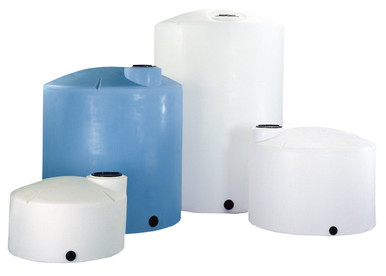
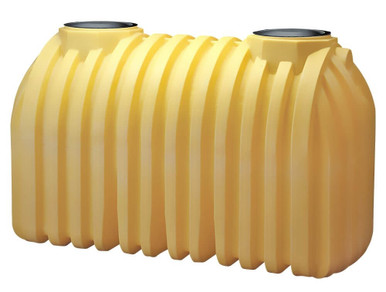
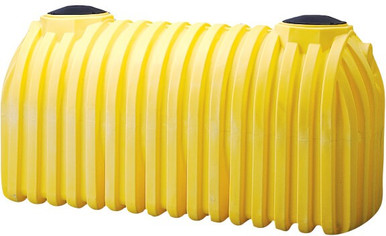
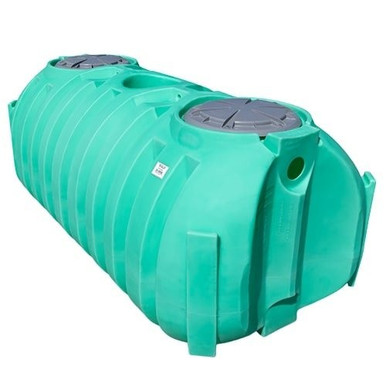
New Jersey (NJAC 7:9A) sizes septic tanks by bedroom count or design flow, with residential systems typically starting at 1,000 gallons. These IAPMO PS 1–listed polyethylene tanks meet that capacity standard; your county or state permitting office confirms the final size.
Shop all IAPMO PS 1–listed septic tanks →
Meeting the construction standard is not the same as a permit — your county environmental health office issues the permit and makes the final determination. Call us with your permit number and we will confirm the exact tank spec before shipment, with freight quoted to your ZIP.
Chemical Storage & Secondary Containment in New Jersey
Storing fuel, fertilizer, or process chemicals alongside your tank changes the rules. The federal Spill Prevention, Control, and Countermeasure rule (40 CFR Part 112) applies at 1,320 gallons of aggregate aboveground oil storage and requires secondary containment sized to at least 110% of your largest tank. Releases of hazardous substances above their federal reportable quantity (40 CFR 302.4) must be reported to the National Response Center at 1-800-424-8802.
New Jersey layers its own spill reportable quantities and restricted-substance rules on top of that federal floor — confirm the current thresholds with your state environmental agency before specifying a chemical tank. Just as important, the polyethylene resin must be matched to the exact chemical, concentration, and specific gravity you intend to store; a tank rated for water is not automatically rated for acid, bleach, or fertilizer.
Last reviewed: May 2026 · sourced from New Jersey administrative code
Regulations change on a rolling basis — confirm the current rule with your county or state agency before purchasing. Spot something out of date? Email us and we'll fix it.
Nearby states (Mid-Atlantic) & full index: