
New Mexico Septic Tank Regulations — 20.7.3 NMAC Liquid Waste
New Mexico Septic Tank Regulations
New Mexico's Liquid Waste Regulations, found in 20.7.3 NMAC, are overseen by NMED. Table 201.2 outlines residential and commercial capacity, requiring a minimum design flow of 2.5 times. Table 301.1 provides setback distances, which apply from the Rio Grande to the Chihuahuan desert.
The Governing Framework
New Mexico regulates onsite wastewater under:
- 20.7.3 NMAC — Liquid Waste Regulations. The substantive rule covering onsite wastewater statewide.
- § 20.7.3.201 — Procedures; General Requirements (including capacity calculations and Table 201.2).
- § 20.7.3.808 — Holding Tank Requirements.
- Table 301.1 — Setback distances.
- New Mexico Environment Department (NMED) — state-level regulator. The Liquid Waste Program within NMED administers 20.7.3 NMAC.
Septic Tank Capacity — The "Whichever Greater" Rule
New Mexico's capacity rule combines a bedroom-based table with a flow-based floor:
| Determination Method | Rule |
|---|---|
| Residential | Liquid capacity per Table 201.2 based on number of bedrooms |
| Commercial | Liquid capacity per Table 201.2 based on plumbing fixture units |
| Flow-based minimum | 2.5 × design flow |
| Controlling rule | Whichever calculation method produces the larger capacity |
Setback Distance — The Horizontal-Distance Rule
According to 20.7.3 NMAC, setback distance is the straight horizontal line measured between the on-site liquid waste system and the object in question. Table 301.1 specifies these distances for water wells, surface water, property lines, structures, and water supply lines.
The horizontal distance requirement is important in steep or arroyo-country areas where vertical drop doesn't count for setback. Precise measurements by surveyors are common for these challenging lots.
Holding Tank Requirements — § 20.7.3.808
For places without absorption fields, like remote cabins or temporary commercial sites, holding tanks are regulated by 20.7.3.808. Here are the main requirements:
- Tank capacity based on expected use volume and pump-out frequency
- High-liquid alarm required
- Structural integrity to prevent collapse under full-load conditions
- Access for inspection and pumping
- NMED-approved installer for commercial holding tanks
Permit Process
- Contact NMED or your local liquid-waste authority. Some counties and tribal areas have delegated authority; others refer to NMED directly.
- Site evaluation. Certified soil evaluator per 20.7.3 NMAC protocols.
- Design submission. Plot plan, soil evaluation, system sizing per Table 201.2 and the 2.5× rule.
- Permit application. Through NMED Liquid Waste Program. Fees vary.
- Licensed installer construction.
- Inspection before cover. NMED or delegated authority.
Regional Considerations
- Albuquerque Metro (Bernalillo County): Largely on municipal sewer. Remaining septic on the East Mountain and West Mesa fringes.
- Santa Fe / Los Alamos: High-elevation with caliche layers and some karst. Alternative systems common. LANL area has specific environmental considerations for proximity to Los Alamos National Laboratory.
- Las Cruces / Mesilla Valley: Deep alluvial soils, low rainfall, irrigation water-table concerns. Standard systems work well.
- Chama / Jemez / Taos: Mountain communities with deep snow and shallow soil over volcanic tuff. Deep-bury requirements for frost protection.
- Eastern plains (Roosevelt, Curry, Lea): Flat, deep soils, moderate percolation. Standard systems typical.
- Tribal jurisdictions: Navajo Nation, Pueblo communities, Apache reservations have separate tribal environmental authorities. Projects on tribal land are NOT under NMED 20.7.3 NMAC jurisdiction. Contact tribal EPA offices.
Material Approvals
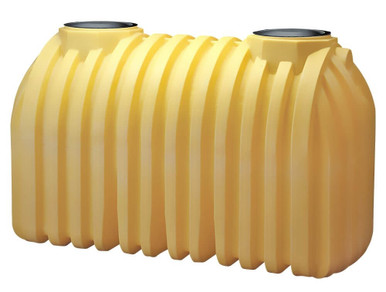
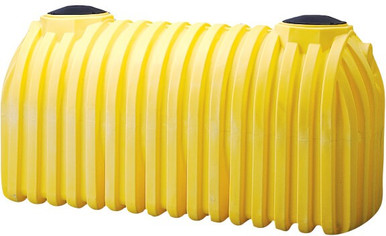
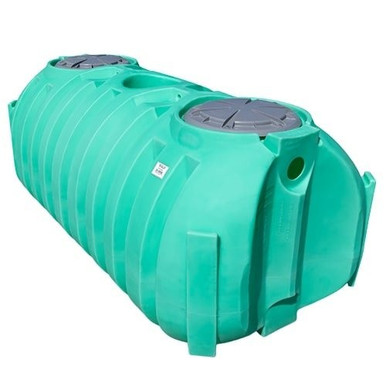
NMED maintains an approved-products list for septic tanks. Polyethylene tanks meeting state construction standards are listed:
- IAPMO PS 1 or NSF 46 listing
- Ribbed polyethylene rated for burial
- Two-compartment preferred
- Check the NMED Approved Products list for current model acceptance
Frequently Asked Questions
- Is my parcel on tribal land?
- In New Mexico, many parcels that appear "rural" on standard maps are actually within Navajo Nation, Pueblo, or other tribal reservations. Tribal environmental authority (not NMED) governs septic installations on tribal land. If you're unsure, contact both NMED and the nearest tribal environmental office.
- What's a "fixture unit" for commercial capacity?
- Plumbing fixture unit (PFU) is a standardized measure of plumbing load from the Uniform Plumbing Code. Each type of plumbing fixture (toilet, sink, shower, floor drain) contributes a specific number of PFUs. Total PFUs determine commercial tank size under Table 201.2. Your designer calculates PFUs from the building plumbing plan.
- What's the 2.5× design flow method for?
- Used when Table 201.2 doesn't clearly apply, or when the calculated flow is higher than what Table 201.2 produces. A 2,000 gpd design flow needs 2.5 × 2,000 = 5,000 gallon minimum tank. This is commonly the controlling calculation for larger commercial or unusual-use installations.
- Can I use a holding tank instead of an absorption field?
- Sometimes. Holding tanks per 20.7.3.808 are allowed where absorption isn't feasible, but require periodic pumping (cost liability) and high-liquid alarms. Temporary installations (construction sites, remote cabins, seasonal-use properties) use holding tanks more often than permanent residences.
Source Citations
Shop Septic Tanks for New Mexico
OneSource stocks polyethylene septic tanks meeting New Mexico construction requirements. Match capacity to your design flow per the rules summarized above. Tank + accessories + holding tank options below cover standard and alternative configurations. OneSource drop-ships from the OEM warehouse closest to your install address.
Plastic Septic Tanks
Full polyethylene septic tank catalog. Sizes from 300 to 1,500+ gallons for New Mexico installations.
Browse Plastic Septic TanksIAPMO Approved Models
NSF/IAPMO listed tanks. Some counties and some installation types require this listing.
Browse IAPMO Approved ModelsSeptic Accessories
Risers, lids, baffles, filters, alarms, pumps, and install hardware.
Browse Septic AccessoriesHolding Tanks
Holding tanks for construction sites, recreational properties, and pump-and-haul installations.
Browse Holding TanksStoring chemicals in your New Mexico tank?
New Mexico's OSSF rules don't cover chemical-storage tanks. These are specified by the manufacturer. If you need a tank for sulfuric acid, bleach, fertilizer solution, or any of 300+ industrial chemicals, our Chemical Compatibility Database provides full construction specifications.
Agricultural Tank Regulations — New Mexico Department of Agriculture (NMDA)
The New Mexico Department of Agriculture (NMDA) at New Mexico State University regulates pesticide, fertilizer, and feed storage under NMAC Title 21, Chapter 17, with authority from NMSA Chapter 76:
- NMAC 21.17.5 — Pesticide rules including registration, labeling, and applicator licensing.
- NMAC 21.17.50 — Bulk pesticide storage and containment rules.
- NMAC 21.17 (broader chapter) — Fertilizer and soil conditioner rules including bulk storage at agricultural supply dealers.
- NMSA 76-4 — Pesticide statutory authority.
- NMSA 76-12 — Commercial Fertilizer and Soil Conditioner Law.
New Mexico agriculture has two main types: small irrigated farms along the Rio Grande, Pecos, and San Juan valleys, and large cattle ranches in the Chihuahuan and Sonoran basins. Facilities with bulk liquid fertilizer or pesticide storage must follow NMDA rules, specifically NMAC 21.17.50 for pesticide storage, requiring 110% containment of the largest tank, an impermeable liner, and documented inspections. NMDA works with NMED on incident responses. Anhydrous ammonia storage follows ANSI K61.1, with high activity in the Mesilla Valley and Pecos corridor during the spring planting season.
Oil & Gas Produced Water — New Mexico Oil Conservation Division (OCD)
The New Mexico Oil Conservation Division (OCD) in the Energy, Minerals, and Natural Resources Department (EMNRD) oversees oil and gas operations under NMAC Title 19, Chapter 15:
- NMAC 19.15.17 — Pits, closed-loop systems, below-grade tanks, and sumps: construction, lining, freeboard, closure.
- NMAC 19.15.29 — Produced water disposal, injection wells, and beneficial reuse.
- NMAC 19.15.36 — Surface waste management facilities.
- NMSA 70-2 — Oil and gas conservation statutory authority.
The New Mexico Permian Basin in Lea and Eddy counties is a major oil and gas area, while the San Juan Basin in San Juan and Rio Arriba counties focuses on gas and coalbed methane. OCD regulates pits and tank batteries under NMAC 19.15.17 with strict standards for construction and lining, tightened in 2008 to protect groundwater. Polyethylene tanks are used for chemical injection, while fiberglass and steel are common for high-volume produced water. The reuse of produced water is regulated under NMAC 19.15.29 and the 2019 Produced Water Act (HB 546).
Petroleum USTs — NMED Petroleum Storage Tank Bureau (PSTB)
The New Mexico Environment Department manages petroleum storage tanks through the Petroleum Storage Tank Bureau under NMAC Title 20, Chapter 5:
- NMAC 20.5.101 et seq. — UST technical standards (design, installation, release detection, corrective action, closure).
- NMAC 20.5.17 — AST rules for aboveground petroleum storage.
- NMSA 74-4 — Hazardous Waste Act statutory authority for related spill and response programs.
- Corrective Action Fund — state reimbursement for eligible cleanup costs.
New Mexico UST owners must register with NMED PSTB, pay annual fees for the Corrective Action Fund, maintain 2018 federal rule upgrades, and report suspected releases within 24 hours. AST rules under NMAC 20.5.17 apply in addition to federal SPCC for facilities above certain volumes.
Septic System Sizing Deep Dive
New Mexico regulates onsite wastewater systems through the NMED Liquid Waste Program under NMAC 20.7.3. The minimum residential capacity is specified:
| Bedrooms | Minimum Septic Tank Capacity |
|---|---|
| 1–3 BR | 1,000 gallons |
| 4 BR | 1,250 gallons |
| 5 BR | 1,500 gallons |
| 6+ BR | +250 gallons per additional bedroom |
New Mexico's soils vary widely, from deep loess on the Eastern Plains to rocky profiles in the Sangre de Cristo foothills. NMAC 20.7.3 requires soil and site evaluations, a licensed installer, and an NMED permit. Alternative systems like aerobic treatment units and drip dispersal are used in areas with slow percolation and scarce water, such as Santa Fe, Los Alamos, and Taos counties, to protect groundwater.
Chemical Storage Secondary Containment & Spill Reporting
Federal SPCC (40 CFR 112) applies at 1,320 gallons aggregate aboveground oil. New Mexico layers on:
- NMSA 74-6-7 — Water Quality Act release-reporting authority under NMED Surface Water Quality Bureau and Ground Water Quality Bureau.
- NMAC 20.6.2 — Ground water protection regulations.
- NMAC 19.15.29 — OCD spill reporting for upstream oil and gas releases.
- New Mexico Department of Homeland Security and Emergency Management (DHSEM) — EPCRA Tier II and State Emergency Response Commission.
Report non-oil-and-gas releases to NMED's Surface Water Quality Bureau or Ground Water Quality Bureau, and federal RQ releases to the National Response Center at 1-800-424-8802. Oil and gas releases go to OCD. The standard for secondary containment is 110%. For state-specific RQ thresholds different from 40 CFR 302.4, contact NMED directly.
Permit Pathways at a Glance
- Residential liquid waste (septic): NMED Environmental Health Bureau (or delegated local authority) under NMAC 20.7.3.
- Fertilizer & pesticide registration: NMDA under NMAC 21.17 and NMSA 76.
- Pesticide applicator license: NMDA under NMSA 76-4.
- Oil & gas produced water storage: NM OCD under NMAC 19.15.17 / 19.15.29.
- Petroleum UST: NMED PSTB under NMAC 20.5.
- SPCC > 1,320 gal oil aggregate: Federal SPCC plan; state spill reporting to NMED or OCD.
- NPDES industrial stormwater: EPA Region 6 (New Mexico is not a delegated NPDES state for most programs).
Current fees change; verify with NMDA, NMED, or OCD before budgeting.
More New Mexico FAQs
- How does the 2019 Produced Water Act change things in the Permian?
- HB 546 (2019) established a statutory framework for produced-water handling, reuse, and research in New Mexico. OCD retains jurisdiction over upstream produced water; NMED handles produced water reused outside the oilfield. The state is actively pursuing science-based rulemaking on pilot-scale beneficial reuse (e.g., non-potable industrial uses) while protecting fresh water.
- Do pit liner standards differ in the Permian versus San Juan Basin?
- NMAC 19.15.17 applies statewide with prescriptive liner thickness, leak detection, and closure requirements tightened in 2008 in response to documented groundwater contamination. Permian Basin groundwater protection and San Juan Basin specific hydrogeology drive consistent statewide standards with site-specific engineering.
- Who regulates a 2,000-gallon pesticide bulk tank at my ag co-op?
- NMDA under NMAC 21.17.50. The bulk pesticide rule requires registration, construction standards, secondary containment, and loading-pad rinsate recovery at commercial facilities. Combine with EPA Pesticide Container Containment Rule (40 CFR 165 Subpart E) compliance.
- How does high-altitude septic design differ in northern New Mexico?
- Taos, Rio Arriba, and Los Alamos county OWTS face shallow bedrock, cold soils, and protected watersheds. NMED and local health departments push ATU plus drip dispersal, mounds, and evapotranspiration beds to manage site constraints and protect shallow aquifers.
- Does New Mexico run its own NPDES program?
- No — New Mexico is not a delegated NPDES state for most industrial and municipal discharges; EPA Region 6 administers federal NPDES permits. NMED handles state-level ground water, surface water quality standards, and non-NPDES regulatory functions.
Septic Tanks That Meet New Mexico Code
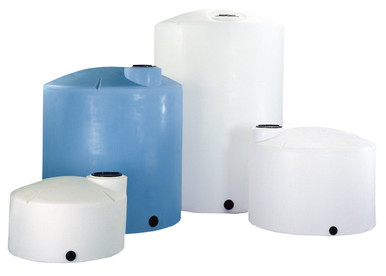
New Mexico (20.7.3 NMAC) sizes septic tanks by bedroom count or design flow, with residential systems typically starting at 1,000 gallons. These IAPMO PS 1–listed polyethylene tanks meet that capacity standard; your county or state permitting office confirms the final size.
Shop all IAPMO PS 1–listed septic tanks →
Meeting the construction standard is not the same as a permit — your county environmental health office issues the permit and makes the final determination. Call us with your permit number and we will confirm the exact tank spec before shipment, with freight quoted to your ZIP.
Chemical Storage & Secondary Containment in New Mexico
Storing fuel, fertilizer, or process chemicals alongside your tank changes the rules. The federal Spill Prevention, Control, and Countermeasure rule (40 CFR Part 112) applies at 1,320 gallons of aggregate aboveground oil storage and requires secondary containment sized to at least 110% of your largest tank. Releases of hazardous substances above their federal reportable quantity (40 CFR 302.4) must be reported to the National Response Center at 1-800-424-8802.
New Mexico layers its own spill reportable quantities and restricted-substance rules on top of that federal floor — confirm the current thresholds with your state environmental agency before specifying a chemical tank. Just as important, the polyethylene resin must be matched to the exact chemical, concentration, and specific gravity you intend to store; a tank rated for water is not automatically rated for acid, bleach, or fertilizer.
Last reviewed: May 2026 · sourced from New Mexico administrative code
Regulations change on a rolling basis — confirm the current rule with your county or state agency before purchasing. Spot something out of date? Email us and we'll fix it.
Nearby states (Mountain) & full index: