
North Dakota Septic Tank Regulations — NDAC 33.1-25-01
North Dakota Septic Tank Regulations
North Dakota's onsite wastewater is managed under NDAC Chapter 33.1-25-01 by the NDDEQ, with local permits handled by the Local Public Health Unit. This applies from the Red River Valley to the Bakken, following Senate Bill 2267 in 2025.
The Governing Framework
North Dakota regulates onsite wastewater under:
- NDAC Chapter 33.1-25-01 — North Dakota Administrative Code, on-site sewage treatment system rules.
- North Dakota Department of Environmental Quality (NDDEQ) — state-level administrator, now with consolidated authority over licensing, permitting, and inspection following Senate Bill 2267 (2025).
- Local Public Health Units — administer field permits under NDDEQ oversight.
- NDDEQ-licensed installers — required for installation of onsite wastewater systems (homeowner self-install on own property for personal use is the primary exception).
Septic Tank Capacity
In North Dakota, septic tank size is determined by the number of bedrooms or apartment units for homes, and by occupant load or plumbing fixtures for other buildings. NDAC Chapter 33.1-25-01 has tables that show how tank size increases with more bedrooms or fixtures.
| Installation | Typical Minimum Capacity |
|---|---|
| Residential baseline | Per NDAC 33.1-25-01 bedroom tables |
| Additional bedrooms | Incremental capacity increase per tables |
| Non-residential | Per occupant load / fixture-unit tables |
Your NDDEQ-licensed installer or designer will use the latest tables for your installation. Polyethylene tanks that meet IAPMO/NSF standards and NDAC construction rules are approved.
Setback Distances
Setbacks in North Dakota are the required distances between systems and wells, rivers, lakes, homes, and property lines. NDAC 33.1-25-01 lists specific distances based on system type, soil, and features. Your licensed installer will ensure the right setbacks for your location.
Regional Considerations
- Red River Valley (Fargo, Grand Forks): Agricultural heartland, highest population density. Mix of municipal sewer (Fargo, Grand Forks) and rural septic. Clay-rich Lake Agassiz sediments complicate absorption-field design — low permeability often requires mounds or alternative systems.
- Bakken oil region (Williston, Dickinson, Minot): Rapid-growth oil-patch communities. New rural residential and commercial septic installations common. Workforce housing and temporary camps have specific commercial/institutional sizing requirements.
- Missouri Plateau (central/western ND): Rolling prairie terrain, variable glacial soils. Standard systems typical; alternative systems where soils perform poorly.
- Turtle Mountains and Pembina Hills: Varied glacial terrain, short construction season due to northern latitude.
- Badlands (western ND): Challenging terrain, bentonite clay concerns, limited flat ground for absorption fields.
- Lake country (Devil's Lake region, Lake Sakakawea shoreline): Shoreland considerations, high-water-table concerns, potentially alternative systems.
Climate and Construction-Season Realities
North Dakota's northern-plains climate affects onsite wastewater construction and operation:
- Deep frost penetration (typically 4–6 feet, deeper in sustained cold) requires tanks, lines, and risers to be installed below frost or insulated.
- Construction season is typically May through October. Winter construction is possible but expensive due to frozen ground.
- Tanks must be designed and sited to avoid freezing during operational low-flow periods — particularly in seasonal cabins and recreational properties.
- Effluent-line insulation and careful vent protection minimize winter operational issues.
Permit Process
- Contact your Local Public Health Unit. For initial guidance on permit requirements and local overlay rules.
- Site evaluation. Soil profile, percolation, site restrictions.
- System design. By qualified designer per NDAC 33.1-25-01.
- Permit application. Through Local Public Health Unit, with NDDEQ coordination as needed.
- NDDEQ-licensed installer construction.
- Inspection before cover.
Frequently Asked Questions
- What changed with Senate Bill 2267?
- Passed during 2025 session. SB 2267 consolidated licensing, permitting, and inspection authority with NDDEQ and established a statewide installer-licensing framework. Contractors must now hold NDDEQ credentials. The consolidation aimed to standardize practice across ND's varied local public health administration.
- Can I install my own system?
- Homeowner self-install on own property for personal use is generally allowed as an exception to the installer-licensing mandate. All other installations require a NDDEQ-licensed installer. Verify your specific scope with NDDEQ or your Local Public Health Unit.
- Are polyethylene tanks accepted in North Dakota?
- Yes, when meeting IAPMO/NSF listings and NDAC 33.1-25-01 requirements. Major OEM rotomolded polyethylene tanks from Norwesco, Snyder, and others are commonly approved. Frost depth and tank rating are important specification considerations.
- What about Lake Agassiz clay soils?
- Red River Valley clays often perform poorly for absorption-field infiltration. Alternative systems (mounds, pressure distribution, aerobic treatment with reduced-area discharge) are common in clay-rich areas. Plan for alternative system cost on clay parcels.
- How do Bakken workforce-housing installations work?
- Large workforce camps and man-camps require commercial/institutional wastewater permitting with higher scrutiny than single-family. Temporary installations may use holding tanks with pump-and-haul arrangements; permanent installations need full NDAC 33.1-25-01 compliance including designed treatment and discharge.
Source Citations
Shop Septic Tanks for North Dakota
OneSource stocks polyethylene septic tanks meeting North Dakota construction requirements. Match capacity to your design flow per the rules summarized above. Tank + accessories + holding tank options below cover standard and alternative configurations. OneSource drop-ships from the OEM warehouse closest to your install address.
Plastic Septic Tanks
Full polyethylene septic tank catalog. Sizes from 300 to 1,500+ gallons for North Dakota installations.
Browse Plastic Septic TanksIAPMO Approved Models
NSF/IAPMO listed tanks. Some counties and some installation types require this listing.
Browse IAPMO Approved ModelsSeptic Accessories
Risers, lids, baffles, filters, alarms, pumps, and install hardware.
Browse Septic AccessoriesHolding Tanks
Holding tanks for construction sites, recreational properties, and pump-and-haul installations.
Browse Holding TanksStoring chemicals in your North Dakota tank?
North Dakota's OSSF rules don't include chemical-storage tanks; these are determined by the manufacturer. For tanks rated for chemicals like sulfuric acid or bleach, our Chemical Compatibility Database provides full construction specifications.
Agricultural Tank Regulations — ND Department of Agriculture
The North Dakota Department of Agriculture (NDDA) oversees pesticide and fertilizer regulation under NDAC Title 7.
- NDAC Article 7-03 — Pesticides, administered by the NDDA Pesticide and Fertilizer Division. Covers registration, dealer licensing, applicator certification, and enforcement.
- NDAC Article 7-04 — Commercial Feed, Fertilizer, and Seed Laws implementation.
- NDCC Chapter 4.1-34 — Pesticide Control Law (statutory backbone).
- NDCC Chapter 19-18.1 — Fertilizer Regulation.
- Bulk storage: North Dakota defaults to the federal 40 CFR 165 Subpart E for commercial pesticide repackaging. Industry best practice is 110% secondary containment for bulk liquid storage.
North Dakota's agriculture mainly produces spring wheat, durum, canola, soybeans, corn, and sunflower. The Red River Valley also grows sugar beets and specialty crops. Bulk facilities store liquid UAN, 10-34-0, and herbicides in polyethylene tanks. Cold-climate design is important due to harsh winters.
Oil & Gas Produced Water — NDAC 43-02-03 (Bakken Play)
North Dakota's Bakken and Three Forks areas make these rules some of the most used for oil and gas saltwater management in the U.S. The Industrial Commission, via the Department of Mineral Resources, oversees this.
- NDAC Chapter 43-02-03 — Oil and Gas Conservation rules.
- 43-02-03-53.3 — Saltwater Handling Facility Construction and Operation Requirements. Surface tanks may not be underground or partially buried, must be devoid of leaks, and constructed of (or lined with) materials resistant to produced saltwater, brines, or chemicals.
- Dike requirements: Dikes must be erected and maintained around saltwater tanks at any saltwater handling facility prior to introducing fluids. Dikes and the base material must be of sufficiently impermeable material to provide emergency containment. Dikes must be of sufficient dimension to contain the total capacity of the largest tank plus one day's fluid throughput.
- Storage and handling: All waste, recovered solids, and fluids must be stored and handled to prevent runoff or migration offsite.
- Reporting: Within 30 days of construction or modification of a saltwater handling facility, a sundry notice (form 4) must be submitted with a schematic drawing detailing all facilities, tanks, dike heights, and calculated containment volumes.
- 43-02-03-29.1 — Crude oil and produced water underground gathering pipelines.
Bakken brines have very high TDS (150,000–250,000 ppm) with chlorides, sulfates, barium, and strontium. Polyethylene tanks need a specific gravity rating (often 1.9 SG for Bakken saltwater), resin compatibility, and freeze-thaw durability for the Williston Basin. North Dakota's tank + 1-day throughput dike sizing rule is stricter than the usual 110% containment standard elsewhere.
Septic System Sizing Deep Dive
North Dakota's onsite wastewater is under NDAC Article 62-03.1 by the North Dakota Department of Environmental Quality for Individual Sewage Disposal Systems. Typical capacity tables are used in practice.
| Bedrooms | Minimum Septic Tank Capacity |
|---|---|
| 1–3 BR | 1,000 gallons |
| 4 BR | 1,250 gallons |
| 5 BR | 1,500 gallons |
| Non-dwelling | Engineered design on peak daily flow |
Septic design in North Dakota must consider frost depth (4 to 6 feet in the north) and freeze protection for pump systems. Drift Prairie soils vary in percolation, Missouri Plateau sandy soils suit trenches, and Red River Valley clay often needs pressure distribution or advanced treatment. Check setbacks and Table values with NDDEQ or your county before finalizing plans.
Chemical Storage Secondary Containment & Spill Reporting
Federal SPCC (40 CFR 112) applies at 1,320 gallons aggregate aboveground oil. North Dakota layers on:
- NDAC Article 33.1-24 — NDDEQ Solid Waste and hazardous material rules.
- NDCC Chapter 23.1-08 — Environmental Response Law (statutory spill reporting framework).
- NDDEQ 24-hour Emergency Notification at 1-701-328-5210.
- NDAC Article 33.1-27 — Underground Storage Tank rules.
Polyethylene chemical tanks need secondary containment for at least 110% of the largest tank, except at saltwater facilities where NDAC 43-02-03-53.3's 'largest tank plus one-day throughput' rule applies. For over 1,320 gallons of oil, keep a written SPCC plan. Bakken operators maintain SPCC and state O&G documentation together.
Permit Pathways at a Glance
- Residential septic: NDDEQ or county environmental health under NDAC Article 62-03.1.
- Pesticide applicator and dealer: NDDA under NDAC Article 7-03.
- Commercial fertilizer: NDDA under NDCC Chapter 19-18.1.
- Oil & gas saltwater handling: NDIC Department of Mineral Resources under NDAC 43-02-03, including the sundry notice filing within 30 days of construction/modification.
- Petroleum UST: NDDEQ under NDAC Article 33.1-27.
- SPCC > 1,320 gal oil aggregate: Federal SPCC plan; NDDEQ spill reporting.
More North Dakota FAQs
- I'm building a saltwater handling facility in McKenzie County. What's the dike sizing?
- Largest tank capacity plus one day's fluid throughput. File the sundry notice (form 4) within 30 days of construction or modification with a schematic drawing showing all tanks, dike heights, and calculated containment volumes. Use impermeable base material and dike construction.
- What specific gravity rating do I need for Bakken brine?
- Common Bakken produced water runs 1.1 to 1.2 SG at standard conditions, but some deeper Three Forks brines run higher. Polyethylene tank specification typically calls for at least 1.5 SG rated resin with chloride-resistant construction. Confirm with the manufacturer and your produced-water lab data.
- Are there cold-weather design requirements for poly tanks?
- No specific North Dakota rule, but industry practice calls for low-temperature impact resistance testing, heat tracing on exposed plumbing, and insulation on tanks holding temperature-sensitive chemistry. Cold-climate brittleness is a real failure mode in the Bakken.
- My Red River Valley sugar beet farm has a 2,000-gallon AMS tank. What applies?
- Ammonium sulfate solution is a liquid fertilizer regulated under NDDA. Above 1,320 gallons aggregate, check whether the product meets the oil definition under 40 CFR 112 (AMS typically doesn't). Build 110% secondary containment as best practice.
- Is there a state-funded cleanup program?
- The Petroleum Tank Release Compensation Fund covers eligible petroleum UST releases. Non-petroleum chemical releases are owner liability. Bakken operator E&P waste obligations run with the operator under NDAC 43-02-03.
- What's the reporting process for a saltwater release?
- Immediate notification to both the NDIC Department of Mineral Resources (operator's district office) and NDDEQ. For any release reaching surface water, also notify the National Response Center at 1-800-424-8802. Document cleanup, sampling, and final disposition.
Septic Tanks That Meet North Dakota Code
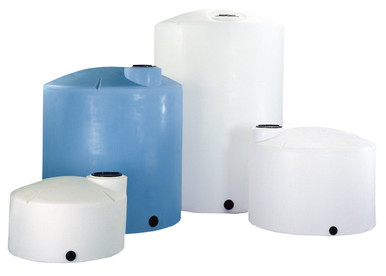
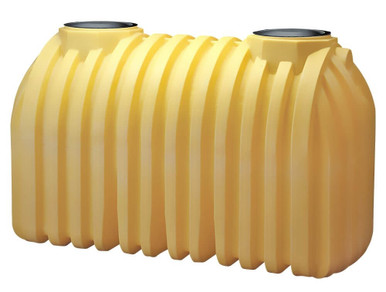
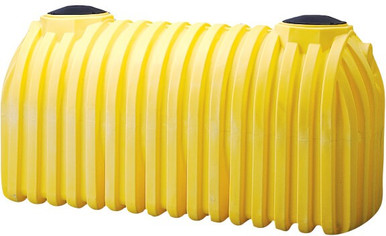
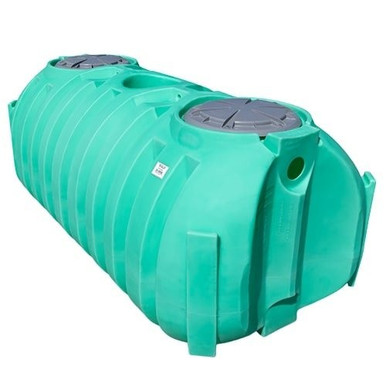
North Dakota (NDAC 33.1-25-01) sizes septic tanks by bedroom count or design flow, with residential systems typically starting at 1,000 gallons. These IAPMO PS 1–listed polyethylene tanks meet that capacity standard; your county or state permitting office confirms the final size.
Shop all IAPMO PS 1–listed septic tanks →
Meeting the construction standard is not the same as a permit — your county environmental health office issues the permit and makes the final determination. Call us with your permit number and we will confirm the exact tank spec before shipment, with freight quoted to your ZIP.
Chemical Storage & Secondary Containment in North Dakota
Storing fuel, fertilizer, or process chemicals alongside your tank changes the rules. The federal Spill Prevention, Control, and Countermeasure rule (40 CFR Part 112) applies at 1,320 gallons of aggregate aboveground oil storage and requires secondary containment sized to at least 110% of your largest tank. Releases of hazardous substances above their federal reportable quantity (40 CFR 302.4) must be reported to the National Response Center at 1-800-424-8802.
North Dakota layers its own spill reportable quantities and restricted-substance rules on top of that federal floor — confirm the current thresholds with your state environmental agency before specifying a chemical tank. Just as important, the polyethylene resin must be matched to the exact chemical, concentration, and specific gravity you intend to store; a tank rated for water is not automatically rated for acid, bleach, or fertilizer.
Last reviewed: May 2026 · sourced from North Dakota administrative code
Regulations change on a rolling basis — confirm the current rule with your county or state agency before purchasing. Spot something out of date? Email us and we'll fix it.
Nearby states (West North Central) & full index: