
Oklahoma Septic Tank Regulations — OAC 252:641 DEQ
Oklahoma Septic Tank Regulations
Oklahoma's rules for Individual and Small Public On-Site Sewage Treatment Systems are under OAC 252:641. The DEQ has authority over these rules, and the certified-installer framework was updated in November 2025. These rules apply across the state, from the Ouachitas to the Panhandle.
The Governing Framework
Oklahoma regulates onsite sewage treatment under:
- Oklahoma Administrative Code Title 252, Chapter 641 — Individual and Small Public On-Site Sewage Treatment Systems.
- 252:641 Subchapter 1 — General Provisions (252:641-1-2 Definitions, 252:641-1-3 General Requirements, 252:641-1-4 Operation and Maintenance).
- 252:641 Subchapter 7 — Septic Tanks (including § 7-4 Liquid Capacity).
- 252:641 Subchapter 10 — Sewage Treatment (§ 10-1 governs treatment standards).
- Oklahoma Department of Environmental Quality (DEQ) — state-level rule administrator. DEQ's Environmental Complaints and Local Services (ECLS) division operates the On-Site Sewage Programs.
- DEQ-Certified Installers — Oklahoma requires certified installers for all onsite systems. Statutory changes effective November 1, 2025 updated the certification framework — if you are licensed as an Oklahoma installer, confirm your certification status is current under the updated rules.
Statutory Changes — November 1, 2025
Oklahoma changed the OAC 252:641 framework effective November 1, 2025. These changes affect what certified installers need to do and how they do it. Key areas of change include responsibilities and procedures.
- Updated certification requirements and renewal procedures
- Revised installer reporting obligations
- Changes to inspection and enforcement protocols
Septic Tank Capacity — OAC 252:641-7-4
Oklahoma's liquid capacity requirements are specified in Subchapter 7, Section 7-4. For small public sewage systems:
- Daily flow of 100 gallons or less: septic tank with liquid capacity of no less than 500 gallons
- Larger residential/commercial flows: per 252:641-7-4 design table
For residential onsite systems, the capacity usually depends on the number of bedrooms and the design flow. You can check 252:641-7-4 or talk to your local DEQ representative for the specific table that applies to your project.
Permit Process
- Contact DEQ's On-Site Sewage Programs. Unlike many states that delegate septic to counties, Oklahoma retains significant state-level authority through DEQ.
- Soil and site evaluation. Performed per OAC 252:641 protocols.
- System design. By DEQ-certified designer or installer.
- Permit application. Submitted to DEQ. Fee schedules and timelines vary.
- DEQ-certified installer construction. Use only a currently-certified Oklahoma installer — the Nov 1, 2025 updates changed certification status for some installers; confirm current standing.
- Final inspection. DEQ or DEQ-authorized inspector.
Regional Considerations
- Oklahoma City / Tulsa Metros: Significant municipal sewer footprint. Remaining septic parcels largely in suburban perimeter. Expanding urban growth has moved many previously-septic areas onto sewer.
- Tornado Alley considerations: Tornado-zone tank installations should spec anchoring to prevent tank float in debris-storm flooding. Tank risers must be rated for debris impact.
- Red Dirt Country (central): Red clay with moderate percolation. Standard systems typical but soil testing is essential.
- Panhandle (Cimarron, Texas, Beaver): Sandy, dry soils with deep water table. Good percolation. Standard systems work well but winter freeze-line considerations apply (48"+ cover in northern Panhandle).
- Ouachitas and Ozarks (eastern OK): Rocky terrain, shallow soil over sandstone. Alternative systems common — mounds, pressure-dosed, or engineered dispersal.
- Green Country (Tulsa to Arkansas border): Higher rainfall, more clay content. Drainage design critical.
- Tribal jurisdictions: Eastern Oklahoma tribal reservations (Cherokee, Choctaw, Chickasaw, Muscogee, Seminole) hold environmental-regulation authority separate from Oklahoma DEQ. Projects on restricted or tribal land may be under tribal environmental codes.
Material Approvals
DEQ accepts polyethylene tanks meeting OAC 252:641 construction standards. Verify at order:
- IAPMO PS 1 or NSF 46 listing
- Ribbed polyethylene construction
- Effluent filter compatibility
- Tornado-zone anchoring hardware available
- DEQ-certified installer familiar with current rules (post Nov 1, 2025 changes)
Frequently Asked Questions
- What changed November 1, 2025?
- Oklahoma made statutory updates affecting certified installer framework, reporting requirements, and inspection procedures. Existing installers needed to verify their certification status under the new rules. New projects after that date fall under the updated framework. DEQ's FAQ page (linked in Source Citations) covers the specifics.
- Does Oklahoma delegate septic permits to counties?
- Less than most states. DEQ retains significant state-level authority through the On-Site Sewage Programs within the Environmental Complaints and Local Services division. Counties cooperate but DEQ is usually the authoritative permit authority for onsite systems.
- What's different about tribal lands?
- Environmental regulation on tribal reservations (especially in eastern Oklahoma) falls under tribal environmental codes rather than Oklahoma DEQ rules. Cherokee Nation, Choctaw Nation, Chickasaw Nation, Muscogee (Creek) Nation, and Seminole Nation of Oklahoma each have environmental authorities. If your project is on restricted or tribal land, contact the tribal environmental office first.
- Are polyethylene tanks accepted?
- Yes, provided they meet OAC 252:641 construction standards and are installed by a DEQ-certified installer. Major OEM rotomolded tanks (Norwesco, Snyder, Chem-Tainer) have approved configurations.
Source Citations
Shop Septic Tanks for Oklahoma
OneSource stocks polyethylene septic tanks meeting Oklahoma construction requirements. Match capacity to your design flow per the rules summarized above. Tank + accessories + holding tank options below cover standard and alternative configurations. OneSource drop-ships from the OEM warehouse closest to your install address.
Plastic Septic Tanks
Full polyethylene septic tank catalog. Sizes from 300 to 1,500+ gallons for Oklahoma installations.
Browse Plastic Septic TanksIAPMO Approved Models
NSF/IAPMO listed tanks. Some counties and some installation types require this listing.
Browse IAPMO Approved ModelsSeptic Accessories
Risers, lids, baffles, filters, alarms, pumps, and install hardware.
Browse Septic AccessoriesHolding Tanks
Holding tanks for construction sites, recreational properties, and pump-and-haul installations.
Browse Holding TanksStoring chemicals in your Oklahoma tank?
Oklahoma's OSSF rules don't cover chemical-storage tanks. These are specified by the manufacturer. If you need a tank for sulfuric acid, bleach, fertilizer solution, or any of 300+ industrial chemicals, our Chemical Compatibility Database has all the construction specifications you need.
Agricultural Tank Regulations — Oklahoma Department of Agriculture, Food, and Forestry
The Oklahoma Department of Agriculture, Food, and Forestry (ODAFF) regulates the storage of pesticides, fertilizers, and feed under Title 35 of the Oklahoma Administrative Code. Important chapters cover bulk liquid and dry tank storage on Oklahoma farms and ag-retail yards.
- OAC 35:15 — Plant Industry and Consumer Services. Covers fertilizer, soil amendment, agricultural liming, and pesticide registration, labeling, and distribution.
- OAC 35:30 — Agricultural Environmental Management Services. Includes feedlot, poultry, and swine operations with ties to manure and process-water storage.
- 2 O.S. § 3-81 et seq. — Oklahoma Fertilizer Act, statutory authority for tonnage reporting and inspection fees paid through ODAFF.
- 2 O.S. § 3-82 and related sections — Pesticide registration and applicator licensing.
In Oklahoma's row-crop areas, like the Panhandle and Washita, bulk liquid fertilizer plants use a lot of UAN-28 and UAN-32. ODAFF inspectors check labels and storage integrity. Containment must meet federal SPCC (40 CFR 112) standards for oil and EPA Pesticide Container Containment Rule (40 CFR 165 Subpart E) for pesticides. Co-ops with 10,000-gallon UAN tanks usually build concrete or steel containment to hold 110% of the largest tank volume plus extra for rain, keeping them compliant with EPA and ODAFF rules.
Oil & Gas Produced Water — Oklahoma Corporation Commission
Oklahoma is a leading state for produced water in the Lower 48. The Oklahoma Corporation Commission (OCC) Oil and Gas Conservation Division oversees drilling, production, and saltwater disposal under OAC 165:10.
- OAC 165:10-3 — Drilling, completion, and operation of wells.
- OAC 165:10-5 — Pits, tanks, and surface facilities. Covers construction, lining, freeboard, and closure of produced-water pits and tank batteries.
- OAC 165:10-7 — Underground Injection Control (Class II disposal and enhanced-recovery injection).
- OAC 165:10-9 — Earthen pits and closure standards.
Operators in areas like SCOOP, STACK, Anadarko Basin, and Arkoma handle large volumes of produced water using frac tanks and saltwater disposal wells. OCC Form 1014 (Change of Operator) and Form 1073 (Surface Pit Permit) are common in permits. Polyethylene tanks are used for small-volume chemical injection, while fiberglass or steel tanks handle high-volume produced water. Spills must be reported to OCC under OAC 165:10-7-5 and the federal National Response Center at 1-800-424-8802.
Septic System Sizing Deep Dive
The Oklahoma Department of Environmental Quality (DEQ) manages onsite sewage treatment systems under OAC 252:641. Design flow and minimum tank capacity are applied in practice.
| Bedrooms | Minimum Septic Tank Capacity |
|---|---|
| 1–3 BR | 1,000 gallons |
| 4 BR | 1,250 gallons |
| 5 BR | 1,500 gallons |
| 6+ BR | +250 gallons per additional bedroom |
Oklahoma has diverse soils, like Vertisols in the cross-timbers and Red River valley, and sandy loams on the Cimarron terraces. A percolation test and site evaluation are needed. If conventional trenches don't work, DEQ-approved alternatives include low-pressure dose, aerobic treatment units, lagoon systems, and engineered mounds. Certified installers are required, and pumping records must be kept. In tornado-prone areas, additional anchoring for tanks is often required.
Chemical Storage Secondary Containment & Spill Reporting
Federal SPCC (40 CFR 112) applies at 1,320 gallons aggregate aboveground oil. Oklahoma layers on:
- OAC 252:301 — Hazardous Waste Management, incorporating RCRA Subtitle C.
- OAC 252:606 — Oklahoma Pollutant Discharge Elimination System (OPDES), controlling stormwater discharges from industrial facilities including tank-containment rainwater.
- 27A O.S. § 2-3-503 — Spill reporting statute requiring notice to DEQ of any release that may cause pollution of waters of the state.
- OCC OAC 165:10-7-5 — Reporting of spills associated with oil and gas operations (reports to OCC instead of DEQ for upstream releases).
Secondary containment for polyethylene chemical tanks should hold at least 110% of the largest tank capacity, following industry and federal SPCC standards. If you have more than 1,320 gallons of oil, you need a written SPCC plan with PE certification. For specific reportable-quantity thresholds on non-oil chemicals, check with DEQ or OCC, as state RQs can be the same or stricter than federal 40 CFR 302.4.
Permit Pathways at a Glance
- Residential septic: DEQ-licensed installer under OAC 252:641, with county-level field approval.
- Fertilizer & pesticide registration: ODAFF under OAC 35:15 and 2 O.S. § 3-81.
- Restricted-use pesticide applicator: ODAFF certification and license.
- Oil & gas produced water storage & disposal: OCC under OAC 165:10-5, 165:10-7.
- Petroleum UST: DEQ Petroleum Storage Tank Division registration and fees.
- SPCC > 1,320 gal oil aggregate: Federal SPCC plan; state spill reporting under 27A O.S. § 2-3-503.
Current fee schedules change; verify with ODAFF, DEQ, or OCC before finalizing a project budget.
More Oklahoma FAQs
- Do I need a permit to install a 2,500-gallon saltwater tank at my stripper-well site?
- Yes — tank batteries, including saltwater storage, fall under OCC jurisdiction. Construction, liner, and berm requirements are specified in OAC 165:10-5. Small marginal-well operators still must file the appropriate forms and meet OCC inspection standards.
- Can I reuse frac-tank water for dust control on a lease road?
- Produced water reuse is tightly controlled. OAC 165:10-7 governs any land application or road-spreading; most produced water in Oklahoma goes to Class II disposal wells rather than surface reuse. Contact OCC before moving water off-site for any beneficial-use pitch.
- What's the difference between ODAFF and DEQ jurisdiction for a bulk fertilizer facility?
- ODAFF regulates the product (registration, labeling, tonnage reporting, inspection under OAC 35:15). DEQ regulates the environmental footprint (stormwater under OPDES, spill reporting under 27A O.S. § 2-3-503, waste management under OAC 252:301). A typical Oklahoma fertilizer plant pulls permits from both.
- Does the Oklahoma Panhandle follow the same septic rules as the rest of the state?
- Yes, OAC 252:641 is statewide. But Panhandle soils — deep sandy loams with high perc rates — often drive minimum-footprint conventional trench systems, while the Ogallala aquifer vulnerability pushes DEQ and county health reviewers toward tighter setbacks to private wells.
- I run a co-op with 50,000 gallons of UAN in aggregate — do I need an SPCC plan?
- UAN (urea ammonium nitrate) is generally not an "oil" under 40 CFR 112, so it doesn't count toward the 1,320-gallon SPCC trigger. But if the same yard has an aggregate >1,320 gallons of diesel, gasoline, lubricants, or other oils aboveground, SPCC applies to the oil side of the yard. Work with your environmental consultant to scope what counts.
Septic Tanks That Meet Oklahoma Code
Oklahoma (OAC 252:641) sizes septic tanks by bedroom count or design flow, with residential systems typically starting at 1,000 gallons. These IAPMO PS 1–listed polyethylene tanks meet that capacity standard; your county or state permitting office confirms the final size.
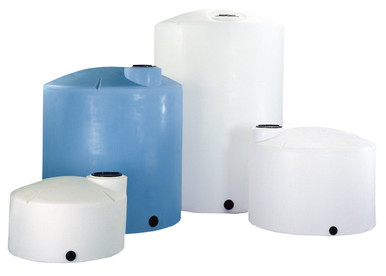
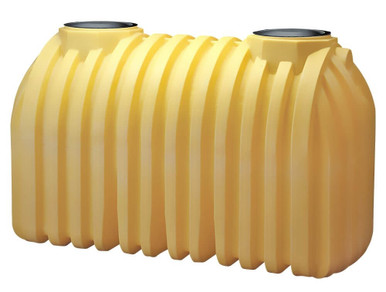
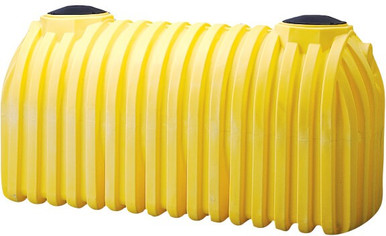
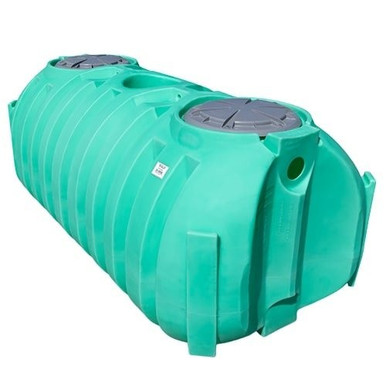
Shop all IAPMO PS 1–listed septic tanks →
Meeting the construction standard is not the same as a permit — your county environmental health office issues the permit and makes the final determination. Call us with your permit number and we will confirm the exact tank spec before shipment, with freight quoted to your ZIP.
Chemical Storage & Secondary Containment in Oklahoma
Storing fuel, fertilizer, or process chemicals alongside your tank changes the rules. The federal Spill Prevention, Control, and Countermeasure rule (40 CFR Part 112) applies at 1,320 gallons of aggregate aboveground oil storage and requires secondary containment sized to at least 110% of your largest tank. Releases of hazardous substances above their federal reportable quantity (40 CFR 302.4) must be reported to the National Response Center at 1-800-424-8802.
Oklahoma layers its own spill reportable quantities and restricted-substance rules on top of that federal floor — confirm the current thresholds with your state environmental agency before specifying a chemical tank. Just as important, the polyethylene resin must be matched to the exact chemical, concentration, and specific gravity you intend to store; a tank rated for water is not automatically rated for acid, bleach, or fertilizer.
Last reviewed: May 2026 · sourced from Oklahoma administrative code
Regulations change on a rolling basis — confirm the current rule with your county or state agency before purchasing. Spot something out of date? Email us and we'll fix it.
Nearby states (West South Central) & full index: