
Rhode Island Septic Tank Regulations — OWTS 250-RICR-150-10-6
Rhode Island Septic Tank Regulations
Rhode Island's OWTS rules are found in 250-RICR-150-10-6, managed by the RI DEM Office of Water Resources. They include denitrification requirements for the Salt Pond and Narrow River areas (§ 6.43) due to the dense coastal watersheds in this small state.
The Governing Framework
Rhode Island regulates Onsite Wastewater Treatment Systems (OWTS) under:
- 250-RICR-150-10-6 — Rules Establishing Minimum Standards Relating to Location, Design, Construction and Maintenance of Onsite Wastewater Treatment Systems. The substantive RI rule.
- § 6.23 — Minimum Setback Distances.
- § 6.27 — Septic Tanks construction and capacity.
- § 6.43 — Requirements in the Salt Pond and Narrow River Critical Resource Areas (denitrification trigger).
- § 6.47 — OWTS Installation.
- Rhode Island Department of Environmental Management (DEM) — state-level administrator. DEM Office of Water Resources OWTS Program.
- Licensed OWTS professionals — Class I/II/III/IV license categories per § 6.10 (inspectors, installers, designers, pumpers).
Septic Tank Requirements — § 6.27
Key Rhode Island septic tank provisions:
- Minimum cover over the invert of the outlet: 1.5 feet (18 inches)
- If depth of cover exceeds 3.5 feet, the OWTS application must include structural loading documentation and tank design must allow proper maintenance access
- Tank must be located to be accessible for servicing and cleaning
- Capacity specifications per § 6.27 and design tables (consult your OWTS designer)
Polyethylene tanks that meet IAPMO/NSF standards and Rhode Island OWTS construction rules are approved. Your OWTS designer will choose the right model and size for your needs.
Setback Distances — § 6.23
| From | To | Minimum Distance |
|---|---|---|
| Private water well | Leach field | 100 feet |
| Private water well | Septic tank | 75 feet |
| Leach field | Property line | 10 feet |
| Deck | Septic tank or leach field | 5 feet |
| In-ground pool | Leach field | 25 feet |
| Above-ground pool | Leach field | 10 feet |
If you need to change the required setbacks, you can apply for a repair or variance application, but you must get DEM approval first. The full setback details, including for surface water and drainage, are in § 6.23.
Salt Pond and Narrow River Critical Resource Areas — § 6.43
Rhode Island's coastal salt ponds and the Narrow River are Critical Resource Areas with extra protection. These include Ninigret, Winnapaug, Quonochontaug, Point Judith, Potter, Card, Green Hill, Trustom, and others.
- Denitrification OWTS technology is required for new systems and most replacements
- Alternative system designs must meet nitrogen-reduction performance standards
- Additional setbacks and site restrictions apply
- Ongoing operation and maintenance contracts typically required
OWTS Professional Licensing — § 6.10
Rhode Island has a formal Class I/II/III/IV licensing system for OWTS professionals:
- Class I — OWTS Inspector
- Class II — Soil Evaluator / OWTS Designer
- Class III — OWTS Installer
- Class IV — OWTS Pumper
Each license class has its own qualifications and continuing education needs. Make sure the OWTS professional you hire has a current DEM license.
Permit Process
- Hire Class II designer. Soil evaluation and system design per 250-RICR-150-10-6.
- Site work and soil evaluation.
- OWTS application. Submitted to RI DEM by Class II designer.
- DEM review and approval. Direct state-level review, not delegated to cities/towns.
- Class III installer construction.
- DEM inspection before cover.
- Certificate of compliance. DEM issues after successful completion.
Regional Considerations
- Providence / Warwick metro: Largely on municipal sewer. OWTS on suburban fringe and some urban-edge parcels.
- South County (Washington): Major salt pond watershed. Denitrification OWTS requirements broadly apply. High-value coastal parcels.
- Aquidneck Island (Newport, Middletown, Portsmouth): Mix of municipal sewer and OWTS. Coastal-watershed considerations.
- Block Island (New Shoreham): All OWTS (no mainland sewer). Island ecology and groundwater concerns drive strict design.
- Narrow River area: CRA requirements apply, denitrification typically required.
- Northern RI (Burrillville, Glocester, Foster): Rural, standard OWTS typical.
Frequently Asked Questions
- Why does DEM handle permits directly instead of cities/towns?
- Rhode Island is small enough that state-level direct administration works well. DEM retains jurisdiction for OWTS permits rather than delegating to municipal health departments (the norm in most states). Contact [email protected] for your project.
- What's a Critical Resource Area?
- DEM-designated watersheds (salt ponds, Narrow River) with heightened environmental sensitivity. Within CRAs, denitrification OWTS technology is required for new and most replacement systems. Maps and boundaries in §6.43 of the OWTS rules.
- What does denitrification OWTS cost?
- Typically $30,000-$70,000+ for design, install, and first-year O&M. Significantly more than conventional septic. CRA location drives this uplift. Budget accordingly if your parcel is in a salt pond watershed.
- Are polyethylene tanks accepted in Rhode Island?
- Yes, when meeting IAPMO/NSF listings and 250-RICR-150-10-6 construction requirements. Major OEM rotomolded polyethylene tanks from Norwesco, Snyder, and others are commonly approved. Your Class II designer will specify accepted models.
- Who do I contact for permit questions?
- RI DEM OWTS Program: [email protected] or (401) 222-3961. Or use the DEM OWTS portal directly.
Source Citations
Shop Septic Tanks for Rhode Island
OneSource stocks polyethylene septic tanks meeting Rhode Island construction requirements. Match capacity to your design flow per the rules summarized above. Tank + accessories + holding tank options below cover standard and alternative configurations. OneSource drop-ships from the OEM warehouse closest to your install address.
Plastic Septic Tanks
Full polyethylene septic tank catalog. Sizes from 300 to 1,500+ gallons for Rhode Island installations.
Browse Plastic Septic TanksIAPMO Approved Models
NSF/IAPMO listed tanks. Some counties and some installation types require this listing.
Browse IAPMO Approved ModelsSeptic Accessories
Risers, lids, baffles, filters, alarms, pumps, and install hardware.
Browse Septic AccessoriesHolding Tanks
Holding tanks for construction sites, recreational properties, and pump-and-haul installations.
Browse Holding TanksStoring chemicals in your Rhode Island tank?
Rhode Island's OSSF rules don't cover chemical-storage tanks. These are specified by the manufacturer. If you need a tank for chemicals like sulfuric acid or bleach, our Chemical Compatibility Database has all the construction details you need.
Agricultural Tank Regulations — RI DEM
The Rhode Island Department of Environmental Management (RIDEM) oversees almost all agricultural tanks in the state. Rhode Island doesn't have a separate Department of Agriculture; instead, ag programs are part of RIDEM's Division of Agriculture and Division of Agriculture and Forest Environment, following the Rhode Island General Laws (R.I. Gen. L.) and the Rhode Island Code of Regulations (RICR).
- 250-RICR-40 series — RIDEM Pesticide rules: applicator licensing, restricted-use pesticide (RUP) recordkeeping, bulk storage, repackaging, dealer registration.
- R.I. Gen. L. § 23-25 — Rhode Island Pesticide Control Act (statutory authority).
- 250-RICR-40-05-3 — RIDEM Commercial Fertilizer Materials registration, tonnage reporting, labeling.
- R.I. Gen. L. § 2-23 — Agricultural Operations (protection from nuisance; operational standards).
Rhode Island is the smallest U.S. state but has diverse agriculture, including turf and sod in Washington County, nurseries statewide, dairy in western Kent, apple orchards in Providence, and shellfish farming in Narragansett Bay. Farmers using bulk liquid fertilizer must build secondary containment to 110% of the largest tank with impermeable liners and spill plans. The state focuses on reducing nitrogen and phosphorus in the Narragansett Bay watershed.
Oil & Gas Storage — Petroleum UST/AST Path
Rhode Island doesn't produce oil or gas; all petroleum is imported to Providence by tanker or pipeline. Petroleum tank storage is regulated by specific guidelines.
- 250-RICR-140-25-1 — RIDEM Oil Pollution Prevention Program — Underground Storage Tank Regulations; design, installation, corrosion protection, spill/overfill, release detection, operator training, closure, financial responsibility.
- 250-RICR-140-25-2 — RIDEM Aboveground Storage Tank rules; the regulated AST framework in one of the more urbanized, tank-dense states in the country.
- R.I. Gen. L. § 46-12.5 — Rhode Island Underground Storage Tank Financial Responsibility Fund (state fund reimbursing eligible corrective-action costs).
- R.I. Gen. L. § 46-12.5.1 — Rhode Island Oil Spill Pollution Prevention and Control Act; strict, joint-and-several, retroactive liability.
- NFPA 30 / 30A — adopted through State Fire Marshal and local fire-code enforcement for flammable and combustible liquids.
Heating-oil tanks in 1- to 4-unit homes follow some UST exemptions and NFPA 31 rules. Insurance programs are common because many homes have old No. 2 heating-oil tanks. Offshore wind-energy leasing is active, but oil and gas leasing is not, and is managed by BOEM/BSEE.
On-Site Wastewater Treatment Systems — 250-RICR-150-10 OWTS
RIDEM manages on-site wastewater systems under 250-RICR-150-10, which sets minimum standards for location, design, construction, and maintenance. Residential design flow is 150 gpd per bedroom.
| Bedrooms | Minimum Septic Tank Capacity |
|---|---|
| 1–3 BR | 1,000 gallons |
| 4 BR | 1,250 gallons |
| 5 BR | 1,500 gallons |
| 6+ BR | Add 250 gallons per additional bedroom |
Rhode Island is small but has a high density of OWTS, with about 30% of households using them, especially in Washington, Kent, and northern Providence counties, and on Aquidneck and Conanicut islands. In Critical Resource Areas, new and replacement OWTS must use nitrogen-reducing advanced treatment to meet water-quality goals. RIDEM offers the Community Septic System Loan Program to help fund upgrades.
Soils in Rhode Island vary from sandy along the coast to gravelly in central areas and glacial till in the west. Frost depth requires 4-foot burial and risers. Designers are classified under 250-RICR-150-10.
Chemical Storage, Narragansett Bay Watershed & Spill Reporting
Federal SPCC (40 CFR 112) applies at 1,320 gallons aggregate aboveground oil. Rhode Island layers on:
- 250-RICR-140-30 — RIDEM Remediation Regulations; the state cleanup framework governing release investigation, risk evaluation, remedial action, and no-further-action determinations. Licensed Remediation Professionals (analog to CT LEP and MA LSP) support self-implementation.
- R.I. Gen. L. § 46-12.5.1 — Oil Spill Pollution Prevention and Control Act; strict, joint-and-several, retroactive liability.
- Narragansett Bay Watershed Restoration (R.I. Gen. L. § 46-12.9) — statutory framework for bay nutrient reduction; drives wastewater-treatment upgrades, stormwater controls, and the OWTS enhanced-treatment overlay in designated watershed areas.
- 250-RICR-140-25-4 — RIDEM Oil Pollution Prevention rules (operational SPCC-type standards beyond federal).
- NFPA 30 / 30A — adopted through State Fire Marshal and local fire-code enforcement for flammable and combustible liquids.
Report federal-RQ releases to the National Response Center at 1-800-424-8802 and state releases to RIDEM's 24-hour Office of Emergency Response at 401-222-3070.
Permit Pathways at a Glance
- Residential OWTS: RIDEM under 250-RICR-150-10; enhanced nitrogen-reducing treatment in Critical Resource Areas.
- Pesticide applicator license: RIDEM under 250-RICR-40.
- Fertilizer registration: RIDEM under 250-RICR-40-05-3.
- Petroleum UST: RIDEM under 250-RICR-140-25-1.
- Petroleum/chemical AST: RIDEM under 250-RICR-140-25-2 + NFPA 30/30A.
- SPCC > 1,320 gal oil aggregate: Federal SPCC plan; RIDEM spill reporting.
- Release investigation / cleanup: RIDEM under 250-RICR-140-30.
- Coastal Resources Management: CRMC under R.I. Gen. L. § 46-23 for shoreline and tidal-wetlands areas.
Current fees change; verify with RIDEM, CRMC, or State Fire Marshal before budgeting.
More Rhode Island FAQs
- What is a Critical Resource Area and how does it change my OWTS design?
- Under 250-RICR-150-10 RIDEM designates Critical Resource Areas (including the South County salt pond watersheds, Narragansett Bay sub-watersheds with impaired nitrogen, and shallow groundwater protection zones) where new and replacement OWTS must use RIDEM-approved nitrogen-reducing advanced treatment. Conventional septic-plus-leachfield may be prohibited on affected parcels; budget a full advanced-treatment unit (AdvanTex, BioBarrier, SeptiTech, FAST, Orenco AX, Singulair, or similar) plus monitoring and maintenance contracts for the service life of the system.
- How does CRMC jurisdiction overlay my tank or septic project?
- The Rhode Island Coastal Resources Management Council (CRMC) under R.I. Gen. L. § 46-23 holds jurisdiction over coastal features and tidal waters, typically including parcels within 200 feet of a coastal feature. Tanks, OWTS, and secondary containment inside the CRMC jurisdictional area require a CRMC assent in addition to RIDEM approval; shoreline setback, sea-level-rise allowance, and erosion-hazard considerations apply. Budget CRMC consultation into any shoreline or salt-pond project.
- Does Rhode Island have a state UST cleanup fund?
- Yes — the Rhode Island Underground Storage Tank Financial Responsibility Fund under R.I. Gen. L. § 46-12.5 reimburses eligible corrective-action costs for registered, compliant tanks. Coverage caps and deductibles are set by RIDEM; unregistered or out-of-compliance tanks are generally ineligible. Documentation discipline is critical to reimbursement.
- Why does a small state have such complex tank regulation?
- Rhode Island's combination of high population density, an almost-entirely Narragansett-Bay-drained landscape, extensive coastal resources, a large legacy industrial footprint in Providence and the Blackstone Valley, and approximately 30% of households on OWTS creates one of the densest tank-regulation environments per square mile in the country. The regulatory response is proportionate: enhanced nitrogen-reducing OWTS, aggressive remediation-program oversight, CRMC coastal layering, and active state-fund support for upgrades.
- Who regulates heating-oil tanks at a Rhode Island home?
- Residential heating-oil tanks at 1- to 4-unit dwellings follow partial UST exemptions, NFPA 31 installation standards through local fire officials, and strict R.I. Gen. L. § 46-12.5.1 oil-discharge liability on any release. The old, dense Rhode Island housing stock (a large share of No. 2 heating-oil basement tanks in Providence, Warwick, Cranston, and surrounding communities) makes insurance-driven tank-integrity programs standard practice. Any release triggers immediate RIDEM reporting.
- How fast must I report an oil or chemical release in Rhode Island?
- Under R.I. Gen. L. § 46-12.5.1 and 250-RICR-140-25-4 petroleum and hazardous-substance releases must be reported to RIDEM immediately; federal-RQ releases also go to NRC at 1-800-424-8802. RIDEM's Office of Emergency Response 24-hour line is 401-222-3070. Delayed reporting compounds liability under RI's strict, joint-and-several, retroactive framework and can jeopardize state-fund eligibility.
Septic Tanks That Meet Rhode Island Code
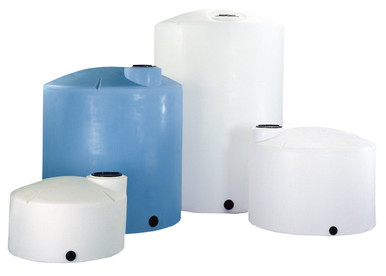
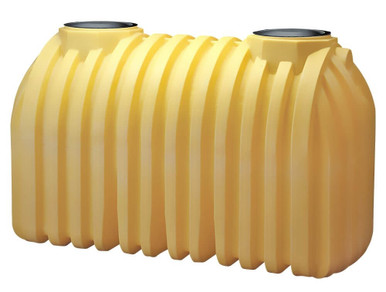
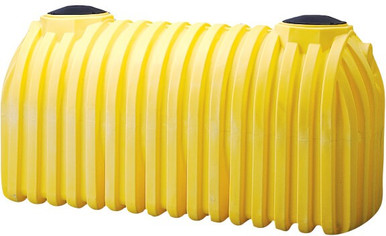
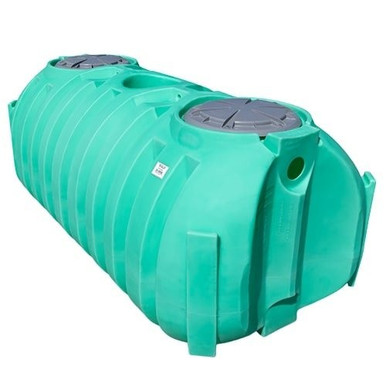
Rhode Island (250-RICR-150-10-6) sizes septic tanks by bedroom count or design flow, with residential systems typically starting at 1,000 gallons. These IAPMO PS 1–listed polyethylene tanks meet that capacity standard; your county or state permitting office confirms the final size.
Shop all IAPMO PS 1–listed septic tanks →
Meeting the construction standard is not the same as a permit — your county environmental health office issues the permit and makes the final determination. Call us with your permit number and we will confirm the exact tank spec before shipment, with freight quoted to your ZIP.
Chemical Storage & Secondary Containment in Rhode Island
Storing fuel, fertilizer, or process chemicals alongside your tank changes the rules. The federal Spill Prevention, Control, and Countermeasure rule (40 CFR Part 112) applies at 1,320 gallons of aggregate aboveground oil storage and requires secondary containment sized to at least 110% of your largest tank. Releases of hazardous substances above their federal reportable quantity (40 CFR 302.4) must be reported to the National Response Center at 1-800-424-8802.
Rhode Island layers its own spill reportable quantities and restricted-substance rules on top of that federal floor — confirm the current thresholds with your state environmental agency before specifying a chemical tank. Just as important, the polyethylene resin must be matched to the exact chemical, concentration, and specific gravity you intend to store; a tank rated for water is not automatically rated for acid, bleach, or fertilizer.
Last reviewed: May 2026 · sourced from Rhode Island administrative code
Regulations change on a rolling basis — confirm the current rule with your county or state agency before purchasing. Spot something out of date? Email us and we'll fix it.
Nearby states (New England) & full index: