
South Carolina Septic Tank Regulations — Regulation 61-56, SC DES
South Carolina Septic Tank Regulations
South Carolina's Onsite Wastewater Systems rules are under Regulation 61-56, now managed by the Department of Environmental Services after DHEC split. These rules include capacity tables, commercial flow formulas, and considerations for coastal areas from Charleston to Hilton Head.
The Governing Framework
South Carolina onsite wastewater is regulated under:
- Regulation 61-56 — Onsite Wastewater Systems. Covers site conditions, primary treatment, tank capacity, setbacks, and installer licensing.
- R.61-56.200 — Minimum Site Conditions.
- R.61-56.201 — Minimum Requirements for Onsite Wastewater System Primary Treatment.
- South Carolina Department of Environmental Services (SC DES) — administers the regulation. DES was split from the former Department of Health and Environmental Control (DHEC) in 2024. Regulatory authority for onsite wastewater moved to DES in this reorganization.
Residential Septic Tank Capacity — R.61-56.201
For single-family residential systems, South Carolina uses a bedroom-based table with a 1,000-gallon floor:
| Bedrooms | Minimum Net Liquid Capacity |
|---|---|
| 1–4 bedrooms | 1,000 gallons (minimum floor) |
| 5+ bedrooms | Per R.61-56.201 calculation |
No septic tank can be installed with a net liquid capacity of less than 1,000 gallons. This 1,000-gallon minimum is for homes with four bedrooms or less. If there are more than four bedrooms, check the regulation for the specific capacity calculation.
Commercial Septic Tank Capacity — Peak Flow Formula
For establishments other than individual dwellings (restaurants, offices, multi-family, schools), capacity is based on peak flow:
| Peak Daily Flow | Required Net Liquid Capacity |
|---|---|
| Less than 1,500 gpd | Capacity = 1.5 × peak flow |
| 1,500 to 4,500 gpd | Capacity = 1,125 + (0.75 × peak flow) |
| Greater than 4,500 gpd | Large System — engineered design required |
Setback Distances
| From Septic Tank System To | Minimum Distance |
|---|---|
| Private well | 75 feet |
| Public well | 100 feet |
| Surface water (standard flow) | 75 feet |
| Surface water or estuary (large systems >1,500 gpd) | 100 feet |
| Basement — upslope infiltration area | 25 feet |
| Basement — sides of infiltration area | 15 feet (25 feet if foundation drains at/below trench bottom) |
Basement setbacks do not apply to septic tank/pump chamber location or where trench installations are downslope of the basement.
Permit Process
- Contact your local DES environmental health office. DES operates regional offices across SC.
- Site evaluation. Soil evaluation by licensed soil classifier or DES environmental health specialist.
- Design submittal. Plot plan, soil evaluation results, system sizing, setbacks.
- Permit issuance. Fees vary by county; typical range $300–$800. Timeline 3–8 weeks.
- Licensed installer construction. SC DES licenses installers under R.61-56.
- Inspection before backfill. Pre-cover inspection confirms tank, piping, dispersal, and setbacks.
Coastal and Regional Considerations
- Lowcountry (Charleston, Beaufort, Hilton Head): High water table, sandy soils, tidal influence. Mound systems and pressure dosing common. OCRM (Office of Ocean and Coastal Resource Management) setback coordination required near tidelands.
- Midlands (Columbia, Sumter): Sandhills and red clay transitions. Standard trench systems typical.
- Upstate (Greenville, Spartanburg): Piedmont red clay and steep slopes. Extended trench or alternative technologies common.
- Grand Strand (Myrtle Beach, Little River): Shallow groundwater, municipal service expanding. Many parcels that once permitted septic are now on sewer.
- Rural well-dependency: Much of SC uses private wells. The 75-foot well setback is often the binding constraint on small-lot parcels.
Frequently Asked Questions
- Why does the search result still mention DHEC?
- DHEC was split in 2024. Regulatory authority for septic moved to the Department of Environmental Services (DES). The regulation (R.61-56) did not change. Forms and older guidance may still reference DHEC; DES has preserved the transition links.
- Can I install under 1,000 gallons for a tiny house or ADU?
- No. R.61-56.201 sets 1,000 gallons as the floor for residential systems regardless of bedroom count. That's a hard minimum.
- What about large commercial systems over 4,500 gpd?
- Those require engineered designs and likely NPDES-style permits if surface discharge is contemplated. Contact DES and likely a consulting engineer at the design-flow planning stage.
- Is there a state permit program for chemical storage tanks?
- R.61-56 covers septic/wastewater, not chemical storage. For chemical tank compliance, the polyethylene chemical compatibility database covers manufacturer-level material selection — separate from state permitting.
Source Citations
Shop Septic Tanks for South Carolina
OneSource stocks polyethylene septic tanks meeting South Carolina construction requirements. Match capacity to your design flow per the rules summarized above. Tank + accessories + holding tank options below cover standard and alternative configurations. OneSource drop-ships from the OEM warehouse closest to your install address.
Plastic Septic Tanks
Full polyethylene septic tank catalog. Sizes from 300 to 1,500+ gallons for South Carolina installations.
Browse Plastic Septic TanksIAPMO Approved Models
NSF/IAPMO listed tanks. Some counties and some installation types require this listing.
Browse IAPMO Approved ModelsSeptic Accessories
Risers, lids, baffles, filters, alarms, pumps, and install hardware.
Browse Septic AccessoriesHolding Tanks
Holding tanks for construction sites, recreational properties, and pump-and-haul installations.
Browse Holding TanksStoring chemicals in your South Carolina tank?
South Carolina's OSSF rules don't include chemical-storage tanks. These are specified by the manufacturer. If you need a tank for sulfuric acid, bleach, fertilizer solution, or any of 300+ industrial chemicals, our Chemical Compatibility Database provides full construction specifications.
Agricultural Tank Regulations — SC Department of Agriculture & DHEC
The South Carolina Department of Agriculture (SCDA) and the SC Department of Health and Environmental Control (DHEC) oversee agricultural tanks under the SC Code of Laws and SC Code of Regulations.
- 27 SC Code Regs R.27-1060 — SCDA Pesticides: applicator licensing, restricted-use pesticide (RUP) recordkeeping, bulk storage and repackaging.
- SC Code § 46-13-40 — statutory authority for the Pesticide Control Act.
- SC Code § 46-25 — Commercial Fertilizer regulations: registration, tonnage reporting, labeling (Clemson University Fertilizer Inspection program delegation).
- R.61-43 — DHEC Standards for the Permitting of Agricultural Animal Facilities: the dominant rule for hog and poultry CAFOs in South Carolina, covering manure storage tank design, land-application setbacks, mortality-management ponds, lagoon freeboard, and nutrient management plans.
South Carolina agriculture focuses on hogs and chickens: swine operations in the Pee Dee and Lowcountry; broiler and turkey houses in the Upstate (Anderson, Spartanburg, Pickens, Oconee), the Midlands (Newberry, Lexington, Saluda), and the Pee Dee (Darlington, Florence, Marlboro); egg-layer complexes in the Midlands. Under R.61-43, animal-waste storage structures above a certain size (usually 500+ animal units for swine or large broiler/layer houses) need permitted manure storage tanks or lagoons with engineered liners, freeboard monitoring, annual sludge surveys, and oversight by a Certified Animal Waste Manager. The Pee Dee and Lowcountry also have significant bulk liquid fertilizer and pesticide storage, requiring containment pads at 110% of the largest tank with impermeable liners, rinsate recovery, and monthly checks. Coastal truck-farming areas have extra setback rules in shellfish-growing-water basins.
Petroleum Storage Tanks (UST & AST) — DHEC
DHEC manages the South Carolina petroleum-tank program under the State Underground Petroleum Environmental Response Bank (SUPERB) Act, with rules at R.61-92.
- R.61-92 SC Code Regs — Underground Storage Tank Control Regulations: design, installation, corrosion protection, spill/overfill prevention, release detection, operator training, closure, financial responsibility.
- SC Code Title 44 Ch. 2 — SUPERB Act (statutory authority, state trust fund for corrective action).
- R.61-9 Water Pollution Control Permits — NPDES and state-water pollution control permits; governs facility stormwater and discharge for AST sites.
- R.61-79 — Hazardous Waste Management Regulations (RCRA Subtitle C delegation).
South Carolina USTs must register with DHEC, pay annual tank fees that support the SUPERB Fund (which reimburses corrective-action costs), maintain 2018 federal upgrades (like spill buckets and overfill prevention), and report suspected leaks within 24 hours. The SUPERB Fund has historically covered a large portion of UST cleanup costs in the state; registered tanks in good standing can access the fund for eligible corrective actions. DHEC's Underground Storage Tank Management Division handles registration, inspection, and compliance, while the Division of Site Assessment, Remediation, and Revitalization manages post-release cleanup. Bulk petroleum terminals, fleet fueling, and farm tanks over certain thresholds must register with DHEC.
CAFO Animal-Waste Storage Deep Dive — R.61-43
R.61-43 is the key regulation for South Carolina tank buyers in the hog and poultry areas. It outlines important design and operating requirements for permitted animal-waste storage structures.
- Engineered design — waste lagoons and above-ground storage tanks require signed and sealed professional-engineer design with specified side slopes, liner permeability (typically ≤ 1 x 10⁻⁷ cm/sec for earthen lagoons), and hydraulic storage volume meeting 180-day minimum for swine and per-species requirements for poultry mortality and litter management.
- Freeboard & monitoring — minimum operating freeboard (commonly 1 ft for lagoons), monthly level recording, and emergency freeboard thresholds that trigger land-application or pumping-down actions.
- Certified Animal Waste Manager — every permitted facility must have a CAWM on staff with DHEC-issued certification; Clemson Extension administers training.
- Nutrient Management Plan — NRCS Code 590-aligned NMP governs land application rates, setbacks from surface waters (typically 100 ft), wells (100 ft), and occupied dwellings.
- Annual reports & sludge surveys — permittees file annual compliance reports; lagoon sludge surveys at specified intervals determine sludge-removal scheduling.
Poly and steel above-ground animal-waste storage tanks (for slurry transfer, land-application staging, or composting leachate capture) must meet the same containment, setback, and permit requirements as lagoons if their capacity exceeds a certain threshold. DHEC actively enforces R.61-43 in the Pee Dee swine belt and Upstate broiler belt; operators work with DHEC regional offices for pre-construction plan approval.
OWTS Septic System Sizing — R.61-56
DHEC regulates on-site wastewater treatment systems (OWTS) under R.61-56 Onsite Wastewater Systems. The residential design flow is 120 gpd per bedroom.
| Bedrooms | Minimum Septic Tank Capacity (R.61-56) |
|---|---|
| 1–3 BR | 1,000 gallons |
| 4 BR | 1,250 gallons |
| 5 BR | 1,500 gallons |
| 6+ BR | Add 250 gallons per additional bedroom |
South Carolina soils vary from rocky residual in the Upstate, red-clay B-horizons in the Piedmont (slow drainage), deep sands in the Sandhills (fast drainage, groundwater concerns), sandy loams in the Coastal Plain, to tidal marsh and high-water-table soils in the Lowcountry where conventional drainfields often fail. DHEC Environmental Affairs staff conduct site evaluations, and licensed master-septic installers do the construction. Alternative systems in SC include aerobic treatment units (ATU) with drip dispersal in high-water-table areas, mound systems in shallow-bedrock Upstate lots, low-pressure pipe (LPP) systems, and advanced pretreatment packages near shellfish-growing-water basins. Coastal counties require elevated tanks and anti-flotation ballast in flood-prone areas.
Chemical Storage Secondary Containment & Spill Reporting
Federal SPCC (40 CFR 112) applies at 1,320 gallons aggregate aboveground oil. South Carolina layers on:
- R.61-68 Water Classifications and Standards — state water quality standards that frame discharge-related enforcement.
- R.61-79 (RCRA) — hazardous waste generator requirements, accumulation limits, and container management.
- DHEC 24-hour Emergency Response Line — 888-481-0125 for release notification.
- SC Emergency Response Commission / LEPC — EPCRA Tier II filings through SC Emergency Management Division.
Report federal-RQ releases to the National Response Center at 1-800-424-8802 and state releases to DHEC's 24-hour emergency line. Secondary containment at 110% of the largest tank is the SPCC and industry standard; R.61-43 animal-waste structures have their own liner and freeboard requirements. For state-specific RQ thresholds, consult the DHEC Emergency Services Program.
Permit Pathways at a Glance
- Residential OWTS: DHEC Environmental Affairs under R.61-56.
- Fertilizer registration & tonnage: Clemson University / SCDA under SC Code Title 46.
- Pesticide applicator license: SCDA under R.27-1060.
- Animal-waste storage (CAFO): DHEC under R.61-43.
- Petroleum UST: DHEC UST Program under R.61-92 with SUPERB Fund participation.
- SPCC > 1,320 gal oil aggregate: Federal SPCC plan; DHEC state spill reporting.
- NPDES industrial stormwater: DHEC (SC is delegated NPDES state) under R.61-9.
- Hazardous waste: DHEC under R.61-79 (RCRA delegation).
Current fees change; verify with DHEC, SCDA, or Clemson Regulatory Services before budgeting.
More South Carolina FAQs
- What is the SUPERB Fund and does it pay for my cleanup?
- The State Underground Petroleum Environmental Response Bank (SUPERB) is a state trust fund, financed by UST registration fees, that reimburses eligible corrective-action costs for registered tanks in good standing. Eligibility, cap amounts, and deductibles are set by DHEC; confirm current parameters with the DHEC UST Management Division before relying on fund coverage in your budget.
- Do I need a permit for a chicken-house manure shed?
- If the operation exceeds the R.61-43 animal-unit thresholds (which vary by species — broilers, layers, turkeys, and swine each have specific counts), yes — the facility needs a DHEC agricultural animal-facility permit with engineered waste-storage design, setback compliance, nutrient management plan, and a Certified Animal Waste Manager. Small flocks below threshold are not regulated under R.61-43 but still face local zoning, county health, and NPDES stormwater rules if applicable.
- What is the difference between DHEC Environmental Affairs and SCDHEC Public Health?
- As of 2024 South Carolina reorganized DHEC into two separate agencies: the SC Department of Environmental Services (DES) handles environmental programs including UST, hazardous waste, water quality, and CAFO; the SC Department of Public Health handles health programs including OWTS permitting. Regulatory citations still reference “DHEC” in pre-reorganization rules; operators should confirm current administering agency for each program because the reorganization is ongoing.
- Does SC have its own AST rule beyond SPCC?
- SC does not operate a comprehensive state AST registration program comparable to Texas 30 TAC 334 Subch. I or West Virginia 47 CSR 63. Petroleum AST operators follow federal SPCC when over threshold; state oversight comes through R.61-9 water pollution, R.61-79 hazardous waste, and DHEC release reporting. If facility operations trigger hazardous-waste status, R.61-79 generator rules apply.
- Who handles shellfish-growing-water setbacks?
- DHEC Bureau of Water administers SC's shellfish-growing-water classification program in coordination with coastal counties. Proximity to approved or conditionally approved shellfish-growing waters (Lowcountry creeks and estuaries) tightens OWTS siting, tank setbacks, and animal-waste land-application buffers. Site evaluation during septic permitting is the first step to identify shellfish-waters proximity.
- What does Clemson Regulatory Services do?
- Clemson University's Department of Pesticide Regulation and the Fertilizer/Lime programs administer portions of SC agricultural regulation under delegation from SCDA. Applicator certification, product registration, tonnage reporting, and inspection functions commonly route through Clemson. Coordinate with Clemson Regulatory Services for pesticide and fertilizer compliance alongside any DHEC environmental permitting.
Septic Tanks That Meet South Carolina Code
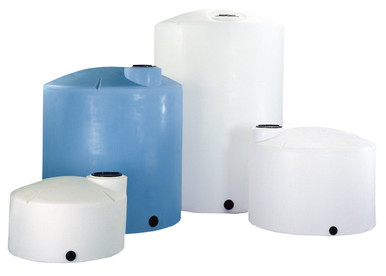
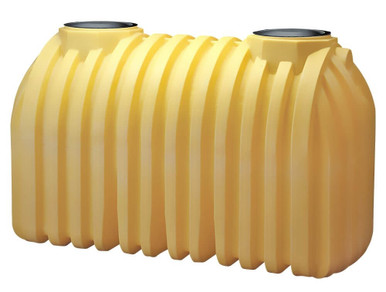
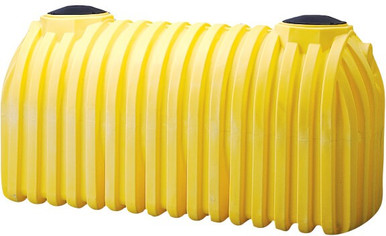
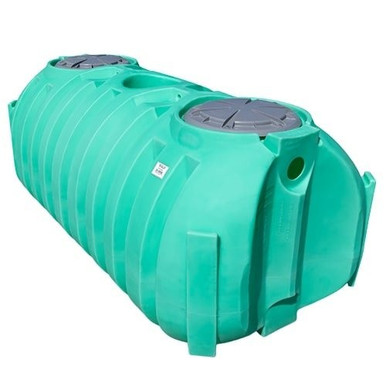
South Carolina (Regulation 61-56) sizes septic tanks by bedroom count or design flow, with residential systems typically starting at 1,000 gallons. These IAPMO PS 1–listed polyethylene tanks meet that capacity standard; your county or state permitting office confirms the final size.
Shop all IAPMO PS 1–listed septic tanks →
Meeting the construction standard is not the same as a permit — your county environmental health office issues the permit and makes the final determination. Call us with your permit number and we will confirm the exact tank spec before shipment, with freight quoted to your ZIP.
Chemical Storage & Secondary Containment in South Carolina
Storing fuel, fertilizer, or process chemicals alongside your tank changes the rules. The federal Spill Prevention, Control, and Countermeasure rule (40 CFR Part 112) applies at 1,320 gallons of aggregate aboveground oil storage and requires secondary containment sized to at least 110% of your largest tank. Releases of hazardous substances above their federal reportable quantity (40 CFR 302.4) must be reported to the National Response Center at 1-800-424-8802.
South Carolina layers its own spill reportable quantities and restricted-substance rules on top of that federal floor — confirm the current thresholds with your state environmental agency before specifying a chemical tank. Just as important, the polyethylene resin must be matched to the exact chemical, concentration, and specific gravity you intend to store; a tank rated for water is not automatically rated for acid, bleach, or fertilizer.
Last reviewed: May 2026 · sourced from South Carolina administrative code
Regulations change on a rolling basis — confirm the current rule with your county or state agency before purchasing. Spot something out of date? Email us and we'll fix it.
Nearby states (South Atlantic) & full index: