
South Dakota Septic Tank Regulations — ARSD 74:53:01
South Dakota Septic Tank Regulations
In South Dakota, the Department of Agriculture and Natural Resources oversees onsite wastewater systems under ARSD 74:53:01. For flows up to 750 gallons per day, a 1,000-gallon tank is required, with an additional 250 gallons per bedroom beyond three. This applies from the Missouri River to the Black Hills.
The Governing Framework
South Dakota regulates onsite wastewater under:
- ARSD 74:53:01 — Administrative Rules of South Dakota, on-site wastewater systems.
- ARSD 74:53:01:25 — Minimum capacities for septic tanks.
- ARSD 74:53:01:24 — Installation requirements for septic tanks.
- SD Department of Agriculture and Natural Resources (DANR) — state-level administrator (consolidated from prior DENR).
- Licensed on-site wastewater installers — required per DANR installer application and licensing process.
- County-level permitting — many SD counties (Lawrence, Pennington, Minnehaha, Custer, and others) handle field permits with DANR oversight.
Septic Tank Capacity — ARSD 74:53:01:25
| Flow / Bedroom Count | Minimum Capacity |
|---|---|
| Flows ≤ 750 gpd | 1,000 gallons (minimum liquid before outlet overflow) |
| Homes with 4+ bedrooms | 1,000 gal + 250 gal per bedroom beyond 3 |
| 4 BR home | 1,250 gallons minimum |
| 5 BR home | 1,500 gallons minimum |
| 6 BR home | 1,750 gallons minimum |
The rule requiring a 1,000-gallon tank plus 250 gallons per bedroom is straightforward and easy to remember. Polyethylene tanks that meet IAPMO/NSF standards and ARSD 74:53:01:24 construction requirements are approved for use.
Installation — ARSD 74:53:01:24
Key installation requirements:
- Install on a solid, level base
- Access hole covers: 6–12 inches below finished grade
- Airtight covers with hasp/lock may be shallower or above grade to prevent unauthorized access
- Tank depth provides adequate gravity flow from building/facility sewer per SD plumbing code
Setback Distances
| From | To | Minimum Distance |
|---|---|---|
| Septic tank | Lake or stream | 50 feet |
| Septic tank | Well ≥ 100 ft deep | 50 feet |
| Septic tank | Well < 100 ft deep | 75 feet |
| Absorption area (drainfield) | Lake, stream, or well ≥ 100 ft deep | 100 feet |
| Absorption area (drainfield) | Well < 100 ft deep | 150 feet |
If your well is shallow, your tank must be 75 feet away and the drainfield 150 feet away, compared to 50 and 100 feet for deeper wells. This is because shallow wells have a higher risk of contamination.
Regional Considerations
- Sioux Falls / Minnehaha County: Highest population density. Mix of municipal sewer and dense-septic suburbs. Glacial till soils variable.
- Rapid City / Pennington County: Black Hills region with varied terrain. Granite bedrock at shallow depth in many parcels forces alternative systems.
- Black Hills (Custer, Lawrence, Meade): Rocky, mountainous terrain. Shoreland considerations near lakes and streams. Standard systems possible but alternative systems common where soil is thin.
- Missouri River corridor (Pierre, Chamberlain, Yankton): River-valley alluvial soils. Floodplain considerations near the river.
- Badlands / West River (Jackson, Shannon, Haakon): Sparse population, long distances to services. Standard systems where terrain allows.
- Prairie Coteau (East River): Glacial plains, agricultural. Typical prairie-soil absorption characteristics.
- Tribal lands: Several SD reservations have federal/tribal jurisdictional layers. IHS coordination typical for installations on tribal land.
Climate and Frost Considerations
South Dakota's plains climate brings similar deep-frost penetration as North Dakota. Typical design considerations:
- Frost depth 4–5 feet typical, locally deeper in prolonged cold
- Tanks, lines, and risers below frost or insulated
- Construction season typically May–October
- Seasonal cabin and recreational-property installations need freeze-protection considerations for low-flow periods
Permit Process
- Contact your county planning/zoning or health office. SD permits are largely county-administered.
- Site evaluation.
- System design. Per ARSD 74:53:01.
- Permit application. County level with DANR coordination.
- Licensed installer construction.
- Inspection before cover.
Frequently Asked Questions
- Who regulates septic in South Dakota?
- SD Department of Agriculture and Natural Resources (DANR) at the state level, most counties at the field-permit level. DANR was consolidated from the prior Department of Environment and Natural Resources (DENR).
- How do the well-depth-based setbacks work?
- Wells less than 100 feet deep are considered shallow and more vulnerable to contamination. SD requires 75 ft from septic tank (vs 50 ft for deeper wells) and 150 ft from drainfield (vs 100 ft). Shallow wells drawing from shallow aquifers face higher contamination risk.
- Are polyethylene tanks accepted in South Dakota?
- Yes, when meeting IAPMO/NSF listings and ARSD 74:53:01:24 construction requirements. Major OEM rotomolded polyethylene tanks from Norwesco, Snyder, and others are commonly approved. Frost depth and structural rating matter.
- What about the Black Hills rocky terrain?
- Shallow bedrock at many Black Hills parcels means conventional absorption fields often aren't feasible. Mound systems, evapotranspiration beds, and other alternative configurations are common. Cost and complexity higher than East River prairie installations.
- Do tribal lands have different rules?
- Yes. Tribal sovereignty means reservation installations have federal and tribal jurisdictional layers beyond state rules. Indian Health Service often involved. Coordinate with tribal environmental office and IHS before starting design.
Source Citations
Shop Septic Tanks for South Dakota
OneSource stocks polyethylene septic tanks meeting South Dakota construction requirements. Match capacity to your design flow per the rules summarized above. Tank + accessories + holding tank options below cover standard and alternative configurations. OneSource drop-ships from the OEM warehouse closest to your install address.
Plastic Septic Tanks
Full polyethylene septic tank catalog. Sizes from 300 to 1,500+ gallons for South Dakota installations.
Browse Plastic Septic TanksIAPMO Approved Models
NSF/IAPMO listed tanks. Some counties and some installation types require this listing.
Browse IAPMO Approved ModelsSeptic Accessories
Risers, lids, baffles, filters, alarms, pumps, and install hardware.
Browse Septic AccessoriesHolding Tanks
Holding tanks for construction sites, recreational properties, and pump-and-haul installations.
Browse Holding TanksStoring chemicals in your South Dakota tank?
South Dakota's onsite sewage rules don't cover chemical-storage tanks. These are specified by the manufacturer. If you need a tank for chemicals like sulfuric acid or bleach, our Chemical Compatibility Database can provide the specifications you need.
Agricultural Tank Regulations — SD Department of Agriculture and Natural Resources
The South Dakota Department of Agriculture and Natural Resources (DANR) manages pesticide and fertilizer regulations under ARSD Title 12, which covers Agronomy Services.
- ARSD Chapter 12:56 — Pesticide Control (rules for registration, applicator licensing, commercial and private pesticide use, enforcement).
- ARSD Chapter 12:58 — Commercial Fertilizer and Soil Conditioner rules.
- SDCL Chapter 38-20A — Pesticide Control Act (statutory backbone).
- SDCL Chapter 38-19 — Commercial Fertilizer and Soil Amendment Act.
- Bulk storage: South Dakota defaults to the federal Pesticide Container Containment Rule (40 CFR 165 Subpart E) for commercial repackaging. Industry best practice is 110% secondary containment of the largest tank with an impervious pad.
In South Dakota, agriculture is mainly corn, soybeans, wheat, sorghum, and cattle. The state is a leader in cow-calf operations and feedlots. Most liquid fertilizer and pesticide storage is in the James River and Big Sioux areas, with growing demand in eastern counties. Polyethylene tanks are common for storing liquid fertilizer. For specific regulations, check ARSD Chapter 12:56 and 12:58 with DANR.
Livestock Waste & CAFO Manure Storage — ARSD 74:52
Due to the high number of livestock in South Dakota, rules for CAFOs and manure storage are crucial. These are managed by DANR.
- ARSD 74:52:01 through 74:52:12 — Concentrated Animal Feeding Operations rules. Require no discharge from production areas and land application areas to waters of the state except as permitted.
- Animal Feeding Operation (AFO) definition: A lot or facility that stables, confines, and feeds or maintains livestock in either an open or housed lot for a total of 45 days or more in any 12-month period.
- Manure management design: Producers must design, construct, operate, and maintain manure management systems to contain the 25-year, 24-hour storm event, plus all sources of process wastewater and liquid and solid manure.
- Key sections: ARSD 74:52:01:05; 74:52:02:22 through 74:52:02:30; and 74:52:10:01 for CAFO specifics.
- NPDES/State general permits: SDG-100000 general permit for large CAFOs.
In CAFOs, polyethylene tanks for things like milk-house wash water and manure must be large enough to handle both the storage needs and a 25/24 storm event. It's important to work with DANR's Feedlot Permit Program early in your planning.
Septic System Sizing Deep Dive
South Dakota's onsite wastewater systems are regulated under ARSD 74:53. Here's a typical capacity table used in the field.
| Bedrooms | Minimum Septic Tank Capacity |
|---|---|
| 1–3 BR | 1,000 gallons |
| 4 BR | 1,250 gallons |
| 5 BR | 1,500 gallons |
| Non-dwelling | Engineered design on peak daily flow |
In the Black Hills, lots with granite underneath often need specially engineered systems. West-river sandy soils usually work with standard trenches. East-river areas with glacial till can be tricky due to variable soil percolation. Check with DANR or your local health office for the latest setback and table values before finalizing your plans.
Chemical Storage Secondary Containment & Spill Reporting
Federal SPCC (40 CFR 112) applies at 1,320 gallons aggregate aboveground oil. South Dakota layers on:
- ARSD 74:56:09 — Regulated Substance Discharge Reporting rules.
- SDCL Chapter 34A-12 — Regulated Substance Discharges, the statutory spill reporting framework.
- ARSD 74:56 — Underground Storage Tank rules.
- DANR 24-hour Emergency Response line for spill notifications.
Polyethylene chemical tanks need secondary containment that holds at least 110% of the largest tank's capacity. If you have more than 1,320 gallons of oil, you must have a written SPCC plan with regular inspections. Contact DANR for the latest South Dakota-specific reporting requirements.
Permit Pathways at a Glance
- Residential septic: DANR or county environmental health under ARSD 74:53.
- Pesticide applicator and dealer: DANR under ARSD 12:56.
- Commercial fertilizer and soil conditioner: DANR under ARSD 12:58.
- CAFO manure storage: DANR Feedlot Permit Program under ARSD 74:52 and state general permit SDG-100000.
- Petroleum UST: DANR under ARSD 74:56.
- SPCC > 1,320 gal oil aggregate: Federal SPCC plan; DANR spill reporting under ARSD 74:56:09.
More South Dakota FAQs
- My 1,200-head cow-calf operation has a stock-pond collection system. Does ARSD 74:52 apply?
- AFO classification depends on confinement days and animal type. 1,000 AU or more is a Large CAFO automatically; 300–999 AU is medium depending on discharge pathways. Coordinate with DANR's Feedlot Permit Program to determine your classification and containment requirements.
- What does the 25-year, 24-hour storm event mean for design volume?
- You must size your manure management system to contain the design storm event runoff plus process wastewater plus liquid and solid manure volumes. A South Dakota-specific precipitation atlas drives the rainfall input. Engineered design typically includes at least 12 months of manure storage plus the storm event buffer.
- My Hutterite colony runs 3,000 finishing hogs. What applies?
- Above typical CAFO thresholds for swine, DANR Feedlot Permit Program requirements kick in. Plan for full nutrient management plan, engineered lagoon or deep-pit storage, and ongoing reporting.
- Do I need a permit for a 500-gallon diesel tank at my ranch?
- Below 1,320 gallons aggregate, no federal SPCC. South Dakota has no state registration requirement for small farm motor-fuel tanks, but spill reporting still applies to any release that reaches a waterway.
- Are Black Hills septic systems more complicated?
- Yes. Granite bedrock, thin soils, steep slopes, and groundwater protection around Rapid City and the Hills require engineered alternative systems. Budget 2x–3x a typical east-river installation.
- Is there a state-funded cleanup program?
- The Petroleum Release Compensation Fund covers eligible petroleum UST releases. Non-petroleum chemical releases are owner liability.
- What happens if manure overtops a storage pond during an extreme event?
- Overtopping is a discharge and must be reported immediately to DANR. Operators should have a documented emergency response plan, pump-down capacity ready, and land-application capability to reduce storage levels ahead of forecast events.
Septic Tanks That Meet South Dakota Code
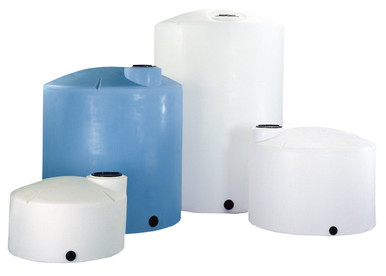
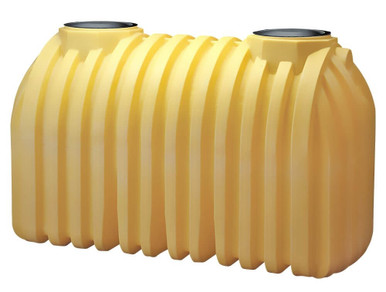
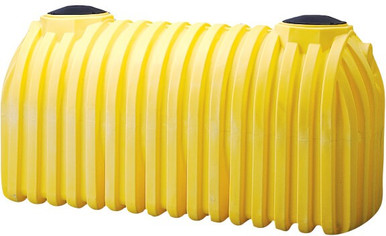
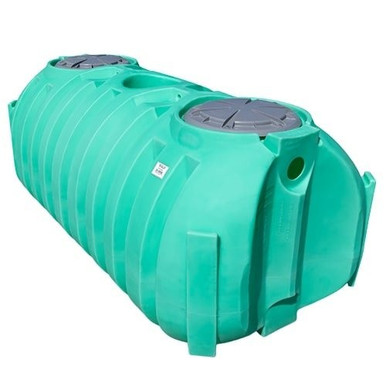
South Dakota (ARSD 74:53:01) sizes septic tanks by bedroom count or design flow, with residential systems typically starting at 1,000 gallons. These IAPMO PS 1–listed polyethylene tanks meet that capacity standard; your county or state permitting office confirms the final size.
Shop all IAPMO PS 1–listed septic tanks →
Meeting the construction standard is not the same as a permit — your county environmental health office issues the permit and makes the final determination. Call us with your permit number and we will confirm the exact tank spec before shipment, with freight quoted to your ZIP.
Chemical Storage & Secondary Containment in South Dakota
Storing fuel, fertilizer, or process chemicals alongside your tank changes the rules. The federal Spill Prevention, Control, and Countermeasure rule (40 CFR Part 112) applies at 1,320 gallons of aggregate aboveground oil storage and requires secondary containment sized to at least 110% of your largest tank. Releases of hazardous substances above their federal reportable quantity (40 CFR 302.4) must be reported to the National Response Center at 1-800-424-8802.
South Dakota layers its own spill reportable quantities and restricted-substance rules on top of that federal floor — confirm the current thresholds with your state environmental agency before specifying a chemical tank. Just as important, the polyethylene resin must be matched to the exact chemical, concentration, and specific gravity you intend to store; a tank rated for water is not automatically rated for acid, bleach, or fertilizer.
Last reviewed: May 2026 · sourced from South Dakota administrative code
Regulations change on a rolling basis — confirm the current rule with your county or state agency before purchasing. Spot something out of date? Email us and we'll fix it.
Nearby states (West North Central) & full index: