
Tennessee Septic Tank Regulations — TDEC Rule 0400-48-01
Tennessee Septic Tank Regulations
Tennessee's Subsurface Sewage Disposal rules, under TDEC Rule 0400-48-01, cover trench design, tank capacity, permitting by counties, and soil conditions from the Cumberland Plateau to the Mississippi bottomlands.
The Governing Framework
Tennessee regulates onsite wastewater through the Department of Environment and Conservation (TDEC) Division of Water Resources:
- Tennessee Comprehensive Rules & Regulations 0400-48-01 — Regulations to Govern Subsurface Sewage Disposal Systems.
- 0400-48-01-.07 — Design of the Conventional Disposal Field.
- 0400-48-01-.11 — Location of Septic Tanks, Dosing Chambers and Absorption Fields (setback table).
- 0400-48-01-.20 — Septic Tank Pumping Contractor licensing.
- County health departments — issue construction permits under TDEC delegation. The Tennessee Department of Health (through county EH offices) handles the field-level permitting.
Disposal Field Design — 0400-48-01-.07
Tennessee's trench-style conventional disposal field requirements:
| Requirement | Specification |
|---|---|
| Trench depth (maximum) | 48 inches |
| Trench depth (minimum) | 24 inches |
| Undisturbed earth between adjacent trench walls | Minimum 6 feet |
| Pipe from tank to disposal field | 3-inch minimum diameter; Schedule 40 PVC or functional equivalent |
Permit Process
- Contact your county environmental health office. All permits are issued at the county level under TDEC delegation.
- Soil site evaluation. Soil scientist or environmental specialist performs a perc test or soil profile per TDEC protocol.
- Design submittal. Plot plan, soil results, system sizing, setback documentation.
- Permit issuance. Typical fees $200–$600 depending on county. Timeline 2–6 weeks.
- Installation. By a TDEC-licensed installer. A separate installer license from tank pumpers (who are licensed under 0400-48-01-.20).
- Pre-cover inspection. County inspects tank placement, pipe, trench, and dispersal before backfill.
Regional Considerations
- Cumberland Plateau (Crossville, Sparta, Jamestown): Rocky sandstone/shale layers often force extended trenches, alternative technologies, or off-site dispersal.
- Nashville Basin: Limestone karst terrain with sinkhole risk. Some counties require geotechnical review for systems near documented sinkhole zones.
- West Tennessee (Memphis, Jackson): Loess and alluvial soils over high water tables near the Mississippi. Pressure distribution or mound systems common.
- East Tennessee (Knoxville, Chattanooga): Valley-and-ridge topography. Steep-slope installations require stepped dispersal or contour trenching.
- Lake communities (Watts Bar, Douglas, Cherokee): TVA and surface-water setbacks compound with 0400-48-01-.11 requirements. Consult county EH before assuming a parcel is buildable.
Material Approvals
TDEC approves polyethylene septic tanks that meet industry standards like IAPMO/UPC listing and ASTM D1998. Major manufacturers such as Norwesco, Snyder, and Chem-Tainer have approved designs. Check these when ordering.
- IAPMO PS 1 or NSF 46 listing.
- Ribbed polyethylene construction rated for soil-cover conditions.
- Baffle arrangement meeting 0400-48-01 design specifications.
- Riser/access port compatibility with county-specific inspection-port requirements.
Frequently Asked Questions
- Do I need a state permit or a county permit?
- County environmental health issues the construction permit under TDEC delegation. The state rule (0400-48-01) sets the substantive standards; the county inspects and approves. Always start with your county EH office.
- What's a "functional equivalent" to Schedule 40 PVC?
- SDR-35 PVC, Schedule 40 ABS, or HDPE pipe rated for the same burial depth and loading. Confirm with your county before ordering material — some counties accept only Schedule 40 PVC by default.
- Can I install an alternative system like an ATU or drip dispersal?
- Yes, with TDEC and county approval. Approved product lists are maintained at the state level. Alternative systems require PE-stamped designs in most counties.
- What's the rule for pumping contractors?
- Under 0400-48-01-.20, septic tank pumpers must hold TDEC licensing separate from installer licensing. Pumping frequency is not set statewide — most counties recommend every 3–5 years for a typical family-of-four 1,000–1,250 gallon tank.
Source Citations
Shop Septic Tanks for Tennessee
OneSource stocks polyethylene septic tanks meeting Tennessee construction requirements. Match capacity to your design flow per the rules summarized above. Tank + accessories + holding tank options below cover standard and alternative configurations. OneSource drop-ships from the OEM warehouse closest to your install address.
Plastic Septic Tanks
Full polyethylene septic tank catalog. Sizes from 300 to 1,500+ gallons for Tennessee installations.
Browse Plastic Septic TanksIAPMO Approved Models
NSF/IAPMO listed tanks. Some counties and some installation types require this listing.
Browse IAPMO Approved ModelsSeptic Accessories
Risers, lids, baffles, filters, alarms, pumps, and install hardware.
Browse Septic AccessoriesHolding Tanks
Holding tanks for construction sites, recreational properties, and pump-and-haul installations.
Browse Holding TanksStoring chemicals in your Tennessee tank?
Tennessee's OSSF rules do not include chemical-storage tanks. These are specified by the manufacturer. If you need a tank for sulfuric acid, bleach, fertilizer solution, or any of 300+ industrial chemicals, our Chemical Compatibility Database provides full construction specifications.
Agricultural Tank Regulations — Tennessee Department of Agriculture
The Tennessee Department of Agriculture (TDA) oversees pesticide storage, handling, and bulk fertilizer operations through its Division of Regulatory Services. TDA rules are in Title 0080 of the Tennessee Comprehensive Rules and Regulations, with pesticide chapters in the 0080-05 series.
- 0080-05-07 — Standards for storage and handling of anhydrous ammonia. Bulk storage is defined at 1,200 water gallons or more. Minimum shell thickness is 3/16 inch; underground containers must be buried at least 24 inches deep and coated with red lead plus two heavy coats of coal tar or asphalt.
- TDA Division of Regulatory Services — Pesticide Section — administers registration, licensing, and enforcement of pesticide use, handling, storage, and application under the Tennessee Pesticide Control Act.
- Liquid fertilizer storage — registrants must comply with TDA container and labeling rules. For agricultural operations in the Tennessee River and Cumberland River watersheds, bulk UAN and other liquid nitrogen sources are commonly stored in polyethylene vertical tanks with containment compatible with the TDEC aquifer protection framework.
- Aquifer protection — TDEC's Groundwater Protection Program (under Water Resources) overlays any agricultural bulk-storage site. Sinkhole and karst terrain in Middle Tennessee frequently triggers enhanced setback and containment requirements beyond the state ag baseline.
Bulk chemical applicators should confirm operator licensing through TDA's online portal and ensure containment meets both TDA agricultural rules and TDEC groundwater rules before starting any new bulk tank site. For specific fees and county application rules, contact the TDA Division of Regulatory Services directly.
Oil & Gas Produced Water — TDEC Oil & Gas Program
Tennessee's oil and gas activity is mainly in the Chattanooga Shale and Devonian carbonates of the Cumberland Plateau and Upper East Tennessee. Produced water, brine, and drilling waste are regulated under specific guidelines.
- Rule Chapter 0400-54 — TDEC Division of Water Resources, Oil and Gas Program — Production.
- Rule Chapter 0400-18-01 — Petroleum Underground Storage Tanks.
- Tennessee Board of Water Quality, Oil & Gas — rule-adopting authority.
- T.C.A. § 69-3-104 — enabling statute for the oil and gas program.
Operators handling produced water at well sites must use tanks with proper secondary containment, meet API design standards, and report releases to TDEC's 24-hour line. Disposal usually happens via Class II UIC wells under the Safe Drinking Water Act. For reporting fees and permit timelines, contact the TDEC Oil and Gas Program directly.
Septic System Sizing Deep Dive
In addition to trench-design rules in 0400-48-01-.07, Tennessee sizes tanks based on bedroom count and flow. Design flow is key: systems are sized for the higher of the bedroom baseline or measured peak flow for non-dwelling uses.
| Use Type | Design Flow Basis | Typical Minimum Tank |
|---|---|---|
| Single-family 1–3 BR | Bedroom count | 1,000 gallons |
| Single-family 4 BR | Bedroom count | 1,250 gallons |
| Single-family 5+ BR | Bedroom count | 1,500 gallons |
| Non-dwelling | Estimated peak daily flow | Sized per county EH review |
Setbacks under 0400-48-01-.11 include minimum distances to private wells, property lines, surface water, and building foundations. These numbers vary and have been updated; check the current table with your county environmental health office before finalizing a site plan. For a buildable-lot check, request a soil site evaluation before contracting.
Chemical Storage Secondary Containment & Spill Reporting
Federal SPCC rules apply at 1,320 gallons aggregate aboveground oil storage (40 CFR 112). Tennessee follows federal rules and adds state spill reporting requirements.
- TDEC 24-hour release reporting: Hazardous substance releases above federal reportable quantities must be reported to TDEC at 1-888-891-8332, and federal RQ releases to the National Response Center at 1-800-424-8802.
- Rule 0400-40-05 — includes 24-hour reporting for any water-pollution noncompliance or release.
- Rule 0400-18-01-.05 — additional state release notification requirements for hazardous materials accidents.
- Rule 0400-15-01 — Hazardous Substance Remedial Action program (the Tennessee analog to CERCLA for state-designated substances).
Polyethylene chemical tank owners should compare their inventory against federal RQs in 40 CFR 302.4 and create a written SPCC plan if above 1,320 gallons aggregate. Secondary containment should hold at least 110% of the largest tank capacity. Consult the TDEC Division of Remediation for site-specific thresholds.
Permit Pathways at a Glance
Which application needs what permit in Tennessee:
- Residential septic tank: County environmental health construction permit under TDEC 0400-48-01 delegation.
- Bulk ag chemicals > 1,200 gal anhydrous: TDA registration under 0080-05-07.
- Bulk pesticide/fertilizer retail: TDA Division of Regulatory Services licensing.
- Oil & gas produced water storage: TDEC 0400-54 registration plus UIC authorization for disposal.
- Aboveground oil > 1,320 gal aggregate: Federal SPCC plan, no separate TN permit but state spill reporting applies.
- Petroleum UST: TDEC 0400-18-01 registration and fees; fees and timelines vary — consult the state agency directly.
More Tennessee FAQs
- Do I need a state permit to install a 500-gallon above-ground diesel farm tank?
- Not under SPCC if that 500 gallons is your total aboveground oil storage — you're below the 1,320-gallon federal threshold. Tennessee has no additional state registration for small farm tanks, but any release that reaches a waterway triggers TDEC 24-hour reporting.
- How is aquifer protection enforced in karst country?
- TDEC's Groundwater Protection Program can impose site-specific conditions on any installation in a designated sinkhole zone. In Middle Tennessee, the county EH office will often refer ambiguous sites to TDEC Water Resources before issuing a septic permit.
- What happens if I release 50 gallons of 32% UAN on a concrete pad?
- Contain, clean up, and document. If any of the fertilizer reaches a storm drain or creek, it's reportable to TDEC immediately. Dry sweep, apply-to-field where possible, and follow your SPCC or facility response plan.
- Is there a state-funded cleanup program like Tennessee's PST fund for chemical tanks?
- No. The Petroleum Underground Storage Tank Fund covers regulated petroleum USTs only. Non-petroleum chemical tanks are the owner's liability with no state reimbursement pool.
- Does Tennessee have specific rules for dairy operations and milk-house wash water?
- Dairy operations fall under a mix of TDEC water quality rules and TDA dairy regulations. Wash water and parlor cleanup wastewater typically cannot be sent to a standard septic system and require either a separate treatment loop or an agricultural wastewater permit. Operators with 200+ cows should plan for a TDEC CAFO framework under 0400-40-05.
- Are there specific setbacks for poultry house bulk propane and water tanks?
- Propane storage follows NFPA 58 and Tennessee State Fire Marshal rules. Bulk water tanks for poultry operations are unregulated by TDEC or TDA beyond general water-withdrawal reporting if the source is a permitted well. Check your county for any local zoning or floodplain restrictions on tank pads before pouring concrete.
- What's the process for reporting an agricultural chemical spill to multiple agencies?
- Use the TDEC emergency line (1-888-891-8332) as your primary state touchpoint. TDEC will coordinate with TDA for ag-chemical incidents and with the National Response Center for federal-RQ events. Do not delay notification to triangulate which agency — single-point reporting to TDEC satisfies state obligations and triggers the appropriate inter-agency referral.
- Do I need a separate permit for stormwater runoff from my tank pad?
- If your site exceeds one acre of disturbance during construction, the TDEC Construction General Permit (CGP) under 0400-40-10 applies. Once operational, industrial sites with material storage may need coverage under the TDEC Multi-Sector General Permit (MSGP). Agricultural operations are typically exempt from the industrial stormwater program but must still avoid discharges that trigger the 0400-40 water-pollution rules.
- Who approves polyethylene tanks for on-farm agricultural use?
- TDA doesn't maintain an approved-tanks list for ag chemicals. Buyers should verify that the polyethylene tank is chemical-compatible with the stored product (see our chemical compatibility database), meets the relevant ASTM standard, and is sized for containment requirements.
Septic Tanks That Meet Tennessee Code
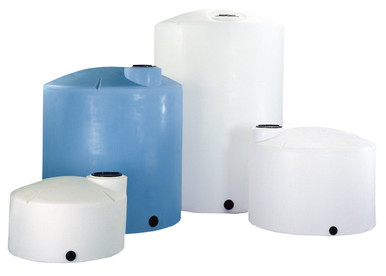
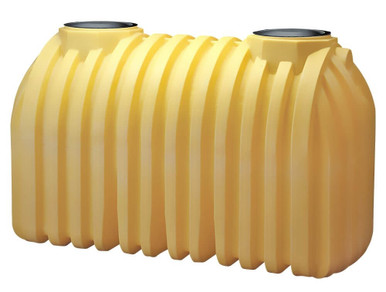
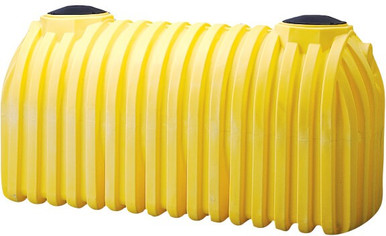
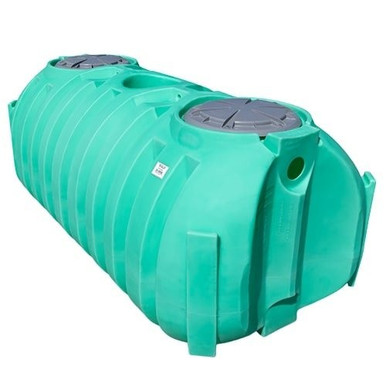
Tennessee (TDEC Rule 0400-48-01) sizes septic tanks by bedroom count or design flow, with residential systems typically starting at 1,000 gallons. These IAPMO PS 1–listed polyethylene tanks meet that capacity standard; your county or state permitting office confirms the final size.
Shop all IAPMO PS 1–listed septic tanks →
Meeting the construction standard is not the same as a permit — your county environmental health office issues the permit and makes the final determination. Call us with your permit number and we will confirm the exact tank spec before shipment, with freight quoted to your ZIP.
Chemical Storage & Secondary Containment in Tennessee
Storing fuel, fertilizer, or process chemicals alongside your tank changes the rules. The federal Spill Prevention, Control, and Countermeasure rule (40 CFR Part 112) applies at 1,320 gallons of aggregate aboveground oil storage and requires secondary containment sized to at least 110% of your largest tank. Releases of hazardous substances above their federal reportable quantity (40 CFR 302.4) must be reported to the National Response Center at 1-800-424-8802.
Tennessee layers its own spill reportable quantities and restricted-substance rules on top of that federal floor — confirm the current thresholds with your state environmental agency before specifying a chemical tank. Just as important, the polyethylene resin must be matched to the exact chemical, concentration, and specific gravity you intend to store; a tank rated for water is not automatically rated for acid, bleach, or fertilizer.
Last reviewed: May 2026 · sourced from Tennessee administrative code
Regulations change on a rolling basis — confirm the current rule with your county or state agency before purchasing. Spot something out of date? Email us and we'll fix it.
Nearby states (East South Central) & full index: