
Utah Septic Tank Regulations — R317-4 Onsite Wastewater
Utah Septic Tank Regulations
Utah's Onsite Wastewater Systems are regulated by Rule R317-4 under the DEQ Division of Water Quality. This includes the 1.5×-design-flow capacity rule and the R317-4-13 Table 2 setbacks, which apply from the Wasatch Front to the red-rock canyon areas.
The Governing Framework
Utah regulates onsite wastewater under:
- Rule R317-4 — Onsite Wastewater Systems. The substantive rule governing design, permitting, and operation of onsite systems statewide.
- R317-4-5 — Plan Review and Permitting.
- R317-4-6 — Design Requirements (tank capacity, absorption field sizing, materials).
- R317-4-10 — Wastewater Holding Tanks administrative, design, and installation.
- R317-4-13 Table 2 — Minimum setback distances.
- Utah Department of Environmental Quality (DEQ) — Division of Water Quality — state-level rule author and oversight.
- Local health departments — implement field permits. Utah's multi-county health districts handle most onsite permitting.
Septic Tank Capacity — R317-4-6
Utah uses two parallel sizing approaches:
| Parameter | Requirement |
|---|---|
| Non-residential facility minimum capacity | 1.5 × design daily flow, with 1,000 gal floor |
| Residential minimum flow (1–2 bedroom) | 300 gpd |
| Residential flow per additional bedroom | +150 gpd per BR |
| Unfinished basement | Counted as +1 bedroom minimum |
Setback Distances — R317-4-13 Table 2
All onsite wastewater systems, including replacement areas, must follow the minimum setback distances in R317-4-13 Table 2. Check Table 2 or contact your local health department for the full list of setback distances for your property. These setbacks determine how far system parts must be from water wells, surface water, water lines, property lines, buildings, and other important features.
Construction Standards
Per R317-4, septic tanks must be:
- Constructed of sound, durable, watertight materials
- Resistant to excessive corrosion, frost damage, or decay
- Designed to be watertight and to withstand all expected physical forces
Polyethylene tanks meeting IAPMO/NSF listings and R317-4 construction standards qualify. Verify at order.
Permit Process
- Contact your local health department. Most of Utah is covered by multi-county health districts (Davis County HD, Salt Lake County HD, Utah County HD, Weber-Morgan HD, etc.).
- Site evaluation. Certified soil tester or health-department environmental specialist.
- System design. Per R317-4-6. Licensed designer or installer prepares the plan.
- Plan review and permit. Under R317-4-5. Fees typically $300–$700. Timeline 2–8 weeks.
- Licensed installer construction. Utah certifies installers.
- Final inspection. Local health department before backfill.
Regional Considerations
- Wasatch Front (Salt Lake, Utah, Davis, Weber counties): Largely on municipal sewer. Remaining septic on rural-fringe and benchlands.
- Bench and foothill sites: Steep terrain on Wasatch bench properties. Pressure dosing and mound systems common where conventional absorption fields won't work.
- High desert / Great Basin (Tooele, Juab, Millard): Deep alkaline soils, minimal rainfall, low water table. Standard trench systems typical.
- Red rock country (Washington, Kane, San Juan): Shallow soil over sandstone in many areas. Alternative systems often required. Moab and St. George growth areas have intensive permitting volumes.
- Uintah Basin: Oil-and-gas activity creates demand for temporary and semi-permanent septic for worker camps. Holding tank installations per R317-4-10 are common.
- Mountain communities (Park City, Heber, Summit): High-elevation installations require deep frost-line (48+ inches) cover. Snowmelt drainage affects absorption field performance.
Frequently Asked Questions
- Why is unfinished basement counted as a bedroom?
- Utah's rule anticipates lifetime use of the home. Homeowners frequently finish basements to add bedrooms after original construction — the tank must be sized to accommodate that likely future state. Sizing for day-one bedroom count leads to under-capacity systems when the finish project eventually happens.
- What's the difference between septic and holding tank?
- Septic tank discharges to an absorption field after primary treatment. Holding tank retains all wastewater for periodic pumping — no dispersal. Holding tanks are governed separately under R317-4-10 and are used where absorption fields aren't feasible (commercial temporary installations, remote cabins with poor soil, some specific lot situations).
- Do I need PE-stamped plans?
- For conventional single-family systems, typically no — a licensed installer can prepare designs. For larger or non-conventional systems (AOSS, large commercial, multi-residence), PE stamping is usually required. Check with your local health department.
- Are polyethylene tanks accepted in Utah?
- Yes. Major OEM rotomolded polyethylene tanks (Norwesco, Snyder, Chem-Tainer, Bushman) meeting IAPMO/NSF listings and R317-4 construction standards are approved. Verify specific model acceptance with your local health department.
Source Citations
Shop Septic Tanks for Utah
OneSource stocks polyethylene septic tanks meeting Utah construction requirements. Match capacity to your design flow per the rules summarized above. Tank + accessories + holding tank options below cover standard and alternative configurations. OneSource drop-ships from the OEM warehouse closest to your install address.
Plastic Septic Tanks
Full polyethylene septic tank catalog. Sizes from 300 to 1,500+ gallons for Utah installations.
Browse Plastic Septic TanksIAPMO Approved Models
NSF/IAPMO listed tanks. Some counties and some installation types require this listing.
Browse IAPMO Approved ModelsSeptic Accessories
Risers, lids, baffles, filters, alarms, pumps, and install hardware.
Browse Septic AccessoriesHolding Tanks
Holding tanks for construction sites, recreational properties, and pump-and-haul installations.
Browse Holding TanksStoring chemicals in your Utah tank?
Utah's OSSF rules do not cover chemical-storage tanks. These are specified by the manufacturer. If you need a tank for sulfuric acid, bleach, fertilizer solution, or any of 300+ industrial chemicals, our Chemical Compatibility Database provides full construction specifications.
Agricultural Tank Regulations — Utah Department of Agriculture and Food (UDAF)
The Utah Department of Agriculture and Food oversees pesticide, fertilizer, and commercial feed storage under Utah Code Title 4, with rules in the Utah Administrative Code (UAC) R68.
- UAC R68-7 — Utah Pesticide Control Act rules including registration, labeling, and applicator licensing.
- UAC R68-8 — Utah Commercial Feed Act rules.
- UAC R68-9 — Commercial Fertilizer rules.
- Utah Code 4-14 — Utah Pesticide Control Act statutory authority.
- Utah Code 4-13 — Commercial Fertilizer Act.
Utah's agriculture sector is strong in dairy (Cache Valley, Millard, and Sevier counties) and produces a lot of alfalfa hay, irrigated crops, and tree fruit along the Wasatch Front and Uintah Basin. Dairy feed and bulk-liquid-nutrient handling are common, and agrichemical dealers use bulk liquid fertilizer (UAN, 10-34-0) and pesticide storage with 110% SPCC-style containment. UDAF works with the Utah Department of Environmental Quality (DEQ) on incident response. Anhydrous ammonia follows ANSI K61.1 standards, and the short Utah growing season means nurse-tank activity is busiest in early spring.
Oil & Gas Produced Water — Utah Division of Oil, Gas, and Mining (DOGM)
The Utah Division of Oil, Gas, and Mining regulates upstream oil and gas under UAC R649:
- UAC R649-3 — Drilling and operating practices.
- UAC R649-9 — Waste management and disposal — produced-water pits, tanks, closure, and surface impoundments.
- UAC R649-10 — Bonding.
- Utah Code 40-6 — Oil and Gas Conservation statute.
Utah's oil and gas sector is focused in the Uintah Basin (Uintah and Duchesne counties) and the Paradox Basin in southeastern Utah. Operators in the Uintah Basin manage large volumes of produced water using evaporation pits, tank batteries, and Class II disposal wells. UAC R649-9 sets the rules for building, lining, freeboard, and closing produced-water pits and tanks. Polyethylene tanks are used for chemical injection, while fiberglass and steel are used for produced-water service. DOGM permits pits under R649-9-2 and works with Utah DEQ Division of Water Quality on groundwater-impact assessments.
Petroleum USTs — Utah DEQ Division of Environmental Response and Remediation (DERR)
Utah's UST program lives in DEQ DERR under UAC R311:
- UAC R311-201 — UST technical standards (design, installation, release detection, corrective action).
- UAC R311-202 — Environmental Assurance Program (state fund reimbursement).
- Utah Code 19-6-4 — UST statutory authority.
Utah UST owners must register with DERR, pay annual fees for the Petroleum Storage Tank Trust Fund, keep up with 2018 federal rule upgrades (like walkthrough inspections, operator training, and secondary containment for new tanks), and report suspected leaks within 24 hours. The Environmental Assurance Program reimburses eligible corrective-action costs. AST facilities above federal SPCC thresholds work with DEQ Division of Water Quality for spill response and water-quality protection.
Septic System Sizing Deep Dive
Utah DEQ Division of Water Quality manages onsite wastewater through UAC R317-4 (Onsite Wastewater Systems), using a design flow basis of 100 gpd per bedroom.
| Bedrooms | Minimum Septic Tank Capacity |
|---|---|
| 1–3 BR | 1,000 gallons |
| 4 BR | 1,250 gallons |
| 5 BR | 1,500 gallons |
| 6+ BR | +250 gallons per additional bedroom |
Utah has varied soils: alluvial loams along the Wasatch Front and in the Cache and Utah Valleys, arid sand-and-gravel outwash in the Great Basin, red sandstone-derived soils on the Colorado Plateau, and shallow stony soils in the high Uintas. R317-4 requires a soil and site evaluation, a licensed installer, and a local health department permit. Alternative systems for failed perc tests include aerobic treatment units, mounds, drip dispersal, and sand-lined systems. Some Utah valleys, like Cache Valley and Summit County, have stricter nitrogen-reduction rules for new OWTS because they sit over sole-source aquifers.
Chemical Storage Secondary Containment & Spill Reporting
Federal SPCC (40 CFR 112) applies at 1,320 gallons aggregate aboveground oil. Utah layers on:
- UAC R317-1 — Definitions and general water-pollution-control authorities, including spill-reporting obligations to DEQ Division of Water Quality.
- UAC R315 — Utah hazardous waste rules incorporating RCRA Subtitle C.
- UAC R649-3-32 and related — DOGM reporting of upstream oil and gas releases.
- Utah Division of Emergency Management — EPCRA Tier II and State Emergency Response Commission coordination.
Report non-oil-and-gas releases to Utah DEQ and federal RQ releases to the National Response Center at 1-800-424-8802. Oil and gas releases go to DOGM. The standard for secondary containment is 110% according to SPCC and industry norms. For state-specific RQ thresholds that differ from 40 CFR 302.4, contact DEQ directly.
Permit Pathways at a Glance
- Residential OWTS: Local health department under UAC R317-4.
- Fertilizer & pesticide registration: UDAF under UAC R68 and Utah Code 4-13 / 4-14.
- Pesticide applicator license: UDAF under Utah Pesticide Control Act.
- Oil & gas produced water storage: DOGM under UAC R649-9.
- Petroleum UST: DEQ DERR under UAC R311.
- SPCC > 1,320 gal oil aggregate: Federal SPCC plan; state spill reporting to DEQ or DOGM.
- UPDES industrial stormwater: Utah DEQ Division of Water Quality.
Current fees change; verify with UDAF, DEQ, or DOGM before budgeting.
More Utah FAQs
- Does Utah require containment for dairy waste storage ponds?
- Yes — Utah CAFO permits under DEQ NPDES and UDAF coordination require engineered waste storage meeting NRCS Standard 313 or equivalent. Liner integrity, freeboard, and closure plans are enforced; larger dairies typically pull a UPDES permit.
- How does DOGM treat Uintah Basin evaporation pits?
- UAC R649-9 permits produced-water evaporation pits with construction, lining, fencing, and closure standards. Wildlife-exclusion netting or covers are common for bird-protection compliance under state coordination with federal Migratory Bird Treaty Act obligations.
- Can I install a 3,000-gallon diesel tank at my remote mine without a permit?
- Utah DEQ DERR jurisdiction applies to regulated USTs; ASTs above 1,320 aggregate aboveground oil trigger federal SPCC. Plan review and local fire marshal coordination apply regardless. Remote does not mean unregulated.
- What is the Utah Environmental Assurance Program?
- EAP (UAC R311-202) is the state petroleum tank fund reimbursing eligible UST owners for corrective-action costs above a deductible. Registration, fee payment, and compliance with release-detection and spill/overfill rules are prerequisites.
- Is sole-source aquifer protection handled differently in Salt Lake Valley?
- Yes — EPA Sole Source Aquifer designations and Utah drinking water source protection zones (DWSP) layer tighter siting, setback, and inspection requirements on tanks and OWTS in valleys where groundwater feeds municipal supply. Salt Lake, Davis, and Weber county sanitarians and Utah DDW coordinate on project review.
Septic Tanks That Meet Utah Code
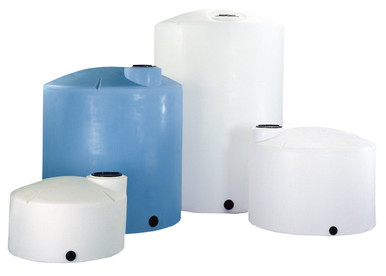
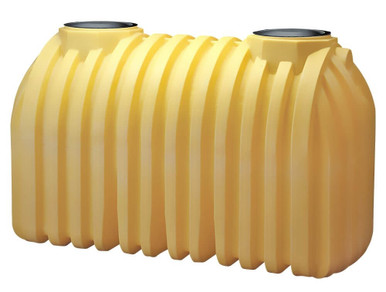
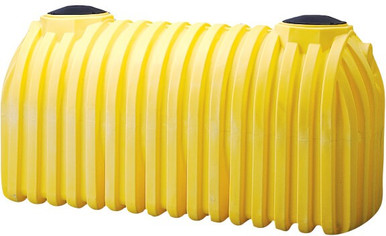
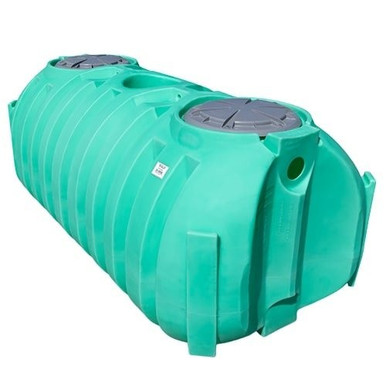
Utah (R317-4) sizes septic tanks by bedroom count or design flow, with residential systems typically starting at 1,000 gallons. These IAPMO PS 1–listed polyethylene tanks meet that capacity standard; your county or state permitting office confirms the final size.
Shop all IAPMO PS 1–listed septic tanks →
Meeting the construction standard is not the same as a permit — your county environmental health office issues the permit and makes the final determination. Call us with your permit number and we will confirm the exact tank spec before shipment, with freight quoted to your ZIP.
Chemical Storage & Secondary Containment in Utah
Storing fuel, fertilizer, or process chemicals alongside your tank changes the rules. The federal Spill Prevention, Control, and Countermeasure rule (40 CFR Part 112) applies at 1,320 gallons of aggregate aboveground oil storage and requires secondary containment sized to at least 110% of your largest tank. Releases of hazardous substances above their federal reportable quantity (40 CFR 302.4) must be reported to the National Response Center at 1-800-424-8802.
Utah layers its own spill reportable quantities and restricted-substance rules on top of that federal floor — confirm the current thresholds with your state environmental agency before specifying a chemical tank. Just as important, the polyethylene resin must be matched to the exact chemical, concentration, and specific gravity you intend to store; a tank rated for water is not automatically rated for acid, bleach, or fertilizer.
Last reviewed: May 2026 · sourced from Utah administrative code
Regulations change on a rolling basis — confirm the current rule with your county or state agency before purchasing. Spot something out of date? Email us and we'll fix it.
Nearby states (Mountain) & full index: