
Vermont Septic Tank Regulations — WW & Potable Water Supply Rules
Vermont Septic Tank Regulations
In Vermont, the Wastewater System and Potable Water Supply Rules (12-001 Code Vt. R.) are managed by the VT DEC Regional Office. A Licensed Designer is required for professional oversight. The rules cover systems up to 6,500 gallons per day (gpd) across areas like the Champlain Valley and the Northeast Kingdom.
The Governing Framework
Vermont regulates onsite wastewater under:
- Wastewater System and Potable Water Supply Rules — codified as 12-001 Code of Vermont Rules 12-033-001-X. The substantive Vermont rule covering onsite wastewater systems and private potable water.
- Vermont Department of Environmental Conservation (DEC), Drinking Water and Groundwater Protection Division — state-level administrator.
- Regional Office Program — issues Wastewater/Water Supply (WW) permits for soil-based wastewater systems with flows less than 6,500 gallons per day, for potable water supplies that are not public water supplies, and for municipal water and sewer connections.
- Licensed Wastewater System and Potable Water Supply Designers — Vermont requires a licensed designer for WW permit applications. Homeowner self-design is not accepted.
Septic Tank Capacity
| Installation | Typical Minimum Capacity |
|---|---|
| Residential baseline (up to 3 BR) | 1,000 gallons |
| With garbage grinder | Capacity increased by minimum 25% |
| Larger residential / commercial | Per VT Technical Standards sizing |
| WW permit jurisdictional limit | < 6,500 gpd (Regional Office Program) |
Your Vermont Licensed Designer will determine the tank size based on the design flow and VT Technical Standards. If your system is over 6,500 gpd, it follows a different set of rules under the Indirect Discharge Rules, requiring permits from additional DEC programs.
Setbacks — Isolation Distances
Vermont's isolation distances vary by soil conditions, system size, and local factors. General framework includes setbacks from:
- Private water wells and springs
- Surface water bodies (lakes, ponds, streams)
- Property boundaries
- Structures and foundations
- Public water supply protection areas
The Wastewater System and Potable Water Supply Rules specify required distances for installations. Your Licensed Designer will ensure the correct distances are applied to your site. In areas like the Lake Champlain watershed, extra protections may be added to the basic rules.
Permit Process
- Hire a Vermont Licensed Designer. VT DEC maintains the active designer directory.
- Site evaluation. Soil profile, percolation, site restrictions per VT Technical Standards.
- System design. By your Licensed Designer per WW & Potable Water Supply Rules.
- WW permit application. Submitted through your Licensed Designer to the Regional Office with jurisdiction.
- DEC review and approval.
- Licensed installer construction.
- Inspection and certificate of compliance.
Regional Considerations
- Champlain Valley (Chittenden, Addison): Heaviest population, mix of municipal sewer (Burlington, South Burlington) and rural septic. Lake Champlain watershed phosphorus concerns drive additional nitrogen/phosphorus reduction in some catchments.
- Central Vermont (Washington, Orange): Small-town and rural. Standard systems typical. Rolling hills with variable soils.
- Northeast Kingdom (Caledonia, Essex, Orleans): Remote rural. Licensed Designer lead times, short construction season, occasional deep frost penetration considerations.
- Green Mountains spine (Lamoille, Bennington, Rutland): Rocky terrain over granite/schist. Shallow soils common, alternative systems frequently required.
- Connecticut River Valley (Windsor, Windham): Varied alluvial and glacial soils. Act 250 scrutiny in scenic corridors.
- Southern Vermont (Bennington, Windham): Mix of rural estates and small towns. Shoreland protections near the Battenkill, West, and other significant waters.
Frequently Asked Questions
- Can I design my own septic system in Vermont?
- No. Vermont requires a Licensed Wastewater System and Potable Water Supply Designer to prepare the WW permit application. Homeowner self-design is not accepted. Licensed Designers are listed in the VT DEC directory.
- What's the 6,500 gpd threshold?
- The Regional Office Program issues WW permits for soil-based wastewater systems with design flows under 6,500 gpd. Larger systems fall under a different regulatory track (Indirect Discharge Rules) with more extensive DEC engagement. Most residential and small-commercial installations fall well under the 6,500 gpd limit.
- Are polyethylene tanks accepted in Vermont?
- Yes, when meeting IAPMO/NSF listings and Vermont Technical Standards construction requirements. Major OEM rotomolded polyethylene tanks from Norwesco, Snyder, and others are commonly approved. Your Licensed Designer will specify accepted models.
- What's unique about Vermont's rules?
- Two things: (1) combined water-supply-plus-wastewater regulatory framework, and (2) Licensed Designer professional requirement for all WW permits. Most states separate well and septic regulation; Vermont treats them together, simplifying property-scale design coordination.
- Does Act 250 apply to my septic project?
- Usually not for single-family residential on an existing parcel. Act 250 triggers on major development, multi-lot subdivisions, and commercial projects above size thresholds. Your Licensed Designer can tell you whether Act 250 applies to your scope.
Source Citations
Shop Septic Tanks for Vermont
OneSource stocks polyethylene septic tanks meeting Vermont construction requirements. Match capacity to your design flow per the rules summarized above. Tank + accessories + holding tank options below cover standard and alternative configurations. OneSource drop-ships from the OEM warehouse closest to your install address.
Plastic Septic Tanks
Full polyethylene septic tank catalog. Sizes from 300 to 1,500+ gallons for Vermont installations.
Browse Plastic Septic TanksIAPMO Approved Models
NSF/IAPMO listed tanks. Some counties and some installation types require this listing.
Browse IAPMO Approved ModelsSeptic Accessories
Risers, lids, baffles, filters, alarms, pumps, and install hardware.
Browse Septic AccessoriesHolding Tanks
Holding tanks for construction sites, recreational properties, and pump-and-haul installations.
Browse Holding TanksStoring chemicals in your Vermont tank?
Vermont's OSSF rules do not include chemical-storage tanks. These are specified by the manufacturer. If you need a tank for chemicals like sulfuric acid, bleach, or fertilizer solution, our Chemical Compatibility Database provides full construction specifications.
Agricultural Tank Regulations — VAAFM & VT DEC
The Vermont Agency of Agriculture, Food & Markets (VAAFM) and the Vermont Department of Environmental Conservation (VT DEC) oversee agricultural tanks under Vermont Statutes Annotated (V.S.A.) and the Code of Vermont Rules (CVR).
- 6 V.S.A. Chapter 81 — statutory authority for VAAFM pesticide, fertilizer, and animal-feed programs.
- CVR 20-011-003 (Vermont Pesticide Control Regulations) — applicator licensing, restricted-use pesticide (RUP) recordkeeping, bulk storage and repackaging, dealer licensing.
- Required Agricultural Practices (RAPs) — VAAFM rule governing all farms, with tiered standards for small, medium, and large farm operations (LFOs); includes manure storage, nutrient management, and waste-containment requirements.
- Act 64 (the Vermont Clean Water Act, 2015) — the statutory foundation for the Lake Champlain and statewide watershed phosphorus-reduction program; drives tighter RAP requirements.
Vermont's agriculture is mainly dairy in Addison, Franklin, Orleans, and Chittenden counties, with maple syrup, apple, and vegetable operations in the Champlain Valley, and cheese and artisan dairy in the Northeast Kingdom. Ag retailers with bulk liquid fertilizer and pesticide storage must have secondary containment at 110% of the largest tank, with impermeable liners and spill plans aligned with VT DEC. The Lake Champlain TMDL and Act 64 require farms in the Champlain Basin to upgrade manure storage, cover crops, nutrient management, and buffer strips. VAAFM inspectors enforce these rules on LFOs under the RAPs.
Oil & Gas Storage — Petroleum UST/AST Path
Vermont does not produce oil or gas, so there is no framework for upstream operators. Petroleum storage is managed by a single rule and the Act 250 land-use overlay.
- Environmental Protection Rule (EPR) Chapter 8 — Underground Storage Tanks and Aboveground Storage Tanks — VT DEC Waste Management and Prevention Division rule covering design, installation, corrosion protection, spill/overfill, release detection, operator training, closure, and financial responsibility for both UST and AST systems.
- 10 V.S.A. Chapter 47 — Vermont Water Pollution Control Act (statutory authority for spill response and state cleanup).
- 10 V.S.A. § 1941 Petroleum Cleanup Fund — state trust fund reimbursing eligible corrective-action costs for registered tanks in good standing.
- 10 V.S.A. Chapter 151 (Act 250) — Vermont's statewide land-use review law; triggers on commercial or industrial projects involving 10+ acres (or 1+ acre in towns without permanent zoning/subdivision), including fuel terminals, bulk agrichemical retailers, and large tank installations. Act 250 adds Vermont-unique environmental-review obligations beyond any underlying permit.
Vermont's EPR Chapter 8 regulates both underground storage tanks (UST) and aboveground storage tanks (AST) in one rule, unlike most states that separate them. Offshore federal OCS leasing does not apply to Vermont.
Act 250 Land Use Review — Vermont's Unique Framework
10 V.S.A. Chapter 151 (Act 250) is a key part of Vermont's tank regulations. Act 250 is triggered by certain conditions.
- Commercial or industrial development on a tract of 10 acres or more.
- Commercial or industrial development on 1 acre or more in a town without permanent zoning or subdivision bylaws.
- Housing projects of 10+ units or subdivision of 10+ lots.
- Development above 2,500 ft elevation.
- Substantial changes to any previously Act 250-permitted project.
Act 250 reviews are done by nine District Environmental Commissions under the Natural Resources Board. The 10 criteria include water pollution, soil erosion, and more. Projects like bulk fuel terminals or large agrichemical facilities in rural Vermont need an Act 250 permit, VT DEC registration, VAAFM permits, and local zoning approval. Act 250 can add 6–12+ months and extra costs to projects, with public hearings potentially extending timelines.
Septic System Sizing — EPR Chapter 1
VT DEC manages wastewater and potable water under Environmental Protection Rule Chapter 1 (Wastewater System & Potable Water Supply Rule). Residential design flow is 150 gpd per bedroom.
| Bedrooms | Minimum Septic Tank Capacity (EPR Ch. 1) |
|---|---|
| 1–3 BR | 1,000 gallons |
| 4 BR | 1,250 gallons |
| 5 BR | 1,500 gallons |
| 6+ BR | Add 250 gallons per additional bedroom |
The VT DEC Drinking Water and Groundwater Protection Division issues a single statewide permit for new wastewater systems and potable water supplies. Licensed Designers (Class B or A) create plans, and installations must follow the permit. Soil types vary across Vermont, affecting system requirements. Advanced-treatment systems are common in areas with tight soils. Shoreland Protection under 10 V.S.A. § 1441 adds extra requirements within 250 ft of lakes over 10 acres.
Permit Pathways at a Glance
- Residential wastewater / potable water: VT DEC under EPR Chapter 1 (Licensed Designer + permit required).
- Shoreland Protection: VT DEC under 10 V.S.A. § 1441 within 250 ft of lakes >10 acres.
- Act 250: District Environmental Commission for commercial/industrial ≥10 acres (or 1 acre in non-zoned towns).
- Fertilizer registration: VAAFM under 6 V.S.A. Ch. 28.
- Pesticide applicator license: VAAFM Pesticide Programs under CVR 20-011-003.
- Required Agricultural Practices (farm): VAAFM under 6 V.S.A. Ch. 215 (Act 64) for all Vermont farms; LFO/MFO/SFO tiered standards.
- Petroleum UST / AST: VT DEC under EPR Chapter 8 with Petroleum Cleanup Fund participation.
- SPCC > 1,320 gal oil aggregate: Federal SPCC plan; VT DEC spill reporting.
Current fees change; verify with VT DEC, VAAFM, and the Natural Resources Board before budgeting.
More Vermont FAQs
- Does every bulk fuel or agrichemical project need Act 250?
- Not every project — only those crossing the 10-acre commercial/industrial threshold (or 1 acre in towns without permanent zoning). But many fuel terminals, large ag-retail sites, and commercial tank installations cross the threshold once you include parking, driveways, rail sidings, and laydown. Pre-application jurisdictional opinion from the District Coordinator is the standard first step; rule of thumb is to assume Act 250 applies to any significant commercial tank project in rural Vermont and budget timeline accordingly.
- What is an LFO and does my dairy qualify?
- Under the Required Agricultural Practices a Large Farm Operation (LFO) is a dairy with 700+ mature cows or equivalent livestock; MFO is 200–699; SFO is below 200 but above a minimum threshold. LFOs face the tightest RAP standards — engineered manure storage, formal nutrient management plans, certified operator oversight, and VAAFM permitting. Under Act 64 all Vermont farms comply with RAP regardless of size.
- How does the Lake Champlain TMDL affect my tank project?
- The Lake Champlain Phosphorus TMDL (EPA-approved 2016) sets phosphorus-reduction obligations across the Champlain Basin (Addison, Chittenden, Franklin, Grand Isle, Lamoille, Orleans, Rutland, Washington counties). Agricultural operations face the tightest RAP requirements, wastewater facilities face tighter NPDES limits, and developers face stormwater-manual Rule compliance with enhanced phosphorus controls. Any nutrient-bearing tank installation in the basin should account for TMDL-driven siting and containment expectations.
- Who regulates heating-oil tanks at a Vermont home?
- Residential heating-oil tanks follow EPR Chapter 8 AST requirements at applicable thresholds, NFPA 31 installation standards through local fire officials, and strict state spill-liability under 10 V.S.A. Ch. 47 on any release. Insurance-driven tank-integrity programs are common. Tanks above applicable volumes trigger state registration.
- Does Vermont have a state UST cleanup fund?
- Yes — 10 V.S.A. § 1941 Petroleum Cleanup Fund reimburses eligible corrective-action costs for registered tanks in good standing. Eligibility, caps, and deductibles are set by VT DEC; confirm current parameters with the Waste Management and Prevention Division before relying on fund coverage. Unregistered or out-of-compliance tanks may be ineligible.
- How fast must I report a petroleum release in Vermont?
- Under 10 V.S.A. Ch. 47 and EPR Chapter 8 a release must be reported immediately to VT DEC; the state spill-response hotline takes calls 24/7. Federal-RQ releases also go to NRC at 1-800-424-8802. Delayed reporting jeopardizes Petroleum Cleanup Fund eligibility and can increase penalty exposure.
Septic Tanks That Meet Vermont Code
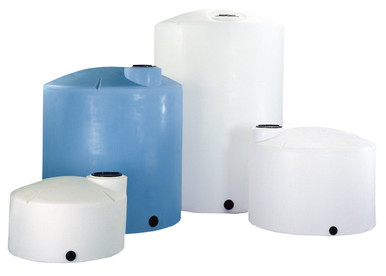
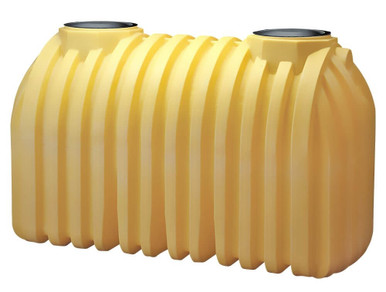
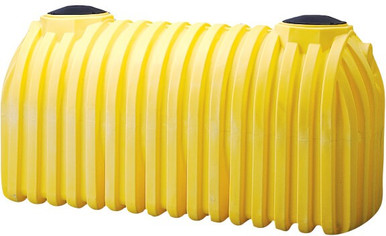
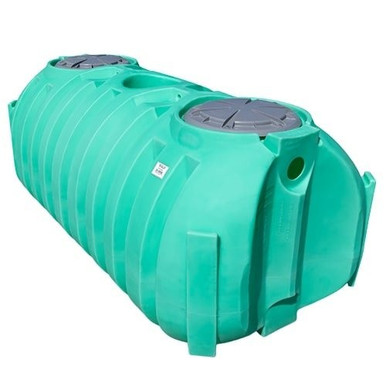
Vermont (VT Wastewater & Potable Water Supply Rules) sizes septic tanks by bedroom count or design flow, with residential systems typically starting at 1,000 gallons. These IAPMO PS 1–listed polyethylene tanks meet that capacity standard; your county or state permitting office confirms the final size.
Shop all IAPMO PS 1–listed septic tanks →
Meeting the construction standard is not the same as a permit — your county environmental health office issues the permit and makes the final determination. Call us with your permit number and we will confirm the exact tank spec before shipment, with freight quoted to your ZIP.
Chemical Storage & Secondary Containment in Vermont
Storing fuel, fertilizer, or process chemicals alongside your tank changes the rules. The federal Spill Prevention, Control, and Countermeasure rule (40 CFR Part 112) applies at 1,320 gallons of aggregate aboveground oil storage and requires secondary containment sized to at least 110% of your largest tank. Releases of hazardous substances above their federal reportable quantity (40 CFR 302.4) must be reported to the National Response Center at 1-800-424-8802.
Vermont layers its own spill reportable quantities and restricted-substance rules on top of that federal floor — confirm the current thresholds with your state environmental agency before specifying a chemical tank. Just as important, the polyethylene resin must be matched to the exact chemical, concentration, and specific gravity you intend to store; a tank rated for water is not automatically rated for acid, bleach, or fertilizer.
Last reviewed: May 2026 · sourced from Vermont administrative code
Regulations change on a rolling basis — confirm the current rule with your county or state agency before purchasing. Spot something out of date? Email us and we'll fix it.
Nearby states (New England) & full index: