
Virginia Septic Tank Regulations — 12 VAC 5-610 Sewage Handling
Virginia Septic Tank Regulations
Virginia's Sewage Handling and Disposal Regulations, found in 12 VAC 5-610, cover Type I residential and Type II commercial systems. They include the 12-inch soil depth rule and require VDH district permits from Tidewater to the Appalachian foothills.
The Governing Framework
Virginia regulates onsite sewage handling under:
- 12 VAC 5-610 — Sewage Handling and Disposal Regulations. Covers system types, construction permits, soil criteria, and operational requirements.
- 12VAC5-610-250 — Procedures for Obtaining a Construction Permit for a Sewage Disposal System.
- Virginia Department of Health (VDH) — State Health Commissioner is the permit-issuing authority.
- District and local health departments — handle field-level permit applications and inspections. VDH operates 35 health districts across the Commonwealth.
- § 15.2-2157 Code of Virginia — Enabling statute for localities to regulate septic tanks where sewers are not available.
Two System Classes — Type I and Type II
Virginia distinguishes between two fundamental sewage disposal system types:
| Type | Description | Typical Use Case |
|---|---|---|
| Type I | Individual sewage disposal system incorporating a septic tank and subsurface soil absorption (septic tank — subsurface drainfield) serving a single residence. | Single-family homes on private lots. |
| Type II | Sewage disposal system incorporating a septic tank and subsurface soil absorption system serving a commercial or other establishment, more than a single-family dwelling, or where pumping, enhanced flow distribution, or low-pressure distribution is required. | Commercial buildings, restaurants, schools, multi-family residential, any system requiring effluent pumping. |
Soil Criteria — The 12/24 Inch Rule
Virginia sets soil-depth requirements that are more rigorous than many neighboring states:
- Minimum 12 inches of soil measured from the ground surface before encountering bedrock, or a seasonal or permanent water table.
- No restrictive horizons may occur within 24 inches of the ground surface.
In Virginia, a "restrictive horizon" in soil evaluation means layers like dense clay, fragipans, hardpans, bedrock, or water tables that prevent water from draining downwards.
Construction Permit Process — 12VAC5-610-250
- Direct the request to the district or local health department. All permit applications start at the VDH district level, not at state central office.
- Soil evaluation. By Licensed Onsite Soil Evaluator (LOSE) or VDH-certified Environmental Health Specialist. The soil report is the substantive core of the application.
- Design submittal. Plot plan with topography, soil profile, proposed system layout, setbacks, reserve drainfield area.
- Construction permit issuance. By the Health Commissioner (through the district). Fees vary; typical range $300–$700. Timeline 30–90 days.
- Installation. By VDH-licensed Onsite Sewage System Installer.
- Final construction inspection. VDH inspects before backfill and issues Operation Permit.
Regional Considerations
- Tidewater (Hampton Roads, Virginia Beach): High water table, sandy coastal soils. Tidal and stormwater setbacks coordinate with VDH onsite rules. Many parcels permit only Type II (pumped) systems.
- Northern Virginia (Fairfax, Loudoun, Prince William): Rapid development has largely moved septic to municipal sewer. Remaining septic lots see intensive engineering oversight. Expect Type II classification for non-trivial installations.
- Shenandoah Valley (Winchester, Harrisonburg, Lexington): Shallow soil over limestone in karst zones. Sinkhole risk. The 12/24 soil rule often constrains parcels.
- Piedmont (Charlottesville, Richmond rural): Red clay over saprolite. Standard systems possible but restrictive horizons common at 18–30 inches.
- Southwest Virginia (Roanoke, Bristol): Appalachian geology. Narrow valleys, steep slopes, shallow soils. Alternative systems common.
- Chesapeake Bay Preservation Act zones: Septic systems within designated Bay Act areas face additional setback, nitrogen-reduction, and monitoring requirements beyond 12 VAC 5-610.
Polyethylene Tank Approval
The VDH approves polyethylene septic tanks that meet industry standards. For Type I systems, major manufacturers have configurations approved in Virginia. Check these when ordering:
- IAPMO PS 1 or NSF 46 listing.
- Ribbed polyethylene rated for design burial depth. Virginia's varied terrain includes both shallow and deep-bury installations.
- Two-compartment construction (Virginia favors two-compartment for primary treatment, though single-compartment with approved configuration is also permitted).
- Effluent filter compatibility — Virginia increasingly requires outlet effluent filters, especially for Type II systems.
Alternative Onsite Sewage Systems (AOSS)
If conventional Type I systems can't be used because of soil or site issues, Virginia allows AOSS. These are engineered systems with pretreatment units like ATUs, sand filters, or peat filters, paired with drip, shallow, or pressure-dosed dispersal. AOSS have specific requirements:
- Engineering design by a licensed engineer.
- Operation and maintenance (O&M) contract with a VDH-certified provider.
- Annual or semi-annual inspection and sampling reports submitted to VDH.
- Significantly higher lifecycle cost than conventional septic ($5,000–$20,000 upfront plus $300–$800 annual O&M).
Frequently Asked Questions
- What makes my system "Type II" even if it serves one house?
- Any system requiring effluent pumping, low-pressure distribution, or enhanced flow distribution (for example, a system dispersing uphill or across a contour where gravity won't work) is classified Type II. The classification drives design review intensity.
- What's an "LOSE" in Virginia?
- Licensed Onsite Soil Evaluator. A professional licensed by the Board for Professional Soil Scientists, Wetland Professionals, and Geologists to perform soil evaluations for onsite systems. Many Virginia LOSEs are also licensed in other states.
- Do I need O&M if I have a conventional Type I?
- Standard Type I systems don't require VDH-supervised O&M — routine pumping every 3–5 years is sufficient. AOSS and many Type II systems do require formal O&M contracts with VDH-certified providers.
- Does my Bay Act parcel have extra rules?
- Yes. Chesapeake Bay Preservation Act designated lands (coastal and tidal drainage areas) have additional nitrogen-reduction requirements and specific setbacks from Resource Protection Areas. Plan for a Type II or AOSS classification in most Bay Act zones.
Source Citations
Shop Septic Tanks for Virginia
OneSource stocks polyethylene septic tanks meeting Virginia construction requirements. Match capacity to your design flow per the rules summarized above. Tank + accessories + holding tank options below cover standard and alternative configurations. OneSource drop-ships from the OEM warehouse closest to your install address.
Plastic Septic Tanks
Full polyethylene septic tank catalog. Sizes from 300 to 1,500+ gallons for Virginia installations.
Browse Plastic Septic TanksIAPMO Approved Models
NSF/IAPMO listed tanks. Some counties and some installation types require this listing.
Browse IAPMO Approved ModelsSeptic Accessories
Risers, lids, baffles, filters, alarms, pumps, and install hardware.
Browse Septic AccessoriesHolding Tanks
Holding tanks for construction sites, recreational properties, and pump-and-haul installations.
Browse Holding TanksStoring chemicals in your Virginia tank?
Virginia's OSSF rules don't apply to chemical-storage tanks. These are specified by the manufacturer. If you need a tank for chemicals like sulfuric acid, bleach, or fertilizer solution, our Chemical Compatibility Database has all the construction details.
Agricultural Tank Regulations — VDACS & VDEQ
The Virginia Department of Agriculture and Consumer Services (VDACS) and the Virginia Department of Environmental Quality (VDEQ) oversee agricultural tanks under the Code of Virginia and Virginia Administrative Code:
- 2VAC5-685 — VDACS Regulations Governing Pesticide Applicators; applicator licensing, restricted-use pesticide recordkeeping, bulk storage, and repackaging.
- Va. Code § 3.2-3902 — statutory authority for the Virginia Pesticide Control Act.
- 2VAC5-390 — Rules Governing the Solicitation of Contributions (irrelevant here) — see 2VAC5-400 for Commercial Fertilizer registration, tonnage reporting, and labeling.
- 9VAC25-630 — DEQ Regulated Medical Waste Management Regulations — additionally, 9VAC25-630 is cited for the Poultry Waste Management Program in the Shenandoah Valley poultry belt (Rockingham, Augusta, Shenandoah counties), covering dry-litter storage, land-application setbacks, and nutrient-management-plan compliance.
Virginia's agriculture varies by region: the Shenandoah Valley has a high concentration of poultry farms; the Eastern Shore has vegetable and poultry operations; Southside grows peanuts, cotton, and corn; Piedmont has cattle and dairy; and the Coastal Plain grows soybeans, corn, and specialty vegetables. Commercial facilities storing bulk liquid fertilizer and pesticides must have secondary containment at 110% of the largest tank, with liners, loading pads, and spill plans. Shenandoah Valley poultry farms above a certain size are heavily regulated, needing DEQ permits, litter-storage buildings, and nutrient management plans.
Oil & Gas Storage — Virginia Dept of Energy (Div of Gas & Oil)
The Virginia Department of Energy, Division of Gas and Oil, regulates oil, gas, and water infrastructure. Virginia's production is mainly in the southwestern coal-bed methane (CBM) area, focusing on the Pocahontas, Lee, and Norton formations:
- 4VAC25-150 — Virginia Gas and Oil Regulation: well construction, casing, cementing, tank batteries, brine handling, plugging.
- Va. Code § 45.2-1626 — brine-injection authority and associated permitting.
- Virginia Gas and Oil Board — field-spacing, pooling, and integration.
CBM operations use less water than traditional oil fields but still need permitted tank batteries, secondary containment, and approved disposal methods like Class II injection or surface discharge. Containment is usually 110% of the largest tank or 1.5x by industry standards. Released CBM water must be reported to the Division of Gas and Oil promptly. Eastern Virginia doesn't have significant oil and gas production; offshore leasing is managed separately.
Petroleum Storage Tanks (UST & AST) — VDEQ
VDEQ administers Virginia's petroleum-tank programs:
- 9VAC25-580 — Underground Storage Tanks: Technical Standards and Corrective Action Requirements.
- 9VAC25-91 — Facility and Aboveground Storage Tank Regulation: registration, installation, release detection, corrective action for petroleum AST facilities.
- Va. Code § 62.1-44.34:8 et seq. — statutory authority for the Virginia Petroleum Storage Tank Program.
- Virginia Petroleum Storage Tank Fund — state trust fund for UST and AST corrective action, financed by fees on regulated facilities.
VDEQ is unique among eastern states for having a state AST rule (9VAC25-91) along with its UST program. Facility owners must register ASTs, pay fees, inspect them, maintain spill prevention, and report spills within 24 hours. The Virginia PST Fund covers eligible cleanup costs. USTs under 9VAC25-580 comply with 2018 federal upgrades, including inspections, training, and containment. VDEQ regional offices conduct field inspections.
Septic Systems — 12VAC5-610 VDH Sewage Handling & Disposal
The Virginia Department of Health (VDH) oversees on-site sewage systems under 12VAC5-610 Sewage Handling and Disposal Regulations. Residential design flow is 150 gpd per bedroom, higher than the 120 gpd in some southern states:
| Bedrooms | Minimum Septic Tank Capacity (12VAC5-610) |
|---|---|
| 1–3 BR | 1,000 gallons |
| 4 BR | 1,250 gallons |
| 5 BR | 1,500 gallons |
| 6+ BR | Add 250 gallons per additional bedroom |
Virginia's soils range widely: Blue Ridge and Allegheny mountain soils, Great Valley limestone silt loams, Piedmont red clay, Coastal Plain sandy loams, and high-water-table soils on the Eastern Shore and Tidewater. VDH-licensed Onsite Soil Evaluators (OSE) and Professional Engineers do site evaluations. Authorized Onsite Soil Evaluators (AOSE) handle most residential permits. The Chesapeake Bay Preservation Act (Va. Code § 62.1-44.15:67 et seq.) and rule 9VAC25-830 set Resource Protection and Management Areas with septic, pump-out, and nitrogen-reduction rules. AOSS are common: aerobic units, drip dispersal, mounds, low-pressure distribution, and nitrogen-reduction systems. Karst-valley sites need extra evaluation for sinkholes.
Chemical Storage Secondary Containment & Spill Reporting
Federal SPCC (40 CFR 112) applies at 1,320 gallons aggregate aboveground oil. Virginia layers on:
- 9VAC25-91 AST rule — state containment and release-reporting requirements below and above SPCC.
- Va. Code § 62.1-44.34:19 — oil discharge reporting (24-hour DEQ notification).
- 9VAC25-31 — Virginia Pollutant Discharge Elimination System (VPDES) permits.
- VDEQ 24-hour spill reporting — 1-800-468-8892 (Virginia Emergency Operations Center).
- Virginia Hazardous Waste Management Regulations 9VAC20-60 — RCRA Subtitle C delegation.
Report federal-RQ releases to the NRC at 1-800-424-8802 and state releases to the Virginia Emergency Operations Center. Secondary containment at 110% of the largest tank is standard for SPCC and Virginia AST; CBM tank batteries often use 1.5x.
Permit Pathways at a Glance
- Residential OSS: VDH under 12VAC5-610; Chesapeake Bay Act 9VAC25-830 overlay east of I-95.
- Fertilizer / feed registration: VDACS under Va. Code Title 3.2.
- Pesticide applicator: VDACS under 2VAC5-685.
- Poultry-waste storage (CAFO): VDEQ under 9VAC25-630 / VPA permit.
- Petroleum UST: VDEQ under 9VAC25-580 with PST Fund.
- Petroleum AST facility: VDEQ under 9VAC25-91.
- Coal-bed methane tank battery: Virginia Department of Energy Division of Gas & Oil under 4VAC25-150.
- SPCC > 1,320 gal oil aggregate: Federal SPCC plan; VDEQ state spill reporting.
- VPDES industrial stormwater: VDEQ (VA is delegated NPDES state).
Current fees change; verify with VDEQ, VDACS, VDH, or the Department of Energy before budgeting.
More Virginia FAQs
- What is the Chesapeake Bay Preservation Act and how does it affect tank siting?
- The CBPA applies to Tidewater Virginia localities and establishes Resource Protection Areas (RPAs) along perennial streams, tidal shores, and wetlands with minimum 100-ft buffers, and Resource Management Areas (RMAs) beyond. Tank siting within the RPA requires exception findings; septic upgrades to nitrogen-reducing AOSS are common requirements on redevelopment. Coordinate early with the Tidewater locality's CBPA administrator.
- Who handles poultry-litter storage in the Shenandoah Valley?
- VDEQ's Valley Regional Office under the Poultry Waste Management Program. Integrators and growers above threshold operate under Virginia Pollution Abatement (VPA) permits with litter-storage building design, impermeable surface, stormwater exclusion, nutrient management plans, and annual reporting. The program is one of the most developed in the eastern US because of the Chesapeake Bay TMDL and Shenandoah broiler density.
- Is Virginia CBM produced water the same as oilfield brine?
- Chemically similar (saline produced water with TDS varying by formation), regulatorily similar (Class II injection or authorized surface discharge where permitted), but lower per-well volume than conventional oilfield operations. Tank-battery containment, plugging, and reporting under 4VAC25-150 apply.
- Does VA have its own AST rule below SPCC?
- Yes — 9VAC25-91 is the Virginia Aboveground Storage Tank Regulation. It is among the more developed state AST programs nationally; tanks below the SPCC 1,320-gal threshold can still be regulated depending on facility aggregate and product. This is important because it captures smaller farm, fleet, and industrial tanks that federal SPCC would miss.
- What is the PST Fund and am I eligible?
- The Virginia Petroleum Storage Tank Fund reimburses eligible corrective-action costs for registered UST and AST facilities. Eligibility turns on registration in good standing, fee payment, and timely release reporting. Confirm current fund parameters, caps, and deductibles with the VDEQ Tanks Program before relying on fund coverage.
- Who licenses my onsite soil evaluator?
- The Virginia Department of Professional and Occupational Regulation (DPOR) licenses Onsite Soil Evaluators and Authorized Onsite Soil Evaluators. VDH regulates the permits they apply for under 12VAC5-610. Two agencies, one workflow — your licensed OSE submits paperwork that VDH Environmental Health processes.
Septic Tanks That Meet Virginia Code
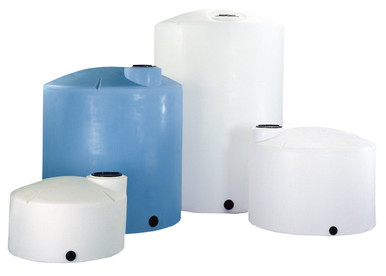
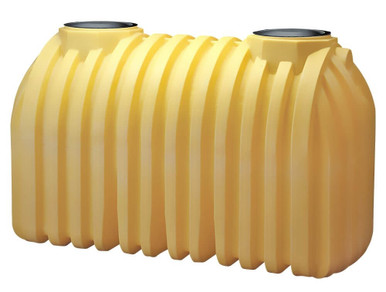
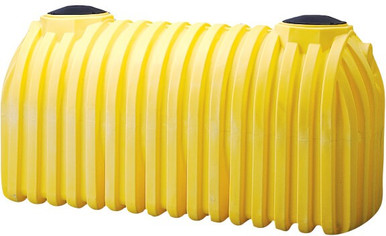
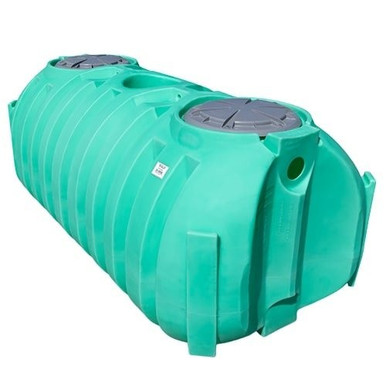
Virginia (12 VAC 5-610) sizes septic tanks by bedroom count or design flow, with residential systems typically starting at 1,000 gallons. These IAPMO PS 1–listed polyethylene tanks meet that capacity standard; your county or state permitting office confirms the final size.
Shop all IAPMO PS 1–listed septic tanks →
Meeting the construction standard is not the same as a permit — your county environmental health office issues the permit and makes the final determination. Call us with your permit number and we will confirm the exact tank spec before shipment, with freight quoted to your ZIP.
Chemical Storage & Secondary Containment in Virginia
Storing fuel, fertilizer, or process chemicals alongside your tank changes the rules. The federal Spill Prevention, Control, and Countermeasure rule (40 CFR Part 112) applies at 1,320 gallons of aggregate aboveground oil storage and requires secondary containment sized to at least 110% of your largest tank. Releases of hazardous substances above their federal reportable quantity (40 CFR 302.4) must be reported to the National Response Center at 1-800-424-8802.
Virginia layers its own spill reportable quantities and restricted-substance rules on top of that federal floor — confirm the current thresholds with your state environmental agency before specifying a chemical tank. Just as important, the polyethylene resin must be matched to the exact chemical, concentration, and specific gravity you intend to store; a tank rated for water is not automatically rated for acid, bleach, or fertilizer.
Last reviewed: May 2026 · sourced from Virginia administrative code
Regulations change on a rolling basis — confirm the current rule with your county or state agency before purchasing. Spot something out of date? Email us and we'll fix it.
Nearby states (South Atlantic) & full index: