
West Virginia Septic Tank Regulations — 64 CSR 9 + 64 CSR 47
West Virginia Septic Tank Regulations
West Virginia's sewage system rules are found in 64 CSR 9, with design standards in 64 CSR 47. The DHHR OEHS Public Health Sanitation Division oversees these rules, including Table 64-47-K for separations. These rules consider the steep terrain from the Eastern Panhandle to the coalfields.
The Governing Framework
West Virginia regulates sewage systems under a two-rule framework:
- 64 CSR 9 — Sewage System Rule. The substantive rule governing permits, inspections, maintenance, and installer licensing.
- 64 CSR 47 — Sewage Treatment and Collection System Design Standards. The detailed engineering design specifications referenced by 64 CSR 9.
- W. Va. Code R. § 64-9-2 — Definitions.
- W. Va. Code R. § 64-9-8 — Subdivisions.
- W. Va. Code R. § 64-47-6 — Individual Sewage Systems (effective rule version subject to periodic update).
- West Virginia Department of Health and Human Resources (DHHR) — Office of Environmental Health Services (OEHS) — Public Health Sanitation Division — administers the rules.
Septic Tank Construction Requirements
According to 64 CSR 47, septic tanks can be made from reinforced concrete, fiberglass, or other materials that are watertight and durable, as approved by the Commissioner. Polyethylene tanks that meet IAPMO/NSF listings and state-approved designs are included in this category.
For single-family homes, the required septic tank and soil absorption system sizes are listed in Table 64-47-L.
Setback Distances — Table 64-47-K
Key setbacks include:
- 50 feet from private water well or groundwater supply
- Additional separation distances per Table 64-47-K for surface water, property lines, structures, and water supply lines
If your property is on steep terrain or in a karst zone, you might need more space than the basic requirements. Check with OEHS or your local health department for the specific table that applies to your location.
Permit Process
- Contact your local health department. West Virginia operates a network of local health departments that implement 64 CSR 9 on behalf of OEHS.
- Soil and site evaluation. Per 64 CSR 9 and 64 CSR 47 protocols.
- System design. Per 64 CSR 47 design standards. Table 64-47-K setbacks and Table 64-47-L sizing apply.
- Permit issuance. Local health department with OEHS oversight. Fees typical range $150–$400.
- Licensed installer construction. West Virginia certifies installers.
- Inspection before backfill. Local health department inspects.
Regional Considerations
- Eastern Panhandle (Jefferson, Berkeley): Karst limestone terrain. Sinkhole zones require geotechnical review. Significant exurban growth from DC metro spillover creates heavy permitting workload.
- Northern Panhandle / Ohio River (Hancock, Brooke, Ohio): Industrial legacy, floodplain considerations. Steel-industry heritage affects groundwater profile in some areas.
- Appalachian Plateau (central/southern WV): Steep terrain, shallow soil over sandstone and shale. Alternative systems (mounds, pressure dosing, ATUs) are often required because conventional trench systems fail on hillsides.
- Coalfields (Mingo, McDowell, Wyoming counties): Former mining legacy including acid mine drainage and subsidence. Specialized engineering review.
- Charleston / Kanawha Valley: Mixed urban/suburban with municipal sewer footprint. Perimeter and rural parcels use septic. Kanawha River floodplain considerations for lowland parcels.
- Seneca Rocks / Monongahela National Forest country: Federal land boundary coordination for parcels near forest boundaries.
Material Approvals
OEHS accepts polyethylene tanks meeting 64 CSR 9 and 64 CSR 47 construction standards. Verify at order:
- IAPMO PS 1 or NSF 46 listing
- Ribbed polyethylene construction
- Approved by the WV Commissioner as an "other watertight and durable materials" qualifying product
- Steep-slope anchoring when site requires
- Effluent filter compatibility
- Elevated riser compatibility for floodplain or steep installations
Source Citations
Shop Septic Tanks for West Virginia
OneSource stocks polyethylene septic tanks meeting West Virginia construction requirements. Match capacity to your design flow per the rules summarized above. Tank + accessories + holding tank options below cover standard and alternative configurations. OneSource drop-ships from the OEM warehouse closest to your install address.
Plastic Septic Tanks
Full polyethylene septic tank catalog. Sizes from 300 to 1,500+ gallons for West Virginia installations.
Browse Plastic Septic TanksIAPMO Approved Models
NSF/IAPMO listed tanks. Some counties and some installation types require this listing.
Browse IAPMO Approved ModelsSeptic Accessories
Risers, lids, baffles, filters, alarms, pumps, and install hardware.
Browse Septic AccessoriesHolding Tanks
Holding tanks for construction sites, recreational properties, and pump-and-haul installations.
Browse Holding TanksFrequently Asked Questions
- Who regulates onsite wastewater in West Virginia?
- West Virginia Bureau for Public Health (within WVDHHR) under 64CSR9 (Sewage Treatment and Collection System Design Standards). Local health departments administer field permits under BPH oversight.
- What about mountainous terrain and shallow bedrock?
- Most of West Virginia is Appalachian Plateau with variable shallow bedrock, thin soils, and steep slopes. Conventional absorption fields often aren't feasible. Alternative systems (mounds, peat biofilters, drip dispersal) are common. Site-specific engineering is the norm.
- Are there coal-country considerations?
- Coal-mining heritage means disturbed lands, abandoned mine subsidence potential, and acid mine drainage concerns in some watersheds. Site evaluation should consider mining history before siting tank or absorption system.
- Are polyethylene tanks accepted in West Virginia?
- Yes, when meeting IAPMO/NSF listings and 64CSR9 construction requirements. Major OEM rotomolded polyethylene tanks from Norwesco, Snyder, and others are commonly approved. Verify with your local health department.
- What's the typical permit process?
- Contact your county/local health department, complete site/soil evaluation, submit design, obtain permit, install with licensed contractor (where required), pass inspection before cover, receive certificate of compliance. Appalachian terrain often means more back-and-forth with health department than flatter states.
Storing chemicals in your West Virginia tank?
West Virginia's OSSF rules do not apply to chemical-storage tanks. These are determined by the manufacturer. If you need a tank for chemicals like sulfuric acid, bleach, or fertilizer solution, our Chemical Compatibility Database provides full construction specifications.
Agricultural Tank Regulations — WVDA & WV DEP
The West Virginia Department of Agriculture (WVDA) and the WV Department of Environmental Protection (WV DEP) oversee agricultural tanks under the West Virginia Code and Code of State Rules (CSR).
- 61 CSR 12J — WVDA Pesticide Rule: applicator licensing, RUP recordkeeping, bulk storage, repackaging.
- W. Va. Code § 19-16A — West Virginia Pesticide Control Act (statutory authority).
- W. Va. Code § 19-15 — Commercial Fertilizer Law: registration, tonnage reporting, labeling.
- 61 CSR 4E — WVDA Commercial Fertilizer Rule.
West Virginia's agriculture is small nationally but important regionally. In the Eastern Panhandle, orchards and grain are common, while poultry operations are in Pendleton and Hardy counties. The Potomac Highlands have cattle and forage, and the Ohio Valley has field crops and dairy. In the Southern coalfields, agriculture is limited. Bulk liquid fertilizer and pesticide storage in the Eastern Panhandle and Ohio Valley must have 110% secondary containment with impermeable liners, rinsate-recovery loading pads, and spill-response plans. WVDA and WV DEP work together on incidents affecting surface water.
Oil & Gas Storage — WV DEP Office of Oil & Gas
The WV DEP Office of Oil and Gas (OOG) manages oil, gas, and produced-water infrastructure. West Virginia's production is mainly from the Marcellus and Utica shales in the Northern Panhandle and North-Central region, with shallow oil and gas across the state.
- 35 CSR 4 — Oil and Gas Wells and Other Wells: well construction, casing, cementing, production operations, tank-battery containment, plugging.
- 35 CSR 8 — Horizontal Well Control Act implementing regulations: Marcellus/Utica-specific design, setbacks, hydraulic fracturing disclosure, centralized storage, water management.
- W. Va. Code § 22-6 / § 22-6A — Oil and Gas statutes and the Natural Gas Horizontal Well Control Act.
- 35 CSR 6 — Underground Injection Control (Class II produced-water disposal).
Marcellus/Utica well-pad operations use large water-storage tanks, modular steel frac tanks, and produced-water storage tanks ranging from 500 to several thousand barrels. OOG requires containment for tank batteries to hold at least 100% of the largest tank plus extra for rain. There are stricter rules for centralized impoundments and produced-water storage. 35 CSR 8 adds specific requirements for Marcellus operations, including water-source and chemical disclosures and setbacks from streams and water intakes. Class II injection wells under 35 CSR 6 are the main disposal method, with some water sent to Ohio for disposal.
Aboveground Storage Tanks — 47 CSR 63 (Post-Elk River MCHM 2014)
West Virginia has one of the strictest state AST regulatory programs in the U.S., created after the January 9, 2014 Elk River chemical spill. This spill released about 10,000 gallons of MCHM into the Elk River, affecting drinking water for 300,000 people. In response, the Legislature passed the Aboveground Storage Tank Act (W. Va. Code § 22-30) and WV DEP issued 47 CSR 63 Aboveground Storage Tank Rule.
- 47 CSR 63 — Aboveground Storage Tank Rule: registration, Level 1/2/3 classification by fluid hazard and zone of critical concern, construction standards, annual inspection, spill prevention, release reporting, closure.
- W. Va. Code § 22-30 — Aboveground Storage Tank Act (statutory authority).
- Registration and fees — owners register ASTs with WV DEP and pay annual fees supporting the program; registration renewal is required periodically (operators confirm current cycle with WV DEP).
- Zone of Critical Concern (ZCC) — tanks within five hours' flow time upstream of a public drinking-water intake (or one-hour zone of peripheral concern) face heightened standards: Level 1 classification, enhanced secondary containment, more frequent inspection, stricter release-reporting triggers.
- Level 1 tanks (highest hazard, within ZCC, or storing listed hazardous substances) require the strictest compliance; Level 2 and Level 3 step down by hazard and location.
- Spill Prevention Response Plan (SPRP) — Level 1 tanks maintain site-specific SPRPs with contact trees, response procedures, and coordination with downstream water systems.
This program is unique because few states regulate non-petroleum ASTs as extensively as 47 CSR 63. Anyone with an AST above the threshold in West Virginia should check their registration and fluid classification with WV DEP Water Resources / DWWM before installing or modifying a tank. After the Elk River spill, the state also funded source-water protection planning with public water systems.
Petroleum UST & Septic — 33 CSR 30 & 64 CSR 9
WV DEP manages petroleum USTs under 33 CSR 30, while the West Virginia Bureau for Public Health (WVBPH) handles septic systems under 64 CSR 9. Residential septic design flow is about 240 gpd per dwelling, with adjustments for household size and high-flow fixtures.
| Bedrooms | Minimum Septic Tank Capacity (64 CSR 9) |
|---|---|
| 1–3 BR | 1,000 gallons |
| 4 BR | 1,250 gallons |
| 5 BR | 1,500 gallons |
| 6+ BR | Add 250 gallons per additional bedroom |
West Virginia's landscape affects septic design. Steep hillsides, shallow bedrock, karst limestone valleys, and river-bottom soils require alternative systems like low-pressure pipe, mound systems, drip dispersal, and engineered package ATU systems. Local Health Departments issue permits under WVBPH oversight. USTs under 33 CSR 30 meet 2018 federal upgrades, and WV DEP runs the leak-detection and corrective-action program.
Chemical Storage Secondary Containment & Spill Reporting
Federal SPCC (40 CFR 112) applies at 1,320 gallons aggregate aboveground oil. West Virginia layers on:
- 47 CSR 63 — AST Rule (covers petroleum and non-petroleum ASTs above threshold with Level 1/2/3 scheme).
- W. Va. Code § 22-11 — Water Pollution Control Act; oil and hazardous-substance release reporting.
- 33 CSR 30 — UST release reporting.
- WV DEP 24-hour spill reporting: 1-800-642-3074 (Environmental Emergency).
- 33 CSR 20 — Hazardous Waste Management Rule (RCRA Subtitle C delegation).
Report federal-RQ releases to the NRC at 1-800-424-8802 and state releases to WV DEP. The SPCC baseline requires secondary containment at 110% of the largest tank. 47 CSR 63 adds extra requirements for tanks near public water intakes. After the Elk River spill, the state improved its chemical-release notification and coordination system.
Permit Pathways at a Glance
- Residential septic: Local Health Department under 64 CSR 9 with WVBPH oversight.
- Fertilizer / feed registration: WVDA under W. Va. Code § 19-15 / 61 CSR 4E.
- Pesticide applicator: WVDA under 61 CSR 12J.
- Oil & gas (Marcellus/Utica) wells and tank batteries: WV DEP OOG under 35 CSR 4 / 35 CSR 8.
- Class II produced-water injection: WV DEP UIC under 35 CSR 6.
- Petroleum UST: WV DEP under 33 CSR 30.
- Aboveground Storage Tank (petroleum & non-petroleum): WV DEP under 47 CSR 63 / W. Va. Code § 22-30.
- SPCC > 1,320 gal oil aggregate: Federal SPCC plan; WV DEP state spill reporting.
- NPDES industrial stormwater: WV DEP (WV is delegated NPDES state) under WV/NPDES.
- Zone of Critical Concern siting: WV DEP WWE coordinating with public water systems.
Current fees change; verify with WV DEP, WVDA, or WVBPH before budgeting.
More West Virginia FAQs
- What happened at Elk River and why does it still shape my tank project?
- On January 9, 2014, Freedom Industries' Etowah River terminal in Charleston released roughly 10,000 gallons of the coal-cleaning chemical MCHM into the Elk River, about 1.5 miles upstream of the West Virginia American Water intake. Roughly 300,000 residents across nine counties lost potable water for days. The spill exposed the absence of a state AST program covering non-petroleum chemicals near drinking-water intakes. The Legislature enacted W. Va. Code § 22-30 and WV DEP promulgated 47 CSR 63 within months. Every AST project in WV today operates under that post-Elk River framework.
- What is the Zone of Critical Concern?
- The ZCC is the watershed area upstream of a public drinking-water intake representing five hours of flow time; the Zone of Peripheral Concern extends to one hour. Tanks located in either zone face elevated registration, inspection, and SPRP requirements under 47 CSR 63. WV DEP maps intake ZCCs in coordination with public water systems; siting analysis checks ZCC status before construction.
- Is my farm nurse tank regulated under 47 CSR 63?
- Agricultural tanks above registration threshold can fall under 47 CSR 63 depending on fluid classification, volume, and location. Mobile farm nurse tanks used temporarily during application windows are generally treated differently from fixed bulk storage. Confirm your specific configuration with WV DEP Dam Safety / WWE before assuming an exemption.
- Does WV regulate Marcellus frac-water tanks?
- Yes — Marcellus/Utica operators' centralized fresh-water impoundments, modular frac tanks, and produced-water storage tanks are regulated under 35 CSR 4 / 35 CSR 8 (oil and gas rules) and may also fall under 47 CSR 63 depending on fluid classification and location. Multi-program overlap is the norm on Marcellus pads.
- Who is my local health department for septic permits?
- West Virginia's 49 local health departments (organized by county or multi-county district) administer sewage permits under 64 CSR 9 with WV Bureau for Public Health oversight. The local office conducts site evaluation, issues permits, and inspects installation.
- Are Marcellus-area tanks held to higher standards than Eastern Panhandle orchard tanks?
- Location matters more than crop or industry. The ZCC status of the tank's parcel, its fluid classification under 47 CSR 63 (Level 1/2/3), and its volume drive standards. A Marcellus pad within a drinking-water ZCC faces Level 1 requirements; an Eastern Panhandle orchard tank outside ZCC may be Level 3. Pre-design consultation with WV DEP is the practical answer.
Septic Tanks That Meet West Virginia Code
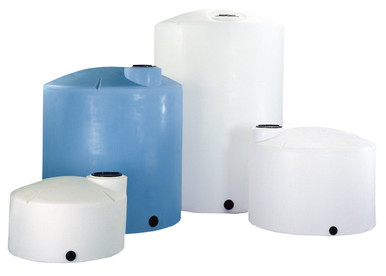
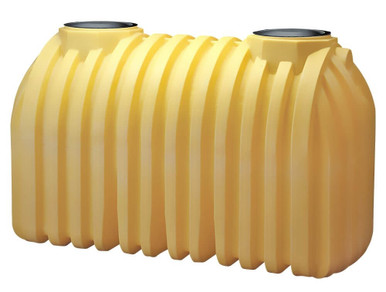
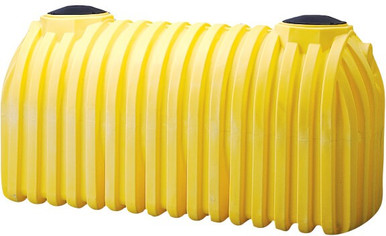
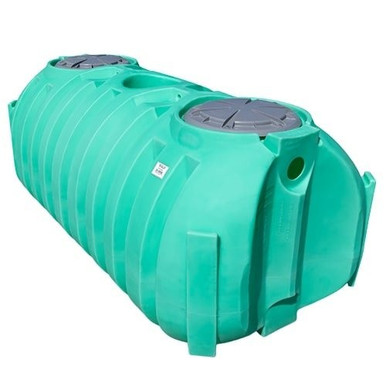
West Virginia (64 CSR 9 / 64 CSR 47) sizes septic tanks by bedroom count or design flow, with residential systems typically starting at 1,000 gallons. These IAPMO PS 1–listed polyethylene tanks meet that capacity standard; your county or state permitting office confirms the final size.
Shop all IAPMO PS 1–listed septic tanks →
Meeting the construction standard is not the same as a permit — your county environmental health office issues the permit and makes the final determination. Call us with your permit number and we will confirm the exact tank spec before shipment, with freight quoted to your ZIP.
Chemical Storage & Secondary Containment in West Virginia
Storing fuel, fertilizer, or process chemicals alongside your tank changes the rules. The federal Spill Prevention, Control, and Countermeasure rule (40 CFR Part 112) applies at 1,320 gallons of aggregate aboveground oil storage and requires secondary containment sized to at least 110% of your largest tank. Releases of hazardous substances above their federal reportable quantity (40 CFR 302.4) must be reported to the National Response Center at 1-800-424-8802.
West Virginia layers its own spill reportable quantities and restricted-substance rules on top of that federal floor — confirm the current thresholds with your state environmental agency before specifying a chemical tank. Just as important, the polyethylene resin must be matched to the exact chemical, concentration, and specific gravity you intend to store; a tank rated for water is not automatically rated for acid, bleach, or fertilizer.
Last reviewed: May 2026 · sourced from West Virginia administrative code
Regulations change on a rolling basis — confirm the current rule with your county or state agency before purchasing. Spot something out of date? Email us and we'll fix it.
Nearby states (South Atlantic) & full index: