
Wisconsin Septic Tank Regulations — SPS 383 POWTS
Wisconsin Septic Tank Regulations
Wisconsin's Private Onsite Wastewater Treatment System (POWTS) rules, under SPS 383, require a 3-year inspection cycle and use a component-manual approval model. These rules apply across the state, from Door County to the St. Croix Valley.
The Governing Framework
Wisconsin regulates onsite wastewater under a single agency with a specialized "component manual" approval model:
- SPS 383 — Private Onsite Wastewater Treatment System (POWTS) Rules. Establishes uniform standards for design, installation, inspection, and management.
- Department of Safety and Professional Services (DSPS) — the regulating agency. Wisconsin's unusual agency structure has DSPS (not a health or environmental agency) owning the POWTS program.
- SPS 305, SPS 316, SPS 382–387, SPS 391 — the broader administrative-code families that provide installer licensing, testing, and related authority.
- County environmental health or zoning — Wisconsin counties implement POWTS permits under DSPS framework. Some counties operate sanitary ordinances that layer on top of SPS 383 minimums.
The Component Manual Approval Model
In Wisconsin, design standards for septic systems are found in component manuals instead of one big rule. The DSPS publishes separate manuals for each system type, covering tank sizes, setback distances, and dispersal designs.
- Conventional in-ground gravity systems
- At-grade systems
- Mound systems
- Pressure distribution systems
- Aerobic treatment unit (ATU) systems
- Holding tanks
- Drip dispersal
The first component manuals were effective on July 1, 2000. They are updated regularly and include design calculations, material specifications, and installation procedures for each system type. When designing a POWTS in Wisconsin, you choose the system type first and then use the specific component manual.
The Mandatory 3-Year Inspection Cycle
Wisconsin is one of the few states with a uniform statewide periodic inspection requirement:
| Requirement | Specification |
|---|---|
| Inspection frequency | Minimum every 3 years |
| Scope | All private onsite wastewater systems, regardless of installation date |
| Pumping trigger | If combined sludge and scum volume equals 1/3 of tank volume |
| Report filing | Report filed with county (format varies by county) |
In Wisconsin, septic systems must be inspected every three years by a licensed pumper. The pumper checks if the tank needs pumping based on a 1/3-volume rule and records the findings. This is different from other states where pumping frequency is up to the homeowner.
Permit Process
- Contact your county environmental health or zoning office. County implementation is where POWTS permits start.
- Soil and site evaluation. Licensed soil tester or master plumber restricted to soil testing performs the evaluation.
- System design. Master plumber restricted to POWTS or licensed designer produces a system design using the appropriate component manual.
- Permit issuance. County processes. Fees vary; typical range $300–$800. Timeline 2–6 weeks.
- Licensed installer construction. Wisconsin requires a plumber with a POWTS installer restriction.
- Inspection before cover. County inspector or DSPS-certified inspector reviews the complete installation.
- Triennial inspection cycle begins. First inspection 3 years after installation, then every 3 years for the life of the system.
Regional Considerations
- Milwaukee Metro: Largely on municipal sewer. Remaining rural parcels (Washington, Ozaukee counties) handle conventional systems. Densely-developed areas have extensive legacy POWTS records.
- Driftless Area (Crawford, Grant, Vernon counties): Steep terrain, shallow soil over bedrock. Mound systems and pressure distribution are the norm. Conventional trench systems often not feasible.
- Door County: Shallow soil over Silurian dolomite. Many parcels cannot support conventional systems and require engineered alternatives. Fractured-bedrock groundwater contamination risk drives stricter design.
- Northwoods (Vilas, Oneida, Iron counties): Seasonal cabin country with high-percentage vacant-winter occupancy. Holding-tank systems common where perc fails. Winter access for pumping is an operational reality.
- Fox Valley (Outagamie, Winnebago, Calumet): Mixed urban/rural. Standard systems in rural; municipal sewer in metro.
- St. Croix Valley (Polk, Burnett): Sandy outwash terrain with good percolation. Standard systems typical.
Material Approvals
DSPS accepts polyethylene tanks meeting SPS 383 and the relevant component manual's materials specifications. Verify at order:
- IAPMO PS 1 or NSF 46 listing
- Ribbed polyethylene rated for burial depth per Wisconsin frost-line considerations (often 4+ feet cover)
- Two-compartment construction is standard
- Effluent filter provisioned
- Riser compatibility with DSPS-approved inspection port requirements (3-year inspection cycle requires accessibility)
Frequently Asked Questions
- Why does DSPS (not a health agency) regulate Wisconsin septic?
- Historical administrative design. Wisconsin consolidated several licensing and construction-related programs under DSPS when agencies were reorganized. POWTS regulation falls under the broader "safety and professional services" umbrella alongside plumbing, electrical, and other construction regulation. Other states (health or environmental) are not doing it wrong — Wisconsin just made a different agency choice.
- What's the component manual for my system?
- It depends on your system type. Standard gravity trench uses the conventional in-ground manual; hillside installations often use pressure distribution or mound; poor-perc lots use ATUs. Your designer selects the manual based on your soil evaluation results. Ask which manual they're applying — it's the foundation of your design.
- Is the 3-year inspection really mandatory?
- Yes, statewide. The inspection must be performed by a licensed pumper or inspector. The pumper files a report with the county. Counties vary in enforcement intensity — some send reminders and follow up, others rely on real-estate-transfer inspections. Either way, at property sale the inspection record must exist.
- What happens if the 1/3-volume trigger is hit?
- The tank must be pumped. A pump-out during a 3-year inspection is billed separately from the inspection itself — typical pumping cost $400–$800 depending on tank size and accessibility. Follow-up inspection may be required if the condition indicates system failure beyond routine solids accumulation.
Source Citations
Shop Septic Tanks for Wisconsin
OneSource stocks polyethylene septic tanks meeting Wisconsin construction requirements. Match capacity to your design flow per the rules summarized above. Tank + accessories + holding tank options below cover standard and alternative configurations. OneSource drop-ships from the OEM warehouse closest to your install address.
Plastic Septic Tanks
Full polyethylene septic tank catalog. Sizes from 300 to 1,500+ gallons for Wisconsin installations.
Browse Plastic Septic TanksIAPMO Approved Models
NSF/IAPMO listed tanks. Some counties and some installation types require this listing.
Browse IAPMO Approved ModelsSeptic Accessories
Risers, lids, baffles, filters, alarms, pumps, and install hardware.
Browse Septic AccessoriesHolding Tanks
Holding tanks for construction sites, recreational properties, and pump-and-haul installations.
Browse Holding TanksStoring chemicals in your Wisconsin tank?
Wisconsin's OSSF rules don't cover chemical-storage tanks. These are specified by the manufacturer. If you need a tank for sulfuric acid, bleach, fertilizer solution, or any of 300+ industrial chemicals, our Chemical Compatibility Database provides full construction specifications.
Agricultural Tank Regulations — ATCP 33
Wisconsin has detailed rules for agricultural-chemical containment, managed by the Wisconsin Department of Agriculture, Trade and Consumer Protection (DATCP) under ATCP 33.
- ATCP 33 — Agricultural Chemical Storage and Containment. Covers firms that store bulk fertilizers and pesticides, including mixing and loading operations.
- ATCP 33.10(3) — Requires all handling of bulk fertilizer or bulk pesticide at a storage facility to be conducted over a mixing and loading pad that catches, contains, and allows recovery of reasonably foreseeable discharges.
- ATCP 33.22(5) — Secondary containment structure specifications for bulk liquid storage.
- ATCP 33.32(5) — Construction standards: Secondary containment structures may be concrete or earth/other materials if fully lined with a synthetic liner at least 30 mils (0.8 mm) thick.
- ATCP 33.42(2)(a) — Location requirements: Base of each mixing and loading pad and secondary containment structure must be at least 5 feet above bedrock and seasonal high groundwater, at least 1,000 feet from navigable lakes and 300 feet from navigable streams, and located outside any 100-year flood plain.
- ATCP 33.44(3)(f)1. — Additional structural and operational standards.
- ATCP 33.82(1) — Operator training and recordkeeping.
ATCP 33 in Wisconsin has specific standards like a 30-mil liner thickness, 5-foot separation from bedrock and groundwater, 1,000-foot setback from lakes, and 300-foot setback from streams. The eastern and southwest dairy regions and central sands vegetable zones have many ATCP 33-regulated sites. Polyethylene bulk tanks are common for liquid fertilizers, with pad design, liner installation, and groundwater separation being key challenges.
Petroleum UST & Heating Oil Storage — ATCP 93 / NR 169
Wisconsin has little oil and gas production, so fuel and heating-oil tank regulations by DSPS and DNR are the closest equivalent to produced-water rules.
- ATCP 93 / SPS 310 — Wisconsin Department of Safety and Professional Services rules for flammable, combustible, and hazardous liquids storage (including UST and AST design, installation, leak detection, and closure).
- NR 169 — DNR Agricultural Chemical Cleanup Program rules (cleanup of contaminated sites).
- Wisconsin Statutes Chapter 101 — Building safety and construction standards (SPS authority).
- Wisconsin Statutes Chapter 292 — Remedial Action and Spill Response authority (DNR).
Fuel-oil heating systems are common in older Wisconsin homes and small businesses. Decommissioning follows ATCP 93 / SPS 310 rules with certified providers. For above-ground fuel storage over 1,320 gallons, federal SPCC (40 CFR 112) rules apply along with state rules.
Septic System Sizing Deep Dive — SPS 383
Onsite wastewater in Wisconsin is regulated under SPS 383 by DSPS. A typical capacity table is used for installations.
| Bedrooms | Minimum Septic Tank Capacity |
|---|---|
| 1–3 BR | 1,000 gallons |
| 4 BR | 1,250 gallons |
| 5 BR | 1,500 gallons |
| Non-dwelling | Engineered design on peak daily flow |
Wisconsin's POWTS framework requires certified master plumbers or registered installers for installation, registered inspectors for site evaluation, and registered maintainers for service. County zoning administrators issue sanitary permits. Conventional trenches are common in Kettle Moraine and central sands, while mound systems or pressure distribution are needed in eastern Wisconsin's clay till. Check current setbacks and Table values with your county before finalizing a site plan.
Chemical Storage Secondary Containment & Spill Reporting
Federal SPCC (40 CFR 112) applies at 1,320 gallons aggregate aboveground oil. Wisconsin layers on:
- Wisconsin Statutes section 292.11 — Hazardous Substance Spills Law. Imposes immediate reporting and response obligations on any person possessing or controlling a hazardous substance that is released.
- NR 706 — DNR Notification and Investigation of Environmental Contamination rules.
- Wisconsin DNR 24-hour Spills Hotline at 1-800-943-0003.
- ATCP 33 spill reporting — Separate DATCP reporting for releases at agricultural chemical facilities.
Wisconsin's section 292.11 spill law requires the responsible party to report and clean up any hazardous substance release that harms the environment, regardless of fault. Secondary containment for polyethylene chemical tanks must hold at least 110% of the largest tank's capacity and meet ATCP 33.32(5) standards for agricultural chemicals.
Permit Pathways at a Glance
- Residential POWTS: County zoning administrator / DSPS under SPS 383.
- Agricultural chemical facility (bulk pesticide/fertilizer): DATCP under ATCP 33 (plan review, construction permit, operating registration).
- Pesticide dealer and applicator: DATCP under ATCP 29 and ATCP 30.
- Flammable/combustible liquids UST and AST: DSPS under SPS 310.
- SPCC > 1,320 gal oil aggregate: Federal SPCC plan; DNR spill reporting under Wis. Stat. 292.11.
- Agricultural chemical cleanup: DNR under NR 169 (ACCP).
More Wisconsin FAQs
- My new dairy's liquid fertilizer site is 250 feet from a small stream. Will ATCP 33 let me build?
- No — ATCP 33.42(2)(a) requires at least 300 feet from navigable streams and 1,000 feet from navigable lakes. Reposition the pad to meet the setback, or the DATCP plan review will not approve the site.
- How do I verify the 5-foot groundwater separation?
- Groundwater monitoring and/or soil boring through the proposed pad location documented in the plan submittal. Seasonal high groundwater is the governing level. Work with a Wisconsin Professional Hydrogeologist or Professional Engineer to prepare the site characterization.
- Does ATCP 33 apply to on-farm bulk storage?
- ATCP 33 historically targeted commercial storage facilities (retailers, custom applicators). On-farm storage thresholds have changed over time; confirm current applicability with DATCP for your specific operation, volume, and storage duration.
- What liner thickness does ATCP 33.32(5) require?
- At least 30 mils (0.8 mm) for synthetic liner construction of earth or other material secondary containment. Concrete containment is also permitted under separate specifications.
- Is there a state-funded cleanup program?
- Wisconsin operates the Agricultural Chemical Cleanup Program (ACCP) under NR 169 for eligible agricultural chemical releases and the PECFA program for petroleum storage tank releases. Each has specific eligibility and funding rules — consult DNR and DATCP directly.
- What does the Wisconsin strict-liability spills law mean for me?
- Under Wis. Stat. 292.11, if you possess or control a hazardous substance that is released, you're responsible for reporting and cleanup, regardless of fault. Integrate the 1-800-943-0003 DNR number into your SPCC / facility response plan and train staff on the immediate reporting obligation.
- Are there special rules for dairy silage leachate and process wastewater?
- Yes. Silage leachate is a high-BOD waste regulated under NR 243 (CAFO / manure rules) and the DNR nutrient management framework. Polyethylene collection tanks must be sized for the expected leachate volume plus design storm event. Coordinate with DNR and DATCP for large dairy operations.
Septic Tanks That Meet Wisconsin Code
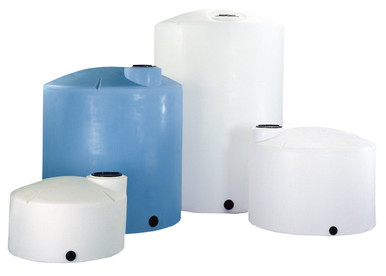
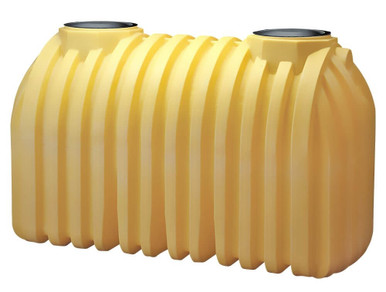
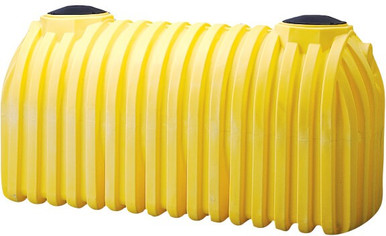
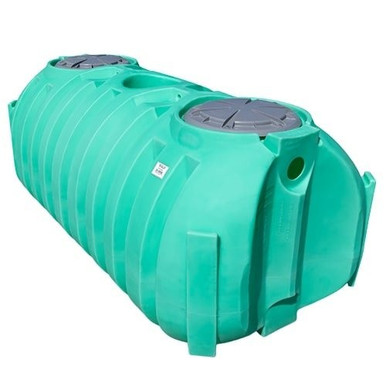
Wisconsin (Wis. Admin. Code SPS 383) sizes septic tanks by bedroom count or design flow, with residential systems typically starting at 1,000 gallons. These IAPMO PS 1–listed polyethylene tanks meet that capacity standard; your county or state permitting office confirms the final size.
Shop all IAPMO PS 1–listed septic tanks →
Meeting the construction standard is not the same as a permit — your county environmental health office issues the permit and makes the final determination. Call us with your permit number and we will confirm the exact tank spec before shipment, with freight quoted to your ZIP.
Chemical Storage & Secondary Containment in Wisconsin
Storing fuel, fertilizer, or process chemicals alongside your tank changes the rules. The federal Spill Prevention, Control, and Countermeasure rule (40 CFR Part 112) applies at 1,320 gallons of aggregate aboveground oil storage and requires secondary containment sized to at least 110% of your largest tank. Releases of hazardous substances above their federal reportable quantity (40 CFR 302.4) must be reported to the National Response Center at 1-800-424-8802.
Wisconsin layers its own spill reportable quantities and restricted-substance rules on top of that federal floor — confirm the current thresholds with your state environmental agency before specifying a chemical tank. Just as important, the polyethylene resin must be matched to the exact chemical, concentration, and specific gravity you intend to store; a tank rated for water is not automatically rated for acid, bleach, or fertilizer.
Last reviewed: May 2026 · sourced from Wisconsin administrative code
Regulations change on a rolling basis — confirm the current rule with your county or state agency before purchasing. Spot something out of date? Email us and we'll fix it.
Nearby states (East North Central) & full index: