
Wyoming Septic Tank Regulations — Chapter 25 Small Wastewater
Wyoming Septic Tank Regulations
Wyoming's Small Wastewater Systems rules in Chapter 25 are managed by the WY DEQ Water Quality Division. They include a rule for either 48-hour retention or a minimum of 1,000 gallons for high-strength and non-residential systems. Check Table 4 for horizontal setbacks, which apply across the state from Yellowstone to the Powder River Basin.
The Governing Framework
Wyoming regulates small wastewater systems under:
- Chapter 25 — Septic Tanks, Soil Absorption Systems, and Related Small Wastewater System Design Standards. The substantive rule.
- 020-25 Wyo. Code R. § 25-10 — Septic Tanks and Other Treatment Tanks.
- 020-25 Wyo. Code R. § 25-17 — Greywater Systems.
- Table 4 (in Chapter 25) — Minimum horizontal setbacks for domestic wastewater (feet).
- Wyoming Statute § 35-11-103(c)(ix) — enabling statutory authority (definition of "small wastewater system").
- Wyoming Department of Environmental Quality (DEQ) — Water Quality Division — Small Wastewater Systems Program — state-level administrator.
- County environmental health / permitting offices — field implementation in most areas.
The 48-Hour Retention Rule
For non-residential or high-strength wastewater, Chapter 25 sets capacity as:
| Parameter | Requirement |
|---|---|
| Non-residential / high-strength | Minimum effective liquid capacity sufficient for at least 48-hour retention at design flow, OR 1,000 gallons, whichever is greater |
| Residential | Per Chapter 25 residential capacity table |
Setback Distances — Table 4
Chapter 25 Table 4 lists the minimum horizontal setbacks needed for domestic wastewater components. You should check the table or ask your local authority for the exact setback values. Remember, on steep terrain, the horizontal distance (not the straight-line distance) is what matters.
Greywater Under § 25-17
Wyoming has specific rules for greywater systems in § 25-17, treating them as a separate category. Greywater, which comes from showers, sinks, and laundry (but not toilets), can be used for irrigation and other uses under Chapter 25 rules, as long as you follow the design and operational requirements. This is especially helpful for properties in water-scarce areas of the state where every gallon counts.
Permit Process
- Contact your county environmental health / permitting office. Wyoming county-level field implementation under DEQ oversight.
- Site evaluation. Per Chapter 25 protocols including soil and groundwater depth assessment.
- System design submission. Plot plan, soil logs, tank and absorption field sizing per § 25-10.
- Permit issuance. Fees typically modest ($200–$500).
- Licensed installer construction.
- Inspection before cover.
Regional Considerations
- Cheyenne / Laramie Metro: Capital city with municipal sewer in urban core. Surrounding rural county (Laramie County) uses septic.
- Teton County (Jackson Hole): Exceptional oversight due to Yellowstone/Grand Teton National Park proximity and sensitive hydrology. Extended setbacks from Snake River and lake frontage. Real-estate-transfer inspections common.
- Park County (Cody, Powell): Mountain and shoulder-valley terrain. Coordination with Yellowstone NP for parcels near the eastern boundary.
- Powder River Basin (Gillette, Sheridan): Coal and coalbed methane country. Groundwater-contamination concerns drive stricter site review in some areas.
- Wind River Reservation: Shoshone and Arapaho tribal environmental authority governs onsite systems on reservation land. Not under Wyoming DEQ jurisdiction.
- Central basins (Riverton, Lander, Rawlins): Deep soil, semi-arid. Standard systems typical.
- Mountain resort / second-home markets (Teton, Star Valley): High-end installations with alternative systems, on-lot irrigation reuse under § 25-17 greywater, and premium engineering.
Frequently Asked Questions
- What's a "small wastewater system" under Wyoming law?
- Defined in Wyoming Statute § 35-11-103(c)(ix). Generally encompasses individual residential and small-commercial onsite wastewater systems below certain flow thresholds. Larger systems fall under different DEQ Water Quality rules (point-source discharge permits).
- Can I reuse greywater for irrigation?
- Yes, under § 25-17 with specific design and operational requirements. Wyoming's semi-arid climate makes greywater reuse operationally attractive. The system must meet Chapter 25 greywater design specifications to qualify.
- Why is Teton County oversight stricter?
- Jackson Hole / Teton Village proximity to Yellowstone and Grand Teton National Park creates elevated hydrological and environmental concerns. Snake River and area lakes support fragile ecosystems. Additional review layers (county planning, NPS coordination) apply. Expect longer permit timelines and higher fees than average Wyoming installations.
- Do polyethylene tanks meet Chapter 25?
- Yes. Major OEM rotomolded polyethylene tanks meeting IAPMO/NSF listings and § 25-10 construction standards qualify. Verify with your county.
Source Citations
Shop Septic Tanks for Wyoming
OneSource stocks polyethylene septic tanks meeting Wyoming construction requirements. Match capacity to your design flow per the rules summarized above. Tank + accessories + holding tank options below cover standard and alternative configurations. OneSource drop-ships from the OEM warehouse closest to your install address.
Plastic Septic Tanks
Full polyethylene septic tank catalog. Sizes from 300 to 1,500+ gallons for Wyoming installations.
Browse Plastic Septic TanksIAPMO Approved Models
NSF/IAPMO listed tanks. Some counties and some installation types require this listing.
Browse IAPMO Approved ModelsSeptic Accessories
Risers, lids, baffles, filters, alarms, pumps, and install hardware.
Browse Septic AccessoriesHolding Tanks
Holding tanks for construction sites, recreational properties, and pump-and-haul installations.
Browse Holding TanksStoring chemicals in your Wyoming tank?
Wyoming's OSSF rules don't cover chemical-storage tanks. These are specified by the manufacturer. If you need a tank for sulfuric acid, bleach, fertilizer solution, or any of 300+ industrial chemicals, our Chemical Compatibility Database has all the construction specifications you need.
Agricultural Tank Regulations — Wyoming Department of Agriculture (WDA)
The Wyoming Department of Agriculture oversees the storage of pesticides, fertilizers, and commercial feed under Wyoming Statutes Title 11, Chapter 22 (Pesticides) and related chapters, with rules in WDA Rules Chapter 5.
- WDA Rules Chapter 5 — Pesticides: registration, labeling, applicator licensing, and RUP handling.
- W.S. 11-22-101 et seq. — Wyoming Environmental Pesticide Control Act.
- W.S. 35-12 — Hazardous materials and commercial fertilizer authorities.
Wyoming's agriculture is mainly livestock-focused, with cow-calf operations, sheep, and crops like alfalfa, hay, sugar beets, dry beans, and malting barley. Bulk liquid fertilizer and pesticide storage at commercial facilities follows a 110% SPCC-style containment standard. While WDA doesn't have a specific rule like Illinois, general obligations under the Wyoming Environmental Quality Act (W.S. 35-11) and federal SPCC guide operations. Anhydrous ammonia storage follows ANSI K61.1 with help from WDA and local fire departments. The Big Horn Basin area sees a lot of nurse-tank use in spring for barley and beets.
Oil & Gas Produced Water — Wyoming Oil and Gas Conservation Commission (WOGCC)
The Wyoming Oil and Gas Conservation Commission manages upstream oil and gas activities under WOGCC Rules and Regulations Chapter 3, with authority from W.S. 30-5-104.
- WOGCC Ch. 3 — Operational rules including pits, ponds, tanks, and produced-water management.
- WOGCC Ch. 4 — Environmental rules.
- W.S. 30-5-104 — Commission rulemaking authority.
Wyoming is a key oil and gas state, with areas like the Powder River Basin, Jonah Field, and Pinedale Anticline producing large volumes of water. WOGCC permits water pits, requires tank containment, and works with Wyoming DEQ on Class II injection wells through the WYPDES program and EPA Region 8. Polyethylene tanks are often used at chemical-injection sites, while fiberglass and steel are common for high-volume water service. Closed-loop drilling and centralized water handling are growing as operators in the Powder River Basin aim for efficiency and reduced environmental impact.
Petroleum USTs — Wyoming DEQ Storage Tank Program
The Wyoming Department of Environmental Quality manages petroleum storage tanks through the Storage Tank Program under Wyoming Storage Tank Regulations Chapter 1, with authority from W.S. 35-11.
- Wyoming Storage Tank Regulations Ch. 1 — UST technical standards, release detection, corrective action, and closure.
- W.S. 35-11-1401 et seq. — Financial Responsibility Account (state fund reimbursement).
- WYPDES — Wyoming Pollutant Discharge Elimination System permits, applicable to industrial stormwater from tank facilities.
Wyoming UST owners must register with DEQ, pay annual fees, maintain release detection, and follow spill/overfill prevention rules from 2018 federal standards. They must report suspected releases within 24 hours. The Financial Responsibility Account helps cover eligible corrective-action costs above a deductible. AST facilities above federal SPCC thresholds must coordinate with DEQ Water Quality Division for spill-response planning.
Septic System Sizing Deep Dive
Wyoming DEQ Water Quality Division regulates onsite wastewater under Wyoming Small Wastewater Systems Rules Chapter 25:
| Bedrooms | Minimum Septic Tank Capacity |
|---|---|
| 1–3 BR | 1,000 gallons |
| 4 BR | 1,250 gallons |
| 5 BR | 1,500 gallons |
| 6+ BR | +250 gallons per additional bedroom |
Wyoming's soils and terrain are tough for OWTS due to shallow bedrock, rocky profiles, high-altitude cold climate, and wind-scoured topsoil. Chapter 25 requires site and soil evaluation, a licensed installer, and DEQ or county review. Alternative systems like mounds, sand filters, aerobic units, and pressure-dosed systems are used where trenches fail. Cold-climate design includes deep bury depths, insulated tanks, freeze-protected piping, and summer installation. High-altitude areas often use mounds with pressure dosing for shallow bedrock and slow percolation.
Chemical Storage Secondary Containment & Spill Reporting
Federal SPCC (40 CFR 112) applies at 1,320 gallons aggregate aboveground oil. Wyoming layers on:
- W.S. 35-11-901 and related — Release notification under the Wyoming Environmental Quality Act; reporting to DEQ Water Quality Division.
- WOGCC Ch. 3 — Spill reporting for upstream oil and gas releases to WOGCC.
- Wyoming Office of Homeland Security (WOHS) — EPCRA Tier II and State Emergency Response Commission coordination.
- Wyoming Hazardous Materials Response Team — incident response coordination.
Report non-oil-and-gas releases to DEQ and federal RQ releases to the National Response Center at 1-800-424-8802. Oil and gas releases go to WOGCC. Secondary containment at 110% is the standard. For state-specific RQ thresholds different from 40 CFR 302.4, contact DEQ directly.
Permit Pathways at a Glance
- Small wastewater (septic): DEQ Water Quality Division or delegated county under Ch. 25.
- Fertilizer & pesticide registration: WDA under WDA Rules Ch. 5 and W.S. 11-22.
- Pesticide applicator license: WDA under Wyoming Environmental Pesticide Control Act.
- Oil & gas produced water storage: WOGCC under Ch. 3 / Ch. 4.
- Petroleum UST: Wyoming DEQ Storage Tank Program under Wyoming Storage Tank Regulations Ch. 1.
- SPCC > 1,320 gal oil aggregate: Federal SPCC plan; state spill reporting to DEQ or WOGCC.
- WYPDES industrial stormwater: Wyoming DEQ Water Quality Division.
Current fees change; verify with WDA, DEQ, or WOGCC before budgeting.
More Wyoming FAQs
- Does WOGCC require containment around every tank battery?
- Yes — WOGCC Chapter 3 requires construction, integrity, and containment standards for produced-water and oil tank batteries. Berm sizing, liner requirements, and freeboard are prescriptive; inspection records must be retained.
- Can I reuse Powder River produced water for dust suppression?
- Produced-water reuse is tightly controlled. CBM (coalbed methane) produced water has historically been used for livestock watering and irrigation under specific permits; conventional produced water with higher TDS typically goes to Class II disposal. Any beneficial-use plan requires WOGCC and DEQ approval.
- How does high altitude affect septic in Jackson or Sheridan?
- Short treatment seasons, frozen soils, and shallow bedrock push high-altitude counties toward mounds with pressure dosing, insulated tanks, and deep bury depths. Some Teton County sites require ATU plus drip dispersal to meet setback and treatment targets.
- Who enforces anhydrous ammonia regulations in Wyoming?
- WDA inspects commercial ag facilities; OSHA PSM applies above 10,000 pounds stored; DOT 49 CFR applies in transport. Wyoming does not publish a standalone prescriptive anhydrous ammonia rule separate from the Pesticides Act and referenced ANSI K61.1 standards.
- Does Wyoming have a state LUST fund?
- Yes — the Financial Responsibility Account under W.S. 35-11-1401 reimburses eligible petroleum tank owners and operators for corrective-action costs above a deductible. Registration and fee payment must be current to qualify.
Septic Tanks That Meet Wyoming Code
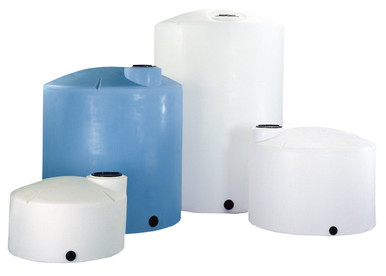
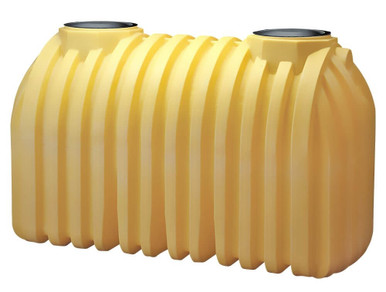
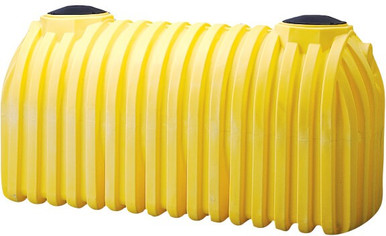
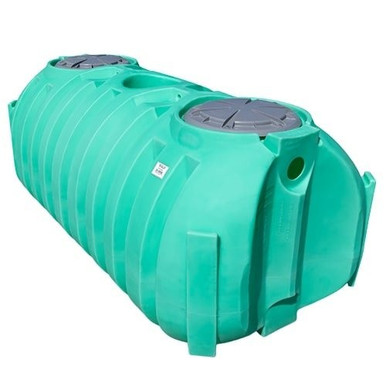
Wyoming (DEQ Chapter 25) sizes septic tanks by bedroom count or design flow, with residential systems typically starting at 1,000 gallons. These IAPMO PS 1–listed polyethylene tanks meet that capacity standard; your county or state permitting office confirms the final size.
Shop all IAPMO PS 1–listed septic tanks →
Meeting the construction standard is not the same as a permit — your county environmental health office issues the permit and makes the final determination. Call us with your permit number and we will confirm the exact tank spec before shipment, with freight quoted to your ZIP.
Chemical Storage & Secondary Containment in Wyoming
Storing fuel, fertilizer, or process chemicals alongside your tank changes the rules. The federal Spill Prevention, Control, and Countermeasure rule (40 CFR Part 112) applies at 1,320 gallons of aggregate aboveground oil storage and requires secondary containment sized to at least 110% of your largest tank. Releases of hazardous substances above their federal reportable quantity (40 CFR 302.4) must be reported to the National Response Center at 1-800-424-8802.
Wyoming layers its own spill reportable quantities and restricted-substance rules on top of that federal floor — confirm the current thresholds with your state environmental agency before specifying a chemical tank. Just as important, the polyethylene resin must be matched to the exact chemical, concentration, and specific gravity you intend to store; a tank rated for water is not automatically rated for acid, bleach, or fertilizer.
Last reviewed: May 2026 · sourced from Wyoming administrative code
Regulations change on a rolling basis — confirm the current rule with your county or state agency before purchasing. Spot something out of date? Email us and we'll fix it.
Nearby states (Mountain) & full index: