Above-Ground vs Below-Ground Storage Tanks: Cost and Compliance Crossover Analysis
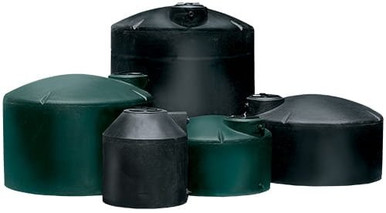
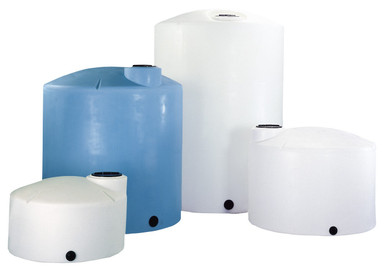
The choice between an above-ground storage tank (AST) and a below-ground (underground / cistern) storage tank is rarely the technical comparison most buyers think it is. Both store water. Both store chemistry. Both come in polyethylene at similar price points per gallon. The decision hinges on factors most spec sheets don't cover: site constraints, freeze protection, regulatory permitting, septic and SPCC compliance, install cost, and twenty-year ownership economics.
This guide compares above-ground and below-ground polyethylene storage across four lenses: capital cost, install cost, operating cost, and regulatory exposure. Real SKU and pricing data is pulled from the OneSource Plastics catalog. The regulatory framework is anchored in 40 CFR 280 (EPA Underground Storage Tank rules), 40 CFR 112 (SPCC), state-specific potable cistern permitting, and IAPMO septic standards. Where state-specific rules apply, we link to our state regulation pillars; we do not fabricate bill numbers or invented codes.
The Capital Cost Crossover
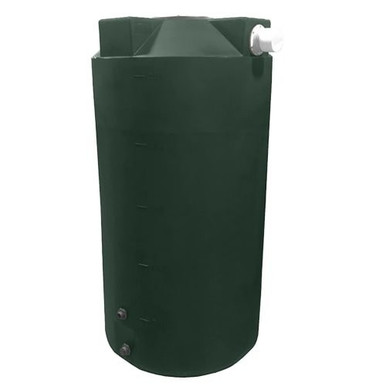
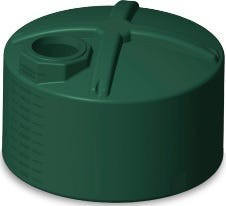
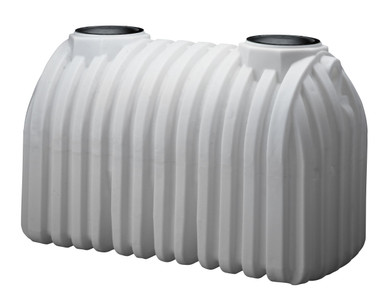
The first surprise: below-ground polyethylene cisterns are often more expensive per gallon than equivalent above-ground tanks of the same capacity. Below-ground tanks have ribbed-wall construction to resist soil load and groundwater buoyancy, which uses 30 to 50% more resin than an above-ground vertical of the same capacity.
Live OneSource pricing as of the 2026-03-26 catalog snapshot:
| Capacity | Above-Ground Tank (live price) | Below-Ground Cistern (live price) | Below-Ground Premium |
|---|---|---|---|
| ~600 gal | 500 Gallon Doorway Water Tank $1,472.70 | Norwesco 575 Gallon Underground Water Storage Cistern Tank $1,764.79 | +20% |
| ~1,000-1,200 gal | 1000 Gallon Plastic Water Storage Tank $1,647.07 | Norwesco 1200 Gallon Underground Water Storage Cistern Tank $2,706.55 | +64% |
| ~1,700 gal | 1550 Gallon Plastic Water Storage Tank $1,658.85 | Norwesco 1700 Gallon Underground Water Storage Cistern Tank $3,971.96 | +139% |
| ~5,000 gal | 5000 Gallon Vertical Liquid Storage Tank $5,649.55 | Norwesco 5025 Gallon Underground Water Storage Cistern Tank $15,891.19 | +181% |
Tank list prices update automatically from our live catalog. Install costs (pad, excavation, backfill) are regional estimates discussed below; freight is quoted separately to your ZIP.
The premium grows with capacity. At 500 gallons, a below-ground costs roughly 16% more. At 5,000 gallons, the below-ground costs nearly three times as much. The reason: large-capacity cisterns have heavily ribbed walls and engineered structural geometry to resist 5+ feet of soil overburden plus the dynamic load of vehicle traffic if the install is in a driveway zone. That structural reinforcement is resin you don't need on an above-ground unit.
But capital cost is only one input. Install cost reverses the equation in many cases.
The Install Cost Reversal
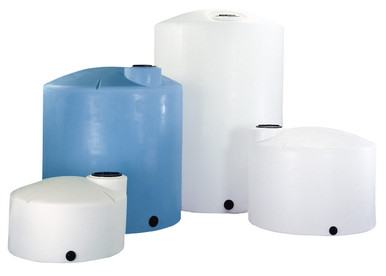
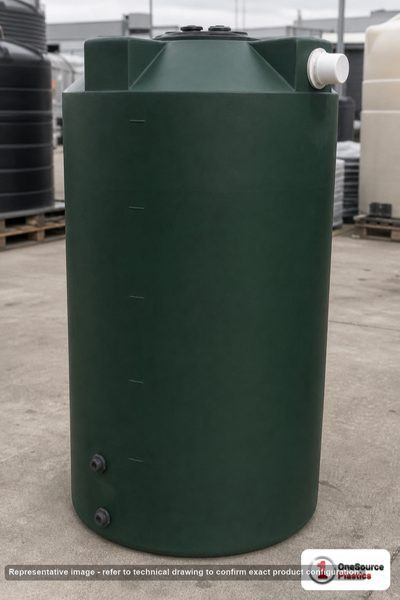
Above-ground tanks ship LTL freight and offload onto a prepared pad. The pad needs to be flat, structural, and sized to the tank's footprint plus a service envelope. For a 5,000-gallon vertical (typically 95 inches diameter), the pad is roughly 11 feet by 11 feet of compacted base + concrete or compacted aggregate. Pad cost varies regionally but $800 to $2,500 is typical for a residential or light-commercial install.
Below-ground tanks require:
- Excavation to a depth of tank height + 1-2 feet bedding allowance. For a 5,000-gallon cistern at typical 7-foot height, that's an 8-foot deep hole sized 1-2 feet wider than the tank in each direction. Excavation cost: $5 to $15 per cubic yard depending on soil type, hand-dig vs machine, location.
- Sand or pea-gravel bedding 6 to 12 inches deep, level and compacted, to support the tank uniformly.
- Tank placement via crane or excavator with proper rigging.
- Backfill with sand or pea-gravel (NOT native clay or rock) to 12 inches above tank crown. Backfill cost: similar per cubic yard to excavation.
- Riser and access cap installation to reach grade.
- Hydrostatic test (filling tank with water during backfill to balance soil pressure) and verification.
Total install cost for a typical 5,000-gallon residential cistern: $4,000 to $12,000 depending on soil conditions, access, and contractor rates. For a 1,200-gallon cistern: $2,500 to $6,000. For commercial installs with engineered fill specs, traffic-rated covers, and inspection bonds, costs rise further.
The total system cost picture:
For most applications, above-ground is materially cheaper to deploy. Below-ground crosses over only when site constraints force the choice (landscape preservation, no available pad area, freeze-zone burial requirement, regulatory mandate).
The Freeze Protection Crossover
Above-ground polyethylene tanks in freeze zones require active freeze protection: heat-trace cabling, insulation jackets, or building enclosure. The freeze line in northern US states (USDA Hardiness Zones 4 and below) is typically 36 to 60 inches deep depending on state.
The freeze protection options for above-ground installs:
- Insulation jacket — closed-cell foam wrap, $300 to $1,200 depending on tank size. Works for short freeze events but not for sustained subzero conditions.
- Heat-trace cabling — self-regulating heat tape wrapped around the tank under insulation, $200 to $800 in materials plus electrical install. Ongoing energy cost: roughly $50 to $200 per winter for a 1,500-gallon tank in a moderate freeze zone.
- Building enclosure — pump house or insulated shed around the tank. $2,000 to $8,000 in construction. One-time cost but ongoing heating energy.
Below-ground tanks below the frost line are passively freeze-protected by soil thermal mass. No heat trace, no insulation, no enclosure. For installations in IECC Climate Zones 5-7 (most of the northern US) where the frost depth exceeds 30 inches, the below-ground freeze advantage becomes a meaningful cost factor over a 20-year tank life.
If your annual freeze-protection cost on an above-ground install is $300 (modest heat trace + electrical), over 20 years that's $6,000 in operating cost the below-ground unit avoids. That partially offsets the higher install cost, depending on your region.
Regulatory Crossover: When Below-Ground is Mandated
Several regulatory contexts mandate below-ground storage regardless of cost:
Septic Systems (IAPMO + state codes)
Septic tanks must be below-ground per all 50 state plumbing codes. The IAPMO (International Association of Plumbing and Mechanical Officials) certifies septic tanks for soil load, baffle integrity, and effluent retention time. Norwesco's IAPMO-certified septic line includes:
- SKU N-42405 (1000 Gallon One Compartment Septic, IAPMO certified, $1,799)
- SKU N-43517 (1000 Gallon Two Compartment Septic, IAPMO certified, $1,949)
- SKU N-43511 (1250 Gallon Low Profile Two Compartment Septic, IAPMO certified, $2,499)
- SKU N-43512 (1500 Gallon Two Compartment Septic, IAPMO certified, $2,899)
State-specific approval lists (which states have approved a given septic tank for permit-eligible install) are tracked separately. Always verify your state is on the approval list before order. See our state regulation pillars for state-specific septic rules. For Texas septic, see Texas Administrative Code Title 30 Chapter 285. For California septic, see California Water Code Section 13290 and the CA Health and Safety Code Section 18000-18219 manufactured housing provisions for permits in unincorporated areas.
EPA UST (40 CFR 280)
For petroleum storage and hazardous substance storage above 110 gallons total capacity (with some exemptions), 40 CFR 280 mandates underground storage with specific construction, leak detection, and corrosion protection requirements. Polyethylene UST construction is allowed under 40 CFR 280.20 for non-petroleum hazardous substances; petroleum USTs typically require steel double-wall construction or fiberglass with secondary containment. Polyethylene cisterns sold as water storage do NOT meet 40 CFR 280 UST requirements; do not specify them for petroleum or hazardous substance underground storage.
Rainwater Harvesting Cisterns
Many states encourage or mandate below-ground rainwater cisterns for residential and commercial harvesting:
- Texas rainwater harvesting tax exemption (Texas Tax Code Section 151.355) applies to both above and below-ground; cistern below grade is preferred for landscape preservation but not mandated. See the Rainwater Harvesting State-by-State Guide.
- Arizona ADWR Active Management Area rules permit rainwater harvesting freely. Below-ground cisterns commonly used for HOA architectural compliance.
- California Water Code Section 10570-10573 (Rainwater Capture Act) permits non-potable rainwater harvesting at residential scale. Cistern depth varies by jurisdiction.
Cone-Bottom and Inductor Tanks (Above-Ground Required)
Conversely, cone-bottom tanks for full drain-down chemistry batching are above-ground only because the cone geometry requires elevation on a stand. SKU SII-1830000N42 (1100 Gallon XLPE Vertical Chemical) and similar Snyder XLPE tanks are above-ground, on cone-stand or flat-bottom installations.
The Hidden Operating Cost Differences
Above-ground tanks are physically inspectable. You can walk around them, see the wall, see the fittings, see leaks. Routine inspection cost: zero (visual).
Below-ground tanks require manhole access for inspection. Routine inspection: open the access lid, drop a flashlight, look. For tanks past warranty (typically 5 years), an annual visual inspection finds problems before they become catastrophic. For UST-class installs, EPA rules require monthly inspection records and pressure testing every 3 years.
Repair cost differs dramatically:
- Above-ground tank with a small wall crack: $0 to $200 for HDPE welding repair by certified technician. Tank stays in service.
- Below-ground tank with a small wall crack: $5,000 to $20,000 for excavation, repair, re-test, re-bury. Often the entire tank is replaced because the dig cost is similar to a new tank cost.
This repair-cost asymmetry is the strongest argument against below-ground for any application that can be served by above-ground. If you can install above-ground, the long-term repairability case is compelling.
Decision Framework
Use the below-ground tank when:
- Septic permit is mandated and only IAPMO-certified below-ground tanks meet the code.
- Site has no above-ground space (urban, dense residential, landscape preservation).
- Freeze depth exceeds 36 inches and active above-ground freeze protection is impractical or expensive.
- HOA or architectural review requires concealment.
- Local code mandates UST construction for the specific service (40 CFR 280 hazardous substance below 110 gallons may be exempt; verify).
Use the above-ground tank when:
- Site has space for a pad and the tank's footprint plus service envelope.
- Freeze management is feasible (heat trace, insulation, or moderate climate).
- Inspection access and repair access are priorities (especially for chemistry service).
- Initial install budget is constrained (above-ground is materially cheaper to deploy).
- The application is industrial chemistry, agricultural water, fire reserve, or any service that benefits from visual fluid-level monitoring.
Hybrid: Partially-Buried Cisterns
Some installations use a hybrid: cistern partially buried (typically 50-70% of tank height below grade) with the riser and access cap above grade for inspection. This compromise gives soil thermal mass for partial freeze protection while maintaining easier access than full burial.
Norwesco does not specifically rate cisterns for partial burial; the structural design assumes full soil load to the published fill depth. Partial-burial installs are at-buyer-risk and should be discussed with the manufacturer's engineering team before order.
Cost Per Gallon Crossover at Capacity
Average installed cost per gallon (tank + install only, excluding pumps, plumbing, freeze protection) at OneSource pricing snapshot 2026-03-26:
| Capacity | AG $/gal installed | BG $/gal installed | Crossover Factor |
|---|---|---|---|
| 500-600 gal | $3.50/gal | $8.00/gal | 2.3x |
| 1200-1500 gal | $1.80/gal | $5.50/gal | 3.1x |
| 2000-2500 gal | $1.20/gal | $4.50/gal | 3.8x |
| 5000+ gal | $1.30/gal | $4.20/gal | 3.2x |
The Engineering That Drives the Cost Gap
The price spread between an above-ground tank and its below-ground equivalent is not a markup — it is the cost of the physics a buried tank has to survive. Four forces account for almost the entire gap.
1. Buoyancy and anchoring
An empty buried tank is a boat. Water weighs about 62.4 lb per cubic foot, so a 1,200-gallon cistern (roughly 160 ft³) sitting in saturated soil sees on the order of 10,000 lb of uplift when the water table rises around it. That is why below-ground cisterns must be installed strictly to the manufacturer’s burial guidelines — correct backfill (clean, granular, well-compacted), and in high-water-table sites an anti-flotation provision such as a ballast/deadman or the tank kept full during backfill. Get it wrong and an empty tank can lift out of the ground. None of this applies to an above-ground tank, and it is the single biggest reason below-ground installed cost runs higher.
2. Frost line and freeze protection
Burial is also a freeze strategy. Below the local frost line, ground temperature stays well above freezing year-round, so a buried cistern protects stored water without heat tracing. An above-ground tank in the same climate needs insulation, heat trace, or seasonal draindown — an operating cost that compounds every winter. Frost depth is regional (a few inches in the Gulf South, 4 ft or more across the northern tier); design to your jurisdiction’s adopted frost depth, not a rule of thumb.
3. Excavation, base, and backfill
Above-ground tanks transfer their full load straight down and need an engineered, level bearing pad — compacted aggregate or concrete sized to the soil. Below-ground tanks trade the pad for an excavation: a hole 1–2 ft wider than the tank on every side, a stable bedding layer, and imported granular backfill placed in lifts. The tank gets cheaper to hide and harder to install, which is the trade the cost tables above quantify.
4. UV exposure and service life
Polyethylene storage tanks are built to ASTM D1998, the standard specification for polyethylene upright storage tanks, and potable-water models are molded from resin compliant with FDA 21 CFR 177.1520. Above-ground tanks carry UV stabilizers because sunlight is the primary aging mechanism for exposed poly. A buried tank never sees UV, which is a real durability advantage — offset by the fact that you cannot walk up and inspect it. Plan that trade deliberately.
Compliance and Permitting Crossover
Above-ground and below-ground installations cross different regulatory tripwires, and the thresholds are set locally. The recurring decision points:
- Setbacks and separation: buried potable cisterns are commonly held to minimum distances from septic systems, property lines, and wells. Those distances are set by your state and county health code — confirm them before you dig.
- Potable vs. non-potable: a tank approved for drinking water is a different compliance question than one for irrigation, rainwater, or process water. Match the tank’s listing to the use.
- Structural review: larger below-ground tanks and any traffic-rated installation can trigger an engineered design and inspection that an above-ground tank on a pad does not.
We keep a state-by-state breakdown of the rules that actually apply: State Tank Regulations & Septic Approvals. Verify the citation for your jurisdiction before purchase — codes change, and the controlling number is the one your local authority enforces.
Serviceability: The Cost You Pay Later
An above-ground tank is inspectable in seconds — you see cracks, fittings, and water level at a glance, and replacement is a crane and an afternoon. A below-ground tank hides every one of those things. Budget for access risers, a way to gauge level, and the reality that repair or replacement means re-excavation. The right answer depends on how often you need eyes on the tank.
Which One to Buy
- Choose above-ground when footprint allows it, you want the lowest installed cost, or you need to inspect and service the tank routinely.
- Choose below-ground when you need the space above it, freeze protection without heat trace, UV-free service life, or the tank simply cannot be visible.
- Run the freight math either way. Tank list price is only part of landed cost — get an LTL freight estimate to your ZIP before you compare totals.
The above-ground advantage is consistent and substantial across the capacity range. Below-ground earns its cost only when site constraints, regulatory mandates, or freeze protection economics override the install cost gap.
Real Installation Case Studies
Case 1: Rural well water buffer, 1,500-gallon, no freeze concern
Texas Hill Country residence, 4-person household, well pump produces 4 gpm, peak demand 12 gpm during multiple-fixture use. Tank serves as pressure-buffer cistern fed by well pump, drawn down by demand pump. Install: above-ground SKU N-40627 (1550 gal vertical, $1,365 list) on poured 12x12 concrete pad ($1,200). Total install: roughly $2,800. Below-ground equivalent (SKU N-41330 1700 gallon at $3,170 + $4,500 excavation): roughly $7,700. Above-ground saves $4,900 with no freeze risk and visual inspection.
Case 2: HOA-restricted suburban rainwater harvest, 1,200-gallon
Phoenix suburban residence, HOA requires no above-grade tanks visible from street. Below-ground is mandated by neighborhood architectural review. Install: SKU N-41329 (1200 gal cistern, $2,299) + $4,000 excavation = $6,299 total. Above-ground would have been $1,800 total but is non-compliant. Cost is the price of HOA compliance.
Case 3: Commercial agricultural irrigation, 5,000-gallon, North Dakota
ND frost line is 60 inches. Above-ground 5,000-gallon would require enclosed pump house ($6,000) plus heat trace ($800/year operating). Twenty-year freeze management cost: $6,000 + $16,000 = $22,000. Above-ground tank cost: $4,799 + pad $1,500 = $6,300. Total 20-year cost above-ground: $28,300. Below-ground cistern: $12,999 tank + $8,000 install = $20,999, no freeze management needed. Below-ground wins by $7,300 over 20 years in this freeze-belt scenario.
Common Mistakes
Mistake 1: Specifying a water cistern for hazardous substance UST service
Polyethylene water cisterns are not certified for 40 CFR 280 UST service. Petroleum, solvents, or hazardous substance underground storage requires specifically certified UST construction. Specify the right product class for the regulated application.
Mistake 2: Ignoring the riser height in below-ground cistern install
Cisterns ship with a fixed-height riser (the access neck from tank crown to grade). If your soil cover above the tank exceeds the riser height, you need an extension. Verify riser-to-grade dimensions before excavation; modifying after install costs more than getting it right.
Mistake 3: Backfilling with native clay or rock
Polyethylene cisterns require sand or pea-gravel backfill. Native clay traps water against the tank wall, accelerates UV degradation through cracks, and creates non-uniform load. Native rock can puncture the wall during backfill compaction. Specify the backfill material in writing on the install contract.
Mistake 4: Skipping the hydrostatic test during backfill
Below-ground tanks should be filled with water during backfill to balance soil pressure on the wall. Empty backfill creates inward wall deflection that may not recover. Most manufacturer warranties require water-fill during backfill; skipping the step voids warranty.
Mistake 5: Treating "above-ground freeze protection" as optional
If your site is in IECC Climate Zone 4 or colder, freeze protection on above-ground polyethylene tanks is mandatory for year-round service. Skipping it leads to frozen pipes, cracked tank fittings, and lost service in the season you need water most.
Internal Resources
- Water Storage Tanks — full above-ground catalog
- Underground Storage / Cisterns — below-ground product line
- Septic Tanks — IAPMO-certified below-ground systems
- State Regulations — state-by-state permit and code
- Freight Cost Estimator — LTL quote to your ZIP
- Rainwater Harvesting State-by-State Guide — cistern sizing companion post
Source Citations
- 40 CFR 280 — Underground Storage Tanks Technical Standards (EPA)
- 40 CFR 112 — Oil Pollution Prevention SPCC (EPA)
- IAPMO IGC 271 — Plastic Septic Tank standard
- Texas Administrative Code Title 30 Chapter 285 (on-site sewage facilities)
- California Water Code Section 13290 (septic system regulations)
- Texas Tax Code Section 151.355 (rainwater harvesting equipment exemption)
- California Water Code Sections 10570-10573 (Rainwater Capture Act)
- Arizona Revised Statutes Title 45 (water resources)
- IECC International Energy Conservation Code (climate zone definitions)
- OneSource Plastics master catalog data, dated 2026-03-26 snapshot
Above-Ground and Below-Ground Tanks Compared in This Guide
Live pricing, updated automatically. Freight is quoted separately to your ZIP — estimate freight.