DEF Storage Tank Selection: ISO 22241, UV Degradation, and Why DEF Tanks Look the Way They Do
Diesel Exhaust Fluid (DEF) is an industrial commodity that arrived in the US fleet because of one regulation: 40 CFR Part 86, the EPA's 2010 Heavy-Duty Highway Diesel Engine emissions standard. To meet the 0.20 g/bhp-hr NOx limit on a Class 8 diesel truck, manufacturers added Selective Catalytic Reduction (SCR) systems that inject DEF into the exhaust stream upstream of a catalyst. The DEF reduces NOx to nitrogen and water. No DEF, no emissions compliance, no truck operation — modern engines derate to a 5 mph crawl when the DEF tank empties.
That regulation created a bulk-storage market for DEF at every fleet yard, distribution center, agricultural operation, and construction site that runs Tier 4 diesel equipment. The fluid itself is simple: 32.5% high-purity urea in deionized water, manufactured to ISO 22241-1 specification. The storage tank for it is more complicated than it first appears, because DEF is fussy about temperature, contamination, and ultraviolet light. This post walks through the actual chemistry constraints, the ISO 22241 compatibility list, and the catalog of DEF storage tanks at OneSource Plastics that comply.
What DEF Actually Is — and Why It's Fragile
DEF is 32.5% urea (CO(NH2)2) by weight, dissolved in 67.5% deionized water. The 32.5% concentration is the eutectic mixture — the urea/water ratio that has the lowest possible freezing point, which is 12°F (-11°C). Below that temperature DEF freezes in a slush that's still pumpable above about 0°F but fully solid below -10°F. Above 86°F (30°C) sustained, urea begins to slowly decompose into ammonia and biuret, both of which contaminate the fluid and degrade SCR catalyst efficiency.
The urea component is the active chemistry. When DEF is heated by exhaust gas inside the SCR catalyst, the urea decomposes to ammonia (NH3), which then reacts with NOx to produce nitrogen and water. The reaction is well-documented in the SAE Technical Paper Series and in 40 CFR Part 86 Subpart S.
What makes DEF storage non-trivial:
- UV light degrades urea. Photolysis of urea generates ammonia and CO2. Continuous UV exposure over 12 to 24 months can drop the urea content below the ISO 22241 minimum (31.8 to 33.2%), at which point the fluid is no longer DEF and will throw codes in the SCR ECU.
- Temperature cycling accelerates degradation. Sustained storage above 86°F shortens shelf life from 2+ years (cool storage) to under 6 months.
- DEF is corrosive to the wrong materials. Carbon steel, aluminum, brass, copper, zinc-coated steel, and many solders all react with DEF. Acceptable materials per ISO 22241-3 are limited.
- DEF is highly sensitive to contamination. 1 ppm of copper or zinc, 0.5 ppm of chloride, or any trace of diesel fuel will fail the fluid for SCR use. Cross-contamination from a diesel pump funnel or a galvanized fitting is enough.
ISO 22241-3: What You're Actually Allowed to Store DEF In
ISO 22241 is the international DEF specification series. Part 1 covers fluid specification (32.5% urea, purity limits). Part 2 covers test methods. Part 3 specifies handling, transportation, and storage materials. Part 4 covers refilling interface for vehicles.
The ISO 22241-3 acceptable storage and dispensing material list is short:
- Polyethylene (HDPE, LDPE, HMW-HDPE) — primary recommended material for tanks, hoses, fittings.
- Polypropylene (PP) — acceptable for tanks and fittings.
- PVDF (Kynar) — acceptable, used for premium fittings.
- PTFE (Teflon) — acceptable, used for gaskets and seals.
- Stainless steel (304 or 316) — acceptable for tanks, fittings, pumps. Not 304L for high-purity service per some readings of the standard.
- Titanium — acceptable but rarely used for cost reasons.
The prohibited list is what gets people in trouble:
- Carbon steel (rusts, contaminates with Fe)
- Aluminum (etches, contaminates with Al)
- Galvanized steel (releases zinc, fails ISO 22241 contamination limits)
- Copper, brass, bronze (releases Cu, fails contamination limits)
- Solder (typically Sn/Pb, contamination)
- Most natural rubbers (degrades, releases extractables)
- Mild steel weld filler (corrosion + contamination)
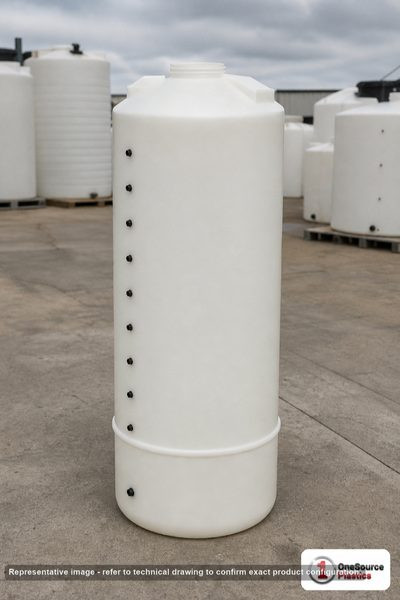
HDPE is the dominant tank material because it's compatible, inexpensive, and easy to mold into the geometries DEF storage needs. Every DEF tank in the OneSource Plastics catalog is HDPE.
Why Natural-White HDPE Is the Default DEF Tank Color
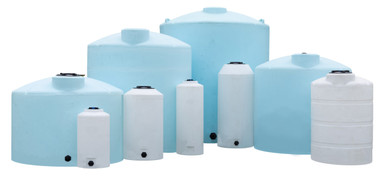
Looking at the DEF catalog, virtually every tank is "Natural White" or "White." This is not aesthetic preference. Three reasons drive the color choice:
Reason 1: Visual fluid-level inspection
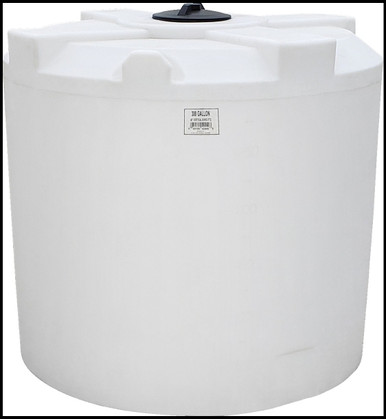
DEF is normally clear with a faint blue tint (food-grade dye is sometimes added by manufacturers; some DEF is colorless). Natural-white translucent HDPE allows operators to visually verify fluid level through the tank wall, eliminating the need for a sight-glass fitting. For 250-gallon to 5,000-gallon DEF tanks at fleet yards, the natural-white wall doubles as a visual gauge.
Reason 2: Contamination detection
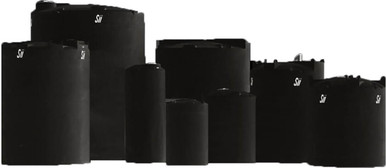
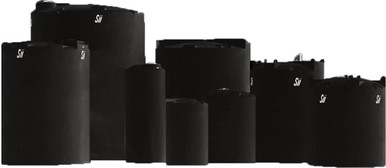
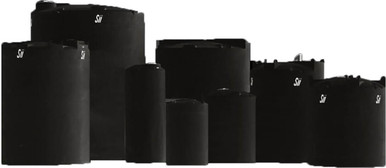
If DEF becomes contaminated by diesel fuel (the most common cross-contamination at fleet sites), water-immiscible diesel separates as a top layer in the tank. Natural-white walls let an operator visually detect this immediately. Black or opaque-pigmented tanks hide the problem until the fluid is dispensed and tests fail.
Reason 3: Most DEF tanks are intended for indoor or shaded outdoor service
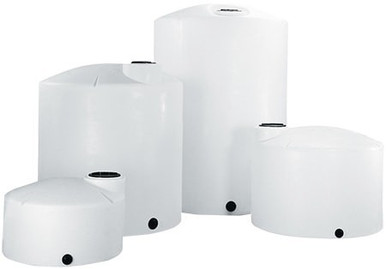
The 250 to 5,150 gallon mini-bulk DEF tanks (NTO 250DEF through 5150DEF series) are designed for installation under cover — in a fleet maintenance bay, under a freight-yard awning, in a dedicated DEF hut. Indoor service eliminates the UV concern that would drive black-tank selection. The natural-white wall is preferred because of the inspection benefit.
The OneSource Plastics DEF Catalog by Application Class
Mini-bulk dispensing tanks (250 to 5,150 gallon, NTO mini-bulk family)
| MPN | Capacity | Color | ASTM SG | List Price |
|---|---|---|---|---|
| 500DEF | 500 gal | Natural White | 1.9 | $3,175.00 |
| 750DEF | 750 gal | Natural White | 1.9 | $3,475.00 |
| 1000DEF | 1000 gal | Natural White | 1.5 | $3,775.00 |
| 1500DEF | 1500 gal | Natural White | 1.5 | $4,275.00 |
| 2100DEF | 2100 gal | Natural White | 1.5 | $4,575.00 |
| 2500DEF | 2500 gal | Natural White | 1.7 | $4,775.00 |
| 3000DEF | 3000 gal | Natural White | 1.7 | $5,275.00 |
| 4200DEF | 4200 gal | Natural White | 1.7 | $7,075.00 |
| 5150DEF | 5150 gal | Natural White | 1.7 | $8,950.00 |
These are the workhorses. Single-wall HDPE, ISO 22241-3 compliant, designed for installation in a covered or enclosed area. Add a dispensing pump (typically 12V or 120V depending on power available), a hose reel, a metered nozzle, and an optional level sensor that ties into a fuel-management system. Lead time is typically 14 to 28 days from order.
IBC tote tanks with electric circulation (DEF275/300/330 series)
| MPN | Capacity | Power | List Price |
|---|---|---|---|
| DEF275-12VOLT | 275 gal | 12V DC | $2,100.00 |
| DEF275-120VOLT | 275 gal | 120V AC | $2,100.00 |
| DEF330-12VOLT | 330 gal | 12V DC | $2,200.00 |
| DEF330-120VOLT | 330 gal | 120V AC | $2,200.00 |
| DEF300-120VOLT | 300 gal | 120V AC | $3,600.00 |
IBC totes are the right choice for fleet sites that need dispensing without an external pump. The integrated 12V or 120V pump runs from the truck battery (12V) or shore power (120V). Common applications: agricultural equipment yards, road-construction crews, off-grid heavy-equipment sites.
Cubetainer compact storage (60 to 260 gallon Fluidall family)
| MPN | Capacity | Configuration | List Price |
|---|---|---|---|
| 1032001N95401 | 60 gal | Cubetainer with bungs | $266.15 |
| 1032101N95401 | 80 gal | Cubetainer with bungs | $298.46 |
| 1032101N95402 | 80 gal | Cubetainer + pallet base | $630.77 |
| 1032201N95401 | 120 gal | Cubetainer with bungs | $395.71 |
| 1032201N95402 | 120 gal | Cubetainer + pallet base | $706.15 |
| 1032301N95401 | 180 gal | Cubetainer with bungs | $527.69 |
| 1032301N95402 | 180 gal | Cubetainer + pallet base | $860.00 |
| 1032401N95401 | 260 gal | Cubetainer with bungs | $910.00 |
| 1032401N95402 | 260 gal | Cubetainer + pallet base | $1,201.54 |
Cubetainers are the small-footprint option, typically used for shop refilling or backup storage. The pallet-base configuration is for forklift handling at fleet maintenance facilities.
Insulated outdoor cubes (Western Global DefCube family)
For continuous outdoor service in unprotected locations, the Western Global DefCube line is the ISO-22241-aware solution. The exterior is a steel security shell (typically painted dark for UV blocking and aesthetics), the interior is HDPE bladder, and the assembly is insulated to maintain DEF temperature in cold-weather climates. Models include the 136-gallon DefCube130 ($7,370 base, $9,409 with 115V circulation/heat) and the 597-gallon DefCube550 ($13,071 with 115V).
The price premium over a comparable open natural-white tank reflects the steel shell, insulation, and integrated circulation system that prevent freezing in winter and limit thermal degradation in summer. For trucking yards and freight terminals in cold climates (Minnesota, North Dakota, Maine, etc.), the heated insulated cube is often the only practical configuration.
Compact-footprint Enduraplas REU series (25 to 75 gallon)
Enduraplas REU025C09S (25 gal, $1,624.50), REU055C09S (55 gal, $1,692), and REU075N09S (75 gal, $1,723.50) are premium high-purity DEF tanks for laboratory, R&D, or small-fleet applications where ISO 22241-3 compliance margin and surface finish quality matter more than capacity. All natural-white HDPE with 1.9 ASTM rating.
When You Should Choose a Black-Shelled (Insulated Cube) DEF Tank
Three conditions where the natural-white open tank is the wrong choice and you need a black-shelled insulated cube:
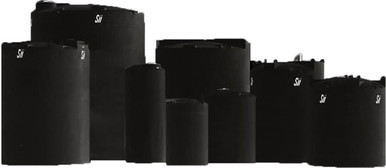
- Continuous direct sunlight, no overhead cover. A natural-white translucent HDPE tank in direct sun for 18+ months will see urea degradation. The black-shelled cube blocks UV at the shell layer.
- Cold climate, no heated building. Below 12°F (-11°C) DEF freezes. The insulated cube with optional heater pad maintains fluid above freezing, allowing year-round dispensing.
- Hot climate, no shaded location. Above 86°F (30°C) sustained, urea decomposes. The insulated cube with optional cooling fan maintains fluid below the degradation threshold in southwestern US summer service.
For typical fleet-yard service in moderate climates (most of the continental US except the upper Midwest and the Sun Belt), the natural-white open tank under an awning is the right answer at one-half to one-quarter the cost of an insulated cube.
Common DEF Tank Specification Mistakes
Mistake 1: Using a generic water tank for DEF storage
A generic water tank lacks the ISO 22241-3 documentation. The tank itself may be fine HDPE, but without the certification you can't prove compliance to a DOT auditor or the SCR vendor warranty office. Always specify ISO 22241-3 compliant tanks for DEF service.
Mistake 2: Reusing a tank that previously held diesel, gasoline, or oil
Petroleum residue contaminates DEF below detection limits and poisons SCR catalysts. Once a tank has held petroleum it is permanently disqualified for DEF service. New tank or nothing.
Mistake 3: Brass or galvanized fittings on the tank
Even one brass elbow or galvanized nipple in the dispense path will leach copper or zinc into the DEF and fail the fluid for SCR use. Only stainless steel, polypropylene, or PVDF fittings are acceptable. Verify every fitting on the install.
Mistake 4: Outdoor installation without UV protection
Natural-white HDPE in direct sun degrades the urea. If you can't put the tank under cover, choose either an insulated cube or a tank with a UV-stabilizer additive package, and plan for fluid testing every 6 months.
Mistake 5: No bottom drain for tank cleaning
DEF accumulates particulate over time (atmospheric dust, biological growth in trace amounts despite the antimicrobial properties of urea solution). Plan for periodic tank cleaning every 24 to 36 months. A bottom drain or a clean-out manway makes this practical; without one you're pumping out from the top, which leaves residue.
Regulatory Context
- 40 CFR Part 86 — EPA Heavy-Duty Highway Diesel Engine emissions standards (the source regulation that requires SCR systems).
- 40 CFR Part 1039 — EPA Nonroad Diesel Engine emissions standards (Tier 4 final, agricultural and construction equipment).
- ISO 22241-1 — DEF specification (composition, purity).
- ISO 22241-2 — DEF test methods.
- ISO 22241-3 — DEF handling, transportation, storage materials.
- ISO 22241-4 — DEF refilling interface.
- API 1631 — Interior lining of underground storage tanks (referenced for cross-contamination prevention in mixed petroleum/DEF facilities).
Internal Resources
- DEF Tanks Category — full catalog
- Chemical Storage Tanks — broader chemistry storage
- ASTM SG Decoded — companion post on tank ratings
- Brand Comparison: 2000-Gallon Verticals
- Freight Cost Estimator
How to Order
For fleet-scale DEF storage, send your dispensing volume per week, location ZIP, climate (covered/uncovered), and power availability to [email protected] or call 866-418-1777. We'll quote the right tank class, integrated dispensing equipment, and freight from the nearest production location.
Source Citations
- 40 CFR Part 86 Subpart S — EPA Heavy-Duty Highway Diesel emissions, NOx control
- 40 CFR Part 1039 — EPA Tier 4 Nonroad Diesel emissions
- ISO 22241-1, -2, -3, -4 — Diesel engines, NOx reduction agent AUS 32, urea solution specifications
- SAE Technical Paper Series, urea-SCR catalyst chemistry
- API 1631 — Interior lining of underground storage tanks (cross-reference for storage hygiene)
- Master catalog data, OneSource Plastics 2026-03-26 snapshot
Related chemical compatibility resources
For deeper engineering specifications on the chemicals discussed above, see our chemical-compatibility pillars:
- DEF (Diesel Exhaust Fluid) — storage compatibility, recommended resin grade, fittings, secondary containment.
- Urea Solution — storage compatibility, recommended resin grade, fittings, secondary containment.
Recommended Tanks for This Guide
Live pricing, updated automatically · estimate freight to your ZIP.