Fluoropolymer Pump Selection (PFA, FEP, PTFE) for Halogenated Solvent Service: Wetted-Path Specification Engineering
Pumping a halogenated solvent — methylene chloride, chloroform, perchloroethylene, trichloroethylene, 1,1,1-trichloroethane, hydrofluoric acid, hydrochloric acid, sulfuric acid above 80% concentration, or any of the bromine and iodine industrial chemistries — separates the wetted-path materials of the pump into two camps: those that survive the chemistry and those that fail in 60 to 600 hours of service. Stainless steel 316 is in the second camp for most of these. Polypropylene is in the second camp for most of these. The fluoropolymers — PFA (perfluoroalkoxy alkane), FEP (fluorinated ethylene propylene), PTFE (polytetrafluoroethylene), and the modified variants MFA and PVDF — are the chemistry that holds. Picking which fluoropolymer for which pump component is the engineering exercise this guide walks.
The cost gradient is steep. A standard 316 stainless steel centrifugal pump for 50 GPM solvent service runs $1,200 to $2,800. The same hydraulic duty in a PFA-lined steel pump body runs $5,800 to $14,000. The all-PTFE air-operated double-diaphragm (AODD) pump for the same duty runs $3,400 to $9,500. The economic argument is rarely the upfront pump cost — it is the cost of the unplanned shutdown when a 316 SS pump impeller pits through and dumps 200 gallons of methylene chloride into the secondary containment at 2 a.m. on a Sunday. The fluoropolymer pump that costs 4x upfront pays back inside the first avoided incident. This article assumes you have already made that economic decision and now need to specify the pump correctly.
Halogenated Solvent Chemistry: What You're Actually Pumping
Halogenated solvents are organic compounds in which one or more hydrogen atoms have been replaced by a halogen — fluorine, chlorine, bromine, or iodine. The carbon-halogen bond is strong, polarizable, and electronegative, which gives these solvents excellent solvency for fats, oils, and waxes (the historical degreasing applications) and the chemical behavior that makes them aggressive toward common engineering plastics and many metals.
The aggression mechanisms vary by chemistry:
- Methylene chloride (dichloromethane, CH2Cl2) — Class IB flammable per NFPA 30 (flash point not applicable; vapor pressure 350 mmHg at 20 C). Permeates polypropylene, polyethylene, and PVC at rates that make these unusable for prolonged contact. Attacks elastomers including EPDM, Buna-N, and standard Viton (FKM). Compatible with PTFE, PFA, FEP, and FFKM (perfluoroelastomer, Kalrez or Chemraz).
- Perchloroethylene (PCE, tetrachloroethylene, Cl2C=CCl2) — Class IIIB combustible. Same permeation profile as methylene chloride for polyolefins. Stress-cracks polycarbonate. Compatible with all fluoropolymers.
- Hydrofluoric acid (HF) — etches glass, etches stainless steel above 60 C, etches most ceramics. Storable in PFA, FEP, PTFE, and HDPE for cold dilute service (under 49% concentration, under 30 C). Anhydrous HF is a different beast — restricted to nickel alloys and PFA-lined steel.
- Hydrochloric acid (HCl), 30-37% concentrated — eats 304 SS, eats 316 SS at concentrations above 1% and temperatures above 30 C. PFA, PTFE, FEP, PVDF compatible.
- Sulfuric acid above 80% — strong oxidizing acid above 80% concentration; below 70% it is a non-oxidizing acid. PFA and PTFE compatible across the entire concentration range. PVDF is compatible to about 60% sulfuric, marginal at 70%, fails at 80%+. See our sulfuric acid storage and tank selection guide for the resin envelope on the storage side.
The pump wetted-path question is whether the polymer in contact with the fluid will (1) chemically resist degradation, (2) resist permeation that would migrate solvent into the pump bearings or motor housing, and (3) maintain dimensional stability under thermal cycling so seals and clearances hold. Fluoropolymers answer yes to all three for the chemistries above. The differences between PFA, FEP, and PTFE are about manufacturability, temperature limit, and permeation rate — not whether they survive the chemistry at all.
The Four Fluoropolymers: PTFE, PFA, FEP, MFA
PTFE (Polytetrafluoroethylene)
The original fluoropolymer, discovered at DuPont in 1938. Chemical formula (C2F4)n. Density 2.13-2.20 g/cc. Service temperature -240 C to +260 C continuous, +315 C intermittent. PTFE has the lowest coefficient of friction of any solid material (0.05-0.10 against steel, lower against itself). It is chemically inert to virtually everything except molten alkali metals, fluorine gas, and chlorine trifluoride.
PTFE's manufacturing limitation: it does not melt-flow in the conventional sense. Above its 327 C melting point, PTFE becomes a stiff gel rather than a flowable melt. It cannot be injection-molded, extruded conventionally, or rotomolded. PTFE parts are made by isostatic pressing of the powder into a billet, sintering, then machining. This makes PTFE pump components expensive and limits geometric complexity. Diaphragms, gaskets, and simple machined parts (impellers, casing liners) are practical. Complex hollow geometries are not.
For pump service, PTFE shows up as: AODD pump diaphragms (the chemistry-resistant choice for hostile fluids), valve seats and seals, casing liners in PTFE-lined centrifugal pumps, mechanical seal faces, and o-ring backups. The chemistry compatibility is essentially universal for the halogenated solvent class.
PFA (Perfluoroalkoxy Alkane)
A melt-processable fluoropolymer developed by DuPont as the Teflon PFA grade. Chemical structure: PTFE backbone with perfluoroalkyl ether side chains that disrupt crystallinity enough to permit melt processing. Service temperature -200 C to +260 C continuous. Chemical resistance essentially identical to PTFE for the halogenated solvent class. Permeation rates are lower than FEP for most chemistries because PFA has higher crystallinity than FEP.
The manufacturing advantage is decisive. PFA can be injection-molded, extrusion-coated onto steel pipe, blow-molded into bottles, and rotomolded into tank liners. This is what makes PFA the dominant fluoropolymer for lined-steel pump and piping construction. A PFA-lined centrifugal pump body uses a steel pressure shell for hoop strength (steel takes the 150-300 PSI working pressure) with a 0.080" to 0.250" PFA liner on the wetted path for chemistry resistance. The construction costs less than solid PFA (you'd need a much thicker shell), retains the pressure rating of steel, and gives you the chemistry envelope of PFA.
PFA is the right answer for: lined centrifugal pump bodies (Goulds 3196 PFA-lined or equivalent), lined-pipe transfer lines, lined-valve bodies (ball, plug, diaphragm), and pump impellers when the solvent chemistry demands fluoropolymer wetted path. PFA's continuous service temperature of 260 C exceeds anything you will encounter in halogenated solvent transfer service.
FEP (Fluorinated Ethylene Propylene)
A copolymer of tetrafluoroethylene and hexafluoropropylene. Service temperature -200 C to +200 C continuous. Lower melting point than PFA (260-280 C vs 305 C for PFA) makes FEP easier to process but limits the upper service temperature. Optical transparency makes FEP useful for sight-glass tubing where you want to see fluid color or particulate.
For pump service, FEP is the second-tier choice behind PFA: FEP-lined pumps exist but are less common than PFA-lined construction. FEP shows up most often as: heat-shrink tubing for cable insulation, sight-tube material for solvent transfer line sight glasses, and as low-cost lining for ambient-temperature service where the 260 C ceiling of PFA is overkill.
MFA (Modified PFA, Solvay Hyflon MFA)
A modified PFA with improved mechanical properties — higher stress-crack resistance, better dimensional stability under load. Chemistry envelope identical to PFA. Use case is specialized pump components where mechanical loading is high (impellers under cavitation loading, valve seats under high-cycle service). MFA costs about 30% more than PFA and is rarely specified outside of high-end semiconductor and pharma manufacturing.
Pump Architecture: AODD vs Centrifugal vs Magnetic-Drive
Air-Operated Double-Diaphragm (AODD) Pumps
The workhorse for hostile chemistry transfer. An AODD pump uses two flexible diaphragms reciprocating against compressed air on the dry side and the process fluid on the wet side. No rotating shaft, no shaft seal, no electric motor in the wetted path. The pump self-primes, runs dry without damage, and stalls safely at deadhead pressure (it just stops moving fluid, no overpressure event).
For halogenated solvent service, the diaphragm material is the pump's chemistry envelope. PTFE diaphragms (sometimes 2-piece overmolded onto a Santoprene or Hytrel back to give the diaphragm flex life) cover the full halogenated solvent chemistry. The pump body is typically PTFE solid (Wilden P200 PTFE, ARO PD05R-FPS-PTT, Yamada NDP-25BPT) or PVDF for less aggressive duties. Ball check valves are PTFE or ceramic. The pump's fully wetted material list is fluoropolymer end to end.
Capacity range: AODD pumps are available 5 GPM to 250 GPM in fluoropolymer construction. Above 250 GPM the air consumption gets uneconomic and centrifugal pumps make more sense. For drum and tote unloading service of 5-30 GPM, AODD is the default.
PFA-Lined Centrifugal Pumps
For continuous-duty transfer at 50-500 GPM, PFA-lined centrifugals are the standard. Construction: ductile iron or carbon steel pressure casing, 0.125"-0.250" PFA liner molded into the casing wetted surfaces, PFA-encapsulated impeller, PFA-lined back plate, silicon carbide or PTFE-lipped mechanical seal. Brand examples include Goulds 3298, Sundyne PSP, and Iwaki MX-Series in lined construction.
The mechanical seal is the failure point. Single mechanical seals running halogenated solvent service typically need a pressurized barrier-fluid arrangement (API Plan 53A or 53B) using a compatible barrier fluid (PAO, polyalkylene glycol, or the same process fluid filtered) at 25-50 PSI above process pressure. Double seals with proper barrier fluid management push MTBF past 18 months in continuous duty. Single seals in dry-running service to halogenated solvents fail in 90 days, sometimes in 30 days.
Magnetic-Drive (Mag-Drive) Sealless Pumps
The seal-elimination architecture. A mag-drive pump replaces the shaft seal with a magnetic coupling: an outer drive magnet rotates on the motor shaft outside the pump, an inner driven magnet on the impeller shaft inside a sealed pump cavity, and a containment shell (titanium, Hastelloy, or PEEK) between them. No dynamic seal means no seal leakage path. For halogenated solvent service, this is a major win: leak rates of essentially zero, no fugitive emissions reportable under EPA Method 21 leak detection, no seal flush water consumption.
The mag-drive failure modes are different. Containment shell breach (rare) is catastrophic. Bearing wear (the inner bearing runs in process fluid as a pressure-lubricated journal bearing) drives most failures. For solvent service the bearings are typically silicon carbide running on silicon carbide — chemistry compatible, wear life 12-36 months depending on solids loading. Particulate-laden solvents (recovery streams, distillation bottoms) shred SiC bearings fast; clean solvents from drum or tank service give long bearing life.
For our customer base, mag-drive pumps fit the chemical processing applications where the storage tank already lives behind double-wall containment. See the methanol storage selection guide and the ethanol storage Class IB tank selection for the upstream storage architecture that pairs with mag-drive transfer.
Specifying the Pump: The Five-Question Decision Tree
Question 1: What is the chemistry, concentration, and temperature?
Pull the SDS. Look at the "10 — Stability and Reactivity" section for incompatible materials. Cross-reference against fluoropolymer chemistry charts (Cole-Parmer, Chemours, Solvay all publish them). For sulfuric above 80% you need PFA or PTFE — PVDF will fail. For HF above 49% you need PFA or PTFE-lined steel — never PVDF, never PVC. For methylene chloride at ambient, FEP works as well as PFA but PFA is the conservative spec.
Question 2: What is the duty cycle?
Drum-unload of 30 GPM for 20 minutes once a day = AODD with PTFE diaphragms. Continuous transfer of 100 GPM for 16 hours/day = PFA-lined centrifugal with API Plan 53 mechanical seal or mag-drive. Batch transfer of 250 GPM with 4 starts per shift = mag-drive with thermal protection on the bearings.
Question 3: What is the suction condition?
AODD self-primes — it doesn't care about NPSHa within reason. Centrifugal pumps need 3-5 ft NPSHa above NPSHr or they cavitate and destroy the impeller. For solvent transfer out of a buried tank or against a long suction lift, AODD is the safer default. For flooded suction out of a day tank above the pump, centrifugal works.
Question 4: What is the discharge pressure?
AODD pumps cap at 100-125 PSI (limited by air supply pressure and the diaphragm rating). Centrifugal pumps deliver 50-200 PSI per stage; multi-stage centrifugals deliver up to 1,500 PSI. For long transfer lines or elevated tank-fill duty, the pressure requirement narrows the architecture choice quickly.
Question 5: What is the secondary containment requirement?
If the tank is 40 CFR 112 SPCC regulated (oil and oil-related products including waste oils and contaminated solvents), the pump assembly often needs to live within the secondary containment area too. That changes the pump pad design and the drainage path. For chemical secondary containment under 40 CFR 264.193 (RCRA), the pump and piping outside the bermed area need leak detection — typically a pump shroud with a drip tray drain to the same containment basin. See our RCRA secondary containment sizing walkthrough for the upstream containment math.
Storage-Side Tank Pairing: Snyder XLPE and Chem-Tainer Stand-Alone HDPE
The pump is downstream of the tank. Pump selection without storage selection is a half-engineered system. For halogenated solvent storage at ambient temperature and atmospheric pressure, the OneSource catalog covers the chemistry envelope with two material classes:
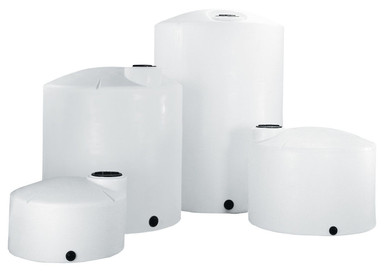
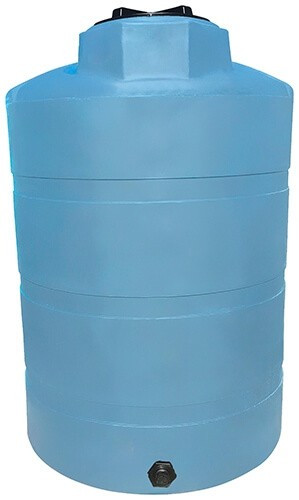
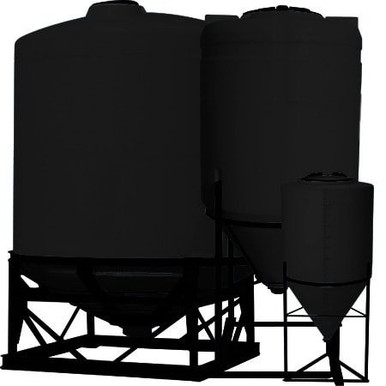
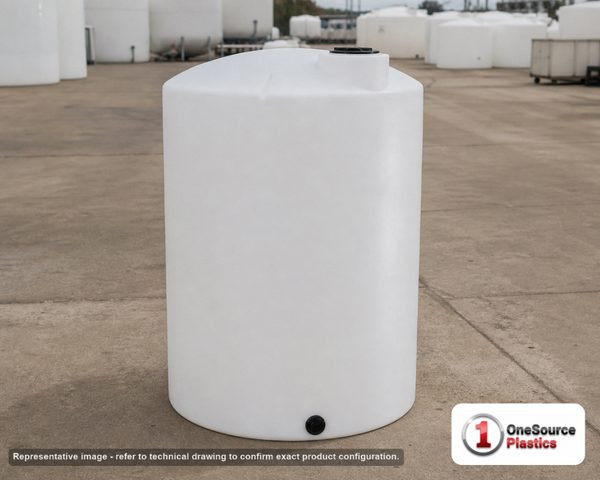
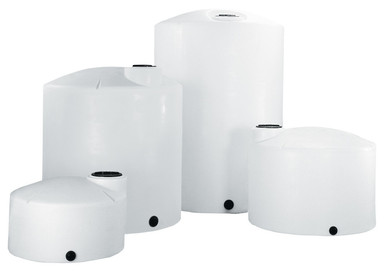
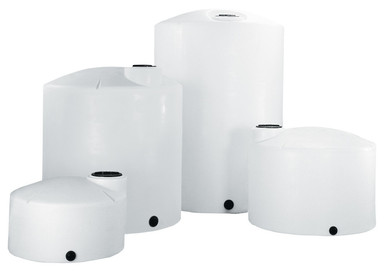
Snyder XLPE chemical storage tanks (cross-linked polyethylene per ASTM D1998) handle the bulk halogenated solvent storage at higher specific gravities and concentrations. The Snyder 100 Gallon XLPE Vertical Chemical Storage Tank (MPN 1012700N42, listed at $924.89) is the small-batch option for drum-replacement storage. The Snyder 1100 Gallon XLPE Vertical Chemical Storage Tank (MPN 1830000N42, $2,911.09 list) and the 1500 Gallon XLPE configuration cover mid-volume process storage. For containment-rated storage of methylene chloride or PCE, pair the XLPE primary with a Snyder Captor Plus secondary — the 1100 Gallon XLPE Captor Double Wall (MPN 5470000N42, $10,298.99 list) gives 110% containment integrated and is SPCC-compliant for the regulated solvent classes.
Chem-Tainer HDPE chemical storage tanks handle the dilute and ambient-temperature solvent storage at lower cost. Note that for halogenated solvents specifically, XLPE is preferred over HDPE because of the better long-term chemistry resistance under cyclic temperature loading. Reserve HDPE for dilute hydrochloric (under 30%), dilute sulfuric (under 50%), and the less aggressive halogenated chemistry.
The pump architecture sits between the storage tank and the process. For drum or tote unloading from your inbound chemistry deliveries, an AODD pump with PTFE diaphragms is the universal answer. For tank-to-process transfer from a Snyder XLPE storage tank to a process reactor or day tank, PFA-lined centrifugal is the long-service-life answer. For the highest-purity service (semiconductor wet etch, pharma high-purity solvents), all-fluoropolymer mag-drive pumps with PTFE bearings give zero-emissions, zero-contamination service.
The Wetted-Path BOM: Read the Pump Submittal
When you receive the pump quote, the wetted-path BOM should be itemized. Typical fluoropolymer AODD pump BOM:
- Pump body / center block: PTFE solid or PFA-lined
- Diaphragms: PTFE-faced with Santoprene back, or solid PTFE
- Diaphragm shaft / outer hardware: 316 SS (sometimes Hastelloy C-276 for severe duty) — note this is wetted only on the wet side of the diaphragm if the shaft penetrates
- Ball checks: PTFE solid, ceramic, or PFA-encapsulated
- Valve seats: PTFE
- O-rings (where used): PTFE-encapsulated Viton (Encapsulated O-rings) or FFKM
- Air-side hardware: aluminum or polypropylene — never wetted on the process side
For PFA-lined centrifugal pumps:
- Pressure casing: ductile iron or carbon steel — NOT WETTED, separated from process by PFA liner
- Casing liner: PFA, 0.125" to 0.250" thickness, factory-molded
- Impeller: PFA-encapsulated stainless steel or ceramic core
- Mechanical seal stationary face: silicon carbide or PFA-encapsulated
- Mechanical seal rotating face: silicon carbide
- Seal o-rings: FFKM (Kalrez 6375 or Chemraz 605 typical for halogenated solvent)
- Shaft sleeve: silicon carbide or PFA-sleeved
For mag-drive sealless pumps:
- Pump casing wetted surfaces: PFA-lined or all-PTFE solid
- Containment shell: titanium grade 2 (corrosion-resistant), Hastelloy C-276, or PEEK (for non-pressure service)
- Inner journal bearing: silicon carbide
- Inner thrust bearing: silicon carbide
- Inner magnet capsule: PFA-encapsulated rare-earth magnets
- Impeller: PFA-encapsulated
Air Supply, Pulsation, and Pressure Pulsation Dampening for AODD
An AODD pump operating at 25 cycles per minute on a 3" suction line generates pressure pulses of ±15 PSI at the pump discharge. For long transfer lines or pressure-sensitive downstream equipment, the pulsation needs to be dampened with an inline pulsation dampener — a bladder accumulator with a fluoropolymer bladder rated for the same chemistry as the pump. Sizing the dampener: bladder volume should be 5-10x the per-stroke displacement of the pump. For a 25 GPM AODD pumping at 25 cycles per minute, the per-stroke displacement is 1 gallon, so a 5-10 gallon dampener is the right size.
Air supply quality matters. Halogenated solvent AODD pumps need filtered, lubricated, and water-separated compressed air. Wet air entering the pump's air-side will pull water through any pinhole in the diaphragm, contaminating the process side. Coalescing filter + automatic drain on the air supply line is the standard arrangement. For Class I Division 1 explosion-proof areas (most solvent transfer applications), the AODD pump's all-pneumatic operation is the inherent advantage — no electric motor, no ignition source.
Mechanical Seal Failure and the API Plan 53 Solution
Single mechanical seals in halogenated solvent service fail because the fluid cannot lubricate the seal faces. The seal faces (silicon carbide on silicon carbide) need a thin film of fluid between them to avoid metal-on-metal galling. Halogenated solvents have low viscosity (0.4-0.8 cP for methylene chloride vs 1.0 cP for water), poor wetting characteristics, and tendency to flash-vaporize at the seal face under the pressure drop across the seal. The result is dry-running seal damage in hours.
API Plan 53A (pressurized seal pot with barrier fluid) puts a compatible barrier fluid (PAO, glycol, or sometimes the same solvent filtered and conditioned) into the seal cavity at 25-50 PSI above process pressure. Any leakage is from the barrier fluid into the process — preventing process fluid leakage outward and giving the seal a stable lubricating film. The seal pot is monitored: pressure drop indicates seal wear, level drop indicates barrier fluid migration into process. MTBF for properly maintained Plan 53A seals on halogenated solvent service is 18-24 months continuous.
API Plan 53B uses a bladder accumulator instead of a seal pot — same function, less footprint, no nitrogen blanket required. Plan 53C uses a piston accumulator — same function with mechanical-only pressure isolation.
For pumps under 100 GPM where the cost of the seal support system rivals the pump itself, mag-drive sealless pumps are the economically rational alternative. For pumps over 100 GPM where mag-drive availability narrows and the seal support system is a smaller fraction of pump cost, sealed centrifugals with API Plan 53 win on capacity and head capability.
Maintenance, Inspection, and the Quarterly Walk-Through
Fluoropolymer pumps fail rarely but they do fail. The maintenance cadence:
- Weekly — visual inspection for leaks at flanges, drip-tray check, seal pot level (if equipped), air supply pressure and filter water-separator drain
- Monthly — vibration check on rotating equipment (centrifugal and mag-drive), AODD cycle rate consistency check, pressure gauge verification
- Quarterly — diaphragm inspection on AODD (visual through inspection ports if equipped, or pull-and-inspect at 6-month interval), mechanical seal pressure differential check on centrifugal pumps with Plan 53, mag-drive inner-bearing wear inspection (typically by motor amp draw trend monitoring rather than disassembly)
- Annual — full pump teardown for AODD pumps in continuous duty, mechanical seal replacement on centrifugals as wear data dictates, magnetic coupling integrity check on mag-drive pumps
Diaphragm replacement intervals on AODD pumps in halogenated solvent service: 12-18 months for full PTFE diaphragms in light duty, 6-9 months in heavy continuous duty. The diaphragm fails by flex-fatigue at the convolution radius — chemistry compatibility is not the failure mode, it is mechanical fatigue from millions of flex cycles. Keep spare diaphragms on the shelf. The downtime cost of waiting two weeks for a diaphragm shipment dwarfs the inventory cost of holding a spare set.
Decision Summary by Application
- Drum / tote unload, 5-30 GPM, intermittent: AODD with full PTFE wetted path. Wilden P200, ARO PD05R-FPS-PTT, Yamada NDP-25BPT class.
- Tank to process transfer, 50-200 GPM, continuous: PFA-lined centrifugal with API Plan 53A and FFKM seal o-rings. Goulds 3298, Sundyne PSP, Iwaki MX-Series lined.
- Tank to process transfer, 50-150 GPM, intermittent or sealless preferred: PFA-lined mag-drive with silicon carbide bearings. Iwaki MX-Series mag-drive, March MDX-MT3, Sundyne LMV.
- High-purity / semiconductor wet etch / pharma: All-PTFE centrifugal or mag-drive, FFKM seals, FEP sight tubes, particulate filtration upstream.
- Bulk transfer, >500 GPM: Lined centrifugal multi-stage with API Plan 53 — mag-drive availability narrows and AODD air consumption uneconomic at this scale.
The pump is downstream chemistry control. The tank is upstream chemistry control. Spec both together. Talk to OneSource Plastics at 866-418-1777 or use the freight estimator for delivered tank pricing to your ZIP. Pump procurement is typically through a fluid handling distributor — we can refer the local representative for the major fluoropolymer pump brands as part of the project specification.
For chemistry-specific tank selection on the storage side, see the chemical compatibility hub at /chemical-compatibility/. For SPCC and RCRA secondary containment requirements that the pump assembly may need to satisfy, see the Snyder Captor double-wall SPCC walkthrough. For mechanical seal selection in non-halogenated chemistry where standard elastomers work, the maintenance burden drops by an order of magnitude — but for halogenated solvent service, fluoropolymer wetted path is the only spec that pays back.
Recommended Tanks for This Guide
Live pricing, updated automatically · estimate freight to your ZIP.