Norwesco Applicator and Leg Tanks for Fertilizer: DOT Non-Roadable Trailer (NRT) Scope Explained
The Norwesco applicator saddle tank and leg tank product families are designed for agricultural fertilizer service — UAN-28, UAN-32, ammonium thiosulfate, liquid potash blends, micronutrient solutions, and the various crop-protection and starter-fertilizer formulations farmers move between bulk storage and the field. These tanks live in a regulatory gray zone that confuses operators on a regular basis. The product itself is a polyethylene shell. The tank-on-trailer assembly that crosses public roads with fertilizer in it is a different regulatory animal than the bulk farmstead tank, and the rules that apply depend on the trailer's usage pattern, the cargo, and the road class.
This post walks through the actual federal framework — 49 CFR Parts 171-180 (Hazardous Materials Regulations), 49 CFR Part 395 (FMCSA Hours of Service), and the agricultural exemptions that most fertilizer-applicator operators rely on. Real Norwesco SKUs throughout.
Norwesco product families in scope
Saddle (applicator) tanks
Saddle tanks are the rounded-bottom shells designed to sit in a steel cradle on a tractor toolbar, in a planter saddle, or in a frame on a pull-cart. They are characterized by a curved bottom that matches the saddle frame contour. Real OneSource catalog SKUs:
- N-45193 — Norwesco 55 Gallon Plastic Applicator Saddle Tank in White, Listed at $230.87.
- N-45105 — Norwesco 85 Gallon Plastic Applicator Saddle Tank in White, Listed at $367.71.
- N-60204 — Norwesco 100 Gallon Plastic Applicator Saddle Tank in White, Listed at $374.40.
- N-45053 — Norwesco 110 Gallon Plastic Applicator Saddle Tank in White, Listed at $388.99.
- N-45117 — Norwesco 150 Gallon Plastic Applicator Saddle Tank in White, Listed at $464.46.
- N-40648 — Norwesco 150 Gallon Plastic Applicator Saddle Tank in White, Listed at $478.99.
- N-45059, N-45061 — Norwesco 200 Gallon Applicator Saddle Tanks in White, Listed at $557.89.
- N-40135 — Norwesco 300 Gallon Applicator Saddle Tank, Listed at $739.00.
- N-40137 — Norwesco 400 Gallon Plastic Applicator Saddle Tank, Listed at $1,079.00.
Horizontal leg tanks
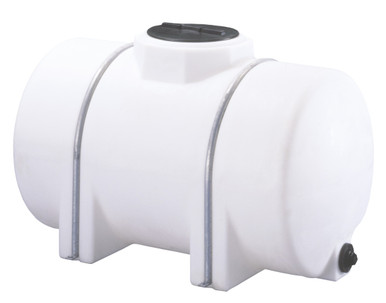
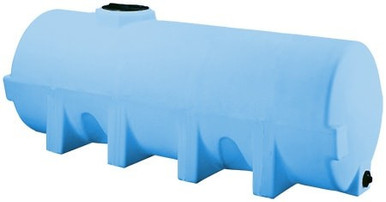
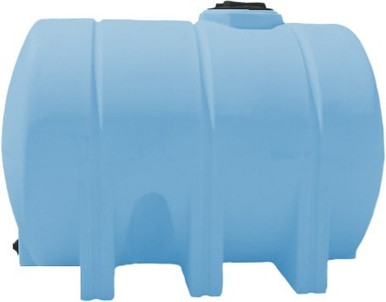
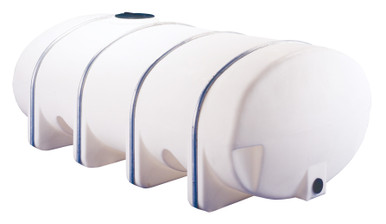
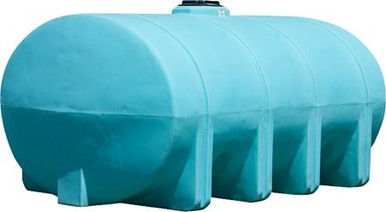
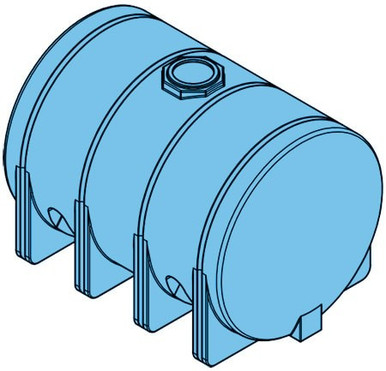
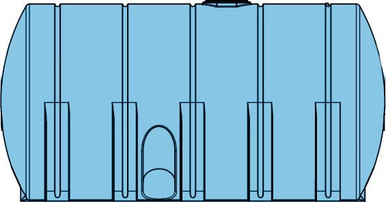
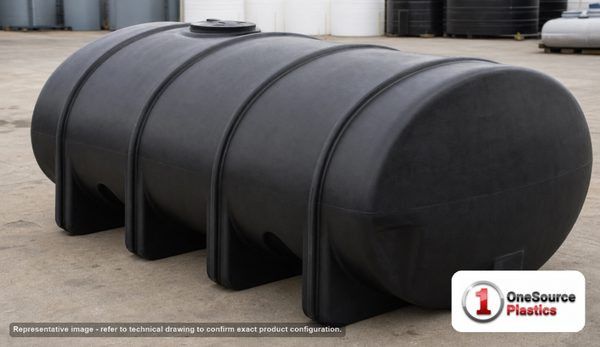
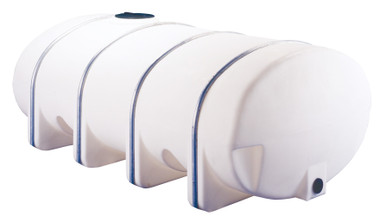
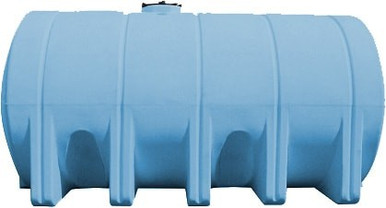
Leg tanks are flat-bottom horizontal tanks with integral molded legs that allow the tank to free-stand on a flat surface — a flatbed truck deck, a service-truck bed, a concrete pad, or a stationary fertilizer-blending stand. They are larger than saddle tanks and used both for transport on a flatbed and for stationary day-tank service at the farmstead. Real catalog SKUs:
- N-45223 — Norwesco 35 Gallon Horizontal Leg Tank in White, Listed at $179.00.
- N-45191 — Norwesco 65 Gallon Horizontal Leg Tank in White, Listed at $329.00.
- N-40298 — Norwesco 125 Gallon Horizontal Leg Tank in White, Listed at $529.00.
- N-45209 — Norwesco 925 Gallon Horizontal Leg Tank in White, Listed at $2,199.00.
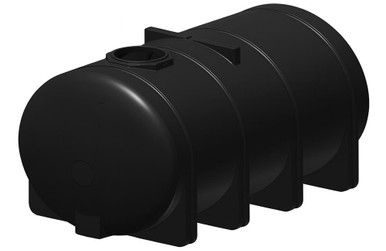
- N-43675 — Norwesco 925 Gallon Horizontal Leg Tank in Black with Fitting Installed, Listed at $2,427.90.
- N-40089 — Norwesco 1025 Gallon Horizontal Leg Tank, Listed at $2,499.00.
- N-40131 — Norwesco 1025 Gallon HDPE Horizontal Leg Tank, Listed at $2,599.00.
- N-41877 — Norwesco 1325 Gallon HDPE Horizontal Leg Tank in Blue, Listed at $3,599.00.
The "DOT NRT" question — what does that even mean
"NRT" — non-roadable trailer — is a colloquial term used in the agricultural-equipment industry to describe a trailer that is designed for off-highway, in-field movement, not for regular highway transit. Examples: a nurse-tank trailer that moves between a fertilizer dealer's yard and the field at low speed on a farm-implement license, or a pull-type sprayer that crosses public roads only between adjacent fields.
Federal regulation does not define "NRT" as a category. What federal regulation does is regulate vehicles that operate on public roads under the Federal Motor Vehicle Safety Standards (FMVSS) administered by NHTSA, and regulate hazardous-materials transportation under the Hazardous Materials Regulations administered by PHMSA at 49 CFR Parts 171-180. A "non-roadable" trailer in the colloquial sense is one that the operator believes is exempt or partially exempt from these federal frameworks. Whether that belief is correct depends on the specific facts.
49 CFR 173 — when fertilizer is hazardous
Most farm fertilizers are NOT hazardous materials under PHMSA classification:
- UAN-28 / UAN-32 (urea-ammonium nitrate solutions, 28-32% nitrogen) — not hazardous under 49 CFR 173, not subject to placarding.
- Liquid potash, ammonium thiosulfate, micronutrient blends — generally not hazardous.
- Aqueous starter fertilizers (10-34-0 etc.) — generally not hazardous.
What IS hazardous under federal classification:
- Anhydrous ammonia (NH3) — UN1005, Division 2.2 with Subsidiary Risk 8 (Toxic by inhalation, hazard zone D). 49 CFR 173.315 regulates the cargo tanks. NH3 is NEVER stored in polyethylene tanks; it requires DOT 51 / DOT 53 / MC 331 steel cargo tanks.
- Ammonium nitrate (AN) solid — UN1942, Division 5.1 oxidizer. Solid fertilizer, not in scope for liquid tanks.
- Concentrated nitric acid, sulfuric acid — hazardous corrosives. Not typical agricultural fertilizers; check for blending operations.
For the agricultural-fertilizer use case that the Norwesco saddle and leg tanks are designed for — UAN, ATS, micros, starter blends — the cargo is generally NOT hazardous under 49 CFR. The tank assembly therefore is not a "DOT cargo tank" in the regulatory sense, and the placarding/manifest/driver-credential requirements of 49 CFR Parts 172-177 do not apply.
49 CFR 395.1(k) — the agricultural commodity exemption from Hours of Service
The FMCSA Hours of Service rule at 49 CFR Part 395 caps driver duty time at 11 hours driving in a 14-hour on-duty window, with required off-duty rest periods. There is a specific exemption at 49 CFR 395.1(k) for agricultural commodity transportation:
"The maximum driving time and on-duty time provisions...do not apply to drivers transporting agricultural commodities (including livestock, bees, horses, and insects) within a 150 air-mile radius from the source of the commodities or the distribution point for the commodities, during planting and harvesting periods, as determined by each State."
This exemption is the one that lets fertilizer dealers and farmer-owned operations move tank trailers around the local area during planting season without the driver-logging burden that an OTR truck driver carries. The exemption applies during state-determined planting and harvest windows, within the 150-mile radius. Outside the radius or outside the window, the standard HOS rules apply.
FMCSA registration thresholds
49 CFR 390.5 and 390.21 require Motor Carrier authority and USDOT numbers for vehicles operating in interstate commerce above the GVWR/GCWR thresholds. The thresholds for fertilizer-applicator equipment:
- 10,001 lb GVWR / GCWR or more in interstate commerce — USDOT number required.
- Hazardous materials placarded in any commerce, any weight — USDOT number required.
- Intrastate operations — state-by-state rules apply; many states mirror federal thresholds for intrastate commercial operations.
A typical farmer pulling a 925-gallon Norwesco N-45209 leg tank on a flatbed trailer behind a farm pickup, intra-state, within the 150-mile agricultural radius, during the state's planting window, with non-hazardous UAN cargo, is exempt from USDOT registration, ELD, and most placarding. That same operation moving across a state line, or outside the planting window, or with anhydrous ammonia, would trigger different regulatory frameworks.
Tank assembly and frame requirements
A Norwesco saddle or leg tank by itself is just a plastic shell. To make the assembly road-legal in the limited senses described above, you need:
- A trailer frame or truck-bed mount rated for the tank's loaded weight. A 925-gal leg tank loaded with UAN-32 (SG 1.32) is approximately 1,025 gal × 8.34 lb/gal × 1.32 = 11,290 lb of fluid plus 410 lb of tank shell = ~11,700 lb. The carrying frame, axles, tires, and trailer brakes must be rated accordingly.
- Trailer brakes per state DOT — most states require trailer brakes above 3,000-5,000 lb GVWR.
- Lighting per FMVSS 108 — tail lights, brake lights, turn signals, side markers, reflectors. Even on a farm-plate trailer, FMVSS 108 lighting is required for road operation after dark.
- Safety chains, breakaway brake — standard tow-vehicle requirements.
- Tank securement — the polyethylene shell must be strapped or banded to the frame per 49 CFR 393.100 cargo securement standards. Most states accept ratchet straps at multiple anchor points; some require a proprietary cradle. Check the manufacturer's installation guide for the specific tank.
What Norwesco saddle and leg tanks are NOT designed for
Two common misuses to avoid:
1. Anhydrous ammonia (NH3) service
Polyethylene saddle and leg tanks are NOT rated for anhydrous ammonia. NH3 is stored under pressure (typically 250 psi at ambient) and reacts chemically with polyethylene over time. NH3 service requires DOT 51 / DOT 53 high-pressure steel cargo tanks per 49 CFR 173.315 and 178.337. Do not put NH3 in a Norwesco shell under any circumstances. Use the appropriate steel nurse tank.
2. Concentrated 28% / 32% sulfuric acid as a stand-alone shipment
Some agricultural blending operations use concentrated sulfuric acid as a pH-adjustment additive to UAN. Concentrated sulfuric acid is a hazardous Class 8 corrosive (UN1830) in any quantity over 119 gallons per 49 CFR 172.504; below that threshold it may not require placarding but still requires hazmat shipping papers. Polyethylene compatibility with concentrated sulfuric is limited and time-dependent — consult the manufacturer compatibility chart and the /chemical-compatibility/sulfuric-acid/ pillar before storing.
Operational best practices
- Match the tank to the carrier vehicle. A 925-gal leg tank needs a 14,000-lb-GVWR-class trailer or a 1-ton flatbed truck. Do not put it on a half-ton pickup bed.
- Strap at multiple anchor points. Minimum four ratchet straps over the tank shoulders to anchor points on the frame. Inspect after the first 50 miles.
- Drain or fill on the home pad, not on the road. Loading and unloading at curbside introduces spill risk and may exceed cargo-tank fill-rate limits if you are using a pump-equipped trailer.
- Inspect the polyethylene shell quarterly. UV degradation, fitting wear, strap-induced abrasion. Replace the shell if you see crazing, fitting weep, or surface haze with chalk wipe-off.
- Track the SG rating against your fluid. Catalog applicator tanks are typically 1.5 SG. UAN-32 is 1.32 SG — well within rating. Heavy ammonium thiosulfate or potash blends can run 1.4-1.5 SG — verify before specifying.
Bottom line
Norwesco saddle and leg tanks are unrated for hazardous-materials cargo. Used within their design scope — non-hazardous liquid fertilizers, blends, and agricultural inputs in standard SG ranges — they sit comfortably inside the 49 CFR 395.1(k) agricultural exemption framework when operated locally during planting and harvest. The tank itself is a polyethylene shell; what makes the assembly compliant is the carrier frame, lighting, brakes, securement, and the fluid you put in it. Match each piece to the regulation that governs it, and the equipment runs season after season without surprises.
For sizing recommendations on a specific applicator-tank application, fluid-compatibility verification, or freight quote to your destination ZIP, call 866-418-1777 or use /freight-cost-estimator/.
Field Operations Addendum
The DOT-NRT designation — non-regulated transport — is precise about what it covers and what it excludes. Reading it as a blanket exemption from transport rules is the fastest way to a roadside violation.
Site-to-site movement scope. NRT applies to the intra-facility and farm-to-field movement of an empty or product-loaded tank where the tank itself is the cargo container being relocated, not a hazardous-materials transport in the regulated sense. The classic use is a poly transport tank moved on a flatbed or pickup between fields, between a barn and a tank pad, or between two parcels of the same operation. The product inside (water, fertilizer, non-hazardous chemicals at agricultural concentrations) and the duty cycle (short distances, low speeds, predominantly off-road or rural-road) are what keep the move outside the regulated transport bucket.
Off-road vs on-road. Off-road movement on private property is largely a matter of the operator's own safety practice — strap the tank, check the trailer rating, drive at sensible speeds. On-road movement is where state and federal rules start to apply. Even under NRT, the tank has to be secured under the general cargo-securement rules in 49 CFR 393.100-393.136, the trailer has to meet the lighting and brake requirements for its weight class, and the driver has to hold the appropriate license for the combined vehicle weight. NRT does not exempt any of those baseline transport requirements.
Placard requirements. NRT moves of non-hazardous product do not require hazmat placards. The moment the tank is loaded with a regulated hazardous material above the placarding threshold, the move falls under 49 CFR 172 placarding rules and the operator needs the placard, the shipping paper, and the trained-driver credential. Placard-by-default is the safer practice if the product status is ambiguous.
State DOT exemptions. Many states publish an agricultural-use exemption that mirrors the federal NRT scope but with state-specific distance, road-class, or seasonal limits. Pull the exemption from the state DOT or department of agriculture website before relying on it — the federal scope is the floor, not the ceiling, and the state rule is what the state trooper enforces at the scale.
Recommended Tanks for This Guide
Live pricing, updated automatically · estimate freight to your ZIP.