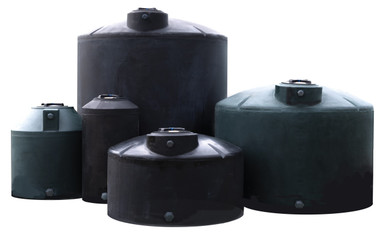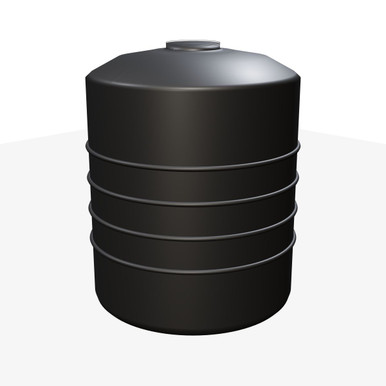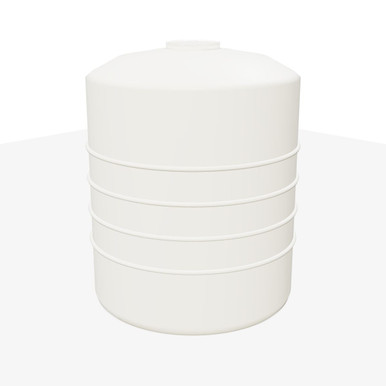
Norwesco Doorway Tank Sizing Guide: 100 to 1000 Gallon by Application
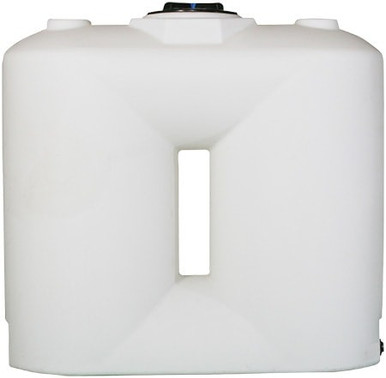
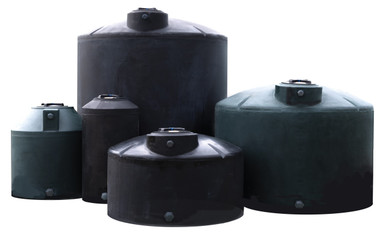
Doorway tanks are the form-factor specialists of the polyethylene world. Every other vertical, horizontal, and cone-bottom tank is sized for capacity first and footprint second. Doorway tanks invert the priorities: the narrow profile (typically 22 to 40 inches across the smaller axis) exists exclusively so the tank can pass through a standard interior door opening, then expand back into capacity once it's set. If the tank doesn't physically fit through the doorway it's installed behind, no amount of capacity matters.
This guide covers the Norwesco doorway tank family from the 100-gallon slimline up to the 1,000-gallon four-foot-wide unit. Every dimension and price below is pulled from the live OneSource Plastics catalog as of the publication date. Use this guide to match the right doorway profile to your installation: water storage in basements, chemistry feed in mechanical rooms, fertilizer batching in greenhouse zones, brine storage at salt-handling facilities, or any application where the tank lives behind a door it must first pass through.
What Makes a "Doorway" Tank
The defining characteristic is the narrow dimension. Standard interior residential doorways frame at 32 inches wide (30-inch rough opening + door + casing) and standard commercial interior doorways frame at 36 inches wide. Norwesco doorway tanks are designed so at least one face dimension fits through one of these openings, typically with 1 to 4 inches of clearance.
The trade-offs versus a standard vertical or horizontal tank are straightforward:
- Higher cost per gallon than equivalent-capacity verticals. A 300-gallon vertical is roughly 35 to 38 inches diameter and uses less material than a 300-gallon doorway at 25 to 29 inches wide and 50 to 65 inches tall plus length.
- Tighter wall thickness tolerances because the geometry is rectangular-with-rounded-ends rather than perfectly cylindrical. Hoop stress redistributes in non-uniform ways at the corners.
- Smaller manway and fitting options in the smaller-capacity units because there isn't room on the top to accommodate large lids.
- Generally limited to 1.0 to 1.5 specific gravity service. The geometry doesn't lend itself to the heavy-wall 1.9 ASTM construction needed for high-density chemistry.
The trade-off goes the other way too. The tank actually fits where standard tanks don't. For installations behind doors, that's the only specification that matters.
The Complete Norwesco Doorway Catalog at OneSource Plastics
Below are the doorway-profile tanks Norwesco currently produces, sorted by gallon capacity. All dimensions are length x width x height (the width column is the narrow dimension you measure your doorway against). All prices are list before LTL freight; freight is quoted to ZIP via the Freight Estimator or by calling 866-418-1777.
| MPN | Capacity | L × W × H | Color | Weight | List Price |
|---|---|---|---|---|---|
| N-44800 | 100 gal | 38″ × 22″ × 45″ | White | 41 lb | $369.99 |
| N-44986 | 100 gal | 38″ × 22″ × 45″ | Black | 41 lb | $390.00 |
| N-43311 | 100 gal | 48″ × 13″ × 43″ | White | 47 lb | $408.77 |
| N-45716 | 150 gal | 50″ × 18″ × 53″ | Natural White | 165 lb | $620.00 |
| N-42337 | 250 gal | 62″ × 29″ × 44″ | White | 99 lb | $769.99 |
| N-45722 | 250 gal | 59″ × 25″ × 54″ | White | 109 lb | $708.92 |
| N-45346 | 250 gal | 62″ × 29″ × 44″ | Black | 99 lb | $845.00 |
| N-41526 | 250 gal | 62″ × 29″ × 44″ | Natural White | 103 lb | $770.00 |
| N-44960 | 300 gal | 59″ × 25″ × 65″ | White | 129 lb | $829.99 |
| N-44976 | 300 gal | 59″ × 25″ × 65″ | Green | 129 lb | $829.99 |
| N-44330 | 300 gal | 66″ × 29″ × 50″ | White | 129 lb | $989.99 |
| N-41527 | 300 gal | 66″ × 29″ × 50″ | Natural White | 138 lb | $990.00 |
| N-44549 | 400 gal | 66″ × 29″ × 70″ | White | 183 lb | $1,221.49 |
| N-44361 | 400 gal | 66″ × 29″ × 70″ | Green | 183 lb | $1,200.00 |
| N-43856 | 400 gal | 66″ × 29″ × 70″ | Natural White | 183 lb | $1,280.00 |
| N-43616 | 500 gal | 74″ × 31″ × 70″ | White | 194 lb | $1,295.94 |
| N-44655 | 600 gal | 58″ × 35″ × 83″ | White | 363 lb | $3,178.00 |
| N-44310 | 750 gal | 82″ × 35″ × 85″ | White | 319 lb | $1,722.30 |
| N-44045 | 1000 gal | 92″ × 40″ × 89″ | White | 384 lb | $2,469.99 |
Three observations from the catalog data above before we get to applications:
- The 100-gallon slimline (N-43311) at 13 inches wide is the narrowest production polyethylene tank in this capacity range. It clears any standard doorway and most older 28-inch doorways. The trade-off is the narrow geometry concentrates wall stress, and the tank is taller relative to footprint than the standard 22-inch-wide 100 gallon.
- The 600-gallon at $3,178 is priced above the 750-gallon at $1,722. This is not a typo. The 600-gallon doorway has a heavier wall construction and a different fitting package optimized for chemical feed, while the 750-gallon is a water-storage primary unit. Always check the spec sheet, not just the gallon-per-dollar math.
- Doorway tanks above 500 gallons get tall fast. The 600-gallon is 83 inches tall, the 750 is 85, the 1000 is 89. Anything above 500 gallons needs ceiling-clearance verification before order, especially in basements with low joists.
Application 1: Residential and Light-Commercial Water Storage
The most common use case. Homeowners and property managers add water storage in basements, garages, utility rooms, or pump houses, almost all of which were framed before the tank was ordered. The doorway profile lets the tank slide through the existing access without door removal or wall demolition.
Sizing rule of thumb: for daily-use water buffer (well pump pressure smoothing, irrigation top-up, fire-suppression cistern in jurisdictions that count storage toward NFPA flow requirements), size the tank to one to three days of typical household demand. The EPA estimates average residential indoor use at about 82 gallons per person per day (EPA WaterSense data). A four-person household running a one-day buffer needs roughly 330 gallons; a three-day buffer needs roughly 1,000 gallons.
For potable water, specify FDA / NSF/ANSI 61 compliant resin and a tank in the natural-white or food-grade-rated color. The 250-gallon natural-white N-41526 and the 300-gallon natural-white N-41527 are common selections for residential potable storage. Black tanks (N-44986 100-gal, N-45346 250-gal) are the right choice for outdoor applications where algae growth is a concern, but for indoor potable use the natural-white or white resin is preferred for visual sight-glass inspection of fluid level and clarity.
Internal cistern applications also need to comply with state-specific plumbing codes. In California, see the California Plumbing Code (Title 24) provisions for non-potable greywater storage. In Texas, see Texas Administrative Code Title 30 Chapter 290 for public water systems and Texas Property Code Chapter 5 for harvested water. In Florida, see Florida Building Code Plumbing Chapter 14 for non-potable water reuse. Our state regulation pillar pages link to the specific statutes for all 50 states.
Application 2: Greenhouse Fertilizer and Chemistry Batching
Greenhouse and indoor-grow operations need fertilizer concentrate batching tanks that fit through standard greenhouse access doors, often 30 to 32 inches wide on the head-house bulkhead. The 250-gallon (N-42337) and 300-gallon (N-44960) doorway models are workhorses for this application because they hold enough concentrate for a multi-week feed cycle but still pass through head-house double doors.
Specifying chemistry tanks requires checking the resin compatibility. Norwesco doorway tanks are constructed from natural HDPE or pigmented HDPE depending on color. HDPE is broadly compatible with the macronutrient and micronutrient salts used in greenhouse fertigation: potassium nitrate, calcium nitrate, magnesium sulfate, ammonium phosphate, urea solution, ferrous sulfate. HDPE is not recommended for service with concentrated nitric acid (used in some pH-down applications above 50% concentration) or any of the chlorinated solvents that show up occasionally in pesticide carriers.
The fitting set on doorway tanks is generally a 5-inch or 8-inch lid, a sidewall outlet (typically 1.5-inch or 2-inch bulkhead), and a vent. For greenhouse fertigation you'll typically add an in-line mixer on the recirculation loop and a level sensor. The tank itself is the cheap part of the system; budget the same dollars for the dosing pumps, valves, sensors, and controller.
For greenhouse operations larger than what 300 gallons supports, the 500-gallon doorway (N-43616) at 31 inches wide and 70 inches tall remains within most head-house door dimensions. Above 500 gallons, the geometry usually no longer fits a standard greenhouse access and you'll need to plan a tank in via roof crane during construction or step down to multiple smaller units in series.
Application 3: Mechanical Room Chemical Feed
Cooling tower chemistry, boiler chemistry, water softener brine, pH neutralization. All of these live in mechanical rooms accessed through standard 32-inch or 36-inch doors. The chemistry is moderate concentration (typically 5 to 30%) and moderate density (SG 1.0 to 1.4).
Recommended doorway sizes for mechanical room feed:
- 100 to 150 gallon (N-44800 or N-45716): day-tank for chemical metering pump suction. Refilled from drum or tote, drawn down by pump over 24 to 72 hours.
- 250 to 400 gallon (N-42337, N-44960, N-44549): primary supply tank for facility-scale boiler or cooling tower chemistry. Refill cycle of 30 to 60 days from delivery tanker.
- 500 to 1000 gallon (N-43616, N-43616 series, N-44045): primary supply for industrial-scale facilities or water-softener brine batching. Refill cycle of 60 to 90 days.
Brine specifically: dissolved salt brine for water softener regeneration is typically 22 to 26% sodium chloride at SG 1.17 to 1.20. The 1.5 ASTM rating on Norwesco doorway tanks is sufficient for this service. The salt is not aggressive to HDPE but the brine generation cycle creates wet-dry-wet conditions that can attract microbial growth on tank walls. Plan for periodic cleaning every 12 to 24 months.
Application 4: Brewery and Food Processing
Craft breweries, distilleries, and small food-processing operations frequently retrofit existing buildings where the brewing equipment was specified before the building was selected. Doorway tanks earn their keep here because they pass through the existing utility-room and back-bay doors that were never sized for tank delivery.
Common applications:
- Cold-side rinse water buffer: 250 to 500 gallon, white or natural color, behind the fermenter wall.
- CIP (clean-in-place) chemical batching: 100 to 250 gallon for caustic and acid solutions, separated into two tanks for cross-contamination prevention.
- Spent-grain water collection: 300 to 600 gallon for the dump-water from mash tuns and lauter tuns, accumulated for biological treatment or hauler removal.
For potable rinse water, specify the FDA / NSF/ANSI 61 compliant resin and request the certification documentation from your tank supplier. For CIP chemistry (sodium hydroxide at 2 to 5%, phosphoric or nitric acid at 1 to 3%), HDPE is fully compatible at these dilution levels. For higher CIP concentrations sometimes used in dairy applications, step up to 1.9 ASTM tanks rather than relying on doorway profile units, and read our chemical compatibility database to verify the chemistry against the resin.
Application 5: Salt-Brine Storage for Snow and Ice Operations
Municipalities and commercial snow-removal operators batch their own brine on-site. The brine is typically 23.3% sodium chloride (saturated brine, SG 1.18) for road treatment, or 32% calcium chloride (SG 1.34) for prewet applications.
The doorway profile matters here because brine batching often happens in pre-existing salt-storage buildings or maintenance garages where the bay doors are sized for trucks but the interior staging doors are still standard 36-inch widths. Multiple 1,000-gallon doorway tanks (N-44045) in parallel give the storage capacity for a multi-day plowing event without requiring a custom oversized tank that won't fit through the existing building access.
For calcium chloride at SG 1.34, the 1.5 ASTM rating on standard Norwesco doorway tanks is at the edge of its rated envelope. For continuous service with calcium chloride, consider stepping up to a vertical 1.9 ASTM tank if the install location can accommodate the wider footprint. If the install requires the doorway profile, request the specific ASTM rating in writing from the manufacturer before order. See our companion post on ASTM Specific Gravity Decoded for the full SG-vs-rating treatment.
Sizing Decision Framework
Three measurements before you order, in this order:
- Door width. Measure the actual clear opening (door open to 90 degrees, casing-to-casing). Subtract 1 inch for safety. The tank's narrow dimension must be at or below this measurement.
- Door height. Standard residential doors are 80 inches; commercial often 84. The tank's height must clear the door header. The 600, 750, and 1000 gallon doorway tanks are 83 to 89 inches tall and will not pass through a residential 80-inch door upright. They must be tipped during entry, which requires the floor-to-ceiling clearance to accommodate the tank length on the diagonal.
- Final installation footprint. Once through the doorway, the tank needs floor space for its full L x W plus a service envelope (at minimum 18 inches around the manway-side, 6 inches on the other three sides for fitting connections and inspection access).
If any of those three measurements fails the candidate tank's spec, step down to the next smaller doorway model or split the storage across two tanks plumbed in parallel.
Freight, Lead Time, and Local Pickup
All doorway tanks ship LTL (less-than-truckload) freight from the Norwesco production point closest to your delivery address. Norwesco operates 12 manufacturing locations across the US (St. Bonifacius MN, Lake Wales FL, Litchfield IL, Bushnell FL, Bellevue OH, Brighton CO, Lebanon OR, Wichita Falls TX, Wickliffe KY, Hamilton ND, Tea SD, and others). The freight cost is heavily distance-dependent because the cube/weight ratio of a tank is awful for trucking. Get a quote from the Freight Estimator with your destination ZIP before finalizing the purchase.
Lead times on the doorway family are typically 7 to 21 days from order to ship pickup at the production point, plus 3 to 7 transit days depending on lane. Black, natural-white, and white colors are usually in stock or on a short production cycle. Custom colors (dark green for agricultural water storage, FDA-compliant translucent for sight-glass applications) typically add 14 to 21 days to lead time.
For local pickup at our Burnet, Texas facility, contact us at 866-418-1777 with your order details. Local pickup avoids LTL freight cost entirely and works well for customers within a 200-mile radius who can dispatch a flatbed pickup truck.
Common Doorway Tank Specification Mistakes
Mistake 1: Measuring the door at the casing instead of the clear opening
The casing is the trim around the door. The clear opening (door swung 90 degrees, frame-to-frame) is typically 2 inches narrower than the casing-to-casing measurement. Always measure the actual passable space, not the cosmetic frame.
Mistake 2: Forgetting the diagonal during entry
A 70-inch-tall tank entering through an 80-inch-tall door is fine if the doorway is 30 inches wide. But if you have to tip the tank to clear a low ceiling on the room side of the door, you need the room's floor-to-ceiling height to accommodate the tank length on the diagonal. A 500-gallon doorway at 74 inches long requires roughly 96 inches of diagonal clearance during a 30-degree tip. Sketch the geometry before ordering.
Mistake 3: Specifying potable certification on a non-potable application
NSF/ANSI 61 compliant resin is more expensive than standard HDPE. If the tank is for non-potable use (irrigation, fire reserve, brine, fertilizer, chemistry), don't pay the premium for potable certification. Your supplier should ask the application question, but always confirm the certification level matches your actual use.
Mistake 4: Assuming the larger doorway tank fits everywhere a smaller one does
Doorway dimensions don't scale linearly with capacity. The 250-gallon at 25 inches wide and 54 inches tall fits residential doors and most basement stairwells. The 500-gallon at 31 inches wide and 70 inches tall fits standard residential doors but may struggle with stairwells that have low landings. The 1000-gallon at 40 inches wide and 89 inches tall does NOT fit standard residential 32-inch doorways and is functionally a commercial-only product. Always re-verify the dimensions for the specific MPN before order.
Mistake 5: Ignoring the fitting locations relative to the install
Doorway tanks have fittings on a specific face (typically the long face of the tank). If your tank is going against a wall on the fitting-face side, you can't connect plumbing without pulling the tank back out. Always check the spec sheet for fitting orientation and plan the install location accordingly.
Internal Resources
- Water Storage Tanks Category — full water storage catalog beyond doorway models
- Chemical Compatibility Database — verify your chemistry against HDPE before order
- State Regulations — potable water and chemistry storage rules by state
- Freight Cost Estimator — LTL quote to your ZIP
- ASTM Specific Gravity Decoded — companion post on tank rating selection
How to Order
All MPNs in the table above are live in the OneSource Plastics catalog. Click into the product page from the water storage or chemical storage categories, or search the MPN in the site search. For specification assistance, freight quotes, or volume orders, call 866-418-1777 or use the contact form at /contact-us/.
Source Citations
- Norwesco product specification sheets (current production catalog)
- OneSource Plastics master catalog data, dated 2026-03-26 snapshot
- EPA WaterSense average residential water use data
- ASTM D1998 — Standard Specification for Polyethylene Upright Storage Tanks
- NSF/ANSI 61 — Drinking Water System Components: Health Effects
- California Plumbing Code Title 24, Texas Administrative Code Title 30 Chapter 290, Florida Building Code Plumbing Chapter 14
Related chemical compatibility resources
For deeper engineering specifications on the chemicals discussed above, see our chemical-compatibility pillars:
- Sodium Chloride — storage compatibility, recommended resin grade, fittings, secondary containment.
- Calcium Chloride — storage compatibility, recommended resin grade, fittings, secondary containment.
- Nitric Acid — storage compatibility, recommended resin grade, fittings, secondary containment.
- Sodium Hydroxide — storage compatibility, recommended resin grade, fittings, secondary containment.
Recommended Tanks for This Guide
Live pricing, updated automatically · estimate freight to your ZIP.