
Tank Washers & Cleaning Systems
IBC, Tote & Drum Wash-Out Systems for Food & Chemical Container Reuse
Automated wash equipment for 55-gallon steel and plastic drums, 330-gallon IBCs, bulk totes, kegs, and specialty containers — for food-grade cleaning, chemical decon, and pharmaceutical sanitation reuse programs.
About Tank Washers & Cleaning Systems
Container reuse programs depend on reliable, repeatable, documented cleaning. A food-grade IBC that carries fruit-juice concentrate one trip and chocolate syrup the next must be cleaned to food-contact standards and validated to eliminate allergen cross-contamination. A chemical drum holding caustic soda cannot be released to downstream use carrying residual alkalinity that would react with the next product. Manual wash-out, even with hot-water and steam, typically falls short of these standards — it is slow, inconsistent, operator-exposed, and poorly documented.
Automated container wash systems run programmed wash-rinse-sanitize-dry cycles with timer-controlled chemistry dosing, temperature-controlled water, rotating spray nozzles for full-interior coverage, and cycle logs for quality documentation. A typical IBC wash cycle runs 8–15 minutes: pre-rinse, caustic circulation (often 2–4% NaOH at 160–170°F), intermediate rinse, acid rinse (phosphoric, citric, or nitric at 1–3%), sanitizer (per-acetic acid or chlorinated), final rinse, and forced-air dry. Cycle parameters are logged per container, often with barcode or RFID tracking against the container ID.
Equipment scales from manual wash stations (one container at a time, operator-loaded) through rotary spray washers (automated single-container) up through conveyor wash lines (continuous flow, 1–3 containers per minute). Ancillary equipment includes chemical dosing skids, recirculation tanks (for water reuse and cost reduction), drying tunnels, and inspection stations with camera or borescope verification. For regulated industries (food, pharma), the wash system is part of the GMP envelope and is validated with IQ/OQ/PQ protocols.
What We Fabricate
55-Gal Drum Washers
Automated single-station wash-rinse-sanitize for steel and plastic 55-gallon drums.
IBC Wash Stations
330-gal intermediate bulk container automated wash with rotary spray heads and chemical dosing.
Tote & Pail Washers
Small-container wash for 5-gal pails, 15-gal totes, and specialty containers.
Keg Wash Systems
Sanitary brewery keg and beverage keg wash with caustic, acid, and sanitizer circuits.
Rotary Spray Wash Heads
Programmable pulsating or rotating nozzle packages for full-interior coverage.
Conveyor Wash Lines
Continuous-flow container wash for high-throughput operations (1–3 containers/minute).
Steam Sanitizing Stations
High-temperature steam sterilization for pharmaceutical and medical-device container programs.
Chemical Dosing Skids
Programmable caustic, acid, and sanitizer dosing pumps with level monitoring.
Recirculation & Recovery
Water-reuse skids for cost-reduction and drought-sensitive operations.
Drying Tunnels
Hot-air convection drying stations for post-wash moisture removal.
Mobile Wash Units
Trailer-mounted wash systems for field service and satellite wash operations.
Inspection & Verification
Borescope or camera-based interior inspection stations with go/no-go documentation.
How a Custom Project Works
- Requirements capture. Volume, materials of construction, service chemistry, operating temperature and pressure, footprint, utility connections, finish, and any code or certification requirements. We work from your specification or draft one against your process.
- Engineering and drawings. A general-arrangement drawing, bill of materials, and weld map — reviewed and signed off before any material is cut.
- Material procurement. Plate, pipe, fittings, and elastomers ordered to the approved bill of materials, with material certifications captured where the service demands traceability.
- Fabrication. Shells formed and welded, heads and ports installed per drawing, sanitary work TIG-welded and ground flush on product-contact surfaces.
- Inspection and testing. Weld examination, pressure or leak testing as applicable, surface-finish verification, and passivation to ASTM A967 on stainless.
- Documentation and shipment. Material certifications, weld and inspection records, and test certificates compiled for handoff. Shipment with blocking and bracing; freight quoted separately to your ZIP.
Engineering & Design Guides
In-depth, vendor-neutral guides written by our engineering team to help you scope the right build — the equipment, the materials, and the trade-offs.
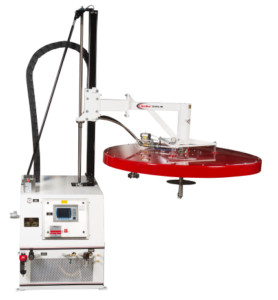
Drum, IBC & Tote Wash Systems
Automated systems clean drums, IBCs, and totes with rotary spray heads, heated recirculation, and programmed cycles for safe reuse.
Read the guide →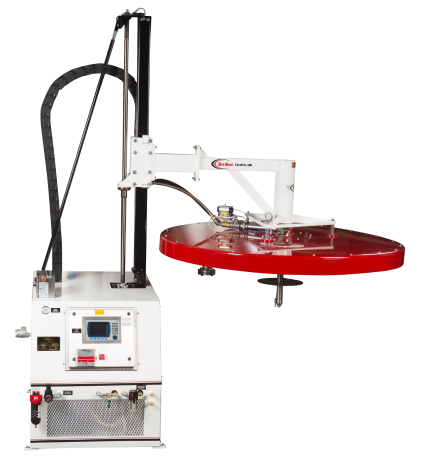
Spray Ball Coverage & Rotary Wash Heads
Static spray balls, rotary spray heads, and rotary jet heads differ in coverage and impact; flow and pressure decide which one your soil needs.
Read the guide →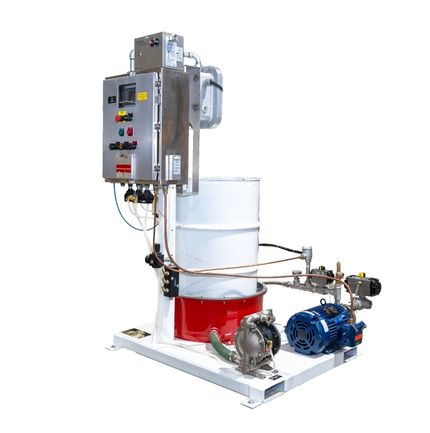
Wash Cycles & Chemistry
Effective wash cycles sequence pre-rinse, caustic, acid, and sanitize while balancing time, temperature, chemistry, and force to the soil.
Read the guide →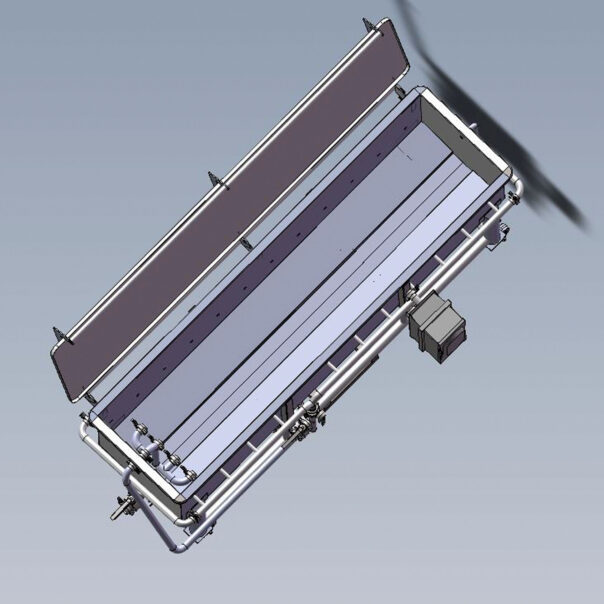
COP & Parts Washing
Clean-out-of-place wash tanks and carts clean parts and fittings by agitation or ultrasonics where automated tank washing cannot reach.
Read the guide →Frequently Asked Questions
- Can the same equipment wash both food and chemical containers?
- In practice, no. Food-contact and chemical containers run separate wash systems to prevent cross-contamination and to isolate different wash chemistries. Shared infrastructure (dosing skids, drying tunnels) is acceptable, but wet-side equipment is dedicated by product class.
- What's the typical cycle time?
- A standard 55-gal drum wash cycle: 8–12 minutes. An IBC wash cycle: 12–20 minutes. Keg wash (brewery keg line): 90–120 seconds. Conveyor lines run continuous-flow at 1–3 containers/minute.
- Do food-container washers require 3-A certification?
- Not necessarily the washer itself, but the wash protocol and equipment must be validated to meet the applicable food-safety standard — FSMA, FDA 21 CFR 178, USDA-AMS for dairy, BRC, SQF. Washers are often specified with 3-A sanitary components to support plant-wide GMP programs.
- Can we reuse wash water?
- Yes. Caustic and acid circuits typically recirculate with make-up dosing. Final rinse is single-pass potable or purified water. Recovery and filtration skids enable 70–90% water reuse on the wash circuits, cutting water and sewer costs substantially.
Start a Tank Washers & Cleaning Systems Project
Give us your process specs and we come back with a full engineering package, firm lead time, and a fixed price. Freight quoted separately to your ZIP.
Request a Custom Quote Call 866-418-1777