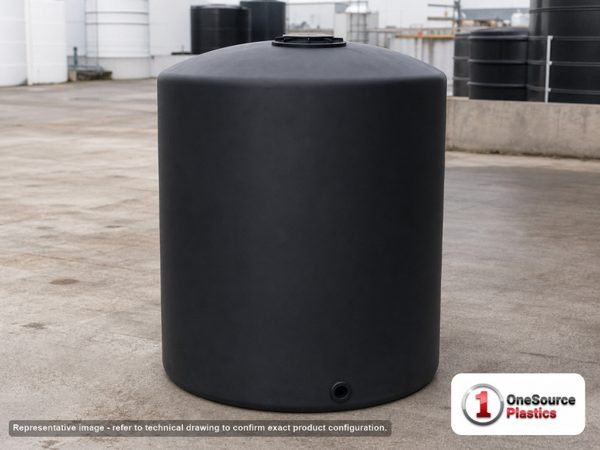
Snyder Captor Plus 110% Containment vs UL-142 Steel Secondary for SPCC 40 CFR 112: Apples-to-Apples Comparison
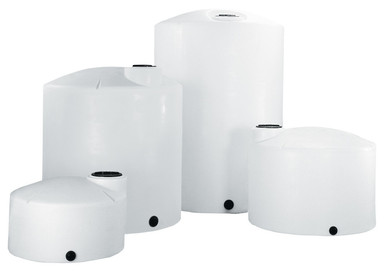
Snyder Captor Plus 110% Containment vs UL-142 Steel Secondary for SPCC 40 CFR 112: Apples-to-Apples Comparison
Filed under: SPCC compliance, secondary containment engineering, oil and chemical storage. Companion read: SPCC Secondary Containment Pillar and Double-Wall Tank Category.
The compliance question that confuses every facility engineer
If your facility stores 1,320 gallons or more of oil aboveground in containers of 55 gallons or larger, you are subject to the EPA Spill Prevention, Control, and Countermeasure rule at 40 CFR Part 112. The rule's general secondary containment requirement at 40 CFR 112.7(c) and the bulk-storage-specific requirement at 40 CFR 112.8(c)(2) say the same thing in two different ways: prevent a discharge to navigable waters by providing containment that can hold the volume of the largest single container plus a freeboard for precipitation. EPA's longstanding interpretation, captured in the SPCC Guidance for Regional Inspectors, is that 110% of the largest container's capacity is the practical engineering target for the containment volume.
Once a facility manager accepts that target, the architecture decision splits into two paths:
- Path A — UL-142 steel single-wall tank inside a bermed concrete or earthen secondary containment structure sized to hold 110% of the tank capacity plus the 25-year, 24-hour storm event for the local AHJ.
- Path B — A pre-engineered double-wall tank (Snyder Captor in polyethylene or a UL-142 double-wall steel equivalent) that provides the secondary containment integral to the primary vessel, eliminating the bermed area entirely or reducing it to a small-spill drip apron.
Both paths can satisfy 40 CFR 112.7(c). They have very different total installed cost, footprint, lifecycle maintenance burden, and chemistry compatibility envelopes. This article walks through the engineering tradeoffs with real OneSource SKUs and specification guidance you can carry into a design review.
What the regulation actually requires (and does not)
Read the regulation carefully because there is more flexibility than most facility engineers assume.
40 CFR 112.7(c) states the general requirement: provide appropriate containment or diversionary structures to prevent a discharge as described in 112.1(b). The containment method, design, and capacity must address the typical failure mode and the most likely quantity of oil that would be discharged.
40 CFR 112.8(c)(2), which applies specifically to onshore bulk storage at facilities other than oil production, drilling, and workover, requires that you "construct all bulk storage tank installations (except mobile refuelers and other non-transportation-related tank trucks) so that you provide a secondary means of containment for the entire capacity of the largest single container and sufficient freeboard to contain precipitation."
The rule does not specify 110% as a numeric target. The 110% guidance comes from EPA's interpretive material: the practical engineering rule of thumb that the entire capacity of the largest container plus precipitation freeboard typically lands near 110% of nominal capacity in real-world bermed installations. EPA inspectors will accept any defensible calculation that shows your containment captures the largest container plus your local 25-year, 24-hour rainfall. In high-rainfall regions like the coastal or the Pacific Northwest, the freeboard requirement may push your design well above 110% — sometimes 115-120% of nominal capacity.
Read the EPA guidance at the EPA SPCC information portal for the regional inspector materials and the most current case-law interpretations. The numeric target you commit to in your SPCC plan is yours to defend.
Path A in detail — UL-142 single-wall steel inside a bermed area
This is the architecture you see at thousands of fuel oil yards, lubrication shops, transformer stations, and industrial maintenance facilities across the country. UL-142 is the Underwriters Laboratories standard for "Steel Aboveground Tanks for Flammable and Combustible Liquids." A UL-142-listed tank is built to a tested wall thickness, head design, and emergency vent specification that the AHJ recognizes for above-ground combustible liquid service.
The secondary containment around the UL-142 tank is typically a bermed area built from one of three constructions:
- Reinforced concrete walls and slab, designed and stamped by a licensed structural engineer, with a chemically compatible liner if the fuel is gasoline or a hydrocarbon that attacks concrete.
- Earthen berms compacted to specification with a continuous synthetic liner (HDPE or PVC geomembrane) and a soil cover.
- Pre-engineered modular spill-containment basins (steel pan with a drainable sump) sized to the tank.
Pros of Path A:
- Steel tank is mechanically tough against vehicle impact and ballistic events that polyethylene cannot tolerate.
- UL-142 listing is universally recognized by every fire marshal and AHJ.
- Steel is fully compatible with diesel, gasoline, motor oil, hydraulic oil, and most distillate fuels — the bread-and-butter SPCC inventory.
- Repairable. A localized corrosion pit can be patched and recoated.
Cons of Path A:
- Footprint is large. A 1000-gallon UL-142 tank with a 110%+ bermed containment occupies 200-400 square feet of yard space depending on geometry.
- Concrete berm with engineering, formwork, rebar, and pour costs $20,000-$60,000 for a typical small installation. Earthen berm with liner is cheaper but maintenance-intensive.
- Containment area must be inspected and water-drained after every rainfall. Drained water is presumed contaminated until tested.
- Steel corrodes. Without disciplined cathodic protection and coating maintenance, expect 20-30 year service life. With good maintenance, 40-50 years.
- Berm freeboard for precipitation is consumed by every rain event until the inspector drains it. In high-rainfall areas this is a continuous operational chore.
OneSource does not stock UL-142 steel tanks — that is the steel-fabricator category and we route those quotes to Custom and Specialty Fabrication. We do, however, sell the polyethylene equivalent for certain non-flammable oil and chemical applications: the Snyder Captor double-wall polyethylene tank.
Path B in detail — Snyder Captor double-wall polyethylene
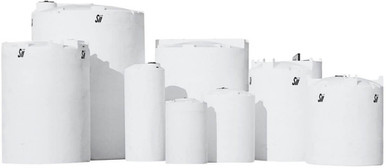
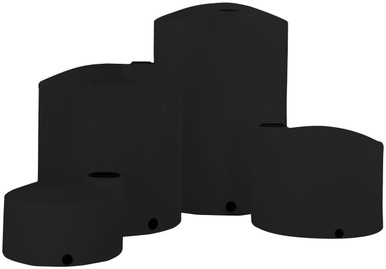
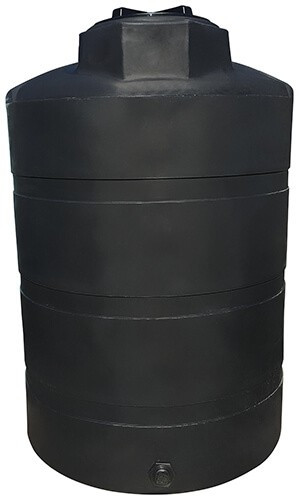
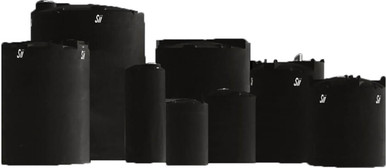
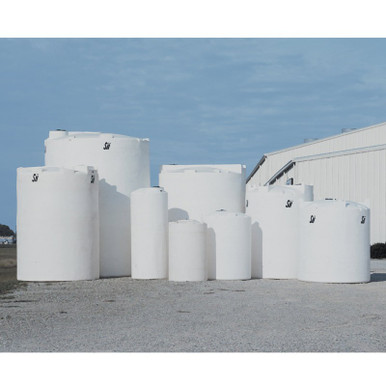
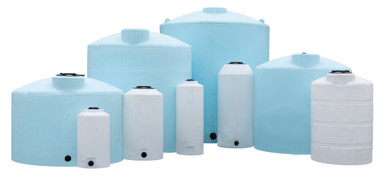
Snyder Industries' Captor product line is a rotomolded double-wall polyethylene tank: a primary inner vessel and a secondary outer containment vessel, molded as an assembly with the interstitial space accessible for visual or sensor-based leak monitoring. The Captor is engineered to provide 110% of the primary tank's capacity inside the outer wall — the secondary containment is integral to the vessel itself, not a separate berm.
Real OneSource Snyder Captor SKUs in the catalog:
- Snyder MPN 5590000N52 — 3000 Gallon HDPLE Captor Double Wall Liquid Storage Tank Opaque Resin, listed at $24,698.99. The 3000-gallon class is the workhorse for midsize SPCC inventories.
- Snyder MPN 5580000N52 — 2500 Gallon Sodium Hypochlorite (UV) Captor Double Wall Tank, listed at $18,701.29. UV-stabilized resin specifically engineered for outdoor sodium hypochlorite service where chlorine residual decay matters.
- Snyder MPN 1006600N43 — 10,000 Gallon HDLPE Captor Double Wall Liquid Storage Tank rated for 1.5 Specific Gravity, listed at $70,408.99. The largest Captor class for high-volume bulk chemical storage.
- Snyder MPN 1006600N42 — 10,000 Gallon XLPE Captor Double Wall Liquid Storage Tank rated for 1.9 specific gravity, listed at $91,468.99. Crosslinked polyethylene for higher-specific-gravity chemistry duty.
- Snyder MPN 1006600N45 — 10,000 Gallon HDLPE Captor Double Wall Liquid Storage Tank, listed at $71,533.31.
- Snyder MPN 1006600N49 — 10,000 Gallon HDLPE Captor Double Wall in Black, listed at $70,398.99.
Snyder also produces smaller-volume vertical double-wall tanks in the 100-2000 gallon range for waste oil and chemical service:
- Snyder MPN 5780102N95703 — 500 Gallon Plastic Vertical Double Wall Waste Oil Tank in Yellow, listed at $3,598.99. Yellow per ANSI Z535 caution-color convention for waste oil.
- Snyder MPN 5740102N95703 — 275 Gallon Plastic Vertical Double Wall Waste Oil Tank in Yellow, listed at $2,658.99.
- Snyder MPN 5990102N95703 — 1000 Gallon Plastic Vertical Double Wall Waste Oil Tank in Yellow, listed at $5,091.07.
- Snyder MPN 5490000N42 — 1550 Gallon Vertical Double Wall XLPE Liquid Chemical Storage Tank in White, listed at $10,091.93. The XLPE construction extends chemistry compatibility beyond what HDPE can tolerate.
- Snyder MPN 5700102N95703 — 120 Gallon Plastic Vertical Double Wall Waste Oil Tank in Yellow, listed at $1,628.23. The smallest Captor-equivalent in the catalog, suited to small shop and fleet maintenance applications.
Pros of Path B:
- Compact footprint. A 3000-gallon Captor occupies its own diameter plus a small drip apron. No 200-square-foot bermed area to dedicate.
- No bermed-area rainwater management. The interstitial space stays dry and is not exposed to the sky. Eliminates the daily inspection-and-drain burden.
- Chemistry compatibility. XLPE-bodied Captor handles sulfuric acid, sodium hydroxide, sodium hypochlorite, ferric chloride, urea-ammonium nitrate, glyphosate concentrate, and most water treatment and ag chemistry. HDPE-bodied Captor handles oil, glycol, and most aqueous service. Steel cannot match this chemistry breadth.
- No corrosion. Polyethylene does not rust. UV-stabilized resin gives 20+ year service life outdoors with minimal maintenance.
- Faster install. A Captor lands on a prepared concrete pad in a single day. A bermed steel installation often takes weeks for the concrete cure plus tank set.
- Leak monitoring. Interstitial space accepts a visual sight tube or an electronic conductivity sensor for early leak detection. UL-142 single-wall in a berm gives you no warning until the berm has fluid in it.
Cons of Path B:
- Not for flammable liquids. Polyethylene Captor is not UL-142 listed and is not rated for gasoline, jet fuel, or other flammable Class IB or IC liquids. Diesel (Class II combustible) is acceptable in many jurisdictions; verify with local AHJ. For gasoline, you need UL-142 steel.
- Mechanical impact tolerance is lower than steel. A forklift strike that would dent steel can crack polyethylene. Bollard protection in a vehicle traffic area is mandatory.
- Higher upfront tank cost than UL-142 single-wall steel. A 3000-gallon UL-142 single-wall steel tank is in the $4,000-$8,000 range; the equivalent polyethylene Captor is $21,000+. The Captor wins on total installed cost only when you account for the elimination of the bermed containment structure.
- Repair envelope is narrower. A small puncture in the outer wall can sometimes be repaired by a certified rotomolder. A primary-wall failure typically requires tank replacement.
- Resin-specific chemistry limits. HDPE Captor cannot handle high-specific-gravity acid service. XLPE Captor cannot handle concentrated organic solvents. Specify the resin to the contents.
Apples-to-apples cost comparison at 3000 gallons
Let us compare a 3000-gallon SPCC installation across both paths. Numbers are typical Midwest installation order-of-magnitude figures, not coastal or California permit-burden territory.
| Line item | Path A: UL-142 + bermed concrete | Path B: Snyder Captor double-wall |
|---|---|---|
| Primary tank | $5,500 (3000 gal UL-142 single-wall steel) | $21,210 (Snyder MPN 5590000N52 Captor) |
| Concrete pad (both paths need pad) | $3,000 | $3,000 |
| Bermed containment, engineered concrete with stamped drawings, 110% volume + 25-yr/24-hr storm freeboard | $30,000-$50,000 | $0 |
| Containment liner (chemical-resistant coating on concrete) | $4,000 | $0 |
| Bollards (vehicle protection) | $2,000 | $2,500 (more important on PE) |
| Vent, gauge, sample port, level sensor | $2,500 | $2,500 |
| Engineering and permitting | $8,000 | $3,000 |
| Annual containment-area rainwater management labor | 20-40 hours/year | ~0 hours/year |
| Approx total installed | $55,000-$75,000 | $32,000-$35,000 |
The Captor wins on total installed cost at 3000 gallons in most installations. The crossover point shifts as you scale up — at 10,000 gallons, the absolute Captor tank cost ($60K-$78K) starts to approach the bermed-installation total cost, and the calculus becomes site-specific. For very large installations (25,000+ gallons), bermed UL-142 farms are usually more cost-effective per gallon. For small to midsize SPCC installations (1,000-5,000 gallons), the Captor is almost always cheaper installed.
Chemistry compatibility — the deciding factor for many sites
Steel is great for hydrocarbons. Steel is terrible for sodium hypochlorite, sulfuric acid, hydrochloric acid, ferric chloride, sodium hydroxide above 50 percent concentration, and most ag chemistry. Polyethylene Captor handles all of those — XLPE for the more aggressive chemistries, HDPE for the milder ones.
Real-world example: a water treatment plant that stores 12.5% sodium hypochlorite for chlorination has effectively no choice. Steel will be eaten in months. Lined steel is expensive and the lining fails. Concrete-lined steel is even worse. The Snyder MPN 5580000N52 (2500 Gallon Sodium Hypochlorite UV Captor Double Wall, listed at $18,701.29) is purpose-engineered for this service: UV-stabilized resin to slow sodium hypochlorite decay, double-wall containment for SPCC compliance, and integral interstitial monitoring for leak detection.
For a sulfuric acid storage installation in the 1500-gallon range, the Snyder MPN 5490000N42 (1550 Gallon Vertical Double Wall XLPE in White, listed at $10,091.93) handles dilute to moderate concentration sulfuric in XLPE. Concentrated 93% sulfuric needs different metallurgy or a different polymer; consult the Sulfuric Acid Compatibility Pillar for the concentration ladder.
Specifying the Captor installation
Once you have selected a Captor for an SPCC role, the specification package should address:
- Resin selection. HDPE for oil and most aqueous; XLPE for higher-specific-gravity acid, oxidizer, or aggressive chemistry. Cite the chemistry by name and concentration in the spec, not just "chemicals."
- Specific gravity rating. Specify a Captor rated for at least the actual product specific gravity, with margin. A 1.5-SG-rated Captor for a 1.4-SG urea-ammonium nitrate solution gives appropriate margin.
- Color. Black for full UV exclusion and reduced internal photochemistry. Yellow per ANSI Z535 for waste oil. White or natural where operators need to see the level externally on translucent walls.
- Concrete pad. ACI-stamped foundation design sized for full tank weight + product weight + safety factor.
- Interstitial leak detection. Either a visual sight gauge with a PE float, or an electronic conductivity sensor wired to the facility alarm panel. Specify which in the purchase order.
- Vehicle protection. Bollards on any side facing traffic. Spec a minimum 6-inch schedule-80 steel bollard, concrete-filled, on a 30-inch by 30-inch by 36-inch footing.
- Vent and emergency vent. Properly sized atmospheric vent for normal fill/draw breathing. For combustible liquids, an emergency relief vent sized per NFPA 30 calculations.
- SPCC plan update. Document the Captor as integral secondary containment in the facility SPCC plan, with a note that the bermed-area requirement is satisfied by the integral outer wall design.
The hybrid case — Captor inside a small drip apron
Some AHJs and some inspectors prefer a small drip apron (a low concrete or asphalt curb around the Captor that captures small spills from filling operations) even though the integral outer wall provides the full SPCC containment volume. The drip apron does not need to be sized to 110% of tank capacity; it only needs to capture nuisance spills from the fill connection. A 6-inch curb around a 12-foot diameter pad is typical. This hybrid satisfies the most conservative SPCC inspectors without rebuilding the entire bermed-containment-area infrastructure.
What the EPA inspector will actually check
When an EPA Region or state-delegated inspector audits your SPCC plan implementation, the secondary containment review walks through:
- Calculation showing containment volume meets or exceeds 110% of largest container plus local 25-year, 24-hour rainfall.
- For bermed installations: berm height, slope stability, liner integrity, drain-and-test procedure for accumulated rainwater.
- For double-wall installations: interstitial monitoring method, leak-detection alarm response procedure, last interstitial inspection date.
- Tank shell integrity: for steel, visual corrosion + ultrasonic thickness if older than 10 years; for polyethylene, visual UV-degradation check + interstitial pressure test if equipped.
- Vent and emergency vent sizing documentation against NFPA 30 (combustibles) or applicable industry standard.
- SPCC plan certification by a Professional Engineer (or qualified facility self-certification for Tier I qualified facilities).
Both Path A and Path B can satisfy all six checkpoints. The Captor architecture typically generates fewer recurring inspection findings because there is no bermed area to manage and the integral interstitial space is engineered as part of the tank, not assembled as a site-built structure that can develop deficiencies over time.
Bottom line
For oil storage at facilities subject to 40 CFR Part 112, both UL-142 steel inside a bermed area and Snyder Captor double-wall polyethylene satisfy the secondary containment requirement. The choice comes down to chemistry, footprint, total installed cost, and operational maintenance burden. For non-flammable oil, glycol, and most chemical service in the 1,000-5,000 gallon range, the Captor architecture usually wins on installed cost and operational simplicity. For flammable Class I liquid service or for installations above 25,000 gallons, UL-142 steel inside a properly engineered bermed area is typically the right choice. For aggressive chemistry — sodium hypochlorite, acid, oxidizer service — the Captor is often the only defensible choice because steel cannot tolerate the chemistry.
Browse the Double-Wall Tank Category for the full Captor lineup and routed-quote options for steel. Freight on any tank is quoted to ZIP through the Freight Cost Estimator or by phone at 866-418-1777.
Recommended Tanks for This Guide
Live pricing, updated automatically · estimate freight to your ZIP.