Custom Tank Fabrication: When Off-Shelf Tanks Don't Work - Specialty Specification Guide
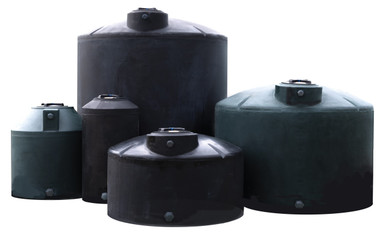
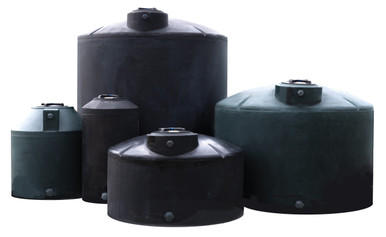
The standard rotomolded polyethylene tank market covers roughly 80-85% of buyer requirements. The remaining 15-20% requires custom fabrication: stainless steel pressure vessels, FRP-lined chemistry tanks, ASME-stamped pressure tanks, large-diameter vertical tanks above 15,000 gallons, jacketed thermal tanks, and process equipment integration. This guide is the specification framework for when off-shelf tanks don't work and custom fabrication is the answer.
OneSource Plastics maintains a custom-tank-fabrication intake process for non-stock specifications. The article walks the decision criteria for choosing custom over standard, the spec sheet you'll need to assemble before quote, and the engineering trade-offs across the three primary custom-fab material families: stainless steel, FRP composite, and engineered HDPE / XLPE.
When Off-Shelf Tanks Don't Work
Standard rotomolded HDPE / XLPE tanks have an operating envelope. Outside that envelope, custom fabrication is the engineered answer. The most common drivers:
Driver 1: Pressure rating above atmospheric
Rotomolded polyethylene tanks are designed for atmospheric pressure (roughly 0-2 psi gauge). Any service requiring positive pressure above atmospheric — surge pressure, pneumatic blowdown, vacuum / blanket gas systems, sealed CO2 venting — requires ASME-stamped pressure vessel construction. Pressure vessels per ASME Section VIII Division 1 cover 15+ psi service. Vacuum service even at -10 psi gauge requires engineered vacuum-rated construction.
Driver 2: Service temperature above 140F continuous
HDPE caps continuous service at roughly 100-120F; XLPE extends to 140F. Above 140F continuous, polymer creep accelerates and structural margin disappears. Hot-process services (chemical reactors, sterilization systems, hot caustic above 140F, hot oil above 200F) require stainless steel or specialty alloy.
Driver 3: Specific gravity above 1.9
Standard XLPE rates to 1.9 SG. Specialty fluids exceeding 1.9 SG include phosphoric acid 75-85% (SG 1.6-1.7, fits XLPE), sulfuric acid 98% (SG 1.84, fits XLPE), but mercury (SG 13.5), zinc bromide brines (SG 2.0-2.5), and high-density slurries push past XLPE. Stainless steel or specialty FRP is the answer.
Driver 4: Capacity above 15,000 gallons
Single-piece rotomolded vertical tanks top out at roughly 15,000-20,000 gallons depending on manufacturer. Above that capacity, options are:
- Multiple smaller rotomolded tanks plumbed in parallel (engineered manifold; see Multi-Tank Manifolding).
- FRP field-erected tanks (15,000 - 100,000+ gallons).
- Welded steel field-erected tanks (any capacity).
- Bolted-steel modular tanks (any capacity, fastest field assembly).
Driver 5: Specialty chemistry beyond polyethylene compatibility
Polyethylene compatibility chart fails for: aromatic solvents (benzene, toluene, xylene), chlorinated solvents (TCE, PCE, methylene chloride), hydrofluoric acid above 70%, fuming nitric acid, oleum, ferric chloride at high concentration with elevated temperature, hot bleach above 50C. These services require stainless 304 / 316L, Hastelloy, FRP with vinyl-ester or epoxy resin, or specialty fluoropolymer-lined tanks.
Driver 6: Geometric / footprint constraints
Off-shelf tanks come in standard diameters and heights. If site constraints require a specific footprint — below-grade vault dimensions, low-overhead industrial space, custom skid integration, marine / OEM equipment integration — custom fabrication delivers the exact geometry. Common cases: under-counter chemistry feed tanks, low-roof basement potable storage, OEM equipment integration where the tank is a component of a larger machine.
Driver 7: Code / regulatory requirements beyond rotomold capability
UL 142 listed petroleum tanks, UL 2085 protected aboveground tanks, ASME Section VIII pressure vessels, NFPA 30 flammable / combustible storage tanks, EPA Method 27 tested tanks — all require specific material and construction methods that off-shelf rotomolded products do not provide.
Custom Fabrication Material Families
Stainless steel (304, 316L, 904L, Hastelloy)
The default for high-temperature, high-pressure, sanitary, and food-grade applications. 304 stainless is the workhorse for general service; 316L for chloride-bearing chemistry; 904L and Hastelloy for severe acid service.
- Strengths: high pressure rating (ASME Section VIII), high temperature (300-600F+), corrosion resistance with right alloy, long service life (40-60+ years typical), sanitary / food-grade options (3A standard, USDA, FDA).
- Limitations: chloride-induced stress corrosion cracking on 304 (use 316L for chlorides), pitting in stagnant chloride environments, high cost (5-10x rotomolded HDPE).
- Lead time: 8-20 weeks depending on size, alloy, ASME stamp requirements.
- Common applications: dairy / food processing, pharmaceutical, brewery / distillery, hot caustic, sulfuric acid mixing, vacuum service, ASME pressure vessels, jacketed thermal tanks.
FRP / Composite (vinyl ester, epoxy, isophthalic polyester)
Field-erected or shop-fabricated fiberglass-reinforced plastic with chemistry-specific resin liner. The standard for large-capacity chemistry above the rotomolded ceiling.
- Strengths: excellent chemistry resistance with right resin (vinyl ester for oxidizers, epoxy for solvents, isophthalic for general service), high capacity (100,000+ gallons field-erected), long service life on chemistry (25-40 years), lower weight than steel.
- Limitations: requires resin selection matched to specific chemistry (no universal resin), inspection / repair requires specialty technique (gel coat, blistering monitoring), UV degradation requires gel coat refresh on outdoor service every 7-15 years, field-erected installation logistics complex.
- Lead time: 12-32 weeks depending on size and field erection.
- Common applications: wastewater treatment plant chemistry feed, large-capacity acid storage, brine storage, specialty chemistry beyond polyethylene compatibility, large-diameter water storage where steel cost is prohibitive.
Engineered polyethylene (custom rotomold, sheet-fabricated HDPE)
For applications inside the polyethylene chemistry envelope but outside standard catalog dimensions or capacity. Two paths: custom rotomold tooling (high tooling cost, low per-unit cost at scale) or sheet-fabricated HDPE (no tooling, higher per-unit cost, geometric flexibility).
- Strengths: chemistry-compatible with polyethylene service envelope, lower cost than steel or FRP for sub-15,000-gallon custom geometry, HDPE sheet-fabricated tanks deliver any rectangular / cubic footprint, faster lead time than custom rotomold (no tooling).
- Limitations: sheet-fabricated joints require quality welding (not all fabricators are equal), wall thickness limited by sheet stock (typically 1/4-inch to 1-inch), pressure rating still atmospheric.
- Lead time: 4-10 weeks for sheet-fabricated; 16-32 weeks for custom rotomold tooling + first article.
- Common applications: rectangular / box-style tanks (no off-shelf round tank fits), under-counter chemistry feed, OEM equipment integration, custom chemistry storage at standard polyethylene chemistry envelope, specialty cone-bottom geometry.
Spec Sheet to Assemble Before Quote
Before requesting a custom fabrication quote, assemble the following spec sheet. Quality of quote correlates directly with quality of input.
Process spec
- Service fluid: exact chemical name, concentration, mixture composition (not "acid solution"; "37% hydrochloric acid, 0.5% inhibitor X").
- Specific gravity: exact SG at maximum operating concentration and temperature.
- Operating temperature: minimum, normal, maximum continuous, peak excursion. Specify both fluid and ambient.
- Operating pressure: atmospheric / vacuum / positive pressure / surge pressure. Quantify.
- Duty cycle: static storage, slow fill-drain, rapid cyclic, batch process. Cycle frequency.
- Capacity required: nominal capacity, working capacity (typically 80% of nominal with freeboard), surge volume.
- Process integration: upstream / downstream equipment, pump rates, piping size, instrumentation taps.
Geometric spec
- Footprint constraint: available floor space, length × width × height envelope.
- Access constraint: doorway / hatch dimensions for delivery, crane access, install logistics.
- Foundation: existing pad / new pad / structural support / saddle requirements.
- Environment: indoor / outdoor / climate / UV / temperature swings / wind / seismic zone.
- Containment: single-wall / double-wall / berm / vault.
Code / regulatory spec
- NSF/ANSI 61: required for potable water service.
- FDA / 3A: required for food, dairy, pharmaceutical service.
- ASME Section VIII: required for pressure vessels above 15 psi gauge.
- UL 142: required for atmospheric-pressure aboveground petroleum storage.
- UL 2085: protected aboveground tanks (fire-resistant, ballistic, vehicle-impact).
- NFPA 30: flammable / combustible liquid storage.
- SPCC (40 CFR 112): double-wall or secondary containment for petroleum / regulated chemistry.
- Local building code: seismic, wind, flood, snow load applicable to install location.
Fitting / accessory spec
- Inlet / outlet: size, location, flange / NPT / sanitary clamp.
- Vent: atmospheric / chemical-rated / pressure-vacuum vent / flame arrestor.
- Lid / manway: size, location, hinged / bolted / sanitary clamp.
- Instrumentation: level switches, pressure transmitters, temperature probes, sample ports.
- Heat trace / insulation: required, target temperature, insulation thickness.
- Internal components: mixers, baffles, heating coils, dip tubes.
Material Selection by Service Type
| Service | First Choice | Alternate | Notes |
|---|---|---|---|
| Hot caustic 50% above 140F | 316L stainless | FRP vinyl ester | XLPE caps at 140F |
| Hydrofluoric acid 70%+ | FRP vinyl ester | PFA-lined steel | Polyethylene fails at HF |
| Aromatic solvents (toluene, xylene) | 316 stainless | FRP epoxy | Polyethylene swells with aromatics |
| ASME pressure vessel (15+ psi) | 304 / 316L stainless | Carbon steel ASME | Atmospheric-only on poly |
| Sanitary / 3A dairy | 316L stainless | (none) | Code requires stainless |
| Pharmaceutical / cGMP | 316L electropolished | PFA-lined | FDA / cGMP certifications |
| Large-capacity (50,000+ gal) chemistry | FRP field-erected | Lined carbon steel | Beyond rotomold ceiling |
| Rectangular / cubic footprint | Sheet-fabricated HDPE | Stainless or carbon steel | No off-shelf round tank fits |
| Vacuum service | Vacuum-rated stainless | Vacuum-rated FRP | Atmospheric poly will collapse |
| Jacketed / heated process | 316L jacketed stainless | FRP with internal coil | Polyethylene cannot be jacketed |
| UL 142 petroleum, AST | UL-listed steel | UL 2085 protected steel | Code requires UL listing |
When to Stay With Off-Shelf Polyethylene
Custom fabrication is expensive, slow, and code-heavy. Stay with off-shelf rotomolded polyethylene when:
- Service is inside the chemistry envelope. Water, DEF, sodium hypochlorite up to 12.5%, sodium hydroxide up to 50%, sulfuric acid up to 93% (XLPE), most agricultural chemistry — all fit standard rotomolded inventory.
- Capacity fits standard SKUs. Up to roughly 15,000 gallons single-piece. Snyder XLPE catalog covers chemistry to 6,000 gallons; Enduraplas TLV vertical to 10,000+ gallons (EP-TLV10000 $12,415.99 list before freight); Norwesco vertical water broadly to 5,000+ gallons.
- Standard cone-bottom geometry works. Chem-Tainer cone-bottom catalog covers 15-, 30-, 45-degree cones with poly stand. Examples: TC-TC3148JP 100 gal cone-bottom with stand $1,020.00 list, TC-TC3166JP 150 gal $1,190.00 list.
- Atmospheric pressure / temperature within polyethylene envelope. 100-140F continuous depending on resin.
- Lead time matters. Off-shelf tanks ship in 1-4 weeks; custom is 8-32 weeks.
The decision is rarely close at the boundaries. Service that fits a standard SKU should not be custom-fabricated; service that exceeds the polyethylene envelope cannot use a standard SKU.
Custom Fabrication Cost Bands
Indicative cost-per-gallon ranges for custom fabrication. Actual quote depends on alloy, code requirements, geometry, and scope of accessories. These are order-of-magnitude estimates for capacity-budgeting only.
| Material | $ / gallon (1,000-5,000 gal) | $ / gallon (10,000-50,000 gal) | Typical lead time |
|---|---|---|---|
| Off-shelf HDPE rotomold (reference) | $0.50-$2.00 | $0.50-$1.50 | 1-4 weeks |
| Off-shelf XLPE rotomold | $1.00-$3.00 | $1.00-$2.50 | 2-8 weeks |
| Sheet-fabricated HDPE custom | $3-$8 | $2-$5 | 4-10 weeks |
| FRP shop-fabricated | $5-$15 | $3-$8 | 8-16 weeks |
| FRP field-erected | N/A (use shop-fab) | $2-$6 | 12-32 weeks |
| 304 stainless (atmospheric) | $10-$25 | $6-$15 | 8-20 weeks |
| 316L stainless (atmospheric) | $15-$30 | $8-$20 | 10-22 weeks |
| 316L ASME pressure (15+ psi) | $25-$60 | $15-$35 | 12-26 weeks |
| UL 142 / UL 2085 steel petroleum | $8-$20 | $5-$12 | 8-16 weeks |
| Hastelloy / specialty alloy | $60-$200+ | $30-$120+ | 16-32 weeks |
The Custom Fabrication Quote Process
OneSource Plastics intake process for custom fabrication:
- Initial conversation. Phone (866-418-1777) or contact form. Define service, capacity, geometry, code requirements.
- Spec sheet assembly. Buyer assembles the process / geometric / code / fitting spec described above. We help fill gaps where the buyer doesn't have data.
- Material recommendation. We recommend material family based on service. Buyer can request alternate material; we explain trade-offs.
- Vendor selection. We engage qualified custom fabricators matched to material family and capacity. Multiple vendors quoted for competitive bid where possible.
- Quote return. Lead time, cost, code documentation, install support, freight, warranty.
- Engineering review. If buyer has consulting engineer, vendor drawings reviewed before fabrication. Common review points: nozzle locations, instrumentation taps, lifting lugs, seismic restraints, accessory mounting.
- PO release and fabrication. Vendor builds; weekly status updates; pre-ship inspection if required.
- Freight and install. Specialty freight (oversized load, escort vehicles, route permits) coordinated. Install support coordinated with site.
- Code certification documentation. ASME U-1A form, UL listing card, NSF certification, weld documentation, hydrotest records — all delivered with the tank.
Common Custom-Fabrication Mistakes
Mistake 1: Going custom when off-shelf would have worked
Custom fabrication is 5-50x off-shelf cost depending on material. Always exhaust off-shelf options first. Snyder XLPE catalog covers most industrial chemistry to 6,000 gallons; Enduraplas TLV covers high-capacity vertical water; Chem-Tainer covers cone-bottom process. Many "custom" requests fit a standard SKU buyers haven't searched.
Mistake 2: Specifying alloy without service-specific input
"304 stainless" for a chloride-bearing service is a warranty claim waiting to happen (chloride stress corrosion cracking). Always specify alloy by service chemistry, not by generic preference. 316L for chlorides; 904L or Hastelloy for severe acid; 2205 duplex for chloride + temperature combinations.
Mistake 3: Skipping the code requirements at quote stage
"We need it ASME stamped" added at week 8 is a quote restart. ASME stamp requires specific material certifications, weld procedures, X-ray, hydrotest, U-1A documentation. Quote with code requirements stated at intake.
Mistake 4: Under-budgeting freight and install
A 30,000-gallon FRP field-erected tank is freighted as components and erected on site. Freight is 5-15% of tank cost; install can be 10-25%. A 50,000-pound stainless ASME pressure vessel may require oversized-load permitting, route survey, escort vehicles, and crane mobilization.
Mistake 5: Forgetting accessory and integration cost
The tank itself is half the project. Pumps, piping, instrumentation, controls, secondary containment, foundations, electrical, weatherization — budget 50-150% of the tank cost for accessory and integration scope on most custom projects.
Project Examples
Example 1: 1,500-gallon hot-caustic mixing tank, 160F continuous
Service exceeds XLPE temperature limit. Material recommendation: 316L stainless atmospheric, 0.250-inch wall, sloped-bottom drain, 4-inch flanged inlet/outlet, top-mount mixer flange, ASME-style head construction (without stamp because atmospheric). Indicative cost $25-40k; lead time 12-16 weeks.
Example 2: 50,000-gallon ferric chloride 40% storage
Capacity above rotomolded ceiling and chemistry on the edge of polyethylene compatibility. Material recommendation: FRP field-erected, vinyl ester resin liner with chemical-rated primary corrosion barrier, 0.500-inch wall, gel coat exterior, conical bottom, top manway with chemical-rated lid. Indicative cost $200-400k; lead time 24-32 weeks.
Example 3: 8,000-gallon hydrofluoric acid 70%, indoor
Chemistry beyond polyethylene compatibility. Material recommendation: PFA-lined carbon steel, ASME-style construction (atmospheric), specialty PFA gaskets and fittings, vacuum-rated atmospheric vent. Indicative cost $300-600k; lead time 28-40 weeks.
Example 4: 5,000-gallon dairy CIP holding tank, 3A sanitary
Code requires sanitary stainless. Material recommendation: 316L electropolished interior, sanitary clamp inlets/outlets, hinged sanitary manway, CIP spray-ball, tri-clamp drain. Indicative cost $80-150k; lead time 14-20 weeks.
Example 5: Custom rectangular under-counter chemistry feed, 200 gallons
Standard round tank does not fit available footprint. Material recommendation: sheet-fabricated 1/2-inch HDPE, 36 × 36 × 36-inch cubic, top access, 2-inch NPT outlet, integrated drip-pan secondary containment. Indicative cost $3-5k; lead time 5-8 weeks.
Internal Resources
- Custom Tank Fabrication Hub — full microsite, supplier-agnostic intake
- Resin Selection Decision Tree
- Chemical Compatibility Database
- Multi-Tank Manifolding
- Cone-Bottom Tank Degree Selection
- Tank Lead-Time and Logistics
- Tank Insurance and Liability
- Contact OneSource — custom fabrication intake, supplier-matched bidding (866-418-1777)
Source Citations
- ASME Section VIII Division 1 — Boiler and Pressure Vessel Code, Pressure Vessels
- ASTM D1998 — Standard Specification for Polyethylene Upright Storage Tanks
- NSF/ANSI 61 — Drinking Water System Components: Health Effects
- UL 142 — Steel Aboveground Tanks for Flammable and Combustible Liquids
- UL 2085 — Insulated Aboveground Tanks for Flammable and Combustible Liquids
- NFPA 30 — Flammable and Combustible Liquids Code
- 3A Sanitary Standards — sanitary equipment for dairy / food processing
- FDA 21 CFR 177 — Indirect Food Additives: Polymers
- 40 CFR 112 — SPCC (Spill Prevention, Control, and Countermeasure)
- OneSource Plastics master catalog data, dated 2026-03-26 snapshot
Related chemical compatibility resources
For deeper engineering specifications on the chemicals discussed above, see our chemical-compatibility pillars:
- Sulfuric Acid — storage compatibility, recommended resin grade, fittings, secondary containment.
- Hydrofluoric Acid — storage compatibility, recommended resin grade, fittings, secondary containment.
- Sodium Hypochlorite — storage compatibility, recommended resin grade, fittings, secondary containment.
- Ferric Chloride — storage compatibility, recommended resin grade, fittings, secondary containment.
Recommended Tanks for This Guide
Live pricing, updated automatically · estimate freight to your ZIP.