
UL 142 Aboveground Fuel Tanks
UL 142 Aboveground Fuel Tanks: Safe, Compliant, and Built to Last
UL 142 is the listing that lets a steel tank legally hold diesel, gasoline, or used oil aboveground — and the difference between UL 142, UL 2085, and a code-stamped pressure vessel is the difference between passing and failing your fire inspection.
What the UL 142 listing means
UL 142, Standard for Steel Aboveground Tanks for Flammable and Combustible Liquids, is the construction and listing standard for atmospheric aboveground tanks that store fuels and other flammable or combustible liquids — diesel, gasoline, ethanol blends, lube oil, used oil, and similar. A tank that carries the UL 142 mark has been built to prescribed steel gauges, weld details, and venting provisions, and it is what fire codes (NFPA 30, the International Fire Code) and most Authorities Having Jurisdiction expect to see on an aboveground fuel installation.
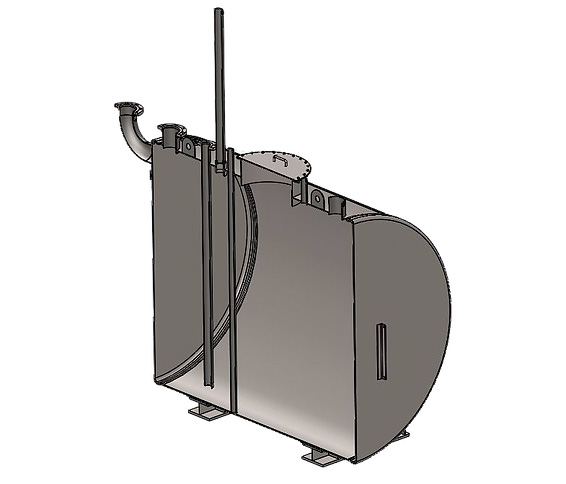
UL 142 tanks are atmospheric tanks — they are not pressure vessels. They come in horizontal (saddle-mounted) and vertical configurations, single-wall or double-wall, and in rectangular as well as cylindrical shapes for compact generator-base and workbench applications.
UL 142 vs. UL 2085: protected vs. unprotected
| Listing | What it adds |
|---|---|
| UL 142 | The base steel-tank standard. Can be single- or double-wall, but the wall itself is not rated to survive a sustained pool fire or a vehicle impact. |
| UL 2085 | A "protected" tank: insulated and built to survive a two-hour pool fire, plus ballistic and vehicle-impact resistance. Required where codes call for a protected aboveground tank, often at retail and fleet fueling. |
Many fire-rated fuel tanks are built as a UL 2085 protected assembly around a UL 142 primary tank. The right listing for your site is set by the local fire code and the AHJ, not by preference — confirm it before fabrication.
Double-wall and secondary containment
A double-wall UL 142 tank places a second steel shell around the primary, creating an interstitial space that contains a leak and can be monitored. For larger installations or where a double-wall tank isn't used, the EPA's SPCC rule (40 CFR 112) generally requires secondary containment sized to hold the largest tank's volume plus freeboard for rain — a coated steel dike, a concrete berm, or an integral containment basin. Getting containment right is usually the difference between a clean inspection and a violation.
Venting: the detail that fails inspections
Every atmospheric fuel tank needs both normal venting (to breathe as liquid moves in and out and as temperature changes) and emergency venting (to relieve pressure if the tank is engulfed in fire) sized to the tank per NFPA 30. Double-wall tanks need emergency venting on both the primary and the secondary. Undersized or missing emergency vents are one of the most common reasons an otherwise-good tank fails its inspection.
Frequently asked questions
- Is a UL 142 tank a pressure vessel?
- No. UL 142 tanks are atmospheric aboveground tanks for flammable and combustible liquids. If a tank needs to hold pressure at or above 15 psig, it falls under ASME Section VIII instead and is code-stamped, not UL-listed.
- What's the difference between UL 142 and UL 2085?
- UL 142 is the base steel-tank standard. UL 2085 is a 'protected' tank that is additionally insulated and tested to survive a two-hour pool fire plus ballistic and vehicle impact. Protected (2085) tanks are often built around a UL 142 primary and are required where the fire code calls for them.
- Do I need double-wall or secondary containment?
- Usually one or the other, and sometimes both. A double-wall tank provides integral secondary containment with a monitorable interstice. Where a single-wall tank is used, the EPA SPCC rule generally requires external containment sized for the largest tank's volume plus rain freeboard. Your AHJ and SPCC applicability decide.
- Can a UL 142 tank store gasoline and diesel?
- Yes — UL 142 covers flammable (e.g., gasoline, ethanol blends) and combustible (e.g., diesel, fuel oil, used oil) liquids. The fuel, its flash point, and the installation drive venting, listing, and containment details, all of which are specified before fabrication.
Scope a code-stamped vessel
Send us your design pressure, service chemistry, dimensions, and the code or jurisdiction you build to. We return a full engineering package, firm lead time, and a fixed quote — freight quoted separately to your ZIP.
Request a Custom Quote Call 866-418-1777