
Food & Pet Food Processing
Cooking Kettles, Sauce Blenders & Pet Food Batch Systems
Steam-jacketed cooking kettles, sauce-and-gravy batch vessels, pet food wet-mix blenders, freeze-dry feed tanks, ingredient-metering skids, and complete contract co-packing lines for food and pet food manufacturers.
About Food & Pet Food Processing
Food manufacturing splits cleanly into hot-process and cold-process equipment. Hot-process means cook kettles — steam-jacketed vessels that bring product to target hold temperature for pasteurization, starch gelatinization, or flavor development. Sauce, gravy, broth, stew, soup, jam, jelly, and many ready-meal components run through steam kettles. Tilt kettles pour directly to down-stream fill or hold; fixed kettles pump through a transfer loop. Direct steam injection accelerates heat transfer on high-viscosity product where jacket heat stalls. Scraped-surface kettles prevent burn-on for sticky or high-sugar products.
Cold-process covers every batch mix, blend, and hold step that doesn't require heat. Dressing and condiment batch tanks are agitated emulsifiers for salad dressing, mayonnaise, aioli, and relish. Cold-fill sauce tanks hold finished product from cook-kettle discharge through filler feed, often with glycol-jacket cooling to arrest starch activity. Freeze-dry batch vessels pre-stage product into lyophilization trays or continuous-tray freeze-dry tunnels — a growing segment with the explosion of freeze-dried ingredients in snack, pet food, and nutraceutical product lines.
Pet food deserves its own paragraph: the industry has grown 7–10% annually for 15 years, and premium wet, semi-moist, freeze-dried, and raw-frozen formats demand purpose-built equipment. Wet-mix blenders incorporate protein, starch, fat, and functional ingredients into a pumpable slurry that feeds extrusion or canning lines. Gravy-and-sauce kettles produce the wet phase of complete-meal pet food cans. Frozen-raw batch mixers blend ground protein and supplement packs for direct-to-consumer frozen-raw brands. Ingredient-metering skids dose minor ingredients (vitamin pre-mix, probiotic culture, flavor) at gram-level accuracy into primary-ingredient streams.
What We Fabricate
Steam-Jacketed Cooking Kettles
50-gal through 2,000-gal tilt or fixed jacketed kettles with scrape-surface agitation options for sauce, gravy, and soup production.
Sauce & Gravy Batch Tanks
Agitated hot-fill vessels with pump-to-filler transfer for bottled sauce, salsa, and gravy production.
Pet Food Wet-Mix Blenders
Heavy-duty ribbon or paddle blenders for wet-mix protein-starch-fat blending ahead of extrusion or retort.
Freeze-Dry Feed Tanks
Pre-lyophilization batch holding for freeze-dried ingredient production.
Cold Fill & Hold Tanks
Glycol-jacketed cooled-batch hold vessels between cook step and filling line.
Emulsion & Dressing Tanks
High-shear agitated emulsifiers for salad dressing, mayonnaise, and aioli batch production.
Ingredient-Metering Skids
Gram-accurate batch-dose skids for vitamin pre-mix, probiotic, flavor, and color minor-ingredient addition.
Broth & Stock Kettles
Long-cook (4–12 hour) culinary-base kettles with slow agitation and precise temperature hold.
Retort Feed Tanks
Canning-line feed vessels with level and temperature control.
Frozen-Raw Batch Mixers
Cold-process protein-and-supplement blending for direct-to-consumer frozen raw product.
Extrusion Conditioning Tanks
Pre-extruder conditioning vessels for pet-food kibble production.
Contract Co-Pack Lines
Complete turnkey blend-batch-fill-palletize packages for contract food manufacturers.
How a Custom Project Works
- Requirements capture. Volume, materials of construction, service chemistry, operating temperature and pressure, footprint, utility connections, finish, and any code or certification requirements. We work from your specification or draft one against your process.
- Engineering and drawings. A general-arrangement drawing, bill of materials, and weld map — reviewed and signed off before any material is cut.
- Material procurement. Plate, pipe, fittings, and elastomers ordered to the approved bill of materials, with material certifications captured where the service demands traceability.
- Fabrication. Shells formed and welded, heads and ports installed per drawing, sanitary work TIG-welded and ground flush on product-contact surfaces.
- Inspection and testing. Weld examination, pressure or leak testing as applicable, surface-finish verification, and passivation to ASTM A967 on stainless.
- Documentation and shipment. Material certifications, weld and inspection records, and test certificates compiled for handoff. Shipment with blocking and bracing; freight quoted separately to your ZIP.
Engineering & Design Guides
In-depth, vendor-neutral guides written by our engineering team to help you scope the right build — the equipment, the materials, and the trade-offs.
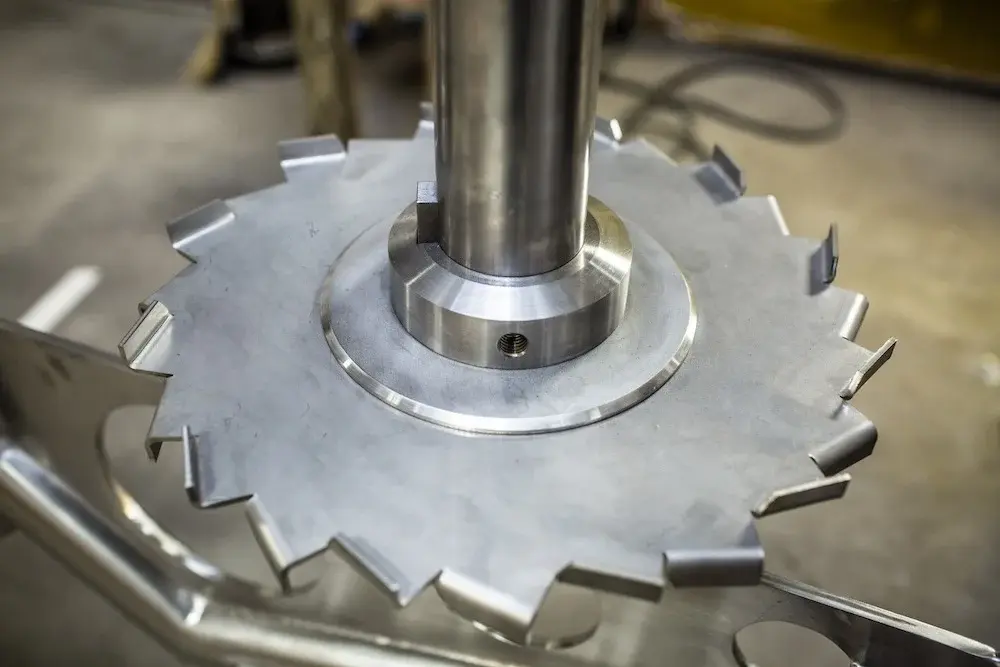
Cooking Kettles & Sauce Blending
Steam-jacketed kettles, scraped-surface agitation, and surge tanks for cooking and blending sauces with even heat transfer and sanitary design.
Read the guide →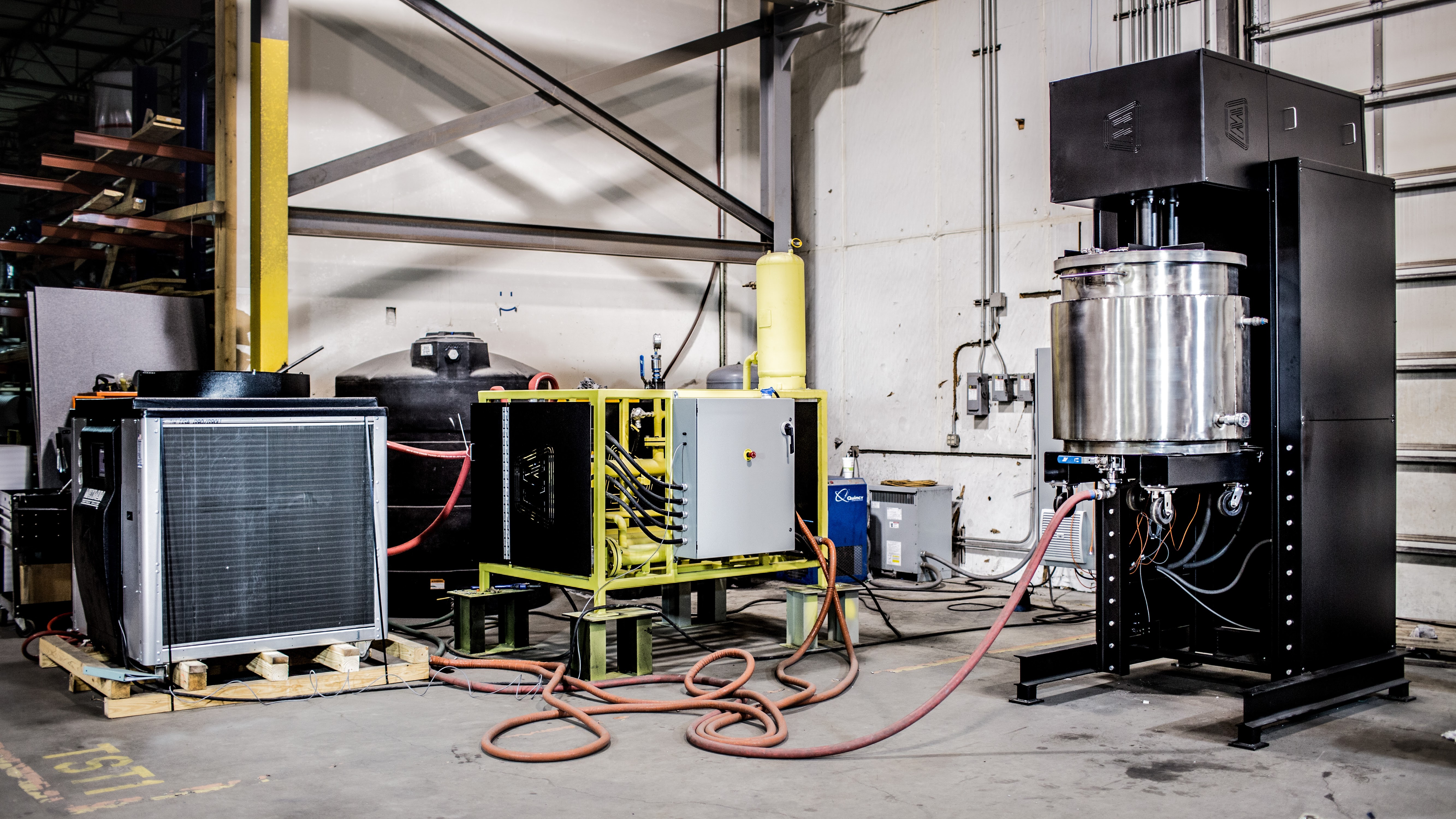
Choosing Dairy Processing Equipment
From batch versus continuous to 3-A sanitary design, balance and storage tanks, and CIP, a guide to dairy equipment that scales from startup to plant.
Read the guide →
Pet Food Processing Systems
Mixing, blending, slurry, and emulsion tanks for wet and dry pet food, with sanitary stainless construction and repeatable batch consistency.
Read the guide →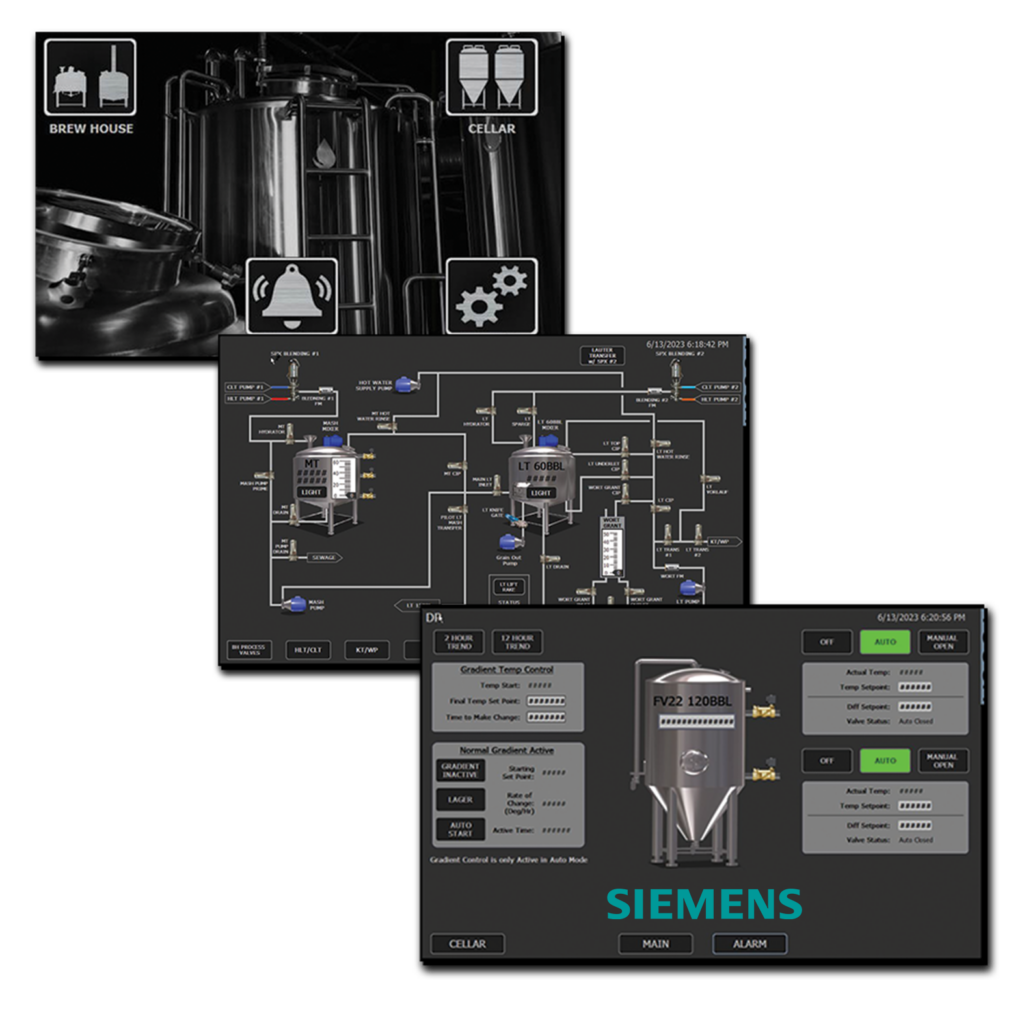
Process Automation in Food & Beverage
PLC controls, recipe management, automated CIP, batching, and traceability that bring consistency and labor savings to food plants.
Read the guide →Frequently Asked Questions
- Direct steam injection or jacket heat?
- Jacket heat is clean and well-controlled but slow on high-viscosity or high-solids product. Direct steam injection adds 10–15% water to the batch but achieves target temp in a fraction of the time — best for soup, broth, and gravy where added water is tolerable. Scraped-surface kettles solve the high-viscosity heating problem without water addition.
- Is a tilt kettle or fixed kettle better?
- Tilt kettles (50-gal through ~200-gal) pour directly to downstream packaging and simplify cleanup. Fixed kettles (150-gal and up) require a transfer pump but handle larger volumes and integrate into CIP loops more cleanly.
- Can you build a pet food wet-mix line?
- Yes. Complete lines include ingredient-metering skids, wet-mix blenders, gravy kettles, conditioning tanks, and retort feed vessels — sized to your target case throughput.
- What's the lead time on a complete co-pack line?
- Typical lead time on a turnkey blend-batch-fill-palletize line is 22–36 weeks from signed drawings through FAT and commissioning. Individual vessels within the package ship on shorter lead times.
Start a Food & Pet Food Processing Project
Give us your process specs and we come back with a full engineering package, firm lead time, and a fixed price. Freight quoted separately to your ZIP.
Request a Custom Quote Call 866-418-1777