AWWA Standards for Buried 6-Inch Chemical Mains: Ductile Iron Pipe (C150/C151) vs Polyethylene (C906) Selection Engineering
The decision to run a 6-inch buried chemical main as ductile iron pipe versus polyethylene is driven by chemistry, soil corrosivity, working pressure, expected service life, and cost. Picking wrong on any of those dimensions is expensive - DI pipe in aggressive sulfate soil corrodes from the outside in and fails in 8 to 15 years; PE pipe in aromatic solvent service permeates and fails in months. The American Water Works Association (AWWA) publishes the engineering standards that govern both materials. AWWA C150 covers thickness design for ductile iron pipe; AWWA C151 covers manufacturing; AWWA C105 covers polyethylene encasement for corrosion protection of buried DI; AWWA C906 covers polyethylene pressure pipe for water and wastewater. Understanding what each standard requires (and what it does NOT cover - chemical service is largely outside the AWWA scope and falls under ASME B31.3 or NACE) is the foundation of a defensible chemical main specification.
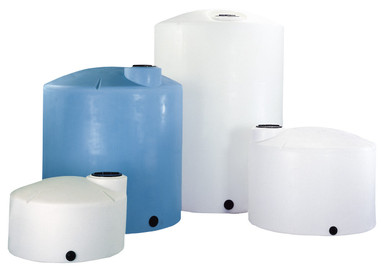
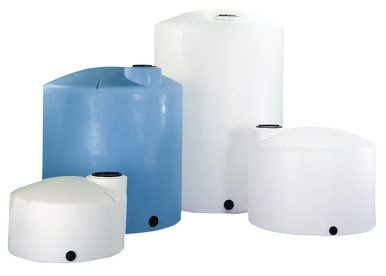
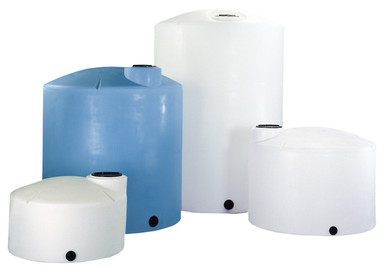
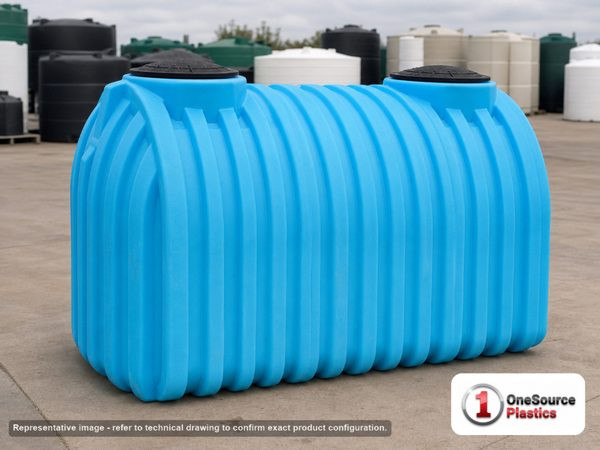
This guide walks the AWWA framework for both pipe materials, the chemistry envelope where each material fits, the joint and fitting considerations that drive long-term reliability, and how OneSource Plastics works with the major rotomolded tank manufacturers (Norwesco, Snyder Industries, Chem-Tainer, Bushman, Enduraplas) to specify a complete tank-and-pipe system rather than just a tank.
Ductile Iron Pipe Standards: AWWA C150 and C151
AWWA C150 (Standard for Thickness Design of Ductile-Iron Pipe) sets the design methodology for sizing ductile iron pipe wall thickness against internal pressure, external earth load, and live load (vehicle traffic for buried installations). The DI pipe pressure class system runs Class 150 (150 psi working pressure rating), Class 200, Class 250, Class 300, and Class 350. For 6-inch nominal DI pipe in Class 350 service, the wall thickness is approximately 0.25 inches with 0.08 inch service allowance.
AWWA C151 (Ductile-Iron Pipe Centrifugally Cast for Water) covers the manufacturing process - centrifugal casting in a rotating water-cooled mold, annealing for ductility, dimensional tolerances, and hydrostatic proof testing. C151 requires every length of DI pipe to pass a hydrostatic test at the rated working pressure for 10 seconds before shipment.
AWWA C104 covers cement-mortar lining for DI pipe interior - the standard interior surface for water service. For chemical service, alternative linings include polyurethane (per AWWA C222), polyethylene per ANSI/AWWA C151 thickness, or ceramic-epoxy. Cement lining is suitable for water and weak alkaline service; cement is rapidly attacked by acids below pH 5 and should not be specified for acid mains.
AWWA C105 covers polyethylene encasement for corrosion protection of buried DI pipe. The DI pipe is wrapped in 8-mil or 12-mil polyethylene tubing or sheeting, sealed at joints, and buried. The encasement isolates the iron from corrosive soil moisture, slowing external corrosion from the soil-water interface. C105 encasement is a low-cost alternative to cathodic protection and is widely used in water service. For aggressive soils (high chloride, sulfate, or organic acid loading) C105 encasement combined with cathodic protection per NACE SP0169 provides the longest DI service life.
Polyethylene Pipe Standards: AWWA C906 and C901
AWWA C906 (Polyethylene Pressure Pipe and Fittings, 4 In. Through 65 In.) sets the engineering standard for HDPE pressure pipe for water and wastewater service. C906 covers pipe materials (PE3408, PE3608, PE4710 grades), dimension ratios (DR 7.3 through DR 21), pressure rating, joint specification (heat fusion, electrofusion, mechanical), and testing.
For 6-inch HDPE pipe in DR 11 (working pressure 200 psi at 73 deg F per the PE4710 grade), wall thickness is approximately 0.6 inches. Note this is 2.4 times thicker than equivalent DI pipe wall - HDPE achieves pressure rating through wall thickness rather than material strength.
AWWA C901 (Polyethylene Pressure Pipe and Tubing, 1/2 In. Through 3 In.) covers smaller-diameter PE pipe and is the standard for service connections from chemical mains to individual feed points.
The AWWA PE standards govern WATER service. For chemical service, the more relevant references are ASTM F714 (PE pipe for water service), ASTM D3035 (PE pipe DR-based), and ASME B31.3 (process piping covering chemical service).
Chemistry Compatibility: Where Each Material Fits
For chemical service across a 6-inch buried main, the chemistry envelope drives material selection more than any other factor.
Ductile iron pipe is appropriate for:
- Potable water and treated water service.
- Wastewater (sanitary and storm) where pH is between 6 and 9.
- Compressed air and inert gas service.
- Hot water service up to 180 deg F (DI handles temperature; HDPE is derated above 100 deg F).
- Mechanically demanding service where impact, abrasion, or high external load is the dominant concern.
DI pipe is NOT appropriate for:
- Acid service below pH 5 (sulfuric, hydrochloric, nitric, phosphoric) - cement lining attacked, iron rapidly corroded.
- Concentrated alkali service (50% sodium hydroxide) - long-term iron is acceptable but cement lining attacked.
- Sodium hypochlorite service - iron catalyzes hypochlorite decomposition and is attacked by free chlorine.
- Organic solvent service - cement lining swells; iron acceptable but joints leak.
HDPE pipe is appropriate for:
- Water and wastewater service across the full pH range.
- Most aqueous chemical service including acids (sulfuric to 70 percent, hydrochloric to 36 percent, phosphoric to 75 percent), alkalis (sodium hydroxide to 50 percent, ammonium hydroxide), and oxidizers (sodium hypochlorite, hydrogen peroxide to 35 percent).
- Salt and brine service.
- Buried service in any soil type - HDPE does not corrode.
HDPE is NOT appropriate for:
- Aromatic solvent service (benzene, toluene, xylene) - permeates the pipe wall and degrades it.
- Chlorinated solvent service (TCE, PCE, methylene chloride) - aggressive permeation.
- Concentrated oxidizer service - sulfuric above 70 percent, nitric above 40 percent, peracetic acid - chain scission.
- High-temperature service above 140 deg F continuous - pressure rating drops sharply, creep accelerates.
- Service requiring tight fit-up to standardized iron fittings without electrofusion equipment access.
Joint Engineering: Where Most Buried Mains Fail
Buried piping fails most often at joints, not in pipe runs. The joint engineering for DI and PE differs fundamentally.
Ductile iron joints: Push-on rubber gasket joints (the most common, per AWWA C111) are quick to install, inexpensive, and reliable for water service. Mechanical joint (gland-and-bolt) joints provide higher pull-out resistance and are used where ground movement or thrust is a concern. Restrained joints (megalug, lock-ring) prevent joint separation under thrust at bends and tees. For chemical service where the gasket is in continuous contact with the chemistry, gasket material selection (EPDM for water; FKM/Viton for solvents; nitrile for petroleum) is the critical compatibility decision.
HDPE joints: Heat fusion (butt fusion) and electrofusion are the two methods that produce leak-free joints in HDPE. Butt fusion uses a heater plate to soften pipe ends, then presses them together to form a homogenous bond - the joint is as strong as the pipe wall. Electrofusion uses a coupling with embedded heating wires; the wires soften the pipe and coupling material to form a similar homogenous bond. Both methods require trained operators, calibrated equipment, and appropriate cycle times. Mechanical joints exist for HDPE but are rated for lower pressure than fusion joints and are reserved for transition fittings.
For chemical mains, fusion joints in HDPE are more reliable than rubber-gasketed joints in DI because there is no gasket to swell, harden, or get attacked by chemistry. The trade-off is the cost and complexity of fusion equipment.
External Corrosion Engineering
Soil corrosivity drives the buried-DI service life. The 10-point soil evaluation per ANSI/AWWA C105 Appendix A scores soil resistivity, pH, redox potential, sulfide content, and moisture. Soils scoring 10 or higher are corrosive enough to require encasement; 12 or higher require encasement plus cathodic protection. Common high-corrosivity scenarios include:
- Coastal soils with chloride loading.
- Industrial soils with sulfate or organic acid contamination.
- Wet clay soils with low resistivity.
- Soils with bacterial activity (sulfate-reducing bacteria, microbiologically influenced corrosion).
HDPE pipe is not subject to soil corrosion. The buried HDPE service-life driver is mechanical impingement (rocks, debris during backfill), excavator damage, and UV exposure from inadequate burial depth on hot days. For 6-inch HDPE buried at minimum 36 inches cover with sand bedding and initial backfill, a 50 to 100 year service life is typical. The same DI installation in corrosive soil without encasement may be 12 to 20 years.
Pressure and External Load Calculations
For buried piping, the design considers:
- Internal pressure: Working pressure rating must exceed maximum sustained operating pressure plus 10 percent surge allowance.
- External earth load: Weight of soil above the pipe. For 36 inch cover with average soil density 120 pcf, earth load is approximately 360 psf or 2.5 psi.
- Live load: Vehicle traffic, equipment crossings. AASHTO H-20 truck loading per AWWA M11 Chapter 6 provides surface load equivalents at burial depth.
- Buoyancy: For pipes below water table, uplift force may exceed pipe self-weight plus soil cover. Concrete weights or soil-anchor straps required.
For 6-inch DI Class 350 at 36 inch cover with H-20 traffic, the pipe is rated 350 psi internal plus comfortably handles the external loads. For 6-inch HDPE DR 11 at the same conditions, the pipe is rated 200 psi internal at 73 deg F - external loads are minor compared to internal pressure capacity. Both are adequate for typical chemical main service at 50 to 150 psi.
Decision Framework
OneSource Plastics Engineering recommends the following decision tree for 6-inch buried chemical mains:
- Water, wastewater, and air service: DI per AWWA C150/C151 with C105 encasement. Rugged, low-cost, decades of utility track record.
- Acid service (any concentration), alkali service, hypochlorite, hydrogen peroxide: HDPE per AWWA C906, fusion joints, no metallic components in wetted path. Compatible with the chemistry envelopes covered in our chemical compatibility hub.
- Mixed-chemistry service or unknown future chemistry: HDPE - the broader compatibility envelope provides a margin of safety against chemistry changes during plant life.
- Solvent service (aromatic or chlorinated): Neither DI nor HDPE alone. Consider stainless steel (304 or 316) or fluoropolymer-lined steel. Outside the AWWA scope; under ASME B31.3.
- High-temperature service (above 140 deg F continuous): DI with appropriate lining or stainless steel. HDPE loses pressure rating rapidly at elevated temperature.
- High-pressure service (above 200 psi): DI Class 250 or higher; HDPE only adequate at higher DR (11 or stronger) and shorter service life under sustained high pressure.
Tank-to-Pipe Connection Engineering
The connection between an outdoor polyethylene storage tank and a buried chemical main is a specification interface that often gets neglected. The tank is rotomolded HDPE or XLPE; the pipe may be DI, HDPE, or stainless. The connection options include:
- Bulkhead fitting on tank wall (HDPE pipe): Standard bolted bulkhead fitting through the tank wall, transitioning to HDPE pipe via threaded or fusion joint. Most common for chemical service. Norwesco, Snyder Industries, and Chem-Tainer all offer factory-installed bulkhead fittings on the tank wall.
- Bulkhead fitting on tank wall (DI pipe): Bolted bulkhead with stainless or PVC threaded nipple, transitioning to DI via flanged adapter. Adds a transition joint that requires gasket compatibility verification.
- Tank-mounted ball valve (HDPE pipe): Threaded or flanged tank fitting with PP or PVC ball valve, then HDPE pipe. Allows tank isolation for service. Standard on Snyder Captor double-wall tanks.
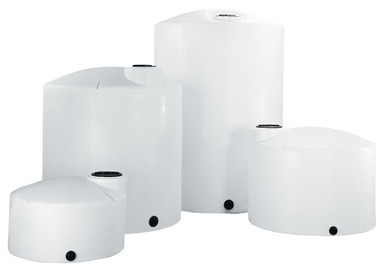
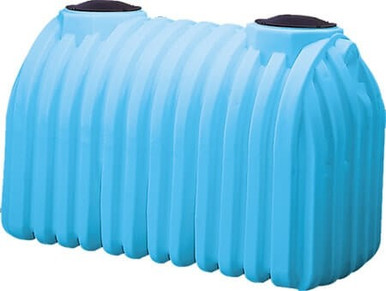
For Snyder Captor double-wall tanks (SII-1006600N42 10,000 gallon, SII-5990102N42 1,000 gallon, SII-5490000N42 1,550 gallon), bulkhead fittings come in standard 2 inch and 3 inch options. Custom sizes available factory at order time. For Norwesco vertical liquid storage tanks (N-40146 1500 gallon and the larger Norwesco vertical class), bulkhead options include 2 inch, 3 inch, and 4 inch with PP or PVC threads.
Pricing and Procurement
For complete tank-and-pipe system specification, OneSource Plastics works with the major manufacturers to deliver a coordinated package. Tank pricing for the Snyder Captor 10,000 gallon double-wall is listed at $15,500; the 1,000 gallon is listed at $3,200. HDPE pipe and fittings ship from regional distribution; DI pipe via direct mill or distributor channel. LTL freight is quoted to your ZIP via the freight estimator separately.
Call OneSource Plastics at 866-418-1777 for tank-and-pipe system specification on a specific chemistry, pressure, and burial depth. We will run the AWWA C150, C906, and chemistry compatibility math against the catalog and recommend the correct material, pressure class, and joint method for your service. The pipe specification matters as much as the tank specification - a 50-year tank connected to a 12-year pipe is a 12-year system. See related guidance in our tank plumbing system design walkthrough and tank material cost-performance trade-off analysis.
Recommended Tanks for This Guide
Live pricing, updated automatically · estimate freight to your ZIP.