Diesel Exhaust Fluid Cold-Weather Crystallization and Heat-Traced Dispensing Piping for Trucking Fleets: Why DEF Freezes at 12 Degrees F, How Tank Expansion Damages Hardware, and Engineered Thaw-Recovery
Diesel exhaust fluid is a 32.5 percent urea solution in deionized water that selective catalytic reduction (SCR) systems on Tier 4 diesel engines inject into the exhaust stream to convert NOx into nitrogen and water vapor. The 32.5 percent urea concentration is not arbitrary - it is the eutectic mixture that gives the lowest possible freezing point for the urea-water binary system at 12 degrees F (negative 11 degrees C). At any other concentration, the freezing point is higher. This is why DEF specifications under ISO 22241 are tight on concentration; off-spec DEF freezes earlier, sometimes much earlier, and the SCR system on the engine cannot recover from a clogged injector line in cold weather without an extended thaw cycle that takes hours.
For a trucking fleet that runs in any state north of latitude 40 degrees, cold-weather DEF management is not optional. The bulk DEF storage tank in the dispensing yard, the dispensing pump, the supply line to the nozzle, and the truck's onboard DEF tank all freeze at the same 12 degrees F threshold. The expansion of frozen DEF is approximately 7 percent by volume, which is enough to crack tanks, split fittings, and rupture supply lines if the equipment is not engineered for the freeze cycle. This guide walks the engineering reality of cold-weather DEF management: tank wall expansion behavior, heat-traced supply piping design, the freezing concentration shift as ice crystallizes preferentially from solution, ISO 22241 storage temperature limits, and the equipment specification that supports year-round dispensing in cold-climate operations.
1. Why DEF Freezes at 12 Degrees F
The urea-water phase diagram has a eutectic point at 32.5 weight percent urea, which corresponds to a freezing temperature of 12 degrees F. Below the eutectic concentration (less urea), the freezing point rises sharply - a 25 percent urea solution freezes at approximately 22 degrees F. Above the eutectic (more urea), the freezing point also rises - a 40 percent urea solution freezes at approximately 32 degrees F. The DEF specification under ISO 22241-1 calls for 32.5 plus or minus 0.7 percent urea by weight, holding the freezing point at the minimum within tight bounds.
The implication of the eutectic chemistry is that DEF freezes congruently. When a 32.5 percent solution drops below 12 degrees F, ice and urea crystallize together in the same proportion, leaving the remaining liquid at the same 32.5 percent concentration. This is why DEF can be thawed and refrozen multiple times without changing concentration - and why off-spec DEF cannot. A 30 percent solution that drops below 19 degrees F will start crystallizing pure ice, leaving the remaining liquid more concentrated and less effective in the SCR catalyst. By the time the field operator notices the problem, the DEF tank contents have stratified into a high-urea liquid layer with ice slush at the surface, and the trucks running on the contaminated DEF are throwing engine fault codes related to NOx conversion failure.
The procurement consequence: source DEF only from suppliers who provide ISO 22241-3 certificate of analysis with each delivery. Test the bulk DEF tank quarterly for urea concentration with a refractometer (commercial DEF refractometers cost approximately 200 dollars and read directly in percent urea). Reject deliveries that test outside the 31.8 to 33.2 percent specification window.
2. Tank Wall Expansion During Freeze and the Hardware That Survives It
DEF expands approximately 7 percent by volume on freezing - similar to water but slightly more. A bulk DEF tank that is filled to 95 percent of capacity at 60 degrees F and allowed to freeze fully will exceed the tank's volumetric capacity. The expansion does not vent through fittings - urea ice is solid - so it expresses itself as outward stress on the tank wall. Polyethylene tanks have enough wall ductility to accommodate the expansion without rupture in most cases, but the fittings, manway gaskets, and bulkhead connections do not. A frozen DEF tank that has cycled through one freeze typically shows leaks at fitting penetrations on first thaw.
The fill-level rule for DEF tanks in cold climates: never fill above 90 percent of capacity if the tank may freeze. The 10 percent ullage absorbs the volumetric expansion without pressing on the tank wall. This is a standing rule in trucking-fleet DEF specifications and is enforced by automatic fill-level cutoffs on dispensing pumps. The cutoff valve installation is straightforward; the discipline of holding the fill rule when DEF is delivered in bulk and the driver wants to maximize the per-trip volume is harder.
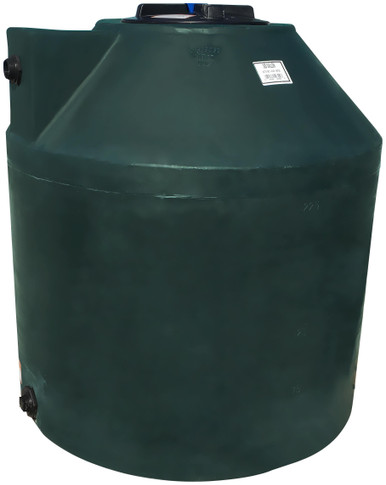
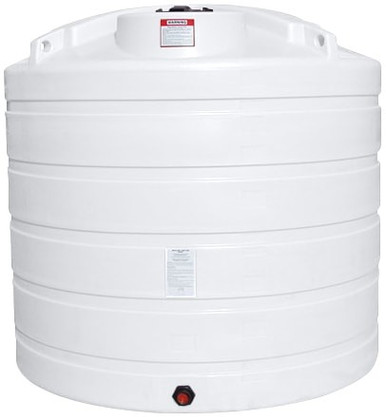
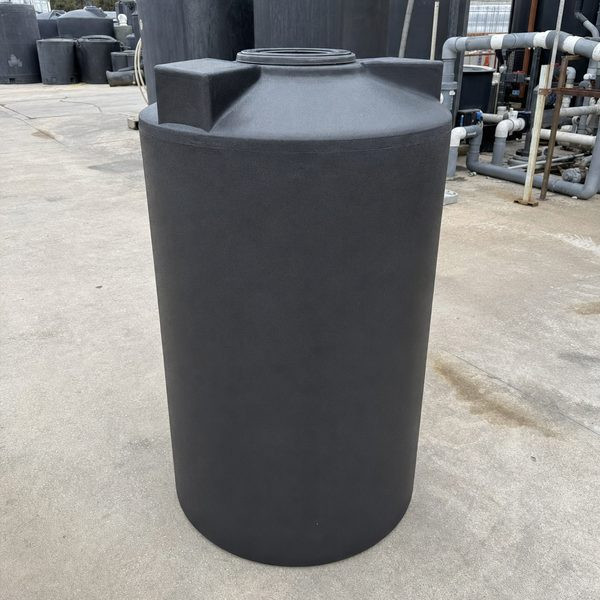
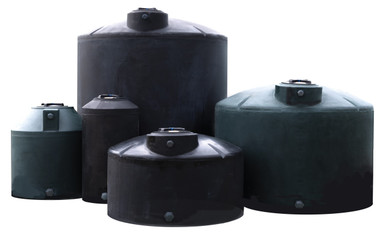
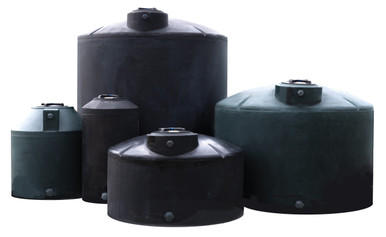
The catalog DEF tanks in the polyethylene range are sized for ground-level fleet dispensing. The Norwesco N-40146 1,500 gallon vertical in white or natural color works for small to mid-size truck fleets (10-30 trucks) where weekly fill cadence is acceptable. The Norwesco 3,000 gallon vertical serves mid to large fleets. For double-wall containment service, the Snyder SII-5490000N42 1,550 gallon double-wall XLPE provides integral secondary containment that captures any leakage if the primary tank does crack during a hard freeze cycle.
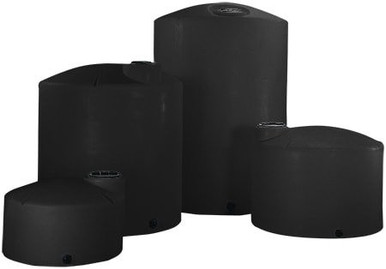
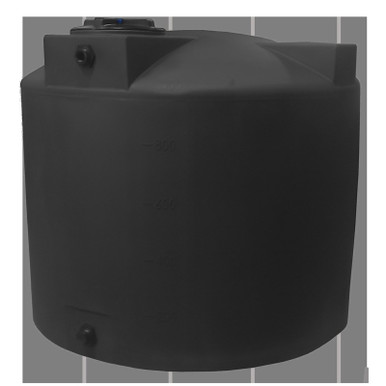
For all DEF tanks in cold climates, specify white or light color to limit solar gain (which accelerates urea decomposition) and to provide visual cue for the fill level via the translucent tank wall. Black DEF tanks are inappropriate even at northern latitudes because of the urea decomposition risk during summer.
3. Heat-Traced Dispensing Piping: Why It Is Required and How To Specify It
The bulk DEF tank in a cold-climate yard rarely freezes solid because the thermal mass of the bulk volume keeps the interior above freezing for several days even at sub-zero outdoor temperatures. The exposed dispensing piping freezes much faster. A 1-inch supply line from tank to nozzle, full of stagnant DEF, drops from 50 degrees F to 12 degrees F in approximately 4 hours at 0 degrees F outdoor ambient. Once frozen, the line is non-functional until thawed.
Heat-traced piping is the standard solution. Two approaches:
- Self-regulating electrical heat trace (PTC): a parallel-resistance cable that adjusts its heat output to local temperature. Wraps the supply line under thermal insulation. Power demand approximately 5-8 watts per linear foot at low ambient. Self-regulating means no thermostat is required - the cable's resistance increases with temperature, so it cannot overheat. Recommended for fleet yards where line length is under 200 ft and grid power is available.
- Constant-wattage heat trace with thermostat: a series-resistance cable run with a snap-disc thermostat at the cold-spot of the line. Power demand higher (10-12 W/ft) but thermal output is more predictable. Required for long supply runs where self-regulating cable cannot maintain temperature at the tail end.
Heat-trace specification details that operators get wrong:
- Insulation must wrap the heat-trace cable AND the supply line together. Bare heat-trace cable on top of bare pipe radiates heat to ambient and the pipe still freezes. Use 1-inch fiberglass or closed-cell elastomeric insulation with the heat-trace cable embedded.
- End-of-line termination kit is required at the nozzle end. Direct cable cutoff exposes the heating element to moisture; use a manufacturer-supplied termination kit rated for the cable type.
- Ground-fault circuit protection is mandatory under NEC Article 427 for heat-trace circuits. A 30-mA GFCI breaker at the panel is the standard implementation.
- Power consumption budget for a typical yard: a 100-ft heated line at 7 W/ft draws 700 watts continuous in cold weather, which is roughly 50 dollars per month at 10 cents per kWh. Plan for it.
- The heat-trace must NOT extend into the bulk tank. The bulk tank thermal mass does not need supplemental heat unless the local climate produces sustained sub-zero temperatures that would overcome the tank's thermal inertia.
For trucking fleets in zone 7 climates (USDA cold zone, including Minnesota, North Dakota, upper Michigan, interior Alaska), an enclosed dispensing cabinet with a thermostat-controlled space heater is the appropriate solution. The cabinet houses the dispensing pump, line filter, and nozzle storage, maintained at 50 degrees F minimum during operation. Outside the cabinet, the supply line from tank to cabinet wall is heat-traced. This combination handles even the coldest practical operating environment without daily attention.
4. ISO 22241 Storage Temperature Specifications and Shelf Life
The ISO 22241-3 storage standard for DEF specifies temperature limits and corresponding shelf life:
- Stored at 50-77 degrees F (10-25 degrees C): minimum 18 months shelf life from manufacture date.
- Stored at temperatures up to 86 degrees F (30 degrees C) but with diurnal exposure to higher temperatures: minimum 12 months shelf life.
- Stored at temperatures regularly above 86 degrees F: shelf life drops to 6 months as urea decomposition accelerates. Above 105 degrees F, shelf life drops below 3 months.
- Stored at temperatures below 12 degrees F (frozen): shelf life is preserved indefinitely. The freeze-thaw cycle does not damage DEF chemistry. The mechanical damage is the issue, not the chemistry.
The cold-storage shelf-life behavior is counterintuitive but useful: DEF that is stored frozen for 6 months and thawed for use is chemically equivalent to fresh DEF, provided the tank survives the freeze cycle. This is the basis for cold-weather DEF stocking strategies in northern climates - the bulk tank can be allowed to freeze in deep winter and thawed in spring for the next operating season, as long as the tank and fittings survive the cycle.
The summer storage problem is more concerning than the winter freezing. A black bulk tank in direct sun in southern climates can reach internal temperatures of 110+ degrees F, which cuts shelf life to under 3 months. Procurement specifications for southern-climate DEF storage should mandate white or light color tanks, shaded location if possible, and operational rotation to keep the bulk tank turnover under 90 days.
5. Thaw-Recovery Procedure for Frozen Lines and Tanks
When a DEF supply line or bulk tank does freeze - because the heat trace failed, because outdoor temperatures dropped beyond the heat-trace design margin, or because power was lost during a winter storm - the thaw-recovery procedure has to be done correctly to prevent equipment damage and DEF contamination:
- Verify the freeze before any heating. A line that is frozen at one section may have liquid on either side. Heating the bracketing liquid pressurizes the frozen section, which can rupture the pipe. Locate the frozen section by surface temperature measurement (touch test or IR thermometer) before applying heat.
- Apply heat from the open end of the frozen section, not from the middle. The frozen section should thaw progressively from one end, allowing the meltwater to flow back into the bulk tank rather than accumulating in the frozen section.
- Use only mild heating - 100 to 140 degrees F applied externally. Direct heat above 200 degrees F can degrade the DEF locally, producing biuret and ammelide that contaminate the SCR catalyst. Heat tape, heat gun on low, or warm-water immersion are acceptable; open flame, propane torch, or steam are not.
- Inspect every fitting on the thawed section for leakage before resuming dispensing. Fitting failures from freeze expansion may not be visible until the line is pressurized again. Pressure-test the line to 50 psi for 5 minutes; any pressure drop indicates a leak that must be repaired before service.
- Verify DEF concentration in the thawed bulk tank. If the freeze was partial or the recovery was uneven, the bulk tank may have stratified concentrations. A refractometer reading at three depths confirms uniform concentration.
- Document the freeze event in the maintenance log. Repeated freeze events in the same yard indicate a systemic problem with the heat-trace design, the insulation condition, or the power reliability. The log supports the engineering review that prevents the next event.
6. Onboard Truck DEF Tank Behavior During Cold-Soak
The onboard DEF tank on a heavy-duty truck is engineered with a heated suction line and a heated tank module that activates during engine startup in cold weather. The heating module typically draws power from the engine coolant loop or from a dedicated electrical heater after engine start. Cold-start with a fully-frozen onboard DEF tank takes 20-40 minutes before the SCR system has enough liquid DEF to begin injection, during which time the engine runs in a degraded NOx mode that may eventually trigger derate.
The onboard tank is the truck OEM's responsibility, not the fleet operator's. But the fleet's bulk DEF storage and dispensing system feeds the onboard tank, and the onboard tank's startup behavior is sensitive to the temperature and concentration of the DEF it receives. Specifically:
- DEF dispensed cold (below 32 degrees F at the nozzle) takes longer for the onboard heater to bring to operating temperature, extending the cold-start derate window. Heat-traced dispensing maintains DEF at 50+ degrees F at the nozzle, which reduces the onboard heating burden.
- DEF dispensed off-specification (concentration outside 31.8-33.2 percent) freezes at higher temperatures in the onboard tank, increasing the frequency of freeze events. The onboard tank cannot recover from off-spec freezes as quickly as from on-spec freezes.
- DEF that has cycled through repeated freeze-thaw cycles in the bulk tank may have biological contamination from microbial growth in the residual moisture above the ice. Microbial DEF poisons the SCR catalyst even at low contamination levels. Bulk-tank rotation every 90 days prevents the buildup.
7. Specification Checklist for Cold-Climate DEF Yard
For a trucking fleet specifying DEF dispensing infrastructure in a cold climate (zone 5 or colder):
- Specify bulk tank in white or natural polyethylene; double-wall if site falls under SPCC or local secondary-containment rules.
- Size bulk tank for 6-8 weeks of consumption to balance shelf-life concerns against fill frequency.
- Locate tank under a shade structure or canopy to limit solar gain in summer.
- Specify automatic fill cutoff at 90 percent capacity to preserve freeze ullage.
- Specify dispensing cabinet with thermostat-controlled space heater set to 50 degrees F minimum.
- Heat-trace the supply line from bulk tank to dispensing cabinet with self-regulating PTC cable, 7 W/ft minimum, GFCI-protected at 30 mA.
- Insulate the heat-traced line with 1-inch closed-cell elastomeric insulation, vapor-sealed at all joints.
- Specify in-line filter on supply line, 5-micron rated, replaceable from the cabinet without breaking the heat-trace circuit.
- Specify metered nozzle with automatic shutoff and tank-side level interlock to prevent overfill of onboard tanks.
- Stock a refractometer in the maintenance kit; test bulk DEF concentration quarterly and on every new delivery.
- Document a cold-weather operating procedure including thaw-recovery steps, accessible at the dispensing cabinet.
- Train all yard staff on the freeze-recovery protocol and DEF concentration test procedure annually.
8. Brand Notes for DEF Service Polyethylene Tanks
The five-brand catalog options for DEF storage:
- Norwesco vertical tanks: standard offering in white or natural for DEF service, sizes from 305 gallons to 12,500 gallons. Warranty covers DEF service explicitly when ordered with the appropriate label. N-40146 1,500 gallon is the most common fleet size.
- Snyder Industries Captor double-wall: integral 110-percent secondary containment for DEF, available in 1,000 to 12,500 gallon sizes. Recommended for facilities in SPCC-regulated jurisdictions. SII-5490000N42 1,550 gallon example.
- Enduraplas vertical tanks: available with optional integrated heat-trace ports through the wall flange for tanks specified for cold-climate operation.
- Chem-Tainer vertical tanks: standard polyethylene service for DEF in mid-size fleet applications.
- Bushman vertical tanks: double-wall and single-wall options for DEF service with heat-trace-ready fitting layouts.
OneSource Plastics quotes complete cold-climate DEF dispensing packages including tank, dispensing cabinet, heat-trace, insulation, and pump/nozzle assembly. Reference list pricing on the bulk tank component starts at $1,895 for a 1,500-gallon Norwesco vertical and scales by tank size. LTL freight to your ZIP is quoted via the freight estimator or by phone at 866-418-1777.
For complementary reading on related topics, see our earlier DEF storage selection guide for ISO 22241 background and UV degradation behavior, and the agricultural urea storage guide for context on adjacent fluid systems.
Recommended Tanks for This Guide
Live pricing, updated automatically · estimate freight to your ZIP.