Ethanol Blending E10 vs E15 vs E85 Fuel-Grade Tank Compatibility: Material Envelope by Concentration and Temperature
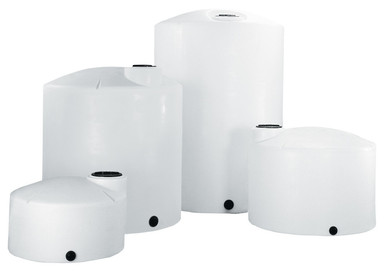
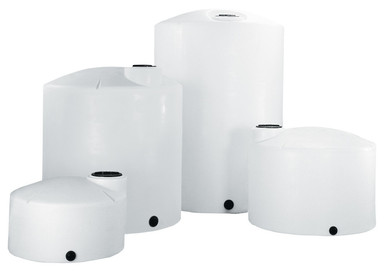
Ethanol-gasoline blends are not one chemistry. E10 (10 vol% ethanol, 90 vol% gasoline), E15 (15/85), E85 (51-83% ethanol per ASTM D5798 winter blend, gasoline balance), and E100 (denatured fuel ethanol per ASTM D4806) sit on different points of the chemical compatibility curve and each one demands a different storage tank, dispenser, hose, and gasket specification. The phrase "ethanol-compatible" without a percentage qualifier is an empty marketing claim that has caused real failures at filling stations and farm fuel depots across the country since EPA waived E10 in 1979 and E15 in 2011. This guide walks the chemistry, the EPA and ASTM standards that govern fuel ethanol, the material compatibility data, and the OneSource Plastics catalog options for above-ground fuel storage in the ag and small-fleet applications where ethanol blends are the practical fuel.
The compatibility envelope shifts in three dimensions: ethanol concentration, temperature, and contact time. A polypropylene fitting that survives 30 days of E10 at 70 F may swell, crack, and leak in 14 days at the same temperature with E85. The same fitting that survives E10 at 70 F may craze in 60 days at 105 F summer ambient. Storage tank materials have to handle the full envelope plus thermal cycling, UV exposure, and the humidity-driven phase separation that ethanol blends exhibit when water gets in.
The Fuel Ethanol Standards: ASTM D4806, D5798, D4814
Fuel ethanol in the US runs on three governing ASTM standards:
- ASTM D4806 — Standard Specification for Denatured Fuel Ethanol for Blending with Gasolines for Use as Automotive Spark-Ignition Engine Fuel. The neat ethanol that goes into blending. 92.1 vol% ethanol minimum, denatured with 1.96-5.0 vol% natural gasoline or other approved denaturants. Limits on water (1.0 vol% max), inorganic chloride (40 mg/kg max), copper (0.1 mg/kg max), acidity (0.007 wt% max as acetic acid), pHe (6.5-9.0).
- ASTM D5798 — Standard Specification for Ethanol Fuel Blends for Flexible-Fuel Automotive Spark-Ignition Engines. Covers E51 to E83 — the E85 marketed product. The 51-83 range exists because winter blends drop ethanol content for cold-start volatility (Class 1 winter blend = 51-66% ethanol; Class 4 summer blend = 75-83%).
- ASTM D4814 — Standard Specification for Automotive Spark-Ignition Engine Fuel. Governs gasoline including the gasoline portion of E10 and E15. Permits up to 10 vol% ethanol in conventional gasoline (E10 universally allowed since 1979 EPA waiver) and up to 15 vol% in EPA Tier 3 gasoline for 2001+ model year vehicles (E15 EPA waiver issued 2011).
The EPA Renewable Fuel Standard (RFS) under 40 CFR Part 80 mandates a national volume of renewable fuel blended into the transportation fuel supply each year. The blender is responsible for ensuring the fuel meets the applicable ASTM specification and EPA Substantially Similar fuel rule. For the storage tank, the relevant question is which ethanol concentration the tank will see, because the chemistry envelope changes substantially across the E10-E85 range.
Ethanol Chemistry Aggression Mechanisms
Pure ethanol (CH3CH2OH) is a polar protic solvent. Pure gasoline is a non-polar hydrocarbon mixture. Their blend is a chemistry intermediate that aggresses materials through three mechanisms:
- Permeation — small ethanol molecules permeate polymer barriers faster than the larger gasoline hydrocarbons. Permeation rates through HDPE for E10 are roughly 2-3x higher than for neat gasoline; for E85 the rate is 8-15x higher. The fugitive emissions and the mass loss from a stored fuel batch both increase with ethanol content.
- Plasticizer extraction — many engineering plastics contain plasticizers (DEHP, DOP, phthalates) that improve flexibility and processing. Ethanol leaches plasticizers out of the polymer matrix, leaving the polymer brittle and prone to stress cracking. This is the dominant failure mode for PVC piping and many elastomers in ethanol blend service.
- Hygroscopic water absorption — ethanol absorbs atmospheric water aggressively (it is hygroscopic). The water-saturated ethanol-gasoline blend phase-separates if water content exceeds the solubility limit (typically 0.4-0.5 vol% for E10 at 60 F). The phase-separated water layer at the tank bottom is acidic, rich in dissolved chloride, and accelerates corrosion of any steel fittings or galvanized metal it contacts. Phase-separated fuel is also unusable for engine combustion — the engine will stall on the water layer.
Material Compatibility by Ethanol Concentration
HDPE (High-Density Polyethylene) — the Norwesco / Snyder / Enduraplas Tank Material
HDPE per ASTM D1998 (Standard Specification for Polyethylene Upright Storage Tanks for Water, Wastewater, and Chemicals) is the rotomolded tank material covering the OneSource fuel storage catalog. Compatibility envelope:
- E10: HDPE compatible with limitation. Permeation rate at 70 F is about 0.5 g/m2/day for E10 vs 0.2 g/m2/day for neat gasoline. UL 1316 (Glass-Fiber-Reinforced Plastic Underground Storage Tanks for Petroleum Products, Alcohols, and Alcohol-Gasoline Mixtures) governs underground tank standards; for above-ground HDPE, ASTM D1998 applies and compatibility is generally acceptable for the storage temperature range -20 F to +110 F.
- E15: HDPE compatible. Permeation rate increases to about 1.5x the E10 rate. Service life and mechanical properties unaffected for typical above-ground storage at ambient temperature.
- E85: HDPE marginal. Permeation rate is 5-8x the E10 rate. ESCR (environmental stress crack resistance) declines under continuous E85 contact. For E85 service, XLPE (cross-linked polyethylene per ASTM D1998 Type II) is preferred over HDPE; XLPE shows substantially better long-term resistance to alcohol blends.
- Neat ethanol (E100, denatured): HDPE marginal to incompatible for long-term storage. XLPE preferred. For prolonged storage of neat denatured ethanol, the industry default is fluoropolymer-lined steel or epoxy-coated steel. Polyethylene is acceptable for short-term batch storage.
Note that the OneSource catalog does not list a polyethylene tank rated for E85 dispenser service. The ag fuel and farm fuel applications in our catalog are diesel and E10 gasoline — the dominant rural fuel duty. For E85 dispensing at retail filling stations, the tank technology shifts to UL 142 above-ground steel tanks or UL 1316 underground fiberglass — neither of which OneSource sells.
XLPE (Cross-linked Polyethylene)
Cross-linked polyethylene per ASTM D1998 Type II is the chemistry-grade upgrade from HDPE. The crosslinking creates a 3D polymer network that resists swelling and stress cracking better than HDPE under aggressive chemistry exposure. For ethanol blends, XLPE shows roughly 2-3x longer service life than HDPE in extended-contact service. The Snyder XLPE chemical storage product line is not specifically rated for fuel ethanol service in the standard catalog — XLPE is more commonly specified for sulfuric acid, sodium hydroxide, and chlorinated chemistries — but for any ethanol blend storage application requiring polyethylene, XLPE is the conservative spec over HDPE.
FRP (Fiberglass Reinforced Polymer)
UL 1316 underground fiberglass tanks are the dominant retail dispenser tank for E85 service. The resin chemistry matters: vinyl ester FRP is required for ethanol service per UL 1316 amendments adopted in the 2007-2010 timeframe; isophthalic polyester FRP is NOT rated for ethanol blend service. The newer UL 1316 ethanol-rated tanks use epoxy vinyl ester or novolac vinyl ester resin systems specifically formulated for alcohol resistance. For above-ground service, FRP tanks are less common in the ag and small-fleet duty that OneSource serves; UL 142 steel dominates the above-ground category.
UL 142 Steel Tanks
UL 142 (Standard for Steel Aboveground Tanks for Flammable and Combustible Liquids) governs above-ground welded carbon steel tanks. UL 142 tanks are universally compatible with the E10-E85 range (steel itself is compatible with anhydrous ethanol; the failure modes are dissimilar metals galvanic corrosion at fitting interfaces and water-bottom corrosion). For E85 service, UL 142 steel is the dominant retail dispenser technology in the US.
OneSource Plastics does NOT sell UL 142 steel tanks — our catalog is rotomolded polyethylene for the ag fuel applications. For E85 dispensing, steel is the right material; we will refer to a steel tank distributor for that duty.
Aluminum
Aluminum tanks (used in some refueling truck and skid-tank applications) are compatible with E10 and E15 with proper passivation but show pitting corrosion under E85 phase-separation conditions. The OneSource Plastics catalog includes aluminum split refueling tanks (Aluminum Tank Industries 95 Gallon Split Refueling Tank/Toolbox Combo, MPN TTL95SCB, listed at $1,892.31) for diesel and E10 gasoline service. Not rated for E85.
Polypropylene Fittings
Polypropylene bulkhead fittings, ball valves, and hose barbs are commonly specified in fuel storage installations. Compatibility envelope:
- E10: PP compatible at ambient temperature. Service life acceptable for 5-10 year duty.
- E15: PP compatible. Some swell in extended exposure (less than 5% volumetric).
- E85: PP marginal. Swell increases to 10-15% volumetric in long-term exposure. Brittle stress-cracking risk increases. PVDF (polyvinylidene fluoride) is the preferred fluoropolymer fitting for E85 service.
Elastomer Compatibility
Hose, gasket, and o-ring chemistry envelope shifts dramatically across E10-E85:
- Buna-N (NBR, nitrile): standard fuel hose compound. Compatible with E10 and E15. Marginal for E85 — swell exceeds 25% volumetric at 70 F continuous exposure.
- Hydrogenated Buna-N (HNBR): improved alcohol resistance. Compatible with E10, E15, E25.
- Fluoroelastomer (FKM, Viton standard): compatible with E10-E15. Standard FKM (A-grade and B-grade) can swell in E85 due to its sensitivity to polar solvents at high concentrations.
- Fluoroelastomer (FKM Type GFLT, Viton GFLT): improved alcohol resistance. Compatible with E10-E85.
- FFKM (perfluoroelastomer, Kalrez, Chemraz): universally compatible across E10-E100. Cost-prohibitive for hose; used in pump seals and analytical instrument applications.
- EPDM: compatible with E10, marginal for E15-E85. Not the right elastomer for ethanol blend service.
For fuel transfer hose, the universal standard for ethanol blend service is UL 330 or NFPA 30A compliant hose marked for the specific ethanol concentration. Hose marked "E10 compatible" is NOT necessarily E85 compatible. Read the marking; verify with the manufacturer if uncertain.
Underground vs Above-Ground Code Requirements
The regulatory framework differs sharply between underground and above-ground fuel storage:
- Underground tanks (UST): regulated under EPA 40 CFR Part 280 for fuel storage. Tanks must be UL 1316 listed (fiberglass) or STI ACT-100 (cathodically protected steel) per the 1988 underground tank rule. Spill prevention, overfill prevention, and leak detection requirements are specific. Annual operator inspection plus state-specific testing cadences. For ethanol blends, the tank must be specifically listed for ethanol service.
- Above-ground tanks (AST): regulated under NFPA 30 (Flammable and Combustible Liquids Code) and NFPA 30A (Code for Motor Fuel Dispensing Facilities and Repair Garages). UL 142 listing required for steel ASTs. Setback distances from buildings, property lines, ignition sources per NFPA 30 Chapter 22. For private fleet and farm fuel applications, NFPA 30 Chapter 21 (incidental fuel storage) provides simplified requirements for small installations.
- SPCC 40 CFR 112: any above-ground oil storage facility with more than 1,320 gallons aggregate capacity AND reasonable expectation of discharge to navigable waters falls under EPA SPCC. Requirements: written SPCC Plan, secondary containment for at least the largest single tank capacity (110% in most jurisdictions), monthly visual inspections, employee training, recordkeeping. Fuel ethanol blends qualify as oil under SPCC because gasoline qualifies; the inclusion of ethanol does not exempt the fuel from SPCC.
For our catalog scope — above-ground polyethylene fuel storage in the 25-1,000 gallon range for ag and small-fleet applications — the practical regulatory framework is NFPA 30A for siting plus 40 CFR 112 SPCC if the aggregate site fuel capacity exceeds 1,320 gallons. See our Snyder Captor SPCC walkthrough for the secondary containment side, and the ethanol storage chemical compatibility guide for the chemistry envelope on the storage tank side.
OneSource Catalog: Polyethylene Fuel Tank Selection for Ag and Small Fleet
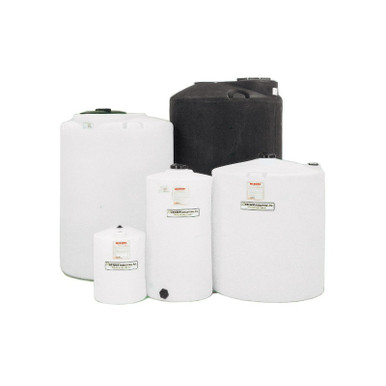
The Enduraplas Diesel Fuel Boss product line is the dominant ag fuel storage in the OneSource catalog. The line is engineered specifically for diesel service but the tank shell (HDPE per ASTM D1998) is also acceptable for E10 gasoline service in farm and small-fleet duty. Catalog options:
- Enduraplas 25 Gallon Compact Plastic Portable Diesel Fuel Boss Tank with Pump and Fuel Nozzle (MPN RDU025C10D, listed at $1,217.16). Pickup-truck mountable, 12V pump, suitable for diesel and E10 gasoline (verify pump rating).
- Enduraplas 55 Gallon Compact Plastic Portable Diesel Fuel Boss Tank with Pump and Fuel Nozzle (MPN RDU055C10D, listed at $1,347.00).
- Enduraplas 75 Gallon Narrow Plastic Portable Diesel Fuel Boss Tank with Pump and Fuel Nozzle (MPN RDU075N10D, listed at $1,419.84).
- Enduraplas 100 Gallon Standard Plastic Portable Diesel Fuel Boss Tank with Pump and Fuel Nozzle (MPN RDU100S10D, listed at $1,854.60).
- Replacement 10 GPM 12 Volt DieselFlo Pump (MPN ARDPDP01, listed at $184.50) — service replacement for the Fuel Boss line.
Important: the Fuel Boss line is marketed for diesel service. The tank shell is HDPE which tolerates E10 gasoline; however the pump, hose, and nozzle assemblies on the integrated package are diesel-rated. For E10 gasoline service, the integrated pump may not be UL 87A listed for gasoline dispensing. UL 87A and UL 87 listings cover dispensing pump assemblies for gasoline at retail filling stations and self-service. Private farm and fleet fuel dispensing under NFPA 30A Chapter 12 has reduced listing requirements for non-public dispensing — check with the local fire marshal and state weights and measures authority.
For E85 dispensing, the OneSource polyethylene catalog is NOT the right product. Steel UL 142 ASTs or UL 1316 underground FRP tanks are the correct technology. We can refer steel tank distributors for that duty.
For diesel-only farm and fleet duty (the larger fraction of OneSource customer base), the Fuel Boss line is purpose-built. See also the larger Snyder Industries Liquitote Aviation JET A Fuel Tank (550 Gallon, MPN 373449, listed at $7,989.83) for aviation fuel duty and the Chem-Tainer 28 Gallon Diesel Fuel Caddy with Industrial Pump (MPN 932404IP, listed at $530.99) for shop-floor refueling.
DEF (Diesel Exhaust Fluid) — the Adjacent Chemistry
DEF is technically not a fuel — it is a 32.5% urea solution in deionized water (ISO 22241 specification) used in selective catalytic reduction systems on diesel engines to reduce NOx emissions. DEF is corrosive to copper, brass, zinc, and aluminum; storage tanks and dispensing equipment must be HDPE, polypropylene, or stainless steel 304 / 316L.
DEF storage tanks in the OneSource catalog include the Fluidall Cubetainer line (60-260 gallon range) — purpose-built HDPE cubetainers for DEF service with stainless steel hardware:
- Fluidall 60 Gallon DEF Cubetainer (MPN 1032001N95401, listed at $266.15)
- Fluidall 80 Gallon DEF Cubetainer (MPN 1032101N95401, listed at $298.46)
- Fluidall 120 Gallon DEF Cubetainer with stainless inserts (MPN 1032201N95401, listed at $395.71)
- Fluidall 180 Gallon DEF Cubetainer (MPN 1032301N95401, listed at $527.69)
- Fluidall 260 Gallon DEF Cubetainer (MPN 1032401N95401, listed at $910.00)
For the DEF chemistry envelope and ISO 22241 compliance details, see the DEF storage chemical compatibility guide.
Phase Separation: The Ethanol-Specific Failure Mode
The single most common ethanol blend storage failure is phase separation. The mechanism: ethanol is hygroscopic and absorbs atmospheric water through tank vents, fittings, and any air-exposed surface. As ethanol pulls water out of humid air, the water dissolves into the ethanol-gasoline blend until the water concentration exceeds the solubility limit. At that point the blend separates into two layers:
- Top layer: gasoline-rich, ethanol-depleted. Octane has dropped because the ethanol contribution to octane is now in the bottom layer. Engine running on the top layer alone runs lean and at lower octane than expected.
- Bottom layer: water-rich, ethanol-saturated. This layer is corrosive (slightly acidic from atmospheric CO2 dissolved in the water), accelerates pitting of any steel below it, and is unusable for combustion (the engine will stall on it).
Solubility limits at 60 F:
- E10 phase-separates at approximately 0.4 vol% water
- E15 phase-separates at approximately 0.6 vol% water
- E85 phase-separates at approximately 4-5 vol% water (much higher tolerance because ethanol IS the solvent for water)
Solubility decreases sharply with temperature. Cold winter ambient at 0 F drops the E10 tolerance to about 0.2 vol% water. The implication: a tank that holds E10 fine in summer phase-separates in winter as the ambient cools and water that was in solution drops out at the tank bottom.
Prevention:
- Tank vents with desiccant breathers (silica gel canister on the vent line) for high-humidity climates
- Low-point water draws and routine bottom-water sampling (the tank bottom is where phase-separated water collects)
- Fuel rotation — keep stored fuel inventory turning over, do not let blends sit for more than 6 months in storage
- Keep the tank as full as practical to minimize headspace water absorption from atmospheric air
Fuel Stability and Storage Life
Gasoline (without ethanol) has a storage life of 6-12 months at ambient before oxidation degrades the lighter aromatic fractions and gum forms. E10 has a slightly shorter storage life, about 3-6 months, because ethanol oxidation produces acetic acid and acetaldehyde that catalyze further fuel breakdown. E85 is more stable than E10 actually — the high ethanol content acts as an antioxidant for the gasoline fraction.
For the ag and farm fleet application where fuel sits in storage for the off-season, fuel stabilizer additives (PRI-G, Star Tron, Sta-Bil 360 ethanol formula) are the standard countermeasure. The additive doses ethanol-blend fuel to inhibit oxidation and extend storage life to 12-24 months. ASTM D7525 covers the test method for oxidation stability of spark-ignition engine fuels.
Site-Specific Considerations
Hot Climate (Texas, Arizona, California Central Valley)
Above-ground tanks in 110+ F summer ambient see internal fuel temperatures of 95-105 F continuous. At those temperatures, vapor pressure rises, permeation through polyethylene increases, and elastomer degradation accelerates. For Texas Panhandle ag fuel duty, the fuel temperature management strategy: white tank color (reflects heat), shaded tank location if practical, taller fill column to reduce ullage volume, and elastomer selections rated for 105 F continuous. See our Texas state regulations for the agricultural fuel storage code framework.
Cold Climate (North Dakota, Minnesota, Maine)
Phase separation risk peaks in winter. The countermeasure is winter-blend fuel (lower ethanol content E51-E66 winter blend per ASTM D5798 Class 1) plus desiccant tank breathers plus monthly water-bottom inspection. See our North Dakota state regulations for the cold-climate fuel storage code framework.
Coastal Humid (Florida, coastal)
High atmospheric humidity drives water absorption through every tank vent. Desiccant breathers are mandatory, not optional. Inspection cadence increases to monthly for the bottom water draw.
Summary: Material Selection Decision Tree
- Diesel fuel only: HDPE polyethylene (Enduraplas Fuel Boss line) or steel UL 142. Chemistry compatibility solved by HDPE.
- E10 gasoline, ag/farm/fleet duty under 1,000 gallons: HDPE polyethylene acceptable for the tank shell. Pump and fittings rated for E10 gasoline service required (UL 87A or equivalent listing for the pump assembly).
- E15 gasoline: same as E10 with elastomer upgrade to HNBR or Viton GFLT for hose and seal materials.
- E85 dispensing at retail station: NOT the OneSource polyethylene catalog. UL 142 above-ground steel or UL 1316 fiberglass underground. Refer to steel tank or FRP tank distributor.
- DEF: HDPE Cubetainer (Fluidall line). ISO 22241 chemistry envelope.
- Aviation Jet-A: Snyder Liquitote (550 gallon MPN 373449) for skid-tank duty.
The fuel storage application is highly regulated and the wrong material specification is expensive. Talk to OneSource Plastics at 866-418-1777 for tank selection, or use the freight estimator for delivered tank pricing to your ZIP. For chemistry-specific compatibility questions, the chemical compatibility hub at /chemical-compatibility/ covers the ethanol, methanol, diesel, and DEF storage envelopes in detail. For SPCC 40 CFR 112 secondary containment requirements when the aggregate site capacity exceeds the 1,320-gallon threshold, see the secondary containment volume math walkthrough.
Recommended Tanks for This Guide
Live pricing, updated automatically · estimate freight to your ZIP.