
Texas Septic Tank (OSSF) Regulations — 30 TAC Chapter 285, TCEQ Permitting
Texas OSSF (Septic Tank) Regulations
In Texas, the TCEQ uses 30 TAC Chapter 285 and the Authorized Agent permit system to determine septic tank size based on gallons per day (gpd) per bedroom.
The Governing Framework
In Texas, "septic systems" are formally called On-Site Sewage Facilities (OSSFs). The regulatory stack runs three levels deep:
- Texas Health and Safety Code Chapter 366 — the state statute that authorizes the OSSF permitting program.
- 30 Texas Administrative Code (TAC), Chapter 285 — the TCEQ regulations that implement Chapter 366. This is where tank capacity tables, setbacks, and installation standards actually live.
- Local Authorized Agent (AA) — a county or municipal authority designated by TCEQ to issue permits and conduct inspections locally. You do NOT file directly with TCEQ for most residential systems; you file with your county's Authorized Agent.
30 TAC Chapter 285 — Subchapter Roadmap
| Subchapter | Topic | What to Look For |
|---|---|---|
| A | General Provisions | Applicability, definitions, exemptions |
| B | Licensing & Registration | Who can design, install, and inspect OSSFs |
| C | Permitting Procedures | Permit process with Authorized Agents |
| D | Planning, Construction, and Installation Standards | Tank capacity, setbacks, dispersal, installation — this is where buyers look |
| E | Maintenance & Management | Operating requirements, aerobic system maintenance contracts |
| F | Enforcement | Violations, fines, corrective actions |
Septic Tank Capacity — The gpd-per-Bedroom Table
Texas sizes septic tanks based on gallons per day (gpd) of design flow, not just the number of bedrooms. The gpd is calculated using the number of bedrooms, water-saving fixtures, and other occupancy factors as per 30 TAC Chapter 285. Here are TCEQ's basic assumptions:
- No water-saving fixtures: 300 gpd for a 3-bedroom single-family home.
- With water-saving fixtures: 240 gpd for a 3-bedroom single-family home.
These flows translate to the required minimum tank capacity:
| Residence Type | Design Flow (gpd) | Minimum Tank Capacity |
|---|---|---|
| 3-bedroom, no water savers | 300 | 1,000 gallons |
| 3-bedroom, with water savers | 240 | 750 gallons |
| 4-bedroom (typical) | 360–400 | 1,000–1,200 gallons |
| 5+ bedroom | 440+ | 1,500 gallons (often up-spec'd) |
Authorized Agent Permit Process
- Identify your AA. Most Texas counties are their own Authorized Agent; a handful of cities (Houston, Austin subsets) have their own. Call your county environmental services office first; they will direct you to the local AA if different.
- Site evaluation. A registered professional (soils evaluator or licensed installer) conducts a site-specific soil profile, groundwater check, and setback survey. This is distinct from California's perc test — Texas uses soil classification rather than percolation rate as the primary design criterion.
- Design submittal. Plans drawn by a licensed OSSF installer or professional engineer. Must include tank specifications, dispersal field layout, and all setback-relevant features.
- Permit issuance. Typical AA permit fee $200–$800, often bundled with inspection fees. Turnaround 1–4 weeks depending on county.
- Installation. Must be performed by a TCEQ-licensed installer (Class I or Class II depending on system type). Owner installation is not permitted in Texas for standard residential OSSFs.
- Inspection. AA inspects the tank AND dispersal field before backfill. Pressure test on effluent line where applicable.
- Maintenance contract (aerobic systems). Aerobic treatment systems require a continuous maintenance contract with a licensed maintenance company. Conventional anaerobic septic tanks do NOT require a maintenance contract under state rule, though county AAs may impose one.
Material Approvals
Texas allows polyethylene septic tanks that meet the construction standards of 30 TAC Chapter 285 Subchapter D. Tanks from Snyder, Norwesco, Enduraplas, and Chem-Tainer are certified for structure and materials. Make sure to check these certifications when ordering:
- IAPMO or NSF listing for the tank itself (national plumbing-code compliance).
- ASTM D1998 — the standard for polyethylene upright storage tanks that governs wall thickness, seam integrity, and material properties.
- TCEQ-approved installer signoff — the licensed installer must certify the tank meets applicable Subchapter D requirements on the permit documentation.
Texas-Specific Considerations
- Aerobic treatment systems (ATUs) are common. Much of Texas has soils (especially the Blackland Prairie belt and coastal clays) that fail conventional percolation. Aerobic treatment with surface spray application is the common alternative. These systems require a continuous maintenance contract.
- Surface spray is regulated separately. If you are looking at a surface-spray aerobic system, consult TCEQ's Manual for Designing Surface Application of OSSFs — this is a specialized design manual beyond the 30 TAC Chapter 285 defaults.
- Drought and water-saving pressure. Texas has intermittent drought pressure; many counties encourage or require water-saving fixtures for new construction. This lets you down-size the septic tank to 750 gallons for a 3-bedroom home.
- Hurricane and flood zones. Coastal counties (Nueces, Galveston, Harris, Cameron) impose additional requirements for flood-zone installations including anti-buoyancy ballasting and elevated dispersal.
Frequently Asked Questions
- What's the difference between a Class I and Class II installer license?
- Class I installers can install conventional (gravity-dispersal) anaerobic septic tanks. Class II installers can additionally install aerobic treatment units, low-pressure dosing, and other advanced dispersal systems. Most residential installers are Class II to cover the full service line.
- Can I install a septic tank myself in Texas?
- No. 30 TAC Chapter 285 requires a TCEQ-licensed installer for standard residential OSSFs. There is no owner-installer exemption equivalent to what some rural counties elsewhere allow.
- What happens if my property fails the soil evaluation?
- You'll likely be routed toward an aerobic treatment system with surface spray application or low-pressure dosing. These systems cost 2-4x more than conventional septic and require a maintenance contract. Discuss alternatives with your licensed installer before committing.
- Does Texas accept polyethylene tanks for OSSF use?
- Yes, provided the tank meets Subchapter D construction standards. All major manufacturers (Norwesco, Snyder, Enduraplas, Chem-Tainer) produce rotomolded HDPE tanks compliant with Texas OSSF use. Verify the IAPMO/NSF listing on the tank nameplate.
- Do I need a permit to replace an existing tank?
- Yes. Any new tank installation, including a like-for-like replacement, requires an AA permit. The permit is typically simpler and cheaper for replacements than new installations.
Source Citations
Shop Septic Tanks for Texas
OneSource stocks polyethylene septic tanks meeting Texas construction requirements. Match capacity to your design flow per the rules summarized above. Tank + accessories + holding tank options below cover standard and alternative configurations. OneSource drop-ships from the OEM warehouse closest to your install address.
Plastic Septic Tanks
Full polyethylene septic tank catalog. Sizes from 300 to 1,500+ gallons for Texas installations.
Browse Plastic Septic TanksIAPMO Approved Models
NSF/IAPMO listed tanks. Some counties and some installation types require this listing.
Browse IAPMO Approved ModelsSeptic Accessories
Risers, lids, baffles, filters, alarms, pumps, and install hardware.
Browse Septic AccessoriesHolding Tanks
Holding tanks for construction sites, recreational properties, and pump-and-haul installations.
Browse Holding TanksStoring chemicals in your Texas tank?
Texas's OSSF rules don't apply to chemical-storage tanks, which are specified by the manufacturer. If you need a tank for sulfuric acid, bleach, fertilizer solution, or any of 300+ industrial chemicals, our Chemical Compatibility Database has all the construction specifications.
Agricultural Tank Regulations — Texas Department of Agriculture (TDA)
The Texas Department of Agriculture oversees the storage of pesticides, fertilizers, and feed in bulk under the Texas Agriculture Code and 4 TAC Title 4 (Agriculture), Part 1 (TDA):
- 4 TAC Chapter 7, Subchapter B — Pesticide regulations: applicator licensing, recordkeeping, restricted-use pesticide (RUP) handling, bulk storage and repackaging.
- Texas Agriculture Code Chapter 76 — Pesticides (statutory authority for TDA pesticide program).
- Texas Agriculture Code Chapter 63 — Commercial Fertilizer Control Act (registration, tonnage reporting, labeling).
- Texas Agriculture Code Chapter 141 — Commercial Feed Control Act.
Texas agriculture is the largest and most varied in the lower 48 states, with different regions specializing in crops and livestock. Facilities storing bulk liquid fertilizers and pesticides must have secondary containment that holds 110% of the largest tank, with impermeable liners, rinsate-recovery loading pads, monthly inspections, and spill-response plans. Anhydrous ammonia storage follows ANSI K61.1 standards. The TDA works with TCEQ if bulk chemical incidents threaten water sources.
Oil & Gas Storage — Railroad Commission of Texas (RRC)
Texas is the leading oil and gas state in North America. The Railroad Commission of Texas (RRC) regulates oil, gas, and produced-water infrastructure under 16 TAC Chapter 3 (Statewide Rules) with authority from the Texas Natural Resources Code:
- 16 TAC § 3.8 (Statewide Rule 8) — Water Protection: pit construction, tank battery containment, saltwater disposal (SWD) well standards, authorized fluid handling.
- 16 TAC § 3.9 (Statewide Rule 9) — Disposal Wells: Class II SWD and enhanced-recovery injection wells.
- 16 TAC § 3.13 (Statewide Rule 13) — Casing, cementing, drilling, well control.
- 16 TAC § 3.14 (Statewide Rule 14) — Plugging.
- 16 TAC § 3.20 — Notification of Fire Breaks, Leaks, or Blow-Outs (spill reporting).
- Texas Natural Resources Code Chapter 91 — statutory authority for produced-water and tank-battery regulation.
The Permian Basin is the top oil-producing area in North America, with other regions like Eagle Ford and Haynesville also having significant storage. The RRC requires oilfield tank batteries to have secondary containment that is 1.5 times the largest tank's capacity, with extra space for rain. Spill reporting is required for releases of 5 barrels or more under 16 TAC § 3.20, with immediate notification if water is threatened. The RRC Site Remediation program handles cleanup, and larger spills may involve TCEQ.
Petroleum Storage Tanks (UST & AST) — TCEQ
The Texas Commission on Environmental Quality (TCEQ) manages non-oilfield petroleum storage tanks under 30 TAC Chapter 334, with authority from the Texas Water Code Chapter 26:
- 30 TAC Ch. 334 Subchapters A–H — Underground Storage Tanks: design, installation, corrosion protection, spill/overfill prevention, release detection, operator training, closure.
- 30 TAC Ch. 334 Subchapter I — Aboveground Storage Tanks (AST program): registration, construction, spill prevention, corrective action for ASTs storing petroleum products.
- Texas Water Code § 26.342–26.361 — Underground and Aboveground Storage of Hazardous Substances (statutory authority).
- Petroleum Storage Tank Remediation (PSTR) Fund — state reimbursement mechanism (now sunset; limited corrective-action claims continue).
Texas UST owners must register with TCEQ, pay annual fees, follow 2018 federal rule upgrades, and report suspected leaks within 24 hours. The AST program under 30 TAC 334 Subchapter I is unique, covering registration, design standards, and reporting for tanks storing 'petroleum substances' even below federal SPCC thresholds. Bulk terminals, fleet fueling, and large farm tanks must register with TCEQ. TCEQ provides RG-475 as a guide for operators.
Edwards Aquifer Protection Program — 30 TAC Chapter 213
The Edwards Aquifer is a crucial water source for several Texas cities. Because water recharges directly through limestone, Texas has strict regulations on tank and fluid storage in these areas:
- 30 TAC Chapter 213 — Edwards Aquifer Protection Program (Austin and San Antonio regional offices administer).
- Contributing Zone Plan required for construction disturbing ≥5 acres in the Contributing Zone (Subchapter B).
- Water Pollution Abatement Plan (WPAP) required in the Recharge Zone for any regulated activity including tank installation, fueling stations, and industrial storage (Subchapter A).
- Aboveground Storage Tank and underground-storage-tank siting within the Recharge or Transition Zone triggers enhanced containment: double-walled systems, impermeable secondary containment, and release-detection specifications that exceed the 30 TAC 334 baseline.
- Organic Chemical Storage Facility Plan (OCSF) required for facilities storing listed organic chemicals on the aquifer.
The recharge zone includes several counties, and any construction in these areas requires approval from TCEQ's Edwards Aquifer Protection Program. Operators may need to retrofit or move tanks if they don't meet compliance standards. For tank work in the I-35 corridor, the Edwards program rules apply.
OSSF Septic System Sizing Deep Dive
Texas regulates on-site sewage facilities (OSSF) under 30 TAC Chapter 285, with local implementation by Authorized Agents like county health departments. Design flow is usually 60 gpd per person or 120 gpd per bedroom for homes:
| Bedrooms | Minimum Septic Tank Capacity (30 TAC 285 Table III) |
|---|---|
| 1–3 BR | 1,000 gallons (some AAs require 1,500 for 3BR) |
| 4 BR | 1,250 gallons |
| 5 BR | 1,500 gallons |
| 6+ BR | Add 250 gallons per additional bedroom |
Texas has a variety of soil types, affecting septic system design. 30 TAC 285 requires a site evaluation by a registered evaluator or engineer, licensed installer, and Authorized Agent permit. Alternative systems like aerobic treatment units and evapotranspiration beds are common in areas where standard systems fail. In the Edwards Aquifer zones, there are stricter rules for system placement.
Chemical Storage Secondary Containment & Spill Reporting
Federal SPCC (40 CFR 112) applies at 1,320 gallons aggregate aboveground oil. Texas layers on:
- Texas Water Code § 26.039 — Accidental discharge reporting to TCEQ within 24 hours for spills above reportable quantities.
- 30 TAC Chapter 327 — Spill Prevention and Control; defines TCEQ reportable quantities (often mirrors federal RQs under 40 CFR 302.4 but check program-specific thresholds).
- 16 TAC § 3.20 — RRC oilfield spill reporting (5 bbl threshold).
- 30 TAC Chapter 335 — Industrial solid waste and hazardous waste (RCRA Subtitle C delegation).
- Texas Division of Emergency Management (TDEM) — EPCRA Tier II administration; State Emergency Response Commission.
Report non-oilfield spills to the TCEQ 24-hour spill line at 1-800-832-8224; report oilfield releases to the RRC District Office within 24 hours per 16 TAC § 3.20. Federal RQ releases go to the National Response Center at 1-800-424-8802. Secondary containment should be 110% of the largest tank, but for oilfield tanks, the RRC requires 1.5 times the largest tank's capacity. For state-specific RQ thresholds, check TCEQ RG-415 or the relevant program rule.
Permit Pathways at a Glance
- Residential OSSF: Authorized Agent (county, river authority, municipality) under 30 TAC Ch. 285.
- Fertilizer registration & tonnage: TDA under Texas Ag Code Ch. 63.
- Pesticide applicator license: TDA under Texas Ag Code Ch. 76 and 4 TAC Ch. 7 Subch. B.
- Oilfield tank battery / SWD well: RRC under 16 TAC § 3.8 / § 3.9.
- Petroleum UST / AST: TCEQ under 30 TAC Ch. 334 (Subch. I for ASTs).
- Edwards Aquifer Recharge/Contributing Zone: TCEQ Edwards Aquifer Protection Program under 30 TAC Ch. 213 (WPAP, CZP, OCSF).
- SPCC > 1,320 gal oil aggregate: Federal SPCC plan; state spill reporting to TCEQ (or RRC for oilfield).
- TPDES industrial stormwater: TCEQ (Texas is delegated NPDES state as TPDES).
- Water rights & surface-water supply: Texas Water Development Board and TCEQ Water Rights.
Current fees change; verify with TDA, TCEQ, or RRC before budgeting.
More Texas FAQs
- Why does Texas split oilfield from non-oilfield regulation between RRC and TCEQ?
- Historical jurisdiction — the Railroad Commission originally regulated railroads, then pipelines, then oil and gas production beginning in the 1910s. When the federal environmental program matured, Texas kept upstream E&P under RRC while placing non-oilfield environmental regulation (retail UST, industrial AST, hazardous waste, air, water rights, TPDES) under TCEQ. Bulk terminals handling produced water commingled with refinery streams can trigger both agencies' jurisdiction; operators coordinate both.
- Is my Hill Country ranch tank covered by the Edwards Aquifer program?
- If the tank sits on the Edwards Recharge Zone or Contributing Zone (check TCEQ's zone maps), yes — you need a Water Pollution Abatement Plan, enhanced containment, and pre-construction TCEQ approval under 30 TAC 213. This applies to fueling facilities, large agricultural fertilizer storage, organic chemical storage, and even certain OSSF installations. Zone determination is the first step on any Hill Country project.
- What is the difference between a Class II SWD and a Class V well in Texas?
- Class II SWD (saltwater disposal) wells inject oilfield produced water and are regulated by RRC under 16 TAC § 3.9. Class V wells inject non-hazardous, non-oilfield fluids (stormwater, aquifer recharge, etc.) and are regulated by TCEQ's UIC program under 30 TAC Ch. 331. Different agencies, different rule sets, different inspection regimes.
- Does Texas have its own AST rule below SPCC?
- Yes — 30 TAC Ch. 334 Subchapter I is the Texas AST program. Federal SPCC kicks in at 1,320 gal aggregate aboveground oil, but Texas's state AST program can impose registration and design standards on petroleum-substance tanks below the SPCC threshold depending on size and contents. This is distinctive nationally; most states lean on SPCC alone.
- Who permits my agricultural bulk fertilizer tank in Texas?
- TDA handles fertilizer registration and retail licensing under Texas Ag Code Ch. 63. Local fire marshal plan review applies for fire-code aspects. If the facility triggers secondary-containment and stormwater thresholds, TCEQ TPDES industrial stormwater and state spill rules layer on. In Edwards Aquifer zones, 30 TAC 213 adds pre-construction plan review.
- What does the Texas Water Development Board do?
- TWDB handles state water planning, regional groundwater conservation district coordination, and major infrastructure finance. It does not directly regulate individual tanks but its groundwater availability models and regional water plans drive conservation-district rules in Hill Country, Trans-Pecos, and Edwards-Trinity plateau counties that can affect well and tank permitting at the local level.
Septic Tanks That Meet Texas Code
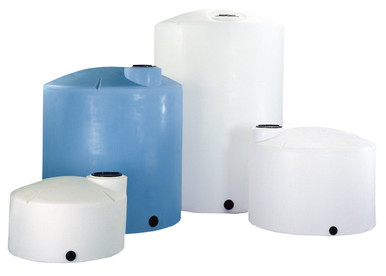
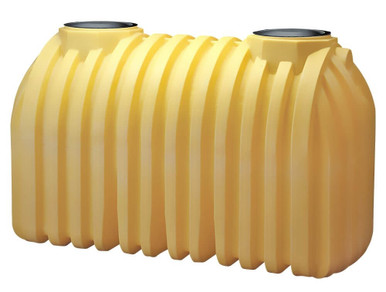
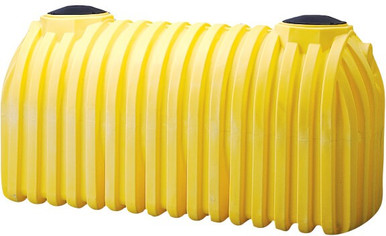
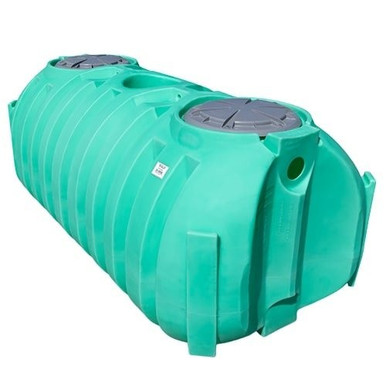
Texas (30 TAC Chapter 285) sizes septic tanks on a gallons-per-bedroom basis. A single- or two-compartment IAPMO PS 1–listed tank at or above 1,000 gallons satisfies most residential designs; your TCEQ Authorized Agent confirms the final size.
Shop all IAPMO PS 1–listed septic tanks →
Meeting the construction standard is not the same as a permit — your county environmental health office issues the permit and makes the final determination. Call us with your permit number and we will confirm the exact tank spec before shipment, with freight quoted to your ZIP.
Chemical Storage & Secondary Containment in Texas
Storing fuel, fertilizer, or process chemicals alongside your tank changes the rules. The federal Spill Prevention, Control, and Countermeasure rule (40 CFR Part 112) applies at 1,320 gallons of aggregate aboveground oil storage and requires secondary containment sized to at least 110% of your largest tank. Releases of hazardous substances above their federal reportable quantity (40 CFR 302.4) must be reported to the National Response Center at 1-800-424-8802.
Texas layers its own spill reportable quantities and restricted-substance rules on top of that federal floor — confirm the current thresholds with your state environmental agency before specifying a chemical tank. Just as important, the polyethylene resin must be matched to the exact chemical, concentration, and specific gravity you intend to store; a tank rated for water is not automatically rated for acid, bleach, or fertilizer.
Last reviewed: May 2026 · sourced from Texas administrative code
Regulations change on a rolling basis — confirm the current rule with your county or state agency before purchasing. Spot something out of date? Email us and we'll fix it.
Nearby states (West South Central) & full index: