Snyder Captor Sloped-Bottom Complete-Evacuation Operational Protocol: Step-by-Step Tank-Turnover Procedure, Residual-Mass Quantification by SKU, CIP Integration for Chemistry-Change Service, and Why Procedure Beats Geometry
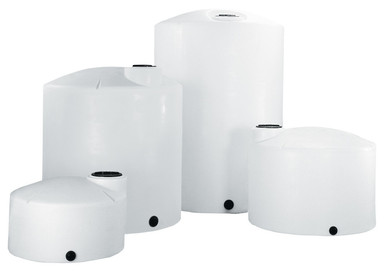
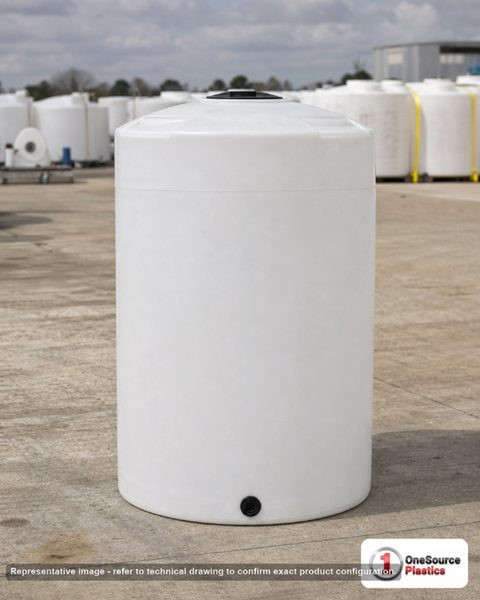
The Snyder Captor double-wall vertical tank with integrated sloped bottom is purchased on the strength of one feature: the floor slope produces complete evacuation through a single low-side outlet. The marketing literature promises that residual heel - the volume of liquid that cannot be drained by gravity through a flat-bottom tank - is engineered to near-zero on Captor sloped-bottom geometry. The marketing is mostly correct on the geometry. The geometry is not the variable that matters. The variable that matters is the operational procedure for tank turnover and chemistry change. A Captor with a perfectly-sloped floor that is operated with bad evacuation procedure leaves more residual mass at the end of each batch than a flat-bottom tank operated with good procedure. This guide walks the complete-evacuation operational protocol that turns the Captor geometry into the operational performance the geometry was designed to deliver.
Reference materials cited: Snyder Industries Captor product technical bulletin (manufacturer documentation); ASME BPE Bioprocessing Equipment Standard for clean-in-place design principles applicable to chemical-service tanks; FDA 21 CFR Part 117 current good manufacturing practice for equipment cleaning; manufacturer fitting catalogs for low-flow drain valves and high-flow CIP nozzles.
1. Why Geometry Alone Is Not Enough
The Captor sloped-bottom geometry consists of an interior tank floor that drops typically 1.5 to 3 inches per linear foot toward the outlet, depending on the SKU. For a 1,000-gallon Captor with a 60-inch interior diameter, the slope produces a center-to-edge drop of approximately 7-15 inches. The geometry is a real engineering improvement over flat-bottom: the gravity-induced flow gradient drives liquid toward the outlet rather than allowing it to pool at the floor centerline.
The published claim is that complete evacuation through the sloped geometry leaves residual heel of approximately 0.5-2 percent of nominal capacity, compared to 5-15 percent for a flat-bottom tank with the outlet at the side wall. The claim is achievable but not automatic. The actual residual heel on a Captor in service depends on three operational variables that the geometry cannot fix:
First, viscosity. Water-thin chemistry (water, dilute acid, dilute base) drains through a sloped floor with negligible residual. Viscous chemistry (concentrated polymer, surfactant solution, sludge-bearing wastewater) leaves a film on the floor and walls that gravity alone does not drain. The residual mass for viscous service is typically 5-20x the geometric minimum.
Second, drain rate. Slow draining (typically a small valve choked partially closed during evacuation) leaves more residual than fast draining because the liquid has time to settle into the floor texture and surface tension holds the residual film against gravity. Fast draining with the valve fully open generates the wave-front that strips the residual film off the floor.
Third, post-drain dwell time. The first 30-60 seconds after the visible flow stops, the surface-tension-held residual film slowly drips toward the outlet. Closing the valve immediately at apparent end-of-flow leaves that residual mass in the tank. Holding the valve open for an additional 2-5 minutes captures the residual.
The combined effect: a Captor operated with disciplined complete-evacuation procedure leaves residual mass at the geometric minimum (0.5-2 percent of nominal capacity); the same Captor operated without disciplined procedure leaves 3-10x more residual. The difference dominates the geometry choice.
2. Residual-Mass Quantification by Slope and Service
For the standard Captor SKUs in the OneSource catalog, the geometric minimum residual mass at the floor is approximately:
- 1,000-gallon Captor SII-5990102N42: approximately 5-15 gallons geometric minimum at 1.5-inch-per-foot slope. Service-dependent residual: 5-10 gallons for water, 15-30 gallons for moderate-viscosity chemistry, 40-100 gallons for high-viscosity polymer service.
- 1,550-gallon Captor SII-5490000N42: approximately 8-25 gallons geometric minimum. Same scaling factors for viscosity service.
- 2,500-gallon equivalent Snyder Captor: approximately 15-40 gallons geometric minimum.
The percent-of-capacity at geometric minimum is roughly constant: 0.5-2 percent for low-viscosity service across the SKU range. The absolute mass scales with tank size, which affects the economics of complete-evacuation procedure: a 5-gallon residual on a 1,000-gallon tank may not justify the procedural overhead, while a 40-gallon residual on a 2,500-gallon tank is worth the procedural discipline if the chemistry is expensive or the chemistry-change cycle is frequent.
The service-dependent multiplier is the variable to manage. For chemistry where residual carries operational consequences - chemistry-change contamination, batch-to-batch product quality, regulated-waste classification of the residual - the procedure that minimizes the residual is the variable that matters more than the SKU choice.
3. The Step-by-Step Tank-Turnover Procedure
The complete-evacuation procedure for a Captor sloped-bottom tank between batches:
- Stop fill or upstream supply. Confirm fill line is closed and no incoming flow. Document time stamp for the batch records.
- Open primary outlet drain valve to fully open position. Captor SKUs ship with 2-inch or 3-inch outlets standard; use the largest available. Partial opening produces low-velocity drain that leaves more residual.
- Confirm visual flow. Watch the discharge for steady stream then transition to surging flow then to dripping. The transition typically occurs over 30-90 seconds for a tank near empty.
- Hold valve fully open for additional 2-5 minutes after surging transitions to dripping. The residual film on the floor drips toward the outlet during this dwell. Closing the valve too early leaves the film in place.
- Inspect through the manway or sight port if available. Confirm visible floor surface; the floor should be wet but not pooled. Pools indicate the slope is partially obstructed (sediment buildup, fouling) and the procedure is not capturing the geometric minimum.
- Optional: low-flow purge. If chemistry-change service is required, introduce a small volume (typically 5-15 percent of tank capacity) of the next chemistry as a flush, swirl through the manway-or-CIP-nozzle injection, drain through the open valve. This carries the residual film out with the flush volume.
- Document residual. Note time stamps for each step, total drain time, and operator visual confirmation of the floor condition.
- Close drain valve. Tank is now ready for next batch fill or for chemistry change.
The procedure adds approximately 5-10 minutes to a tank turnover relative to "open the valve, walk away, close it when you remember." The 5-10 minutes recovers 30-50 percent of the otherwise-lost residual mass, which compounds across hundreds of batches per year on a high-cycle tank.
4. CIP Integration for Chemistry-Change Service
When the next batch is a different chemistry than the prior batch, complete evacuation alone is not sufficient - the residual film of the prior chemistry will contaminate the next batch. Clean-in-place (CIP) procedures address this. The Captor sloped-bottom geometry supports CIP because the slope drives the wash chemistry toward the same outlet as the product.
The CIP cycle for a Captor between dissimilar chemistries:
- Pre-rinse with water. Spray a CIP nozzle (typically a rotating spray ball or fixed nozzle on the dome) with 50-150 gallons of water at 80-120 psi for 5-15 minutes. The water carries soluble residual out the open drain. Time depends on tank size and chemistry; high-viscosity chemistry needs longer.
- Caustic wash if applicable. For chemistry where caustic is appropriate (organic residue, biological contamination), inject 1-3 percent sodium hydroxide solution at 140-160 F through the CIP nozzle for 10-30 minutes. Capture the wash water for treatment or discharge per regulatory requirement.
- Acid wash if applicable. For chemistry where mineral scale is an issue (calcium carbonate, magnesium hydroxide, hard water deposits), inject 0.5-2 percent phosphoric or citric acid solution at 120-140 F for 10-20 minutes.
- Sanitize if applicable. For chemistry where biological contamination is a concern (food, pharma, biotech adjacent), peroxide or chlorinated sanitizer at the appropriate concentration and dwell time per ASME BPE.
- Final water rinse. 50-100 gallons of clean water through the CIP nozzle to remove all wash chemistry. Confirm rinse-water conductivity matches feed-water conductivity to verify cleanout.
- Drain and inspect. Open drain valve, hold open per the standard complete-evacuation procedure, inspect visually before reintroducing the next chemistry.
Captor SKUs intended for CIP service ship with a CIP nozzle port on the dome (typically 2-inch or 3-inch flange). The CIP nozzle itself is an after-market addition; specify a 360-degree spray ball for general chemistry-change CIP, or a high-flow nozzle for sludge-bearing or high-viscosity service. Total CIP package cost for a 1,000-gallon Captor is typically 1,500-3,500 dollars including nozzle, valves, and piping.
5. Mixing-Service Considerations
For Captor tanks in continuous-mixing service (an in-tank agitator running during fill and dwell), the residual heel and complete-evacuation procedure interact with the mixing. A mixed tank has lower residual at the floor because the mixing prevents settling, but the off-floor walls and the dome retain residual film unless the mixing is aggressive enough to maintain flow against those surfaces.
The procedure adjustment for mixed service:
- Continue mixing during the drain cycle. Stopping the mixer at end-of-batch allows settling that increases residual heel.
- Keep mixer running until the liquid level drops below the mixer impeller. This typically occurs at 10-20 percent of nominal capacity for a typical agitator placement.
- Once liquid level is below the impeller, stop the mixer and continue the gravity drain.
- For high-cycle service, consider installing an eductor or low-level mixer that operates effectively at low fill levels. These are after-market additions that improve evacuation performance for service that requires it.
Mixing-service Captor configurations are common for chemical batch processing, chlorine generation, polymer dilution, and other continuous-throughput applications. The OneSource catalog Captor SKUs are mixing-compatible out of the box; specify the mixer mounting and drive on the dome at order entry.
6. Procedural Documentation and Compliance
The complete-evacuation procedure produces residual mass numbers that are auditable and contributory to multiple regulatory frameworks:
- RCRA hazardous waste residual: 40 CFR 261.7 defines empty containers and tanks based on residual mass thresholds (typically less than 1 inch of residual or under 3 percent by weight of the original contents). Documentation of complete-evacuation procedure supports the empty-container determination and avoids triggering hazardous waste tank status.
- FDA 21 CFR Part 117 cleaning validation: for food-contact equipment, the cleaning procedure must be validated to remove residue to specified limits. The complete-evacuation plus CIP procedure is the foundation of that validation.
- EPA effluent guidelines: for facilities under industrial pretreatment under 40 CFR 403, the residual chemistry that goes to drain during CIP is subject to discharge limits. Documenting the wash-water volume and chemistry supports the pretreatment compliance.
- ASME BPE bioprocessing: for tanks in pharmaceutical or biopharmaceutical service, the slope angle, surface finish, and CIP nozzle coverage are subject to ASME BPE design verification. Captor sloped-bottom is compatible with ASME BPE general principles but specific compliance depends on the SKU and the application.
The procedural documentation that supports compliance: time-stamped batch records for each evacuation cycle, residual-mass quantification (visual inspection or quantitative measurement of the wash-water volume), and CIP cycle parameters (nozzle pressure, wash chemistry concentration, dwell time, rinse-water conductivity). These records should be retained per the applicable regulatory framework (typically 3-7 years).
7. Failure-Mode Documentation
Patterns that recur in Captor sloped-bottom complete-evacuation incidents:
- Sediment buildup blocking the slope. Tanks holding solids-bearing chemistry (slurry, sludge, polymer with insoluble fines) accumulate sediment in the lowest point of the slope. After 6-24 months of service, the sediment can fill the cross-section above the outlet and divert flow around the deposit, leaving residual liquid pooled behind the sediment dam. Mitigation: scheduled tank entry and floor cleanout per service intensity.
- Drain valve undersized. Specifying a 1-inch outlet on a 1,000-gallon Captor produces low drain velocity that leaves wall and floor residual film in place. Mitigation: specify 2-inch outlet minimum; 3-inch for fast-cycling tanks.
- Dome and upper-wall residual. The sloped-bottom geometry addresses the floor; the dome and upper walls still retain wash residue from any tank sufficiently full to wet those surfaces. Mitigation: CIP nozzle that covers 360 degrees of the interior surface, including the dome.
- Outlet plumbing residual. A 4-foot horizontal run from the tank outlet to the next valve traps several gallons of liquid that the tank itself cannot drain. Mitigation: minimize horizontal piping at the outlet; use slope-down piping that drains by gravity to the next handling point.
- Operator skip-step. The 2-5 minute end-of-drain dwell is the most-skipped step in field operations because nothing visible is happening. Mitigation: written SOP, time-stamp documentation, and operator training that explains the residual-mass implication.
8. Comparison to Alternative Bottom Geometries
Where the Captor sloped-bottom fits in the broader bottom-geometry catalog:
- Captor sloped-bottom: 0.5-2 percent geometric minimum residual, supports CIP, fits chemical-service double-wall envelope. Reference: SII-5990102N42 1,000 gallon, SII-5490000N42 1,550 gallon.
- Cone-bottom tanks (Chem-Tainer 30 or 45 degree): 0.1-1 percent residual at the cone discharge, requires elevated mounting, full geometry below grade for cone-fed plumbing. Best for batch chemistry where cone discharge geometry is acceptable. Reference: see Chem-Tainer cone-bottom catalog.
- Flat-bottom side-outlet: 5-15 percent residual, lowest capital cost, lowest operational performance for chemistry change. Best for water and bulk chemical service where residual is not operationally significant. Reference: Norwesco N-40146 1,500 gallon, N-40164 5,000 gallon.
- Flat-bottom center-outlet (IMFO): 1-3 percent residual with proper procedure, good middle ground for chemistry that does not require the full cone-bottom or sloped-bottom geometry. Available on some Snyder SKUs.
- Dished-bottom (some Bushman SKUs): 2-5 percent residual, intermediate performance, often paired with elevated mounting for outlet access.
The selection decision framework: if chemistry change is daily or more frequent, specify Captor sloped-bottom or cone-bottom. If chemistry change is monthly or less frequent, flat-bottom side-outlet is acceptable. If batch contamination tolerance is tight (FDA, pharma, biotech), specify Captor with full CIP package. If batch contamination tolerance is loose (water, bulk chemical), the cheapest geometry that meets containment requirements is the right answer.
9. Implementation Checklist
- Select Captor SKU based on chemistry, capacity, and double-wall containment requirements.
- Specify outlet diameter (2-inch minimum, 3-inch preferred for sub-2-minute drain on tanks over 1,000 gallons).
- Specify outlet valve type (full-port ball valve recommended for fastest drain rate and lowest residual).
- If CIP service, specify dome CIP nozzle port and order spray ball nozzle separately.
- Specify mixer mounting if mixed service.
- Develop written tank-turnover SOP including the 2-5 minute end-of-drain dwell.
- Develop written CIP cycle specification including pre-rinse, wash, sanitize, final-rinse parameters.
- Train operators on the SOP with explicit residual-mass implications.
- Implement batch-record documentation that captures evacuation start, end, dwell time, and operator inspection result.
- Establish quarterly cleanout audit that verifies sediment is not accumulating at the slope low point.
OneSource Plastics quotes complete Captor packages including CIP nozzle, valve assemblies, batch-record documentation templates, and operator training materials. List pricing on a 1,000-gallon Captor SII-5990102N42 starts at $6,798.99; the 1,550-gallon Captor SII-5490000N42 lists higher; CIP and mixing options are quoted separately. LTL freight to your ZIP is quoted via the freight estimator or by phone at 866-418-1777.
For complementary reading on related operational topics, see our sloped-bottom vs cone-bottom geometry comparison for the head-loss and drainage-rate engineering context, and our Snyder Captor double-wall SPCC compliance walkthrough for the secondary-containment integration that complements the operational evacuation procedure.
Recommended Tanks for This Guide
Live pricing, updated automatically · estimate freight to your ZIP.