Tank Chemical Feed Pump Sizing: Diaphragm vs Peristaltic vs Gear for Different Service
Chemical feed pump selection is the operating-cost decision that follows the tank-selection decision. Pick wrong and the dosing is inaccurate, the tubing or check valves fail in months, the tank empties unevenly, or the chemistry over-feeds and ruins the downstream process. Pick right and the pump runs unattended for years, dosing within +/- 1% of setpoint, with maintenance limited to a tube change or diaphragm refresh every 1–3 years. This pillar walks the three dominant positive-displacement chemical feed pump technologies — mechanical and solenoid diaphragm, peristaltic (hose / tube), and gear — against ten common tank service categories, with explicit gallon-per-day sizing math and the chemistry-compatibility trade-offs that drive the selection. Real Snyder, Norwesco, Chem-Tainer, Enduraplas, and Bushman feed-tank SKUs from the OneSource catalog ground every example.
Reference standards: ANSI/HI 7.1 (rotary pumps for nomenclature, definitions, application, and operation), ANSI/HI 1.3 (rotodynamic / centrifugal pumps for application and operation), ASME B73.5 (specification for thermoplastic and thermoset polymer material horizontal end-suction centrifugal pumps for chemical process), ASTM D1998 (polyethylene tank fittings and supports that connect to feed pumps), NSF/ANSI 61 (potable contact for water-treatment chemical feed), NEC Article 500 / 505 (hazardous-location pump motor certification), NFPA 70 ground-fault and arc-fault protection, OSHA Process Safety Management 29 CFR 1910.119 for highly hazardous chemical feed, and the EPA Lead and Copper Rule (LCR) revisions that drive municipal corrosion-inhibitor dosing. OneSource catalog SKUs cited include Snyder MPN 32101 (150-gallon mixing cone-bottom), MPN 32419 (60-gallon mixing), MPN 1850000N51 (17-gallon black mixing), Norwesco MPN 41484 (300-gallon cone-bottom), MPN 43852 (1,000-gallon cone-bottom), and Snyder MPN 5580000N52 (2,500-gallon sodium hypochlorite double-wall) where the dosing pump installs directly off the tank outlet bulkhead.
The Three Pump Technologies in One Page
| Technology | Operating Principle | Typical GPD Range | Accuracy |
|---|---|---|---|
| Mechanical diaphragm | Crank or eccentric drives a flexing diaphragm; check valves direct flow | 1–5,000 gpd | +/- 1–3% (with stroke + speed control) |
| Solenoid diaphragm | Pulsed solenoid drives diaphragm; stroke controlled by pulse frequency | 0.05–100 gpd | +/- 2–5% |
| Peristaltic / hose | Rotor with rollers compresses elastomer tube against housing | 0.001–1,000 gpd | +/- 1% (tube life dependent) |
| Gear pump | Meshing gears trap and transport fluid pockets between teeth | 100–100,000 gpd | +/- 5% (positive displacement, no metering) |
Diaphragm Pumps: The Default for Chemical Feed
Where mechanical diaphragm wins
- Wide turndown ratio: 100:1 by stroke length adjustment; 10:1 by motor speed (VFD or stepper). Combined turndown of 1000:1 is feasible.
- High discharge pressure capability: 100–250 psi standard; some models to 1,500 psi.
- Chemistry compatibility: head, diaphragm, and check-valve materials selectable to match nearly any chemistry.
- Fluid volume per stroke: well-defined; supports accurate dosing on any controllable input.
- Self-priming: typically up to 6–10 ft suction lift on water-like chemistry.
Where mechanical diaphragm fails
- Vapor-locking on degassing chemistry: sodium hypochlorite at high temperature off-gases chlorine. Vapor in the pump head defeats prime. Specify a flooded-suction install (tank above pump) or a degassing pump head.
- Slurry / settleable solids: check valves clog. Specify peristaltic or pneumatic diaphragm with double ball-check.
- Diaphragm fatigue: typical life 1–3 years on chemistry service. Replacement is field-feasible but plan the spare.
- Pulsing flow: diaphragm pumps inherently pulsate. Pulsation dampener required for accurate downstream metering.
Mechanical diaphragm material matrix
| Service | Liquid End | Diaphragm | Check Valves |
|---|---|---|---|
| Sodium hypochlorite 12.5% | PVC or PVDF | PTFE-faced | Ceramic + Viton |
| Sulfuric acid 98% | PVDF | PTFE | Ceramic + PTFE |
| Sodium hydroxide 50% | PP or PVDF | EPDM or PTFE | Ceramic + EPDM |
| Polymer / coagulant | PVC or PP | EPDM | 316 SS + EPDM |
| Hydrofluosilicic acid | PVDF | PTFE | PVDF + PTFE |
| Potable water orthophosphate | PVC NSF 61 | EPDM NSF 61 | Ceramic + EPDM NSF |
Solenoid diaphragm: low-flow precision dosing
Solenoid-driven diaphragm pumps cover 0.05–100 gpd with high turndown and low capital cost. Standard for swimming-pool dosing, small water-treatment plants, and CIP system dosing. Pulse-by-pulse stroke; no continuous shaft. Limited to lower discharge pressure (typically 75–150 psi) and lower viscosity. Excellent fit for sodium hypochlorite injection at low flow rates. Cited tank platform: Snyder MPN 32419 (60-gallon mixing cone-bottom) for the bleach day-tank above the solenoid pump; refer to Sodium Hypochlorite Storage for full system spec.
Peristaltic Pumps: When Chemistry or Solids Defeat Diaphragm
Where peristaltic wins
- Slurry, scale-forming, or solids-laden fluid: only the tube contacts the chemistry; no check valves to clog.
- Viscous fluid: the rotor mechanically displaces fluid; no suction-lift dependence on viscosity.
- Off-gassing chemistry: the tube acts as the working chamber; vapor cannot lock the pump.
- Sterile / hygienic service: tube replaceable between batches; no cleaning of internal pump parts.
- Reverse pumping: rotor direction reverses without mechanical change.
- Self-priming: excellent; suction lift up to 25 ft for water-like fluid.
Where peristaltic fails
- Tube life: tube fatigue on continuous-duty service is 1,000–5,000 hours typical; budget tube replacement quarterly to annually.
- Maximum discharge pressure: standard hose pumps 60–125 psi; high-pressure variants 200 psi. Above that, diaphragm or gear is required.
- Chemistry-tube compatibility: tube material (Norprene, Tygon, PharMed, Viton, Hypalon) limits chemistry. Match the tube spec to the fluid carefully.
- Pulsation: peristaltic flow is also pulsating. Pulsation dampener required for sensitive downstream metering.
- Tube failure mode: tube rupture spills chemistry into the pump housing. Standard pumps have leak detection; specify it.
Tube material decision
| Service | Best Tube Material | Notes |
|---|---|---|
| Sodium hypochlorite 12.5% | Norprene A60-G or Hypalon | Excellent off-gas handling |
| Polymer flocculent | Norprene A60-G | Standard wastewater service |
| Lime slurry | Natural rubber | Long life on slurry |
| Acid (nitric, phosphoric) | Viton or PharMed | Verify concentration limit |
| Hydrocarbon / fuel additive | Viton | Avoid Norprene (swells) |
| Pharma / sterile | PharMed BPT | USP Class VI; gamma-sterile-compatible |
Gear Pumps: When Volume Exceeds Diaphragm Range
Where gear wins
- Continuous high-volume transfer: 100–100,000 gpd, smooth flow, low pulsation.
- Viscous fluid: excellent on glycerine, polymer concentrate, fuel oil, food-grade syrup.
- Moderate to high discharge pressure: 100–500 psi standard.
- Long mean time between failures: rotating-equipment reliability comparable to centrifugal pumps.
Where gear fails
- Solids tolerance: particulate above approximately 25 microns wears the gear teeth. Filter the suction line.
- Dry-running risk: gear-on-gear contact destroys the pump in seconds without fluid lubrication. Always specify dry-run protection (low-level switch on the supply tank).
- Accuracy: positive displacement but not metering-grade. Plus or minus 5% typical; not adequate for tight chemical-feed control.
- Pressure spikes: closed-discharge pressure rises rapidly; specify pressure relief on the discharge line.
- Chemistry compatibility: internal gear materials (cast iron, bronze, hardened steel, PEEK, PTFE) limit fluid choice. Verify carefully.
Sizing Math: Gallons per Day from Process Demand
Pump sizing starts with the process dose rate, not the pump catalog. The standard chemical-dose math:
Qchem = (D × Qprocess) / (C × 3.785)
where Qchem is required chemical pump output (gpd), D is dose (mg/L), Qprocess is process flow (gpd), C is concentration of the chemical solution (mg/L). The factor 3.785 converts liters to gallons.
Worked example: chlorine for water-treatment plant
A small drinking-water plant treats 100,000 gpd at 2 mg/L free chlorine residual. Source chemistry is sodium hypochlorite 12.5% (approximately 125,000 mg/L available chlorine). Required:
Qchem = (2 × 100,000) / (125,000 × 3.785) = 200,000 / 473,125 = 0.42 gpd.
That is roughly 1.6 liters per day — well within solenoid diaphragm range. Tank platform: Snyder MPN 32419 (60-gallon mixing cone-bottom) day-tank refilled every 6–8 weeks from a Snyder MPN 5580000N52 (2,500-gallon double-wall) bulk hypochlorite tank. The pump operates 24/7 at moderate stroke / pulse rate. Refer to Sodium Hypochlorite Storage for the full system.
Worked example: alum coagulant for surface water plant
A 2 million gpd surface-water plant doses 30 mg/L alum from 48% liquid alum (approximately 615,000 mg/L). Required:
Qchem = (30 × 2,000,000) / (615,000 × 3.785) = 60,000,000 / 2,327,775 = 25.8 gpd.
This sits in mechanical diaphragm range. Tank platform: Norwesco MPN 43852 (1,000-gallon cone-bottom) liquid-alum bulk tank refilled by truck every 30–40 days. Refer to Aluminum Sulfate Storage for the full system.
Worked example: caustic neutralization for industrial wastewater
An industrial wastewater stream of 50,000 gpd requires 200 mg/L caustic for pH adjustment. Source chemistry is 50% sodium hydroxide (approximately 760,000 mg/L). Required:
Qchem = (200 × 50,000) / (760,000 × 3.785) = 10,000,000 / 2,876,600 = 3.5 gpd.
Comfortably in solenoid or mechanical diaphragm range. Tank platform: Norwesco MPN 41484 (300-gallon cone-bottom) caustic feed tank with insulation in cold-climate service (50% caustic crystallizes below 54°F). Refer to Sodium Hydroxide Storage.
Suction-Side Engineering: NPSHa and the Tank Outlet
Net Positive Suction Head Available (NPSHa) is the difference between the suction-side pressure and the fluid's vapor pressure. ANSI/HI 1.3 Section 1.3.2 covers the NPSH framework; the same physics applies to positive-displacement pumps. NPSHa must exceed the pump's NPSHr (required) by an engineering margin (typically 3 ft minimum) or the pump cavitates / vapor-locks.
For chemical feed pumps drawing from a tank outlet, the NPSHa is built primarily from the static head of the tank above the pump. A flooded-suction install (tank above pump) is the standard approach; the static head provides NPSHa even when the tank is at low fill. A suction-lift install (pump above tank fluid level) requires the pump to develop suction; available lift is limited by atmospheric pressure (about 33 ft theoretical, 20–25 ft practical for water; less for warm or volatile fluid).
Hazardous-Location Pump Engineering
Chemical feed pumps in petroleum, ethanol, methanol, or other Class I location service must carry NEC Article 500 / 505 certification matching the area classification. Standard chemical-process pumps with TEFC motors are not Class I rated. Verify before order:
- Ethanol, methanol, gasoline, diesel: Class I Division 2 typical for outdoor tank farm; Division 1 inside the dike.
- Hydrogen: Class I Group B; rare on industrial chemical feed but critical when present.
- Solvent recovery: Class I Group D, occasionally B or C depending on fluid.
Pricing Doctrine
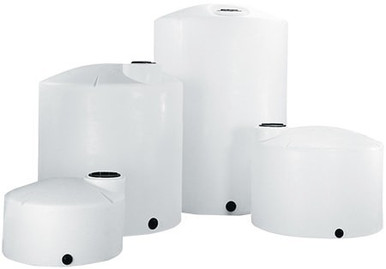
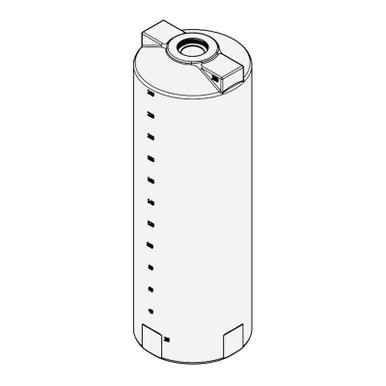
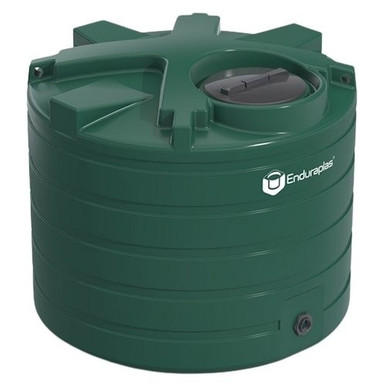
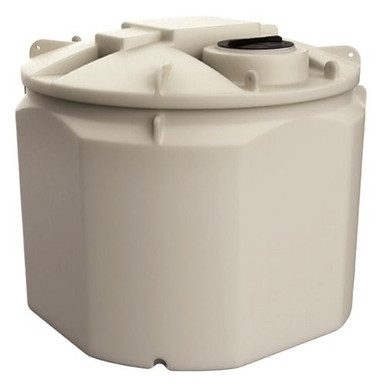
OneSource Plastics provides the chemical feed tank platform: Snyder MPN 32101 (150 gal mix), MPN 32419 (60 gal mix), MPN 32223 (30 gal mix), MPN 1850000N51 (17 gal black mix), Norwesco MPN 41484 (300 gal cone-bottom), MPN 43852 (1,000 gal cone-bottom), MPN 43854 (1,500 gal cone-bottom), Snyder MPN 5580000N52 (2,500 gal hypochlorite double-wall). Pumps, controls, tubing, and dosing-skid hardware are quoted per project. Tanks listed at $18,701.29 before freight; freight quoted separately per ZIP via the Freight Cost Estimator or by phone.
Common Pump Selection Errors
Error 1: Solenoid diaphragm sized to maximum capacity
Solenoid pumps designed to hit nameplate capacity at 100% pulse rate fail prematurely. Specify with 30–40% headroom for 24/7 service.
Error 2: Diaphragm pump on chlorine off-gassing chemistry without flooded suction
Vapor lock kills priming. Flooded suction or degassing-head diaphragm pump required.
Error 3: Peristaltic on petroleum service with Norprene tube
Norprene swells in hydrocarbons. Use Viton tube or switch to diaphragm.
Error 4: Gear pump on slurry service
Gears wear out on particulate within months. Use peristaltic.
Error 5: No pulsation dampener on diaphragm or peristaltic feeding inline mixer
Pulsing flow defeats inline mixing of dilute coagulant. Specify pulsation dampener sized to at least 5x stroke volume.
Error 6: Wrong pump head material for the chemistry
PVC head on hot bleach (above 100°F) embrittles within a year. CPVC or PVDF for that service.
Error 7: No dry-run protection on the feed tank
Empty-tank pump operation destroys diaphragm or gear pump. Always specify low-level switch interlock on the supply tank.
Error 8: Standard motor in Class I hazardous location
NEC 500 violation. Specify explosion-proof or intrinsically-safe pump.
Error 9: Pump discharge pressure above check-valve rating
Diaphragm pumps can develop very high closed-discharge pressure. Always specify pressure relief on the discharge line per ASME B31.3.
Internal Resources
- Tank Plumbing System Design
- Cone-Bottom Discharge Engineering
- Multi-Tank Manifolding
- Sodium Hypochlorite Storage
- Sodium Hydroxide Storage
- Aluminum Sulfate Storage
- Sulfuric Acid Storage
- Chemical Compatibility Database
- Freight Cost Estimator
Source Citations
- ANSI/HI 7.1 — Rotary Pumps for Nomenclature, Definitions, Application, and Operation
- ANSI/HI 1.3 — Rotodynamic Centrifugal Pumps for Application and Operation
- ASME B73.5 — Specification for Thermoplastic and Thermoset Polymer Material Horizontal End Suction Centrifugal Pumps for Chemical Process
- ASME B31.3 — Process Piping
- ASTM D1998 — Polyethylene Upright Storage Tanks: Fittings and Supports
- NSF/ANSI 61 — Drinking Water System Components: Health Effects
- NEC NFPA 70 Article 500 — Hazardous (Classified) Locations
- NEC NFPA 70 Article 505 — Class I Zone 0, 1, and 2 Locations
- OSHA Process Safety Management 29 CFR 1910.119 — Highly Hazardous Chemicals
- EPA Lead and Copper Rule (LCR) Revisions — 40 CFR 141 Subpart I (orthophosphate dosing)
- OneSource Plastics master catalog data, dated 2026-03-26 snapshot (9,419 products)
Recommended Tanks for This Guide
Live pricing, updated automatically · estimate freight to your ZIP.